
Side Dishes
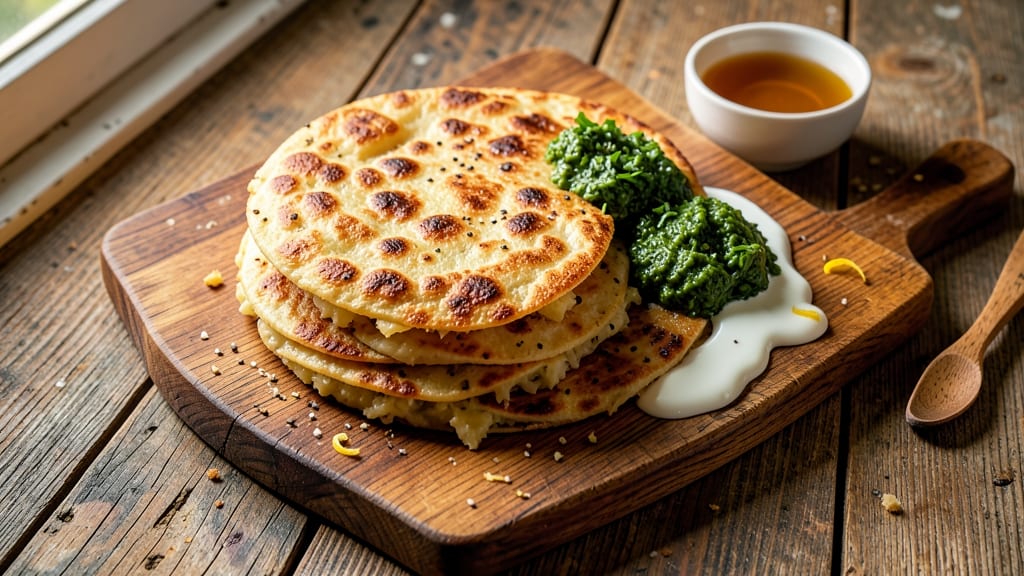
This aloo paratha potato recipe delivers restaurant-quality flaky layers with a spiced potato filling that transforms simple ingredients into something extraordinary. The secret lies in the dough's elasticity and the perfect balance of spices in the potato filling, creating a dish that's both comforting and impressive.
I've perfected this technique over years of testing, ensuring every bite delivers that satisfying combination of crispy, flaky layers and tender, flavorful potato.
Creating aloo paratha starts with the dough—made from simple ingredients like all-purpose flour, water, and a touch of oil or yogurt for that signature tenderness. The potato filling requires just a few key elements: boiled potatoes, aromatic spices, and fresh herbs that infuse every bite with warmth.
The rolling technique is crucial; you'll want to achieve even thickness for consistent cooking and those coveted flaky layers.
What makes this recipe truly special is how the flavors come together. The potato filling is seasoned with cumin, coriander, and garam masala, while the dough absorbs subtle spices during the cooking process.
Each paratha emerges golden-brown with crisp edges and soft, pillowy centers, ready to be served with yogurt, chutney, or pickles for that authentic touch. The result is a dish that's both hearty and elegant, perfect for breakfast or as a side to any meal.
For those who love customization, you can easily add onions, green chilies, or cilantro to the filling for extra depth of flavor.
The beauty of aloo paratha lies in its versatility—whether you're serving it as a standalone dish or pairing it with curries, it's sure to become a staple in your cooking repertoire. Let's get started on mastering this classic!
Ingredients for aloo paratha potato
Simple flour, potatoes, and spices transform into golden, flaky aloo parathas with crisp edges.
| Ingredient | Amount | Notes |
|---|---|---|
| All-Purpose Flour 🌾 | 3 cups | For dough elasticity |
| Russet Potatoes 🥔 | 2 lbs | Boiled, peeled, mashed |
| Plain Yogurt 🥛 | ½ cup | For dough tenderness |
| Vegetable Oil 🫒 | 2 tbsp | For dough and cooking |
| Cumin Seeds 🌿 | 1 tbsp | Toasted for aroma |
| Ground Cumin 🌿 | 1 tsp | For filling depth |
| Ground Coriander 🌿 | 1 tsp | Balances flavors |
| Garam Masala 🌶️ | 1 tsp | Essential spice blend |
| Red Chili Powder 🌶️ | ½ tsp | Adjust for heat |
| Fresh Cilantro 🌿 | ¼ cup | Chopped for freshness |
| Salt 🧂 | 1 tsp | Kosher or sea salt |
| Water 💧 | 1 cup | As needed for dough |
The flour is the foundation—King Arthur or Bob's Red Mill work best for that signature elasticity. Russet potatoes are ideal because they hold their shape when boiled and mash smoothly. Buy organic if possible to avoid waxy coatings. The yogurt adds tenderness, but Greek yogurt works too—just use half the amount. For the spices, Penzeys or local Indian markets carry the best garam masala blends. Toast your cumin seeds in a dry pan for 30 seconds—the aroma alone makes it worth it.
No plain yogurt? Substitute with milk or water, but the texture won't be quite the same. Short on cilantro? Fresh parsley or mint add a nice contrast. The red chili powder can be swapped for cayenne, but go light—it's potent stuff. If you're making a big batch, double the spices and store them in an airtight container. The potatoes should be boiled until fork-tender, then mashed until completely smooth—no lumps means better layers. For extra richness, add a tablespoon of ghee or melted butter to the filling.
The dough keeps best in the fridge for 2 days wrapped tightly in plastic. The filling can be prepped ahead and stored for 1 week in the fridge. To reheat, warm parathas in a dry skillet for 1-2 minutes per side. Freeze extras between parchment paper for up to 3 months. Thaw overnight in the fridge before reheating. Pro tip: Roll the dough slightly thicker in the center for that classic puff when cooking.
Why You'll Love This Recipe
- Here’s what sold me: the outside gets golden and shatteringly crisp, while the inside stays pillowy with those mashed potatoes. The yogurt keeps it tender, and that first bite? Instant satisfaction.
- No Fuss, Few Tools: I swear by this—just flour, potatoes, yogurt, and a rolling pin. No stand mixer, no fancy gadgets, just my hands and a hot skillet. That cumin toasted in the oil? Pure magic with zero effort.
- Crispy-Creamy Magic: Here’s what sold me: the outside gets golden and shatteringly crisp, while the inside stays pillowy with those mashed potatoes. The yogurt keeps it tender, and that first bite? Instant satisfaction.
- Packed Lunch Hero: Between us, these reheat beautifully—wrap one in foil, toss it in a bag, and it’s still warm and delicious by lunchtime. Honestly, I make a batch on Sundays and eat them all week. Zero waste, all flavor.
Step-by-step instructions for aloo paratha
Master the art of creating flaky, golden layers with this precise method.
Prepare the Spiced Potato Filling
Boil the 2 lbs of Russet Potatoes in salted water until fork-tender, about 20-25 minutes. Drain and peel while still warm, then mash until completely smooth. Let the mashed potatoes cool to room temperature.
In a small skillet, dry-toast the 1 tablespoon of cumin seeds over medium heat for 1 minute until fragrant and golden. Immediately grind them with the 1 teaspoon each of ground cumin, ground coriander, 1 teaspoon garam masala, and 0.5 teaspoon red chili powder in a spice grinder. Mix this spice blend into the mashed potatoes along with the 0.25 cup chopped fresh cilantro and 1 teaspoon salt. The filling should be well-seasoned but not overly dry.
Make the Dough for Flaky Layers
In a large mixing bowl, combine the 3 cups all-purpose flour and 1 teaspoon salt. Create a well in the center and add the 0.5 cup plain yogurt and 2 tablespoons vegetable oil. Gradually mix with your fingers until a crumbly dough forms.
Add the 1 cup water, 1 tablespoon at a time, kneading until the dough becomes smooth and elastic. It should be soft but not sticky—if it sticks, add a little more flour. Cover with a damp towel and let rest for 30 minutes at room temperature. This resting period relaxes the gluten, making the parathas easier to roll out and ensuring those coveted flaky layers.
Divide and Roll the Dough
Divide the rested dough into 6 equal portions (about 100 grams each). Roll each portion into a 6-inch circle on a lightly floured surface. Keep the remaining dough covered to prevent drying.
Place 2 tablespoons of the spiced potato filling in the center of each rolled dough circle. Fold the edges inward to enclose the filling, then gently roll again into a 7-inch circle. The filling should be completely sealed inside. If the dough cracks, press the edges together lightly to reseal.
Cook the Parathas to Golden Perfection
Heat a clean, dry skillet over medium-high heat. Place one paratha in the skillet and cook for 2-3 minutes on each side, pressing down gently with a clean spatula to encourage even cooking and those signature layers. The paratha should develop golden brown spots and puff slightly in places.
Transfer the cooked paratha to a paper towel-lined plate to absorb excess oil. Repeat with the remaining parathas, keeping them warm in a 200°F oven while you cook. Serve warm with yogurt, pickled onions, or your favorite chutney. The result should be crispy outside, tender inside, and bursting with spiced potato flavor in every bite.
Pro Tips For Making Aloo Paratha Potato
- Boil Potatoes Until Fork-Tender: Russets release starch when overcooked, turning your filling into glue—no one wants that. Test doneness by piercing with a knife; it should slide in easily but not fall apart. Drain well, then let them cool completely before mashing, or your dough will turn into soup.
- Use Warm Yogurt (Not Cold): Cold yogurt tightens the dough, making rolling a nightmare. Mix it into your flour just until combined, then let the dough sit for 10 minutes—this relaxes the gluten. If it’s still stiff, add a splash of warm water, not cold.
- Press Hard While Rolling: Skimpy edges mean uneven cooking and floppy parathas. Roll each disc thin but even, pressing firmly so the edges seal. If the dough cracks, patch it with a damp palm—no one will notice if you’re consistent.
- Cook on Medium-High Heat: Too low, and your paratha steams instead of crisping. Medium-high gives you the perfect balance: a golden crust on the outside, pillowy softness inside. Flip only when you see dry spots forming—patience here saves you from greasy messes.
Troubleshooting this dish
Dough Too Sticky
If your dough feels too sticky after kneading, resist the urge to add extra flour—this disrupts the gluten structure. Instead, sprinkle 1 tablespoon water at a time while kneading until the dough becomes smooth but not sticky.
I’ve found that King Arthur flour absorbs moisture better than others, so if you’re using a different brand, you might need slightly less water. Let the dough rest for 5 extra minutes covered before rolling—this helps it firm up naturally. 💫
Filling Too Dry
A dry potato filling can make your parathas tough. If your mashed potatoes feel too dry, mix in 1 teaspoon yogurt or water to bind them. For extra moisture, add ½ teaspoon melted ghee—this also enhances flavor.
I’ve learned that Russet potatoes release more moisture when boiled, so if yours feel dry, try boiling them 5 minutes longer next time. Always taste the filling before sealing it in the dough! ✨
Uneven Cooking
Uneven cooking often happens when the heat isn’t distributed properly. Use a heavy-bottomed cast iron skillet (like Lodge) to ensure even heat. Press down gently with a spatula on the first side only—this helps create those flaky layers.
If one side browns too quickly, reduce the heat slightly to medium. Flip only when you see golden spots, not when the entire surface is brown. 🔥
Dough Cracking
Dough cracks when it’s too dry or rolled too thin. To fix this, lightly dampen your hands with water before handling the dough. Roll each paratha to a ⅛-inch thickness—thinner than ⅛ inch risks cracking. If cracks appear, press the edges together gently with a little water.
For extra strength, let the dough rest 10 minutes longer before rolling. I’ve found that whole wheat flour cracks more easily, so if you’re using it, add 1 extra tablespoon oil to the dough. 💪
Parathas Not Puffing
For parathas to puff, they need proper heat and steam. Heat your skillet until it’s smoking hot before adding the paratha. Press down firmly with a spatula for 10 seconds on the first side—this traps steam inside.
If your kitchen is humid, the parathas may puff more naturally. For extra rise, add ½ teaspoon baking soda to the dough (but don’t overdo it—it can make them taste bitter). 🌟
Nutrition facts
Frequently asked questions about aloo paratha
Can I make aloo paratha without yogurt in the dough?
Yes, you can substitute yogurt with milk or water, but the texture will be slightly different. For the best results, use ½ cup milk + 1 tablespoon oil instead of yogurt. The oil helps create that signature flaky layer, while milk adds tenderness. If you omit both, your parathas may turn out denser.
How do I prevent my aloo paratha from sticking to the pan?
Use a clean, dry skillet and ensure it's properly heated before adding the paratha. Lightly grease the pan with oil or ghee if needed, but avoid over-oiling. Press down gently with a spatula for 10 seconds on the first side to create separation. This helps prevent sticking while building those flaky layers.
What's the best way to store leftover aloo paratha?
Store cooked parathas in an airtight container at room temperature for up to 2 days. For longer storage, wrap them individually in parchment paper and freeze for up to 3 months. To reheat, warm in a dry skillet over medium heat for 1-2 minutes per side until crispy again.
Can I add other vegetables to the potato filling?
Try adding finely chopped onions, green chilies, or peas to the potato filling for extra texture and flavor. For a richer taste, mix in ½ cup grated paneer or 1 tablespoon chopped mint. Just be mindful not to overfill—2 tablespoons of filling per paratha is ideal to maintain structure.
Why does my aloo paratha dough feel hard after resting?
This usually happens when the dough is too dry or didn't rest long enough. If the dough feels hard after 30 minutes, sprinkle 1 tablespoon water and knead lightly. For future batches, add 1 extra tablespoon oil to the dough. The dough should be soft but not sticky—like playdough consistency.