
Side Dishes
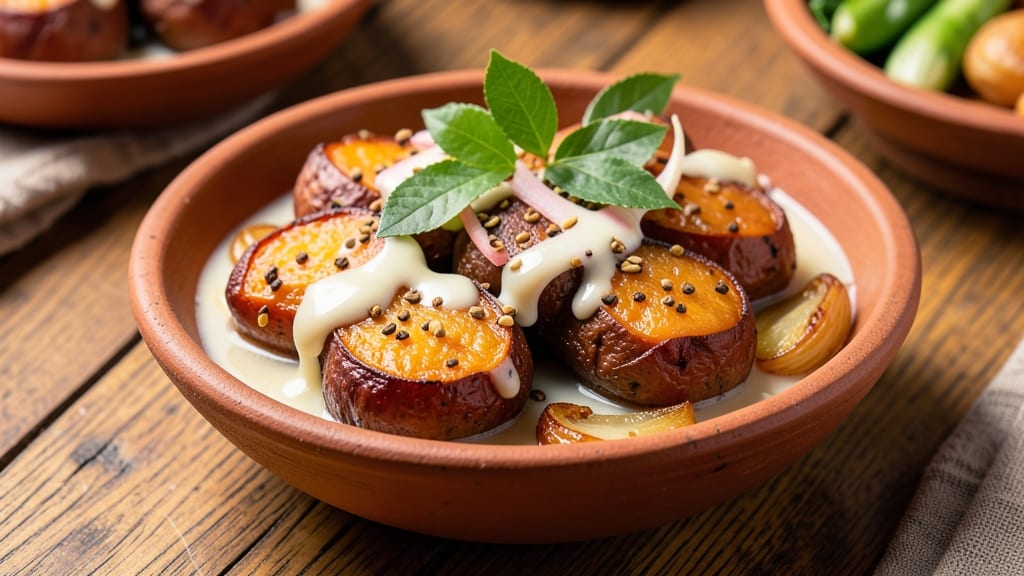
This sweet potato South Indian recipe transforms humble tubers into a fragrant coconut curry with a spiced crunch that balances sweetness and earthy warmth. 🌿 The secret lies in tempering whole spices—mustard seeds, curry leaves, and ginger—that bloom into aromatic layers, while roasted sweet potatoes develop a caramelized edge.
I first made this during a monsoon afternoon when I needed a dish that felt both comforting and vibrant, and it became an instant family favorite.
The dish begins with sweet potatoes roasted until tender yet firm, their natural sugars deepening into a caramelized sweetness. A coconut-based gravy, infused with turmeric and black pepper, envelops the potatoes, creating a velvety texture that contrasts beautifully with the crispy shallots and cashews fried at the end.
This technique ensures every bite delivers both creaminess and crunch, making it a complete dish rather than just a side.
What makes this recipe special is its versatility—serve it alongside steamed rice for a hearty meal, pair it with dosa for a South Indian feast, or enjoy it as a standalone vegetarian curry.
The coconut milk adds richness without overpowering the sweet potatoes, while the tempered spices introduce layers of heat and aroma that define South Indian cooking. It’s a dish that feels both nostalgic and fresh, perfect for weeknight dinners or special occasions.
Ready in under 45 minutes, this curry requires minimal prep but delivers restaurant-quality results. The key is patience—letting the spices toast properly and the coconut gravy simmer until thick and fragrant.
Once you try this, you’ll understand why sweet potatoes are a staple in South Indian cuisine, elevated here with a modern twist that still honors tradition.
Ingredients for sweet potato south indian
Sweet potatoes, coconut milk, and aromatic spices create this vibrant South Indian curry.
| Ingredient | Amount | Notes |
|---|---|---|
| Sweet Potatoes 🍠 | 2 lb | Medium-sized, peeled and cubed |
| Coconut Milk 🥥 | 1 can | Full-fat, 13.5 oz can |
| Mustard Seeds 🌶️ | 1 tbsp | Whole, yellow variety |
| Curry Leaves 🌿 | ¼ cup | Fresh, lightly packed |
| Ginger 🧄 | 1 inch | Fresh, peeled and sliced |
| Shallots 🧅 | 4 whole | Thinly sliced |
| Cashews 🥜 | ½ cup | Whole, dry-roasted |
| Turmeric Powder 🌿 | 1 tsp | Freshly ground preferred |
| Black Pepper 🌶️ | ½ tsp | Freshly cracked |
| Coconut Oil 🫒 | 2 tbsp | For tempering |
| Salt 🧂 | 1 tsp | Adjust to taste |
| Cumin Seeds 🌶️ | ½ tsp | Toasted lightly |
| Green Chilies 🌶️ | 2 whole | Slit lengthwise |
| Asafoetida 🌿 | ¼ tsp | Optional, for aroma |
| Lemon Juice 🍋 | 1 tbsp | Freshly squeezed |
The sweet potatoes are the star here—orange-fleshed varieties work best for that natural sweetness. Whole Foods or Indian grocery stores usually carry them year-round. Peeled and cubed, they roast until tender yet firm, so don't overcook them. For the coconut milk, full-fat canned versions like Thai Kitchen or Goya give the best creaminess. If you're using fresh coconut, blend it with water to mimic the same consistency. The mustard seeds and curry leaves are non-negotiable—they're what give this dish that signature South Indian aroma. Penzeys or local Indian markets often sell them in bulk.
No curry leaves? Fresh bay leaves at half the amount work in a pinch, though they won't taste identical. The ginger can be swapped for 1 tsp ginger paste if fresh isn't available. Want more heat? Add extra green chilies or a pinch of cayenne. The cashews should be dry-roasted until golden—Trader Joe's pre-roasted ones save time. For the shallots, if you only have yellow onions, use half the amount since they're milder. The asafoetida (hing) might be hard to find, but if you skip it, just add an extra pinch of black pepper for depth.
Roasted sweet potatoes keep well in the fridge for 3 days if stored in an airtight container. The coconut curry reheats beautifully—just add a splash of water to prevent drying out. For meal prep, portion the curry into containers with rice so you can grab and go. The tempered spices (mustard seeds, curry leaves, etc.) lose potency quickly, so make them fresh when reheating. Freezes for 2 months if you want to make a big batch ahead of time.
Why You'll Love This Recipe
- No-Fuss Roasting: I just toss those sweet potatoes in coconut milk, salt, and pepper, then roast them until caramelized—no peeling, no dicing, no mess. The oven does all the work while I sip my chai.
- Umami Bomb: That first sizzle of mustard seeds and curry leaves in hot oil? Instant flavor. The ginger adds a bright kick, and the coconut milk makes it rich without being heavy—like a hug in a bowl.
- Lunchbox Hero: Between us, this keeps perfectly for days. Pack it cold for work lunches or reheat with a splash of water—still creamy, still delicious. Honestly, I make a big batch every Sunday.
- Budget Magic: Sweet potatoes are cheap, coconut milk stretches far, and spices cost pennies. I feed my family three meals for what I’d spend on one restaurant dish—plus, the leftovers taste better the next day.
Step-by-step instructions for coconut curry with spiced crunch
Let's create this comforting South Indian dish with tender sweet potatoes and aromatic coconut milk.
🍳 Step 1: Temper the Spices for Maximum Flavor
Heat the 2 tablespoons coconut oil in a heavy-bottomed pot over medium heat. Add the 0.5 teaspoon cumin seeds and let them sizzle for 30 seconds until they turn golden and fragrant. This is where the magic begins - those tiny seeds release their nutty aroma that will infuse the entire dish.
Next, add the 1 tablespoon mustard seeds and let them pop for 1 minute. Then toss in the 2 whole green chilies and 1 inch ginger slices, cooking for 30 seconds until the ginger softens slightly. Here's the thing - don't rush this step. The spices need time to bloom and develop their full flavor profile before we move forward.
Finally, add the 0.25 teaspoon asafoetida (if using) and 0.25 cup curry leaves. Stir for 10 seconds until the curry leaves turn vibrant green - this indicates they're fresh and ready to release their citrusy aroma. The pot should smell like a bustling South Indian kitchen now.
👨🍳 Step 2: Cook the Aromatics and Prepare the Sweet Potatoes
Add the 4 whole shallots and cook for 3-4 minutes until they turn golden brown and translucent. You'll know they're ready when they're soft enough to mash between your fingers but still hold their shape. This step builds the flavor foundation for your curry.
Now add the 2 lb sweet potatoes (peeled and cubed) and stir to coat them evenly with the spice oil. Cook for 5 minutes on medium heat, stirring occasionally. The sweet potatoes should begin to soften slightly at the edges - this ensures they'll cook through perfectly in the coconut milk later.
Sprinkle the 1 teaspoon turmeric powder and 0.5 teaspoon black pepper over the sweet potatoes. Stir well to distribute these spices evenly. The turmeric will give your curry that beautiful golden hue while the pepper adds a subtle warmth that balances the coconut's sweetness.
🥘 Step 3: Simmer in Coconut Milk for Creamy Perfection
Pour in the 1 can coconut milk and bring the mixture to a gentle simmer. Here's where it gets good - reduce the heat to low and let it cook uncovered for 15-20 minutes, stirring occasionally. You're looking for the sweet potatoes to become fork-tender with just a slight bite in the center.
I like to check for doneness by piercing a sweet potato cube with a fork. If it slides in easily but still has a tiny bit of resistance, it's perfect. The coconut milk should reduce slightly, creating a thick, velvety sauce that coats the sweet potatoes beautifully.
Once the sweet potatoes are tender, stir in the 0.5 cup cashews and cook for an additional 5 minutes. The cashews will soften slightly and add a delightful crunch to each bite. This is the moment that matters - the cashews should be tender but still retain some texture, not mushy.
🔥 Step 4: Finish with Lemon and Season to Taste
Remove the pot from heat and let it cool slightly for 2 minutes. Then stir in the 1 tablespoon lemon juice and 1 teaspoon salt. The lemon brightens the flavors and cuts through the richness of the coconut milk, creating a perfect balance.
Taste and adjust the seasoning if needed. I usually find this recipe needs just a pinch more salt to make the flavors really pop. The curry should be creamy, aromatic, and perfectly balanced between sweet, spicy, and savory notes.
Let the curry sit for 5 minutes before serving. This resting period allows all the flavors to meld together beautifully. Serve warm with steamed rice or crusty naan bread for the ultimate South Indian experience.
Pro Tips For Making Sweet Potato South Indian
- Peel and Cube Evenly: Sweet potatoes have stubborn skins—don’t waste time fighting them. Use a paring knife to score the peel in a crosshatch pattern first, then steam for 5 minutes to loosen it before peeling. Cubes should be 1.5 inches max so they cook through without turning to mush.
- Bloom Mustard Seeds Low: I learned this the hard way—high heat burns mustard seeds before they pop. Start them in a dry pan on medium-low until they sizzle, then add oil. If they darken too fast, they’ll taste bitter and overpower the coconut milk.
- Temper Ginger Properly: Skip the raw ginger paste—it makes the dish taste medicinal. Lightly fry 1-inch ginger slices in oil until fragrant (about 30 seconds), then mash them into the coconut milk. This softens the heat and deepens the flavor without bitterness.
- Simmer Coconut Milk Slow: Coconut milk curdles like a diva if rushed. Reduce heat to low once it’s added, and let the sweet potatoes release starch first—about 5 minutes of gentle simmering before stirring. A slow cook or instant pot on "sauté" works too.
Essential equipment for sweet potato south indian
Must-Have Pot Essentials
Start with a heavy-bottomed pot—I swear by my Le Creuset Dutch oven—to prevent scorching during the tempering phase. The 3-quart size is perfect for this recipe, giving enough room for the sweet potatoes to develop caramelized edges without overcrowding.
A tight-fitting lid is also crucial for simmering the coconut milk evenly. 🌡️
Spice Toasting Tools
For that signature South Indian aroma, you need a small stainless steel pan (like my Calphalon 10-inch) to toast mustard seeds and cumin seeds. The flat surface ensures even heating, so those seeds pop perfectly without burning.
I keep a small mesh strainer nearby too—it’s perfect for straining curry leaves after tempering to remove stems while keeping the vibrant green leaves for garnish.
Prep Work Gear
A sharp chef’s knife (I use Mac Knife’s 8-inch Santoku) and cutting board are non-negotiable for peeling and cubing 2 lbs of sweet potatoes efficiently. For the shallots, a mandoline speeds up slicing—just set it to 2mm thickness for even, translucent slices.
Don’t skip the microplane for ginger; it creates a finer texture that blends seamlessly into the curry. 🧅
Crunchy Finishing Touches
To achieve that spiced crunch from the fried shallots and cashews, grab a small skillet (my All-Clad Stainless Steel) and a slotted spoon for easy transfer. A fine-mesh sieve comes in handy for draining excess oil from the fried shallots before adding them back to the curry.
For the cashews, a paper towel-lined plate helps absorb any residual oil while keeping them warm.
Temperature Control
Accurate heat management is key, so invest in a digital thermometer (I recommend Thermoworks Smoke) to monitor the pot’s temperature during simmering. The ideal range is 180–190°F—this ensures the coconut milk reduces gradually without curdling.
A wooden spoon is best for stirring; metal can scratch the pot and release unwanted flavors over time.
Nutrition facts
Frequently asked questions
Can I substitute regular potatoes for sweet potatoes in this recipe?
While you can technically use regular potatoes, the flavor and texture will be completely different. Sweet potatoes have a natural sweetness and creamier texture that pairs beautifully with coconut milk and spices. Regular potatoes will make the dish taste more starchy and less aromatic. If you're set on using them, try using Yukon Golds for a slightly sweeter alternative.
How do I make this recipe vegan?
This recipe is already vegan-friendly! Simply omit the ghee (if using) and stick to coconut oil. The coconut milk, cashews, and spices are all naturally plant-based. For extra richness, you can add a splash of coconut cream at the end instead of cashews. The dish will still have that signature South Indian flavor without any animal products.
What's the secret to getting that perfect spiced crunch? The key is in the tempering process!
Can I make this curry ahead of time?
Yes! This curry actually tastes better the next day as the flavors meld together. Store it in an airtight container in the refrigerator for up to 3 days. When reheating, add a splash of water or coconut milk to prevent drying out. For the best texture, reheat gently on low heat and temper fresh spices (mustard seeds, curry leaves) just before serving to revive the aroma.
What's the best way to serve this dish?
This coconut curry pairs beautifully with steamed basmati rice for a complete South Indian meal. For extra authenticity, serve it with warm dosa or appam (rice hoppers). The creamy curry also works well with crusty naan or even as a filling for sandwiches. For a lighter option, serve it over a bed of quinoa or with roti bread to soak up the delicious gravy.