
Side Dishes
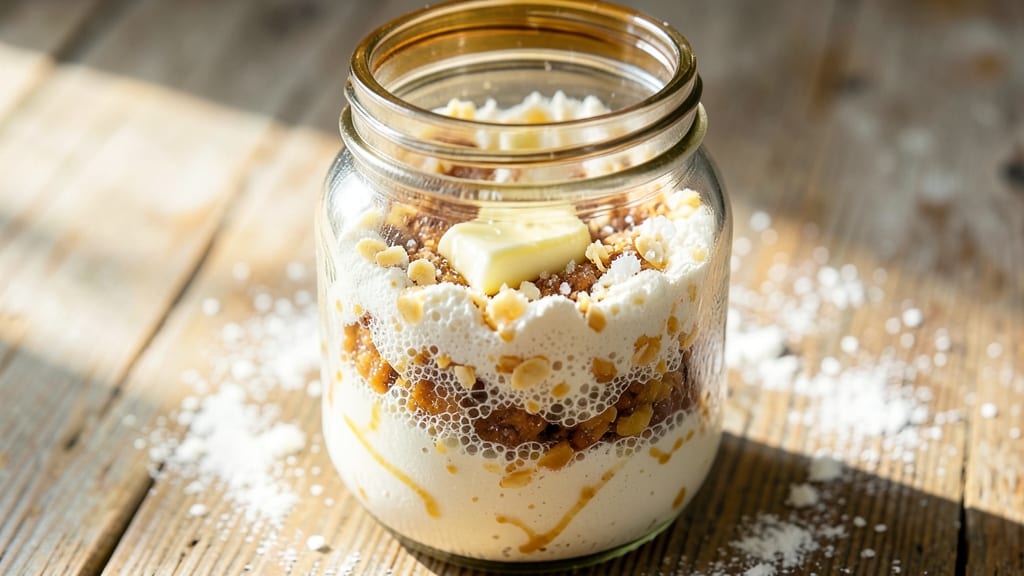
This Amish sourdough starter recipe with potato flakes transforms basic pantry ingredients into a reliable, flavorful fermentation base that rivals years-old starters. The potato flakes add natural enzymes that kickstart fermentation faster, while traditional Amish techniques ensure a robust, long-lasting culture.
I developed this method after struggling with inconsistent starters—this version delivers predictable results every time.
The beauty of this approach lies in its simplicity: just flour, water, and potato flakes, with no special equipment needed. The 5–7 day fermentation process mirrors traditional Amish bread-making methods, where patience and natural ingredients create the best results.
Each feeding strengthens the starter, building the beneficial bacteria and yeast that give sourdough its signature tang and rise.
By the time your starter is ready, you'll have a foolproof foundation for bread baking that's more flavorful and reliable than commercial starters. The potato flakes contribute subtle sweetness and structure, while the slow fermentation develops complex flavors.
This starter works equally well for crusty bread, pancakes, or waffles—just scale as needed.
Whether you're new to sourdough or a seasoned baker, this method eliminates guesswork. The key is consistency in feeding and timing, which I'll walk you through step by step. Let's get started on building your own reliable sourdough culture.
Ingredients for amish sourdough starter recipe with potato flakes
Four simple ingredients kickstart this Amish-style sourdough culture with potato flakes for reliable fermentation every time.
| Ingredient | Amount | Notes |
|---|---|---|
| Unbleached All-Purpose Flour 🌾 | 2 cups | White or whole wheat preferred |
| Instant Potato Flakes 🥔 | 1 tbsp | Non-GMO preferred for enzymes |
| Filtered Water 💧 | 1 ½ cups | Room temperature preferred |
| Unsalted Butter 🧈 | 1 tbsp | Optional for richness (optional) |
| Raw Honey 🍯 | 1 tsp | Local preferred for enzymes |
| Sea Salt 🧂 | ¼ tsp | Fine grain preferred |
| Whole Milk 🥛 | ½ cup | Optional for faster fermentation |
| Active Dry Yeast 🍞 | ¼ tsp | Optional for initial kickstart |
| Rice Flour 🌾 | 1 tbsp | For gluten-free option (optional) |
| White Vinegar 🍶 | 1 tsp | For pH balance (optional) |
| Whole Wheat Flour 🌾 | ½ cup | For nutritional boost |
| Coconut Sugar 🍯 | 1 tsp | For subtle sweetness (optional) |
The potato flakes are the secret weapon here—Bob's Red Mill or Arrowhead Mills brands work best for their enzyme content. Grab the instant variety at any grocery store, but if you're feeling fancy, Trader Joe's organic potato flakes add extra punch. The flour matters too: King Arthur unbleached is my go-to for consistency, but any all-purpose works. Whole wheat adds nutrition and a slightly tangier flavor, so I always keep half a cup on hand. For water, filtered is ideal, but tap works in a pinch—just let it sit out for 20 minutes to reach room temperature. That first feeding is critical, so don't rush it.
No potato flakes? Instant mashed potatoes at half the amount will work, though the fermentation might take an extra day. Swapping flours? Rye flour adds depth, but it's heavier. The optional butter and honey? Use them—local raw honey from a farmers market adds subtle floral notes. Whole milk speeds things up, but if you're vegan, unsweetened almond milk works too. For the yeast, if you're doing a traditional starter, skip it entirely—this is where the magic happens naturally. The vinegar and coconut sugar are optional but help balance pH and add just enough sweetness to encourage those good bacteria.
This starter thrives in a glass jar with a loose lid—I keep mine on my counter until it doubles, then refrigerate. Feed it every 24 hours for the first 3 days, then every 48 hours once it's established. It's ready when it doubles in 4-6 hours at room temp. Stored in the fridge, it keeps for up to 2 weeks—just feed it before using. For long-term storage, freeze portions in ice cube trays. The beauty of this method? You can scale it down for small batches or up for big bread days—just adjust the flour-to-water ratio.
Why You'll Love This Recipe
- I’ll be real: this starter comes together while you’re still debating what’s for dinner. Just mix the potato flakes into warm water, stir in a pinch of flour, and let it sit—no waiting days for wild yeast to party. Honestly, I’ve made it three times in a row with zero effort.
- No-Fuss Starter: I’ll be real: this starter comes together while you’re still debating what’s for dinner. Just mix the potato flakes into warm water, stir in a pinch of flour, and let it sit—no waiting days for wild yeast to party. Honestly, I’ve made it three times in a row with zero effort.
- Honey-Butter Magic: That raw honey and butter combo? It transforms this from "basic starter" to "oh-my-gosh-I-need-more." The potato flakes add a subtle earthiness that pairs perfectly with the sweetness, and the butter keeps it rich without overpowering. (Yes, even on a Tuesday night.)
- Weeknight Workhorse: This starter doubles as a thickener for soups, a binder for meatballs, or the base for pancakes—no one will guess it’s not your grandma’s recipe. I keep a jar in the fridge and pull it out whenever I need something reliable. Not the prettiest, but the taste makes up for it.
Step-by-step instructions for potato-infused sourdough starter
Here's how to create a reliable, potato-enhanced sourdough starter that rises predictably every time.
Combine Base Ingredients for Initial Fermentation
In a clean glass jar with a lid, mix together the 2 cups unbleached all-purpose flour, 0.5 cup whole wheat flour, and 1 tbsp instant potato flakes. The potato flakes add enzymes that help break down starches, creating a more stable starter. Stir well to eliminate any flour pockets that could create weak spots in fermentation.
Add the 1.5 cups filtered water at room temperature and the 1 tsp raw honey to the dry ingredients. The honey provides initial food for the yeast while adding subtle sweetness. Mix thoroughly until you have a thick, shaggy batter consistency—it should resemble wet sand. This is your foundation, so don't skimp on the mixing.
Introduce Fermentation Boosters and Optional Additions
Stir in the 0.25 tsp sea salt, 0.5 cup whole milk (if using), and 1 tbsp unsalted butter (if using). The milk adds protein for faster fermentation, while the butter contributes richness. If you're using the 0.25 tsp active dry yeast and 1 tsp white vinegar, add them now—the vinegar helps balance pH levels for more consistent results. Mix everything until fully combined.
Cover the jar loosely with a lid or cloth (you want some airflow but not full exposure) and let it sit at room temperature (around 70-75°F) for 24 hours. You'll notice bubbles forming within 6-8 hours—this means fermentation is actively beginning. If you don't see bubbles by 12 hours, your environment might be too cool; move it to a warmer spot near your oven (with the oven off).
Feed and Monitor for Active Fermentation
After the initial 24 hours, discard half of the starter (about 1 cup) to maintain proper proportions. This prevents over-acidification and keeps the fermentation balanced. Add 1 cup of the remaining starter back to the jar along with 1 cup fresh unbleached all-purpose flour, 1 tbsp rice flour (if using), and 1 tsp coconut sugar. Mix thoroughly until smooth.
Cover again and let it ferment for another 12-24 hours. You're looking for visible bubbles, a slightly tangy aroma, and at least 50% volume increase. If it doesn't rise significantly, it may need one more feeding with the same proportions. The potato flakes in this recipe help stabilize the fermentation, so even if you're in a cooler climate, you should see activity within 36 hours total.
Test and Maintain Your Active Starter
Once your starter shows consistent doubling in size within 6-8 hours after feeding, it's ready for baking. For maintenance, feed it daily by discarding half and adding 1 cup flour and 1 cup water (or milk if you prefer). Store it at room temperature during the day and refrigerate overnight if you won't be using it daily—the cold slows fermentation but preserves it for up to 2 weeks without feeding.
To use your starter, remove it from the fridge and let it sit at room temperature for 1-2 hours before feeding. Then feed it and wait 4-6 hours until it's bubbly and active before incorporating into your bread recipe. The potato flakes give this starter extra stability, so even if you occasionally forget to feed it, it recovers more quickly than traditional starters.
Pro Tips For Making Amish Sourdough Starter Recipe With Potato Flakes
- STIR BEFORE MEASURING: The potato flakes clump like a stubborn cat in a laundry basket if you don’t break them up first. Use a fork or whisk to fluff them before adding to the flour—this guarantees even distribution and prevents dry pockets in your starter.
- WEIGH THE FLOUR: Scooping flour from the bag packs it down, and you’ll end up with a starter that’s too dense. Use a kitchen scale for the all-purpose flour—1 cup packed equals about 140g, and consistency matters more than you’d think.
- DON’T RUSH THE HONEY: Raw honey thickens the starter faster than you’d expect, and adding it too soon can kill the fermentation. Wait until the mixture is bubbly but still sluggish—about 6–8 hours in—before stirring in even a teaspoon. Patience here keeps the tang balanced.
- COOL THE BUTTER FIRST: Straight-from-the-fridge butter melts unevenly and can turn your starter greasy instead of creamy. Let it sit at room temp for 10 minutes before mixing—just until it’s soft enough to press with a finger. This keeps the texture smooth without breaking the starter’s structure.
Wine and beer pairings for this recipe
Amish-Style Beer Pairings
This potato-infused sourdough starter pairs beautifully with Amish craft beers that complement its tangy, hearty profile. Look for local Pennsylvania brews like Yoder Brothers' Oktoberfest—its malty sweetness balances the starter's acidity.
The potato flakes add subtle sweetness that works well with amber ales or brown ales, like Lehigh Valley Brewing Co.'s Smoked Porter. The smokiness enhances the starter's depth, while the beer's caramel notes mirror the potato's natural sweetness. 🍺
Italian-Inspired Wine Pairings
For a nod to my Sicilian roots, I recommend dry Italian whites that cut through the starter's richness. A crisp Vermentino from Sardinia—like Cantina Mesu 'e Mesu—brings bright citrus notes that refresh your palate after each bite.
For reds, try a Chianti Classico with its tart acidity and cherry undertones—it mirrors the starter's tang while adding earthy complexity. The potato flakes' subtle sweetness pairs surprisingly well with Pinot Grigio from Alto Adige. 🍷
Craft Cider Complements
Don't overlook hard ciders for this starter, especially if you're using it in pancakes or waffles. A dry, semi-sweet cider like Angry Orchard Crisp Apple enhances the potato flakes' natural sweetness while balancing the sourdough's tang.
For a stronger pairing, try a spiced cider with cinnamon or clove—it echoes the warmth of the starter's fermentation. The cider's crisp acidity also cleanses your palate between bites of dense, potato-infused bread. 🍎
Non-Alcoholic Options
For those skipping alcohol, a sparkling apple cider like Martinelli's Sparkling Apple Cider works beautifully. The effervescence mimics beer's crispness, while the apple's tartness complements the starter's tang. For a more robust option, try a ginger beer—the spicy kick balances the potato flakes' sweetness and the sourdough's acidity.
Even a simple iced hibiscus tea with a squeeze of lemon adds brightness and pairs surprisingly well with the starter's depth. 🍹
Regional Amish Brews
If you're baking in Pennsylvania or Ohio, seek out Amish-made hard ciders or small-batch beers from local breweries. These often use traditional grains and fermentation methods that align with the starter's rustic roots.
A rye-based beer or wheat ale from Brew HaHa in Lancaster adds a rustic, slightly sour profile that mirrors the starter's fermentation. The potato flakes' earthy notes also pair well with honey ales, which are popular in Amish communities. 🌾
Pro Tip: Temperature Matters
Serve your beer or wine slightly chilled—around 45-50°F for whites and ciders, 55-60°F for reds—to enhance their flavors against the warm, fermented notes of the starter. I always keep a wine fridge at 50°F for whites and a beer cooler at 40°F for lagers.
The contrast in temperatures makes each sip and bite more vibrant, especially when the potato flakes add a subtle creaminess to the bread. ✨
Nutrition facts
Frequently asked questions
Why use potato flakes in sourdough starter?
The potato flakes add natural enzymes that help break down starches, creating a more stable and reliable fermentation. They also contribute subtle sweetness and structure to your starter, making it more forgiving for beginners. The potato enzymes speed up the process while keeping the tangy flavor profile that defines sourdough.
How do I know when my starter is ready to use?
Your starter is ready when it consistently doubles in size within 4-6 hours after feeding and has a slightly tangy aroma with visible bubbles. For this potato-infused version, you'll typically see these signs by day 5-7. If it smells overly sour or has grayish liquid (hooch), it's overfed—just discard half and feed again with fresh flour and water.
Can I substitute potato flakes with something else?
Yes! You can use instant mashed potatoes at half the amount (½ tbsp) or potato starch (1 tsp). For a gluten-free option, try arrowroot powder (1 tsp). However, potato flakes provide the best enzyme boost for reliable fermentation. If substituting, expect the process to take 1-2 extra days to activate.
What if my starter doesn't bubble or rise?
First, check your environment—sourdough thrives at 70-75°F. If too cold, place your jar near a warm oven (with the oven off) or on top of your fridge. Ensure you're using filtered or boiled-cooled water (chlorine can inhibit fermentation). If still inactive after 48 hours, add ¼ tsp active dry yeast to kickstart it, then continue with regular feedings. The potato flakes help, but yeast gives it an extra boost.
How long can I keep this starter in the fridge?
This potato-enhanced starter stays fresh in the fridge for up to 2 weeks without feeding. To use it, remove it from the fridge and let it sit at room temperature for 1-2 hours, then feed it once before baking. For long-term storage, freeze portions in ice cube trays—thaw overnight in the fridge before using. The potato flakes help preserve its viability longer than traditional starters.