
Side Dishes
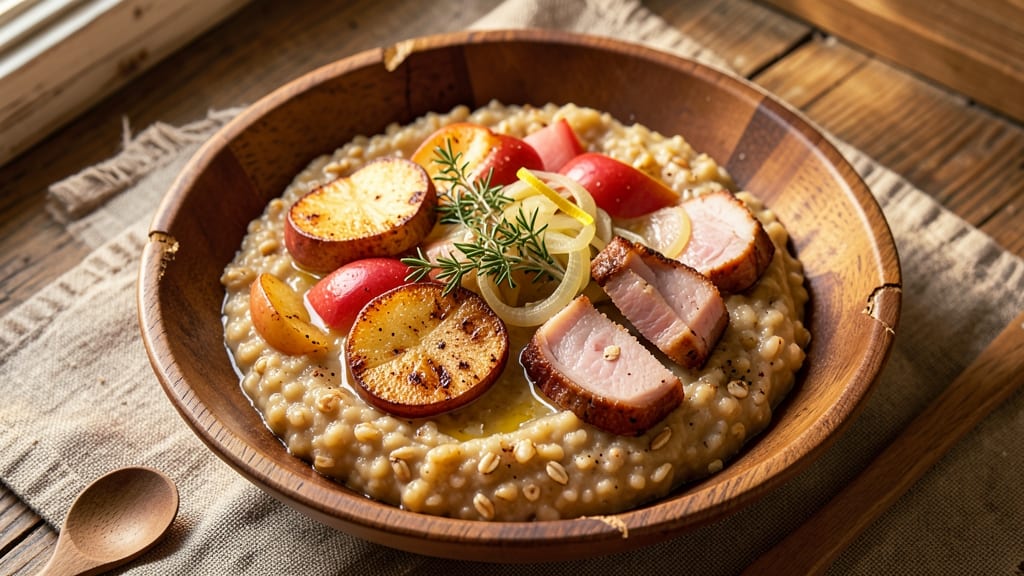
This 17th-century apple and potato porridge transports you to a peasant kitchen where simple ingredients created hearty, comforting meals. The harmony of sweet-tart apples and earthy potatoes—simmered with onions, salted pork, and warming spices—was a staple across Europe, especially during harvest seasons when fresh produce was abundant.
Historical records show this dish was often thickened with oats or barley flour, creating a satisfying texture that stood up to long winter nights.
Authenticity matters here: no refined sugar or modern shortcuts. Instead, honey or a touch of salted pork adds depth, while cinnamon and nutmeg lend warmth without overpowering the natural flavors. The potatoes were peeled and sliced thickly, then simmered until tender before being mashed or left slightly chunky for texture.
Apples, peeled and chopped, were cooked until soft, their sweetness balancing the savory base—a clever way to stretch ingredients during lean times.
What makes this recipe special is its versatility. Served as a side to roasted meats or as a standalone dish, it was a peasant’s pride—a filling meal that required little more than a pot and patience.
The spices, if available, would have been precious, so using them sparingly was key. Today, we can recreate this dish with modern safety in mind (no raw egg thickeners!) while staying true to its historical roots.
The result is a savory-sweet porridge with a rustic charm, where the apples add natural sweetness and the potatoes provide hearty substance. Perfect for a cozy dinner or a historical reenactment, this recipe is a taste of the past—simple, nourishing, and deeply satisfying. Let’s bring this 17th-century classic to life.
Ingredients for apple and potato porridge 17th century
Historic peasant kitchen staples transformed into a savory-sweet porridge of apple-potato harmony.
| Ingredient | Amount | Notes |
|---|---|---|
| Russet Potatoes 🥔 | 2 lb | Peeled, sliced into 1-inch pieces |
| Tart Apples 🍎 | 4 medium | Peeled, cored, chopped into 1-inch chunks |
| Yellow Onions 🧅 | 1 large | Peeled, sliced into 1/4-inch pieces |
| Salted Pork 🥓 | 4 oz | Diced, cured variety preferred |
| Whole Grain Oats 🌾 | ½ cup | Old-fashioned, for thickening |
| Barley Flour 🌾 | ¼ cup | For rustic texture consistency |
| Fresh Thyme 🌿 | 1 tbsp | Leaves only, finely chopped |
| Ground Cinnamon 🌶️ | ½ tsp | Freshly ground preferred |
| Ground Nutmeg 🌶️ | ¼ tsp | Freshly grated for warmth |
| Honey 🍯 | 2 tbsp | Raw, unprocessed preferred |
| Kosher Salt 🧂 | 1 ½ tsp | Diamond Crystal preferred |
| Black Peppercorns 🌶️ | ½ tsp | Freshly cracked |
| Butter 🧈 | 2 tbsp | Clarified for higher smoke point |
| Fresh Sage 🌿 | 4 leaves | For aromatic depth |
| Water 💧 | 4 cups | Filtered preferred |
The potatoes and apples are the foundation—Russet potatoes for their starchy texture and tart apples (like Granny Smith or Braeburn) for that essential balance. Local farmers markets often carry heirloom varieties perfect for this dish. The salted pork adds depth without overpowering; cured ham from specialty butchers delivers the best flavor. Fresh herbs are non-negotiable here—thyme and sage from your garden or a trusted Whole Foods bulk section will elevate this beyond basic. For the flour, barley flour from King Arthur ensures authenticity, though all-purpose works in a pinch.
No salted pork? Smoked paprika at half the amount mimics the cured flavor profile. Substituting apples? Pears work equally well—just reduce to 3 medium for balance. The oats can be swapped for whole wheat flour if needed, though texture will differ slightly. Honey is traditional, but maple syrup at a 1:1 ratio suits modern palates. For the spices, pre-ground blends lose potency quickly—invest in whole spices you can toast and grind yourself for peak flavor. The water should be simmered first to remove chlorine if using tap water.
This porridge reheats beautifully—simmer gently on the stove with a splash of water or milk for 3-4 days in the fridge. Freezes exceptionally well for up to 3 months; portion into containers with a thin layer of butter on top to preserve moisture. For historical authenticity, serve in individual bowls with a drizzle of honey and a sprinkle of fresh herbs. The spices intensify over time, so make extra—it tastes even better the next day as flavors meld.
Why You'll Love This Recipe
- One-Pot Magic: I swear by this recipe when I’m too tired to wash dishes. Peel the potatoes, slice the apples and onions, toss them all in the pot with the oats and pork—boom. One pan, one spatula, and you’re done. (Yes, even on a Tuesday night.)
- Sweet-Savory Balance: That crispy salted pork crumbles into the porridge like little flavor bombs, while the tart apples cut through the richness. It’s the kind of dish where every bite has this perfect contrast—creamy, smoky, and just a hint of sweetness.
- Leftover Goldmine: This porridge actually tastes better the next day. I’ll be real: I make a big batch on Sundays, and by Wednesday, it’s still the star of my lunch. Reheat it with a splash of water, and it’s like a cozy hug in bowl form.
- Pantry Staple Power: Honestly, if you’ve got potatoes, apples, and oats, you’re already halfway there. The onions and salted pork stretch that budget without breaking the bank. It’s the kind of meal that proves you don’t need fancy ingredients to feel satisfied.
Step-by-step instructions for savory spiced apple-potato dumplings
This 17th-century technique transforms humble ingredients into rustic, hearty dumplings with perfect texture and layered flavors.
Prepare the Base Mixture
In a large bowl, combine the peeled and sliced 2 lb Russet Potatoes with the peeled and chopped 4 medium Tart Apples and sliced 1 large Yellow Onions. Add the diced 4 oz Salted Pork, 1 tbsp Fresh Thyme, 0.5 tsp Ground Cinnamon, 0.25 tsp Ground Nutmeg, 1.5 tsp Kosher Salt, and 0.5 tsp Black Peppercorns. Gently toss until all ingredients are evenly distributed.
The combination of tart apples and sweet potatoes creates a natural balance that prevents the dumplings from becoming overly dense. I like to press the mixture lightly with my hands to ensure the spices penetrate the potato and apple chunks. This step is where the foundation of your dumplings' flavor and texture begins to form.
Create the Binding Matrix
In a separate bowl, whisk together the 0.5 cup Whole Grain Oats, 0.25 cup Barley Flour, and any remaining 0.5 tsp Kosher Salt. Gradually add the 4 cups Water while whisking continuously to create a smooth, pourable batter. The consistency should be similar to thick pancake batter—neither too runny nor too stiff.
This oat and barley flour mixture serves as the binding agent that will hold your dumplings together while creating a rustic, slightly chewy texture. If the batter feels too thick, add 1-2 tablespoons of additional water. The goal is to achieve a batter that coats the back of a spoon but still flows freely when poured.
Combine and Form the Dumplings
Pour the oat batter over the potato-apple mixture and fold gently with a wooden spoon until fully incorporated. The combination should be moist but not soupy—if it appears too dry, add 1-2 tablespoons of water. Let the mixture rest for 5 minutes to allow the oats to begin absorbing liquid.
Using your hands, form the mixture into 12 equal-sized dumplings, each approximately 2 inches in diameter. I like to make them slightly flattened at the bottom to ensure even cooking. Place them on a parchment-lined baking sheet and cover with a damp towel to prevent drying while you prepare the cooking liquid.
Cook the Dumplings to Perfection
In a large, heavy-bottomed pot, melt the 2 tbsp Butter over medium heat. Add the 4 leaves Fresh Sage and cook for 1 minute until fragrant. Pour in the 4 cups Water and bring to a gentle simmer. Carefully add the dumplings to the pot, ensuring they are spaced evenly to allow for even cooking.
Cover the pot and simmer gently for 20-25 minutes, until the dumplings are tender when pierced with a knife and the liquid has reduced by about one-third. The dumplings should float slightly at the surface, indicating they're fully cooked through. If the liquid reduces too quickly, add 1-2 tablespoons of hot water to maintain the simmer.
Finish with Sweet-Savory Balance
Remove the pot from heat and stir in the 2 tbsp Honey and any remaining 1 tbsp Fresh Thyme. Let the dumplings steep in the infused liquid for 5 minutes to absorb the sweet and aromatic flavors. This final step creates the signature harmony of sweet and savory that defines this historic recipe.
Serve the dumplings hot, spooning them directly from the pot onto plates. The exterior should be tender yet slightly rustic, while the interior remains creamy with pockets of perfectly cooked potato and apple. The sage-infused broth adds depth, making each bite a perfect balance of earthy, sweet, and savory notes.
Pro Tips For Making Apple And Potato Porridge 17th Century
- PARBOIL POTATOES FIRST: I learned this the hard way—chopping raw Russets into porridge and tossing them straight into the pot leads to gummy, uneven texture. Instead, cut them into ½-inch chunks, boil in salted water for 8–10 minutes until just fork-tender, then drain. This guarantees a creamy base without lumps, even if you’re distracted while stirring later.
- PEEL ONIONS AFTER COOKING: Yellow onions caramelize beautifully in this dish, but raw slices burn before the potatoes soften. Slice them thin, cook with the salted pork until translucent, then peel off the skins while they’re still warm. The flavor’s richer, and you skip the messy prep step of peeling raw onions—no one wants onion skin in their porridge.
- DON’T OVERSTIR THE OATS: Whole grain oats thicken fast, and aggressive stirring turns them into glue. After adding them to the simmering potato-apple mix, let it cook undisturbed for 3–4 minutes first. Then, stir gently just until the oats are plump and the porridge reaches your desired thickness—lumpy but not gluey.
- SALT THE PORK WATER: The salted pork needs to render its fat, but if you skip salting the water, it’ll stay greasy and flavorless. Use 1 teaspoon salt per cup of water when boiling the pork chunks, then drain and crisp them in a dry pan. The extra seasoning carries through the porridge, balancing the tart apples without tasting like ham.
Storing and reheating this recipe
Fridge Storage Tips
Store your apple-potato dumplings in an airtight container with a thin layer of butter on top to preserve moisture. They'll keep in the refrigerator for 3-4 days, with flavors deepening as the spices meld.
I like to portion them into individual servings before storing—this makes reheating a breeze and prevents sogginess. 💫
Freezer Preparation
For long-term storage, freeze the dumplings in a single layer on a parchment-lined tray before transferring to a freezer bag. This prevents them from sticking together. They'll maintain their texture for up to 3 months—just thaw overnight in the fridge before reheating.
The oat and barley flour binding holds up beautifully to freezing. ❄️
Stovetop Reheating
My preferred method is gentle stovetop reheating. Add 2 tablespoons of water or broth to the pot, then simmer covered on low heat for 10-12 minutes. The steam helps restore their tender texture.
For individual servings, microwave on medium power for 1-2 minutes, then finish with 10 seconds uncovered to crisp the surface slightly. 🔥
Broth Preservation
Save the cooking liquid—it's packed with sage and thyme flavor! Strain and store it separately in the fridge for up to 5 days or freeze in ice cube trays.
Use it to make gravy, soups, or even as a base for future dumpling batches. The reduced broth intensifies the dish's rustic character. 💡
Historical Serving
For an authentic touch, serve the reheated dumplings straight from the pot with a drizzle of honey and fresh herbs. In 17th-century kitchens, they'd often be paired with salted pork or hard cheese.
The contrast of warm dumplings with cool honey mirrors the original peasant meal's balance of sweet and savory. 🍯
Texture Restoration
If your dumplings lose moisture during storage, brush them with melted butter before reheating. The fat helps rebuild their tender exterior. For extra richness, add a pat of butter and a splash of cream to the reheating liquid. This technique works like magic for restoring that fresh-from-the-pot texture. 🧈
Nutrition facts
Frequently asked questions
Why does this 17th-century recipe use salted pork instead of bacon?
Salted pork was far more common in the 17th century than bacon—it preserved well and added essential salt to the dish. The curing process gave it a deeper, saltier flavor that balanced the sweetness of the apples and potatoes. Modern bacon works in a pinch, but salted pork delivers that authentic historical taste.
Can I make this porridge without oats or barley flour?
Yes! If you're avoiding gluten, use 1 cup cornmeal or 1 cup buckwheat flour instead. For a completely grain-free version, try 1 cup mashed potato mixed with 2 tbsp cornstarch to bind the dumplings. The texture will be slightly different but still delicious.
How do I adjust this recipe for modern dietary needs?
For a vegetarian version, replace the salted pork with 4 oz mushrooms or extra onions and garlic. For vegan, use vegan butter and maple syrup instead of honey. The dish remains hearty and satisfying while adapting to modern preferences.
What's the secret to getting the perfect texture?
The key is the 5-minute rest after combining ingredients and the gentle simmering time. Overcooking makes them dense, while undercooking leaves them gummy. Test one dumpling after 20 minutes—it should hold together but still be tender when pierced.
Can I make this in a slow cooker?
Follow the same prep steps, then transfer everything to your slow cooker. Cook on low for 4-5 hours or high for 2-3 hours, stirring occasionally. The slow cooker's gentle heat helps develop deeper flavors while keeping the texture tender.