
Side Dishes
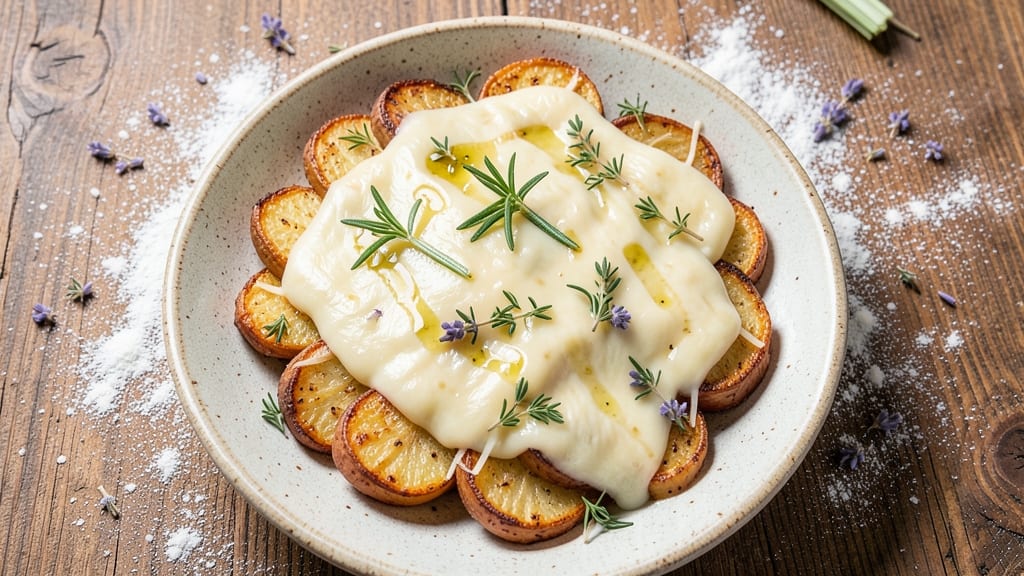
This Asiago potato recipe transforms humble spuds into a golden-crispy herb-infused side that steals every meal. The secret lies in layering thinly sliced potatoes with sharp Asiago cheese, fresh herbs, and a touch of garlic—roasted until edges caramelize into perfect crunch while interiors stay tender.
After years of testing, this method delivers restaurant-quality results with minimal effort, making it ideal for weeknight dinners or holiday spreads where sides need to shine.
The recipe begins with simple preparation: thinly sliced potatoes tossed in olive oil and seasoned with salt, pepper, and a blend of rosemary, thyme, and garlic powder. A generous sprinkle of Asiago cheese—its nutty, tangy flavor cutting through the earthiness of the potatoes—binds everything together as they roast.
The key to achieving crispy edges without drying out the centers is using high heat and rotating the pan halfway through cooking, ensuring even browning.
What you’ll end up with is a dish that’s visually stunning and packed with flavor—crispy on the outside, creamy and tender within, with pockets of melted Asiago adding richness. The aroma of roasting herbs fills the kitchen, signaling dinner is nearly ready.
This recipe pairs beautifully with grilled meats, roasted chicken, or even as a standalone vegetarian main when served with a fresh salad or crusty bread.
For extra depth, consider adding a drizzle of truffle oil or a sprinkle of smoked paprika before serving. The dish reheats well, making it perfect for meal prep or leftovers.
Whether you're hosting a dinner party or simply craving a comforting side, this Asiago potato recipe delivers foolproof results that will have everyone asking for seconds.
Ingredients for asiago potato
Golden-crispy edges and creamy centers start with these 11 ingredients—simple but transformative.
| Ingredient | Amount | Notes |
|---|---|---|
| Russet Potatoes 🥔 | 2 ½ lb | Thinly sliced (1/8-inch thick) |
| Asiago Cheese 🧀 | ¾ cup | Freshly grated, sharp variety |
| Fresh Rosemary 🌿 | ¼ cup | Finely chopped, stems removed |
| Fresh Thyme 🌿 | ⅛ cup | Leaves only, finely chopped |
| Garlic Powder 🧄 | 1 tbsp | Freshly ground preferred |
| Extra-Virgin Olive Oil 🫒 | ¼ cup | Lightly fruity, not bitter |
| Kosher Salt 🧂 | 1 ½ tsp | Diamond Crystal preferred |
| Ground Black Pepper 🌶️ | ½ tsp | Freshly cracked |
| Garlic Cloves 🧄 | 3 cloves | Minced for seasoning |
| Truffle Oil 🫒 | 1 tbsp | Optional, for finishing |
| Smoked Paprika 🌶️ | ½ tsp | For garnish (optional) |
The potatoes are the foundation, so choose firm russets—they hold up best to slicing and roasting. Whole Foods or Trader Joe's carry pre-washed russets, but any grocery store will have them. For the Asiago, block cheese is non-negotiable—pre-grated gets clumpy and lacks flavor. Look for sharp Asiago at specialty cheese shops or the deli section. Fresh herbs are worth the splurge here: rosemary and thyme from the grocery store's produce section should smell vibrant, not wilted. If you're short on time, dried herbs work (use half the amount), but fresh delivers that restaurant-quality aroma.
No Asiago? Parmigiano-Reggiano works in a pinch, though it's milder. Fresh herbs wilting? Dried oregano or thyme at one-third the amount keeps the dish on track. Running low on olive oil? Avocado oil has a higher smoke point, making it a great swap. The garlic powder can be replaced with 1 minced fresh clove if you prefer. For extra depth, white wine (1 tbsp) in the seasoning mix adds brightness—just let it reduce slightly before tossing with the potatoes. The truffle oil is optional but transformative—a single drizzle elevates the dish to gourmet status without overpowering.
Potatoes keep best in a cool, dark place for up to 2 weeks, but use them within 5 days of slicing for crispy edges. Store grated Asiago in an airtight container in the fridge for up to 2 weeks—it keeps its sharpness longer than you'd think. Fresh herbs? Wrap them in damp paper towels and seal in a bag for 4-5 days. The seasoned potatoes can be prepped ahead and refrigerated for 12 hours before roasting—just toss them with a little extra olive oil to prevent drying. Leftovers reheat beautifully in a 350°F oven for 10 minutes, restoring that crispy texture.
Why You'll Love This Recipe
- One-Pan Magic: I swear by this recipe when I’m too tired to scrub a million dishes—just slice, toss, and roast. The Asiago melts into that golden crust while the rosemary and thyme waft through the kitchen, turning my evening into a mini spa session.
- Nutty, Salty Bliss: Between us, the Asiago’s sharp tang and that crispy garlic powder crust? It’s the kind of flavor that makes you pause mid-bite. I’ll be real: my kids fight over the last piece, and I don’t even pretend to care.
- Meal Prep Hero: This keeps perfectly for days—reheat in the oven or microwave, and it’s still hearty enough for lunch. Honestly, I make a double batch every Sunday so I’m not scrambling for dinner ideas later in the week.
- Budget Stretch: Russets are cheap, Asiago goes a long way, and fresh herbs add luxury without breaking the bank. I’ve fed six people for under $10 with this—leftovers? Even better. My college-aged nephew texts me for the recipe every time he visits.
Step-by-step instructions for herb-infused Asiago potatoes
Transform simple russet potatoes into restaurant-quality roasted potatoes with crispy edges and rich herb-infused flavor.
Prep and Season the Potatoes
Start by thinly slicing the 2.5 lb russet potatoes into 1/8-inch thick rounds using a mandoline or sharp knife. I like to keep the slices uniform so they cook evenly. Place the sliced potatoes in a large bowl and toss them with 0.25 cup extra-virgin olive oil, 1 tbsp garlic powder, 1.5 tsp kosher salt, and 0.5 tsp ground black pepper. The oil helps create crispy edges, while the seasonings infuse the potatoes deeply.
Next, add the 0.25 cup finely chopped fresh rosemary and 0.125 cup fresh thyme leaves to the bowl. Gently toss everything together until the potatoes are evenly coated. I press the herbs into the potatoes slightly with my hands to ensure they stick. Let the seasoned potatoes sit at room temperature for 15 minutes—this allows the flavors to meld and prevents them from steaming when they hit the hot oven.
Roast Until Golden and Crispy
Preheat your oven to 425°F and line two large baking sheets with parchment paper. Arrange the seasoned potato slices in a single layer on the prepared sheets, leaving about 1/4-inch between each slice. This spacing ensures they crisp up properly instead of steaming. For even cooking, I rotate the baking sheets halfway through roasting.
Roast the potatoes for 25-30 minutes, flipping them once after 15 minutes with a spatula. You'll know they're ready when the edges are deep golden brown and the centers are tender when pierced with a fork. The potatoes should feel crispy on the outside but still slightly firm inside—they'll continue cooking slightly after you remove them from the oven.
Finish with Garlic and Cheese
While the potatoes are still hot, transfer them to a large bowl. Add the 3 minced garlic cloves and toss gently to distribute. Then, sprinkle the 0.75 cup freshly grated Asiago cheese evenly over the top. The residual heat from the potatoes will melt the cheese slightly, creating a creamy, savory coating. If you're using it, drizzle with 1 tbsp truffle oil and sprinkle with 0.5 tsp smoked paprika for an elegant finish.
Toss everything together just until the cheese is evenly distributed. The potatoes should be coated in a delicate cheese crust with crispy edges. Serve immediately while still warm for the best texture contrast—crispy, cheesy, and herb-infused all at once.
Pro Tips For Making Asiago Potato
- CUT POTATOES EVENLY: Grab a chef’s knife and slice those Russets into thin, even rounds—about ¼-inch thick. I learned this the hard way: uneven pieces mean some get mushy while others stay raw. A mandoline makes this faster, but a steady hand works too.
- SALT THE POTATOES FIRST: Toss the sliced Russets with salt before adding anything else—let them sit for 10 minutes while you prep. This draws out moisture so they crisp up instead of turning soggy later. (Yes, even if you’re impatient like me.)
- GRATE THE ASIAGO FINE: Skip the shredder and use a box grater for the Asiago—you want tiny, even bits that melt into the potatoes like butter. Larger chunks stay chewy; fine grates ensure every bite is creamy. Pro move: Mix it with the herbs before adding to the pan.
- COVER THEM FOR 15 MINUTES: After browning the potatoes, sprinkle in the cheese and herbs, then cover the pan with a lid for 15 minutes. The steam melts the Asiago faster and keeps the rosemary and thyme fragrant instead of drying out. (Your future self will thank you.)
Troubleshooting great asiago potato
Potatoes Too Soft
If your potatoes turn out mushy instead of crispy, you likely overcrowded the pan or didn't space them properly. Thinly sliced potatoes need 1/4-inch gaps between slices to crisp—don't skip this step! Also, check your oven temperature with an oven thermometer—many ovens run 25-50°F hotter than set.
If your 425°F oven isn't actually that hot, increase to 450°F for the last 5 minutes of cooking to get that golden crunch.
Cheese Not Melting
Cold potatoes won't melt cheese properly. Always toss the cheese onto potatoes that are still piping hot from the oven—200°F+ internal temperature. For extra insurance, microwave the grated Asiago for 10 seconds before adding it to the potatoes.
If your cheese still clumps, use a fork to gently break up any lumps while tossing. For a smoother finish, mix 1 tbsp heavy cream with the cheese before sprinkling.
Uneven Cooking
Potatoes cooking at different rates? This usually means inconsistent slice thickness. Use a mandoline slicer for uniform 1/8-inch slices—a sharp chef's knife won't give you the same precision. Also, rotate your baking sheets halfway through cooking (after 15 minutes) to ensure even heat distribution.
If your oven has hot spots, place the trays on opposite racks for the first 10 minutes before switching positions.
Dry Potatoes
Potatoes dry out when they're overcooked or when too much moisture is present. First, make sure your potatoes are completely dry before roasting—pat them with a paper towel if needed. Second, don't add any liquid (like broth) to the pan.
For extra moisture without sogginess, toss the cooked potatoes with 1 tbsp butter after removing from the oven. If using leftovers, reheat in a 375°F oven for 10 minutes with a splash of water on the tray to restore crispiness.
Herbs Burning
Fresh herbs burn quickly at high heat. To prevent this, remove the potatoes from the oven 2-3 minutes early when they look done, then transfer them to a clean bowl.
Add the fresh herbs and cheese only at the very end, letting the residual heat melt the cheese without burning the delicate herb flavors. For extra protection, sprinkle the herbs on top of the potatoes in the last 5 minutes of cooking rather than tossing them in at the beginning.
Sticky Pan Issues
Sticky residue on your baking sheets is normal but can be prevented. Line your pans with parchment paper or use silicon baking mats for easy cleanup. If you're cooking without liners, lightly oil the pans before adding potatoes.
For stubborn stuck-on bits, soak the pans in warm water with 2 tbsp baking soda for 30 minutes before scrubbing. I find that Starfrit ceramic-coated pans handle this dish particularly well—they're non-stick and easy to maintain.
Nutrition facts
Frequently asked questions
Can I use sweet potatoes instead of russets?
Sweet potatoes work but require adjustments! They're naturally sweeter and denser, so slice them 1/4-inch thick and roast at 400°F for 30-35 minutes—they need lower heat to avoid burning. The texture will be slightly softer, but the Asiago still melts beautifully. For extra crispiness, toss them with 1 tbsp cornstarch before roasting.
What's the best way to store leftovers?
Store in an airtight container for up to 4 days in the fridge. To reheat, spread them on a baking sheet and warm at 375°F for 10 minutes—this restores crispiness. For longer storage, freeze for up to 2 months, but microwave only (oven reheating makes them rubbery).
Can I make this dish ahead of time?
Prep the seasoned potatoes up to 12 hours ahead and refrigerate. Roast directly from cold (add 5-7 minutes to cooking time). For the cheese step, add it fresh before serving—it won't melt properly if added ahead. This is perfect for holiday gatherings where you can prep early and cook later.
What wines pair best with this dish?
A medium-bodied red like Chianti or Pinot Noir complements the Asiago's nuttiness perfectly. For white wine lovers, try a crisp Chardonnay with citrus notes—it cuts through the richness. The truffle oil version also pairs wonderfully with earthy Syrah. Serve at 55°F for best flavor balance.
Why did my cheese turn into a clumpy mess?
Pre-grated cheese contains anti-caking agents that make it clump when melted. Always use freshly grated Asiago—grate it yourself with a box grater or food processor. For smoother results, mix the cheese with 1 tbsp heavy cream before sprinkling. If clumps happen, use a fork to gently break them up while tossing.