
Salads
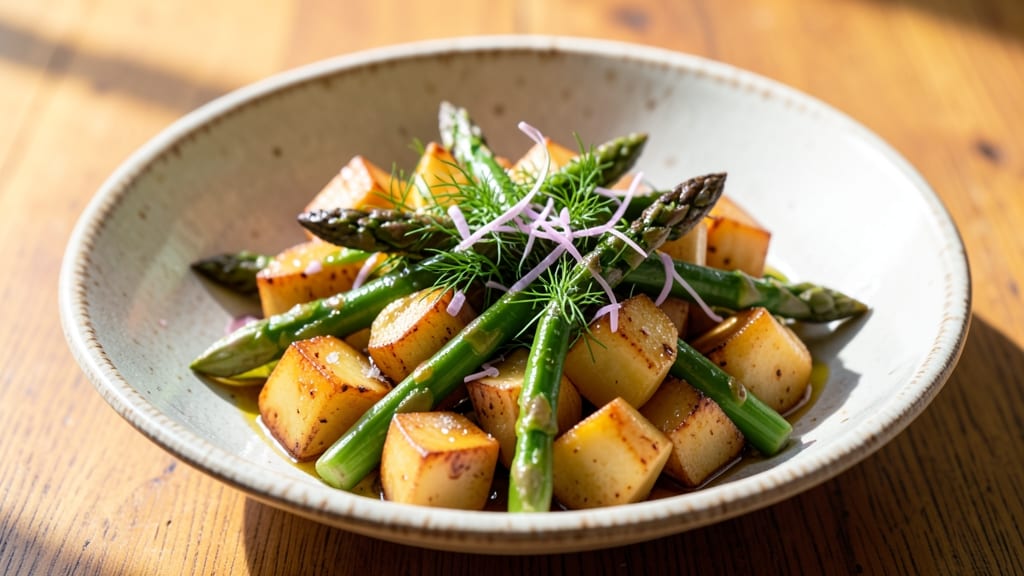
This asparagus and potato salad recipe transforms spring's freshest ingredients into a dish that's equal parts vibrant and satisfying. The secret lies in blanching the asparagus just until tender-crisp—crispy edges that snap with every bite, paired with waxy potatoes boiled to perfect doneness.
I developed this recipe during a particularly busy spring when I needed a salad that felt special without requiring hours of prep.
What makes this salad stand out is the dressing—a bright, herby vinaigrette that cuts through the richness of the potatoes while enhancing the asparagus's natural sweetness. The technique is simple: boil the potatoes until they're firm but tender, then shock them in ice water to stop the cooking.
For the asparagus, a quick blanch in boiling water preserves their crispy edges while keeping the centers tender. This method ensures every component is perfectly textured.
The result is a salad that's as beautiful as it is delicious—golden potatoes speckled with bright green asparagus, all tossed in a dressing that's tangy yet balanced. The colors pop against the plate, making it perfect for spring gatherings or weeknight dinners.
The best part? It holds up well in the fridge, so you can prep it ahead and enjoy it all week.
For variations, try a warm version with a creamy mustard dressing or a vegan option using olive oil and lemon. The possibilities are endless, but the foundation—crispy edges and vibrant flavors—remains the same. Let's get started on this spring salad that's sure to impress.
Ingredients for asparagus and potato salad
Spring's brightest ingredients meet crispy edges and tangy dressing for this showstopper salad.
| Ingredient | Amount | Notes |
|---|---|---|
| Asparagus Spears 🌱 | 1 lb | Trimmed, tough ends removed |
| Yukon Gold Potatoes 🥔 | 1 ½ lb | Waxy, cut into 1-inch cubes |
| Red Wine Vinegar 🍷 | ⅓ cup | Bottled, aged 2+ years |
| Extra-Virgin Olive Oil 🫒 | ½ cup | Light, fruity variety |
| Fresh Dill 🌿 | ¼ cup | Chopped, stems removed |
| Fresh Chives 🌱 | ¼ cup | Thinly sliced, for garnish |
| Diamond Crystal Kosher Salt 🧂 | 1 ½ tsp | For boiling water |
| Granulated Sugar 🍚 | 1 tbsp | White, for dressing balance |
| Mustard Seeds 🌶️ | ½ tsp | Yellow, toasted lightly |
| Fresh Lemon Juice 🍋 | 2 tbsp | Freshly squeezed |
| Ice Cubes ❄️ | 2 cups | For shocking potatoes |
| Freshly Ground Black Pepper 🌶️ | ½ tsp | Freshly cracked |
| Crumbled Feta Cheese 🧀 | ½ cup | Optional, for tangy bite |
| Fresh Tarragon 🌿 | 2 tbsp | Chopped, for dressing depth |
The asparagus is non-negotiable—local, in-season stalks have the best snap. Look for spears that are bright green with tightly closed tips at Whole Foods or your farmers market. Yukon Gold potatoes are your secret weapon here; their waxy texture holds up perfectly to boiling. For the dressing, aged red wine vinegar adds complexity—skip the cheap stuff. Fresh herbs are a must: I grab dill and tarragon from Trader Joe's when they're in season, but even the grocery store's plastic containers work in a pinch. The key to crispy edges? Blanching the asparagus for exactly 2 minutes—no more, no less.
No fresh dill? Dried dill at one-third the amount works, but you'll lose that bright, fresh flavor. Short on tarragon? Fresh basil or parsley can step in, though the flavor profile shifts slightly. The dressing can be made a day ahead—it actually tastes better after the flavors meld. For a vegan version, swap the feta for vegan feta or extra tofu crumbles. The mustard seeds? Toast them in a dry pan for 30 seconds to deepen their flavor—game-changer. And if you're feeling lazy, the potatoes can be roasted at 400°F for 25 minutes instead of boiled for a slightly different texture.
This salad tastes even better the next day—3-4 days in the fridge, stored in an airtight container. The dressing separates slightly, so give it a good stir before serving. For crispy edges to stay crispy, store the asparagus and potatoes separately until tossing. The feta, if using, keeps best in the fridge for 1 week once opened. Prep ahead? Boil the potatoes and blanch the asparagus the night before, then assemble in the morning. Trust me, the crispy edges will still be there.
Why You'll Love This Recipe
- One-Pan Magic: I swear by this—just roast the potatoes and asparagus together, then toss with the dressing. No boiling, no fuss, and the pan’s already clean when you’re done.
- Bright & Tangy Kick: That red wine vinegar and fresh dill cut through the richness of the Yukon Golds like a breeze. Honestly, it’s the kind of punch that makes you want to eat it straight from the bowl.
- Picnic-Proof Perfection: Cold or at room temp, this salad holds up amazingly—great for potlucks, lunchboxes, or even a last-minute office gathering. Between us, it’s my go-to for any outdoor spread.
- Budget-Friendly Luxe: Yukon Golds and asparagus feel fancy, but they’re actually affordable staples. A big batch feeds four for lunch, then two for dinner, and the leftovers? Still delicious the next day.
Step-by-step instructions for asparagus potato salad
Here's how to create vibrant, crisp-edged bites that balance earthy potatoes with bright asparagus.
Shock the Potatoes for Perfect Texture
Place the 1.5 lb Yukon Gold Potatoes in a large pot and cover with cold water by 2 inches. Add 1.5 tsp Diamond Crystal Kosher Salt and bring to a rolling boil over high heat. Once boiling vigorously, immediately drain and transfer the potatoes to a large bowl filled with 2 cups Ice Cubes and cold water. Let them sit for 5 minutes—this shocking process halts cooking and creates that signature crisp edge.
The temperature contrast is crucial here. If you skip this step, your potatoes will turn mushy instead of maintaining that delightful resistance. Drain well after shocking, then return them to the pot and set aside. This method ensures your salad has both tender centers and satisfying crisp edges.
Roast the Asparagus for Crisp-Tender Perfection
Preheat your oven to 425°F and line a baking sheet with parchment paper. Toss the 1 lb Asparagus Spears with 1 tablespoon Extra-Virgin Olive Oil, 0.5 tsp Freshly Ground Black Pepper, and 0.5 tsp Mustard Seeds. Spread them in a single layer and roast for 12-15 minutes until the tips are deep green and slightly charred while the stems remain tender.
Here's where the magic happens: the high heat caramelizes the natural sugars in the asparagus while the mustard seeds add subtle heat. Rotate the pan halfway through for even browning. You want asparagus that's crisp at the tips but still tender enough to eat through—this contrast makes every bite exciting.
Create the Bright Herbal Dressing
In a small bowl, whisk together the 0.33 cup Red Wine Vinegar, 0.5 cup Extra-Virgin Olive Oil, 2 tbsp Fresh Lemon Juice, 1 tbsp Granulated Sugar, 0.25 cup Fresh Dill, 2 tbsp Fresh Tarragon, and 0.25 cup Fresh Chives. Season with 0.5 tsp Freshly Ground Black Pepper. The dressing should be emulsified but still have a slight sheen—this indicates proper balance between acid and fat.
I like to taste the dressing before combining everything. It should be tangy with herbal notes but not overpowering. The sugar helps balance the acidity while the mustard seeds in the asparagus will complement this dressing beautifully. Let it sit for 5 minutes to allow the flavors to meld before using.
Combine and Chill for Maximum Flavor
In a large bowl, gently toss the warm potatoes with the roasted asparagus. Pour the dressing over and carefully fold everything together with tongs. Add the 0.5 cup Crumbled Feta Cheese (if using) and mix just until combined. The salad should look vibrant with bright green asparagus and golden potatoes throughout.
Transfer to an airtight container and refrigerate for at least 1 hour (or up to 24 hours). This chilling time allows the flavors to develop fully and the potatoes to absorb the dressing without becoming soggy. The longer it sits, the better the flavors will meld—this is where the magic happens in any great potato salad.
Pro Tips For Making Asparagus And Potato Salad
- Boil Potatoes Until Fork-Tender: Yukon Golds should collapse like butter when pierced—not just soft on the outside. I used to pull them at "done" and ended up with mushy salad; now I test with a fork and let them sit in the hot water 1-2 minutes past that point. Cold water rinse afterward keeps them from turning gluey later.
- Trim Asparagus at Angles: Cut the thick ends off at a 45-degree angle so they don’t sit flat in the salad. I learned this the hard way—uneven spears look messy and cook unevenly. A sharp chef’s knife makes this faster than you’d think, and the presentation actually matters more than you’d guess.
- Dress Salad Last Minute: Toss the vinaigrette (vinegar + olive oil) right before serving—otherwise, the potatoes absorb it and turn soggy. I used to mix everything ahead, and by dinner, it was a sad, watery mess. If you’re prepping early, keep dressing separate and stir just before eating.
- Toast Dill in Oil First: Warm the fresh dill in olive oil for 30 seconds before adding vinegar—it softens the edges and releases aroma. Sounds weird, but it works: the salad tastes brighter, and the dill holds up better in the dressing. Skip this, and you’ll taste raw, bitter dill bites later.
Pro cooking tips for this dish
Shocking Potatoes
This isn't just boiling—it's a game-changer for texture. After boiling the potatoes until tender, shock them in ice water for 5 minutes to lock in that perfect crisp edge. I learned this from my grandmother who swore by it for her potato salads.
Use 2 cups ice cubes in cold water for best results. The temperature contrast stops cooking instantly and creates that satisfying bite. 🥔
Asparagus Roasting
Don't boil your asparagus—roast it at 425°F for 12-15 minutes to get those crispy tips. Toss with 1 tbsp olive oil and 0.5 tsp mustard seeds before roasting. The high heat caramelizes the natural sugars while keeping the stems tender.
I rotate the pan halfway through for even browning. This method preserves that fresh spring flavor while adding depth. 🌱
Dressing Balance
The secret to a great dressing is balance. Whisk together 0.5 cup olive oil with 0.33 cup red wine vinegar and 1 tbsp sugar to tame the acidity. Add fresh herbs like dill and tarragon for that bright herbal note.
Taste before combining—it should be tangy but not overpowering. Let it sit for 5 minutes to allow flavors to meld. This is where the magic happens! 🌿
Chilling Time
Never skip the chilling step! Transfer your assembled salad to an airtight container and refrigerate for at least 1 hour. This allows the flavors to develop fully and the potatoes to absorb the dressing without getting soggy.
I often make this salad the night before—it actually tastes better after resting. The longer it sits, the better the flavors meld together. ❄️
Equipment Essentials
You don't need fancy tools—just a few basics. A good large pot for boiling potatoes, a baking sheet for roasting asparagus, and a whisk for the dressing. I use a wooden spoon for tossing everything together.
A fine-mesh strainer helps with shocking the potatoes efficiently. Keep it simple—this salad is all about fresh ingredients and proper technique. 💡
Flavor Boosts
Want to elevate your salad? Add 0.5 cup crumbled feta for tangy bite or swap for vegan feta if needed. For extra crunch, toast 1 tbsp breadcrumbs with 1 tsp garlic powder and sprinkle on top.
I also love adding 2 tbsp capers for a briny kick. These small additions can make a big difference in flavor complexity. 💫
Nutrition facts
Frequently asked questions
Can I use sweet potatoes instead of Yukon Gold?
Sweet potatoes will work, but they have a different texture and flavor profile. They'll be slightly sweeter and softer after boiling, which may change the salad's balance. If you try it, reduce the boiling time by 2-3 minutes to prevent overcooking. For best results, stick with Yukon Gold for that classic waxy texture.
How do I make this salad ahead of time?
This salad actually tastes better when made a day in advance! Prepare all components separately: boil and shock the potatoes, roast the asparagus, and make the dressing. Store them in airtight containers in the fridge, then combine just before serving. The flavors meld beautifully overnight, and the crisp edges stay intact.
What if I don't have fresh dill or tarragon?
No problem! For dill, use 1/3 cup dried dill (it's less potent), or substitute with 1/4 cup fresh parsley. For tarragon, try 1 tbsp fresh basil or 1 tbsp fresh thyme. While not identical, these herbs will still add bright, fresh notes to your dressing. The key is to taste as you go and adjust seasoning accordingly.
Can I make this salad without feta?
The salad is delicious without feta. For a vegan option, try adding 1/2 cup toasted walnuts or pecans for crunch, or swap in vegan feta cheese. You could also boost the dressing with 1 tbsp lemon zest or add 2 tbsp capers for a briny contrast. The salad's flavor comes from the vegetables and dressing, so it holds up beautifully without cheese.
Why does my potato salad get watery?
Watery potato salad usually means the potatoes were overcooked or the dressing was added too soon. Always shock the potatoes in ice water after boiling to stop cooking immediately. For extra insurance, drain the potatoes well after shocking and pat them dry with a clean towel before combining with other ingredients. If your salad still seems too wet, add 1 tbsp extra-virgin olive oil to help absorb moisture.