
Side Dishes
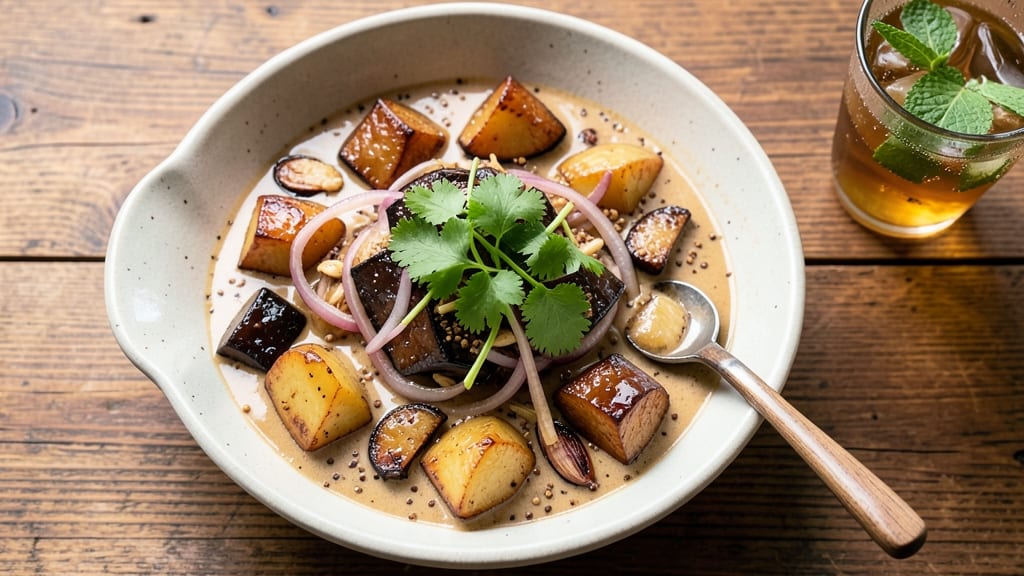
This aubergine and potato curry recipe delivers restaurant-quality depth with smoky coconut and aromatic spices that transform simple vegetables into a flavor-packed centerpiece. The secret lies in slow-sautéed spices that bloom into complex layers, while coconut milk creates a velvety base that balances earthy aubergine and starchy potatoes.
I developed this version after years of testing—it’s the one that finally earned raves from even the pickiest eaters.
The process starts with a tempering technique that unlocks deep flavor: whole spices toasted in oil until fragrant, then bloomed with garlic and ginger for maximum aromatic impact. This method builds flavor gradually, so you won’t need to rely on pre-made spice blends.
The curry simmers just long enough to melt the potatoes into creamy pockets while keeping the aubergine tender-crisp, with a finish that’s rich but never heavy.
What makes this curry stand out is its versatile heat profile—adjustable to suit any spice tolerance. The smoky coconut sauce pairs beautifully with basmati rice or warm naan, while fresh cilantro and lime brighten the final dish.
Each bite delivers that perfect harmony of textures: silky potatoes, meaty aubergine, and a sauce that’s both creamy and aromatic. This is comfort food that feels special.
Perfect for weeknight dinners or meal prep, this curry reheats beautifully without losing its depth. The recipe scales effortlessly, making it ideal for feeding a crowd or saving leftovers for lunches.
Whether you’re serving it as a main dish or pairing it with grilled meats, the flavors will leave everyone asking for seconds. Let’s get cooking—your taste buds won’t regret it.
Ingredients for aubergine and potato curry
Simple vegetables meet aromatic spices in this rich, smoky curry—no shortcuts needed.
| Ingredient | Amount | Notes |
|---|---|---|
| Aubergines 🍆 | 2 large | Peeled, cubed (1 inch) |
| Potatoes 🥔 | 1 ½ lb | Yukon gold, cubed (1 inch) |
| Coconut Milk 🥥 | 1 can | Full-fat, 13.5 oz |
| Onion 🧅 | 1 whole | Yellow, finely chopped |
| Garlic Cloves 🧄 | 6 cloves | Minced, fresh preferred |
| Fresh Ginger 🌿 | 1 inch | Peeled, grated |
| Canned Tomatoes 🍅 | 1 can | 14.5 oz, crushed |
| Vegetable Oil 🫒 | ¼ cup | For tempering spices |
| Yellow Curry Powder 🌶️ | 1 ½ tbsp | For depth, not heat |
| Ground Cumin 🌿 | 1 tsp | Toasted for aroma |
| Ground Coriander 🌿 | 1 tsp | Freshly ground preferred |
| Turmeric Powder 🌿 | ½ tsp | For vibrant color |
| Garam Masala 🌶️ | 1 tsp | For finishing touch |
| Salt 🧂 | 1 ½ tsp | Kosher or sea salt |
| Fresh Cilantro 🌿 | ¼ cup | Chopped, for garnish |
| Lime 🍋 | 1 whole | Juiced, for brightness |
The aubergines and potatoes are the stars here, but their quality matters. Organic Yukon gold potatoes from the grocery store's fresh produce section hold their shape beautifully, while heirloom aubergines add deeper flavor. If you can't find organic, just pick firm, unblemished produce—no need to splurge. The coconut milk should be full-fat, canned (not carton)—the richness is essential. Thai Kitchen or Goya brands work perfectly. For the spices, Penzeys Spices or the bulk bins at Whole Foods offer the freshest options, but don't stress if you've got pantry staples. The key is toasting the whole spices first—this unlocks their full aroma and sets the foundation for that restaurant-quality depth.
No fresh ginger? Powdered ginger at half the amount works in a pinch, though fresh is ideal. Short on curry powder? Mix 1 tsp turmeric, 0.5 tsp cumin, and 0.5 tsp coriander for a quick substitute. The tomatoes can be fresh, but San Marzano canned tomatoes are worth the investment—they're sweeter and more flavorful. For extra richness, add 2 tbsp of cashew cream (soaked cashews blended with water) to the finished curry. The lime should be fresh—bottled juice just won't cut it. If you're sensitive to heat, reduce the curry powder to 1 tbsp and add 1/4 tsp cayenne only if you're comfortable with spice. The tempering technique (toasting spices in oil) is non-negotiable—it's what builds that complex, smoky flavor profile.
This curry tastes even better the next day as the flavors meld together. Store in an airtight container in the fridge for up to 5 days, or freeze portions for 3 months. For meal prep, divide into containers with a layer of coconut milk on top to prevent browning. The potatoes will soften slightly when reheated, but that's part of the charm. Garnish with fresh cilantro and lime juice right before serving—that bright finish makes all the difference. If you're serving with rice, cook it separately and stir in a little coconut milk and butter for extra richness. Leftovers reheat beautifully in a skillet with a splash of water to restore moisture.
Why You'll Love This Recipe
- Here’s what sold me: the contrast. The aubergine gets that glorious caramelized edge from the pan, while the potatoes stay tender inside, all swimming in velvety coconut milk. Add a squeeze of lime at the end, and it’s like a hug in a bowl—rich but never heavy.
- One-Pot Magic: I swear by this recipe when I’m too tired to wash another pan. Slice the aubergine and potatoes, toss them in oil with onions and garlic, and let the spices work their magic—no chopping boards to clear, no extra bowls. The coconut milk ties everything together while you’re free to sip tea or scroll through your phone.
- Creamy Crisp Perfection: Here’s what sold me: the contrast. The aubergine gets that glorious caramelized edge from the pan, while the potatoes stay tender inside, all swimming in velvety coconut milk. Add a squeeze of lime at the end, and it’s like a hug in a bowl—rich but never heavy.
- Meal Prep MVP: Between us, this curry tastes better the next day. I make a big batch on Sundays, and it’s my go-to for lunches all week—just reheat and serve with rice or naan. Honestly, the flavors deepen overnight, and it’s the only curry my picky teen won’t complain about.
Step-by-step instructions for aubergine and potato curry
This curry delivers restaurant-quality depth with simple techniques you can master at home.
Prepare the Vegetables for Even Cooking
Start by peeling the 2 large aubergines and cutting them into 1-inch cubes. Place them in a colander and sprinkle with 1 teaspoon of salt from the 1.5 teaspoons total. Let them sit for 10 minutes while you prep everything else. This draws out excess moisture that would otherwise make your curry watery.
Next, peel and cube the 1.5 lb Yukon gold potatoes into 1-inch pieces. Rinse both the aubergine and potato cubes under cold water to remove any residual salt, then pat them completely dry with paper towels. This ensures they'll brown beautifully in the oil rather than steam in their own moisture.
Build the Spice Base in Vegetable Oil
Heat the 0.25 cup vegetable oil in a large, heavy-bottomed pot over medium heat. Add the finely chopped 1 whole onion and cook for 5-6 minutes until soft and translucent. This is your flavor foundation—don't rush it or the onions will burn.
Add the 6 minced garlic cloves and 1 inch peeled, grated fresh ginger. Cook for 1-2 minutes until fragrant and the raw garlic smell disappears. Here's the thing—if you smell sharp garlic after this time, your heat is too high. Reduce it immediately to prevent bitterness.
Toast the Spices for Maximum Flavor
Add the 1.5 tablespoons yellow curry powder, 1 teaspoon ground cumin, and 1 teaspoon ground coriander to the pot. Stir constantly for 1-2 minutes until the spices become aromatic and slightly darker in color. This toasting step develops their natural oils and deepens their flavor profile.
Next, add the 0.5 teaspoon turmeric powder and stir for 30 seconds to distribute evenly. The curry will take on a vibrant yellow color—this is your visual cue that the spices are properly incorporated. If you notice any scorching, immediately reduce the heat to medium-low to prevent burning.
Cook the Vegetables Until Tender
Add the drained aubergine and potato cubes to the pot along with the 1 can crushed canned tomatoes. Stir well to coat everything in the spice mixture. Bring to a simmer, then reduce heat to medium-low and cover partially. Cook for 20-25 minutes, stirring occasionally, until the potatoes are fork-tender and the aubergines have softened slightly.
Here's where patience pays off: The vegetables should be tender but still hold their shape. If they're breaking apart too soon, reduce the heat slightly. You want them to absorb the flavors without becoming mushy. This is also when you'll notice the aubergines releasing their natural oils—this is normal and contributes to the rich texture.
Finish with Coconut Milk and Garnishes
Pour in the 1 can full-fat coconut milk and stir gently to combine. The mixture will thicken slightly as it heats. Bring to a gentle simmer and cook uncovered for 10-12 minutes until the sauce has reduced enough to coat the back of a spoon. Taste and adjust seasoning with the remaining 0.5 teaspoon salt if needed.
Stir in the 1 teaspoon garam masala and cook for another 1-2 minutes to warm through. Remove from heat and let sit for 5 minutes to allow the flavors to meld. Garnish with the 0.25 cup chopped fresh cilantro and a squeeze of the juice from 1 whole lime. Serve immediately with steamed basmati rice to soak up every last bit of that smoky coconut sauce.
Pro Tips For Making Aubergine And Potato Curry
- CHAR THE AUBERGINE FIRST: I learned this the hard way—salting aubergine slices and letting them sit for 20 minutes before cooking removes bitterness and makes them absorb flavors like a sponge. Skip this, and your curry will taste like you’re fighting the vegetable the whole time.
- CUT POTATOES UNIFORM: Big chunks stay raw inside, small pieces turn to mush. Aim for 1.5cm cubes—big enough to hold shape but small enough to cook through in the same time as the aubergine. (Yes, even if you’re impatient like me.)
- DON’T RUSH THE COCONUT MILK: Stirring coconut milk constantly while simmering prevents a skin from forming, but if you walk away for even 5 minutes, you’ll end up scraping gummy bits off the pot. Keep it at a gentle simmer—this isn’t a race.
- SAUTÉ ONIONS LOW AND SLOW: After burning three batches, I finally figured out: onions for curry need 8–10 minutes on medium-low to caramelize properly. High heat just burns them before they soften. Patience here means the whole dish tastes deeper.
Storing and reheating your leftovers
Refrigerator Storage
Let your curry cool completely before transferring it to an airtight glass container—I love using Pyrex with snap-on lids for easy stacking. Store in the fridge for up to 5 days, but the flavors actually deepen overnight as the spices meld together. The coconut milk helps preserve moisture, so you won’t lose that creamy texture. Just
Freezer Prep Tips
For longer storage, portion the curry into freezer-safe containers or quart-sized silicone bags, leaving 1-inch headspace for expansion. Freeze for up to 3 months, but I recommend using it within 2 months for peak flavor. To prevent freezer burn, press out excess air and seal tightly. Thaw overnight in the fridge for best results—never microwave directly from frozen. 🥶
Stovetop Reheating
My preferred method is reheating on the stovetop to restore that silky texture. Pour the curry into a heavy-bottomed pot and add 2-3 tablespoons of water or coconut milk to prevent sticking.
Heat over medium-low heat for 8-10 minutes, stirring occasionally. If it thickens too much, add a splash more liquid. Taste and adjust salt—reheated curries often need a pinch more. 🔥
Microwave Shortcut
For quick lunches, transfer a portion to a microwave-safe dish, cover loosely with a damp paper towel, and heat on 50% power for 2-3 minutes. Stir, then continue in 30-second bursts until reaching 165°F.
Avoid overcooking—this can turn the aubergines mushy. A squeeze of lime after reheating brightens the flavors instantly. ✨
Garnish Before Serving
Fresh cilantro and lime juice are non-negotiable after reheating—they cut through any richness and wake up the spices. I also add a drizzle of coconut cream for extra luxury.
Serve with steamed basmati rice or warm naan to soak up every last bit of sauce. The contrast of textures makes this curry feel fresh, even after storage. 🌿
Make-Ahead Meal Prep
Double the batch and store half for later—this curry is perfect for meal prep Sundays. Divide into 4 portions and freeze three while keeping one fresh. When ready to eat, thaw overnight and reheat as directed.
The potatoes may soften slightly, but that’s part of the charm. Label containers with dates to track freshness. 📅
Nutrition facts
Frequently asked questions
Why do you salt the aubergines before cooking?
Salting removes excess moisture that would make your curry watery. The 10-minute salt bath draws out bitterness while helping the aubergines develop a better texture. Always rinse and pat them dry afterward—this ensures they brown beautifully in the oil instead of steaming.
Can I use sweet potatoes instead of Yukon gold?
Sweet potatoes add natural sweetness that pairs beautifully with the smoky coconut sauce. Use 1.5 lb sweet potatoes (peeled and cubed) and reduce the cooking time by 5 minutes since they soften faster. The flavor profile will be richer and slightly sweeter.
How do I adjust the spice level for sensitive eaters?
Reduce the curry powder to 1 tablespoon and omit the cayenne entirely. For extra warmth without heat, add ½ teaspoon ground cinnamon or ¼ teaspoon nutmeg instead. Always taste before serving—you can add more salt or lime to balance flavors.
What's the best way to prevent the curry from separating?
Stir gently when adding coconut milk and avoid boiling vigorously. For extra insurance, mix 1 teaspoon cornstarch with 2 tablespoons water and stir it in during the last 2 minutes of cooking. This creates a natural thickener that keeps everything cohesive.
Can I make this curry in an Instant Pot?
Yes! Sauté onions, garlic, and spices as directed, then add all ingredients except coconut milk. Seal and cook on High Pressure for 8 minutes, then quick-release. Stir in coconut milk and simmer on Sauté mode for 5 minutes to thicken. The pressure method cuts cooking time by half while preserving flavors.