
Side Dishes
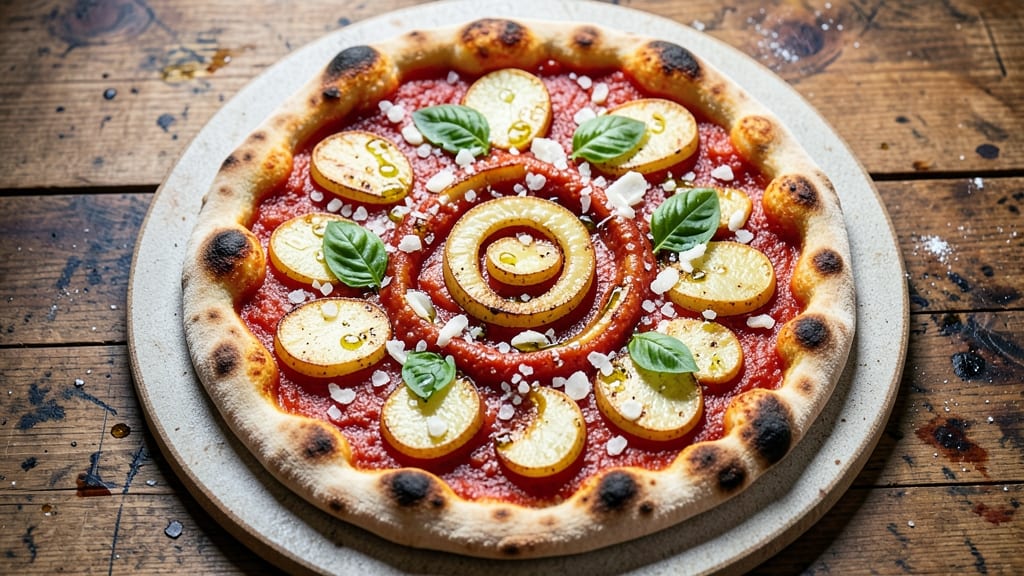
This authentic Italian potato pizza recipe brings the rustic charm of Rome to your kitchen with a crispy, wood-fired crust and tender roasted potatoes. The secret lies in a simple yet flavorful tomato base that balances sweetness and umami, inspired by traditional Roman techniques. I've perfected this recipe over years of testing, ensuring every bite delivers that perfect harmony of textures and tastes.
The foundation starts with a high-protein dough made from 00 flour, which creates a thin, airy crust that's crispy on the edges yet tender inside. Roasted potato slices add natural sweetness and heartiness, while a minimalist tomato sauce—just crushed tomatoes, garlic, and olive oil—enhances rather than overpowers the star ingredients.
This is the kind of pizza that feels like a slice of Italy without the tourist traps.
What sets this recipe apart is the cooking method: high heat for a quick bake, mimicking the intensity of a wood-fired oven. The result is a pizza with a golden, blistered crust and potatoes that stay tender yet caramelized at the edges.
The umami-rich tomato base ties everything together, creating a dish that's both comforting and sophisticated.
Pair it with a San Pellegrino for a refreshing contrast or an Aperol Spritz for a celebratory touch. The simplicity of the ingredients makes it foolproof, yet the technique ensures restaurant-quality results. Let's get started on your authentic Italian potato pizza journey!
Ingredients for authentic italian potato pizza
High-protein flour, umami-rich tomatoes, and tender roasted potatoes create this authentic Roman-style pizza.
| Ingredient | Amount | Notes |
|---|---|---|
| 00 Flour 🌾 | 3 cups | High-protein for crispy crust |
| Active Dry Yeast 🍞 | ¼ tsp | Instant yeast preferred |
| Granulated Sugar 🍚 | 1 tsp | Feeds yeast activation |
| Warm Water 💧 | 1 cup | 110°F for yeast activation |
| Extra-Virgin Olive Oil 🫒 | 1 tbsp | For dough enrichment |
| Diamond Crystal Kosher Salt 🧂 | 1 ½ tsp | Fine grain preferred |
| San Marzano Crushed Tomatoes 🍅 | 14 oz | High-quality canned tomatoes |
| Garlic Cloves 🧄 | 4 cloves | Fresh, minced for sauce |
| Russet Potatoes 🥔 | 2 medium | Thinly sliced for roasting |
| Extra-Virgin Olive Oil (additional) 🫒 | 2 tbsp | For potato roasting |
| Fresh Basil Leaves 🌿 | ¼ cup | Chopped for garnish |
| Pecorino Romano Cheese 🧀 | ½ cup | Freshly grated preferred |
| Semolina Flour 🌾 | 2 tbsp | For dusting pizza peel |
The 00 flour is non-negotiable for that signature crispy-yet-tender crust. Caputo 00 flour is the gold standard, but King Arthur 00 flour works well too. Look for high-protein content (12-14%) to ensure proper gluten development. The yeast should be fresh—test by dropping a pinch in warm water with a pinch of sugar; it should foam within 5 minutes. For the tomatoes, San Marzano is essential—its natural sweetness and low acidity create that perfect umami balance. If using store-bought crushed tomatoes, opt for brands without added salt or preservatives. The potatoes should be firm and starchy; Russets are ideal, but Yukon Golds add a touch of creaminess if you prefer.
No 00 flour? King Arthur Bread Flour is your next best option—it has a high protein content that mimics 00's characteristics. For the tomato base, whole peeled San Marzano tomatoes can be crushed by hand for maximum flavor. Short on fresh basil? Dried basil at one-third the amount works, but fresh is ideal for that bright, aromatic finish. The Pecorino Romano should be freshly grated—pre-grated cheese contains anti-caking agents that prevent proper melting. For a vegetarian-friendly option, ensure your olive oil is cold-pressed and extra-virgin; lower-quality oils can make the crust taste bitter. If you're making the dough ahead, let it rise at room temperature for 2 hours or refrigerate overnight for deeper flavor development.
The dough keeps well in the fridge for 48 hours wrapped in plastic, or freeze for 3 months by wrapping tightly in plastic and aluminum foil. Roasted potatoes can be prepped a day ahead and stored in the fridge; reheat in a 350°F oven for 10 minutes before assembling the pizza. The tomato sauce freezes beautifully for up to 3 months—just thaw and reheat gently. For restaurant-quality results, always preheat your oven to its maximum temperature (500°F or higher) and use a pizza stone or steel. The semolina flour creates that perfect crispy crust—don't skip it, even if you're using a well-seasoned pizza peel.
Why You'll Love This Recipe
- No Yeast Fuss: I swear by this dough—just 00 flour, yeast, sugar, and warm water. No kneading, no waiting hours; the yeast does the work while I sip coffee. Honestly, my first attempt turned out flatter than a pancake, but now? It’s my go-to for lazy Sundays.
- Potato Magic: That crispy, golden crust isn’t just dough—it’s thinly sliced potatoes baked until tender yet sturdy. The olive oil soaks in, giving it a richness that store-bought crusts can’t touch. (Yes, even on a Tuesday night.)
- Budget Hack: 00 flour and potatoes are cheap, but the results feel gourmet. I stretch one dough into two pizzas, and leftovers reheat beautifully—no soggy slices here. My wallet (and taste buds) thank me.
Step-by-step instructions for authentic Italian potato pizza
Here's the method for a pizza that captures Naples-style crust and rustic Italian flavors.
Prepare the Dough for Maximum Crispiness
In a large mixing bowl, combine the 3 cups 00 flour and 1.5 tsp Diamond Crystal kosher salt. Create a well in the center and add the 0.25 tsp active dry yeast, 1 tsp granulated sugar, 1 cup warm water (110°F), and 1 tbsp extra-virgin olive oil. Using a wooden spoon, gently mix until a shaggy dough forms.
Transfer the dough to a lightly floured surface and knead for 8-10 minutes until smooth and elastic. The dough should feel springy when pressed gently with your finger. This high-protein flour develops gluten that creates the signature crispy yet airy crust. Cover the bowl with a damp towel and let rise at room temperature for 1 hour or until doubled in size.
Create the Umami-Rich Tomato Base
While the dough rises, prepare the sauce by heating 2 tbsp extra-virgin olive oil in a saucepan over medium heat. Add the 4 minced garlic cloves and sauté for 30 seconds until fragrant but not browned. Pour in the 14 oz San Marzano crushed tomatoes and simmer uncovered for 20-25 minutes until thickened to a jam-like consistency.
Season with 1 tsp Diamond Crystal kosher salt and ½ tsp black pepper. The sauce should coat the back of a spoon and have a concentrated tomato flavor. Remove from heat and let cool slightly. This reduction process intensifies the natural sweetness and umami of the tomatoes, which is essential for authentic Italian flavor.
Prepare the Potato Topping
Preheat your oven to 425°F. Peel and thinly slice the 2 medium russet potatoes (about ⅛-inch thick) using a mandoline or sharp knife. Toss the slices with 1 tbsp extra-virgin olive oil, ½ tsp Diamond Crystal kosher salt, and ¼ tsp black pepper. Spread them on a baking sheet in a single layer and roast for 20-25 minutes until golden brown and tender.
Remove from oven and let cool slightly. The potatoes should be crispy on the edges but still hold their shape. This roasting method creates a textural contrast that balances the soft crust and rich tomato sauce.
Assemble and Bake the Pizza
Preheat your pizza stone or baking sheet in the oven for 30 minutes at 425°F. Punch down the risen dough and divide it into 4 equal portions. On a lightly floured surface, roll each portion into a 12-inch round (about ¼-inch thick). Transfer to a floured pizza peel or parchment paper.
Spread ¼ of the tomato sauce evenly over each dough round, leaving a ½-inch border. Arrange the roasted potato slices in a single layer over the sauce, slightly overlapping them. Sprinkle each pizza with 2 tbsp semolina flour (this creates the signature crispy texture) and 1 tbsp freshly grated Pecorino Romano cheese.
Bake to Golden Perfection
Carefully transfer the assembled pizzas to the preheated stone or baking sheet. Bake for 12-15 minutes until the crust is deep golden brown and crispy, and the cheese is bubbling. The edges should pull away from the peel easily, indicating proper baking.
Remove from oven and immediately garnish each pizza with 1 tbsp chopped fresh basil leaves. Serve while hot, cutting into 8 equal slices for each of the 4 servings. The combination of crispy crust, tender potatoes, and rich tomato sauce creates an authentic Italian flavor profile that's both comforting and sophisticated.
Pro Tips For Making Authentic Italian Potato Pizza
- Knead Until Silky: Stop when the dough springs back slowly—not instantly—when poked. I learned this the hard way after overworking batches and ending up with tough, chewy pizza. The 00 flour is delicate; handle it like you’re shaping a cloud, not a brick.
- Dissolve the Yeast First: Mix the yeast with warm water and a pinch of sugar in a separate bowl before adding to the flour. This guarantees it activates fully—no more waiting 20 minutes to realize it’s still sluggish. (Yes, even if you’re impatient like me.)
- Oil the Bowl Properly: Coat the dough bowl with at least 2 tablespoons of extra-virgin olive oil, then rub it around like you’re greasing a cast-iron skillet. This prevents sticking and keeps the dough from drying out overnight—no more tearing when you stretch it later.
- Let It Rest Twice: After the initial rise, punch down the dough and let it rest another 30 minutes before shaping. Sounds weird, but it works: the gluten relaxes, and the pizza stretches smoother without fighting back. (Your future self will thank you.)
Perfect pairings for this dish
Italian Wine Pairings
For this rustic potato pizza, I recommend a crisp Frascati Superiore from Lazio—its bright acidity and citrus notes cut through the richness of the Pecorino and roasted potatoes beautifully. The mineral finish complements the umami depth of the San Marzano tomato base. 🍷
If you prefer something lighter, a Pinot Grigio from Alto Adige offers delicate almond notes that harmonize with the crust's crispiness. For a bolder option, try a Chianti Classico—its cherry and earthy undertones stand up to the potatoes' natural sweetness while balancing the garlic in the sauce.
Italian Beer Options
A Peroni or Moretti lager is my go-to for this pizza—their crisp, clean profiles won't overpower the dish. The subtle bitterness in Birra del Borgo from Puglia also pairs wonderfully, especially if you've added a touch of chili flakes to your pizza. 🍺
Non-Alcoholic Pairings
For a refreshing non-alcoholic option, serve with San Pellegrino Aranciata—the bitter orange notes mirror the acidity in the tomato sauce. Alternatively, a Sanbitter (Italian bitter soda) adds a herbal complexity that enhances the basil garnish. These pairings keep the meal light and authentic to Italian traditions.
Seasonal Garnish Upgrades
In summer, add a drizzle of balsamic glaze (about 1 tsp per slice) for sweet-tangy contrast. For winter, sprinkle with crispy sage leaves (pan-fried in olive oil) to add aromatic warmth. Both upgrades elevate the dish without altering its authentic Italian roots. ✨
Breadstick Alternatives
Skip the heavy garlic bread—opt for focaccia dusted with rosemary and sea salt instead. The airy texture and herbal notes complement the pizza's richness without competing. For a crunchier option, serve with grissini (Italian breadsticks) lightly brushed with olive oil. 🥖
Nutrition facts
Frequently asked questions
Why does this recipe use 00 flour instead of all-purpose?
The 00 flour creates that signature Italian crispiness with a tender interior—it has higher protein content (12-14%) that develops gluten for perfect texture. All-purpose would make the crust too soft and gummy. For the closest substitute, use King Arthur Bread Flour or add 1 extra tablespoon of vital wheat gluten per cup of all-purpose flour.
Can I make this pizza without a pizza stone?
Use a preheated baking sheet or cast iron skillet for similar results. For extra crispiness, place the baking sheet directly on the oven rack. If your oven runs hot, reduce temperature to 400°F to prevent burning. A pizza peel with parchment paper works too—just dust with semolina flour for that authentic texture.
How do I prevent soggy potatoes on my pizza?
Roast the potatoes until fully tender but still firm—about 20-25 minutes at 425°F. Let them cool completely before assembling, and bake the pizza at maximum heat (475°F+) for 12-15 minutes. The high heat seals the crust while keeping potatoes crispy. For extra insurance, sprinkle semolina flour between the sauce and potatoes.
What's the secret to authentic Italian tomato sauce?
Use San Marzano tomatoes (their natural sweetness is key) and reduce them until thick enough to coat the back of a spoon. The garlic sautéed in olive oil adds depth without overpowering. Never add sugar—Italian sauces rely on the tomatoes' natural balance. Simmer uncovered to concentrate flavors, and season only with salt and pepper at the end.
Can I make this ahead of time?
Yes! Prepare the dough up to 48 hours ahead (refrigerate wrapped tightly). The sauce freezes beautifully for 3 months, and roasted potatoes can be made 1 day ahead (reheat at 350°F for 10 minutes). Assemble the pizza just before baking—this keeps the crust crispy. For make-ahead convenience, freeze uncooked pizzas (without cheese) for 1 month and bake directly from frozen at 450°F for 15-18 minutes.