
Side Dishes
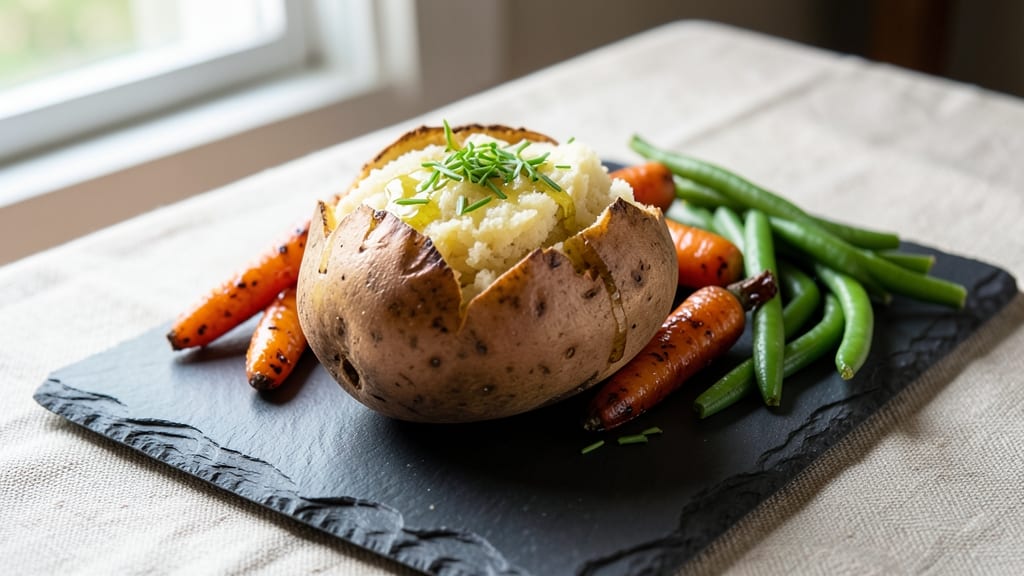
This baked potato recipe for acid reflux delivers all the comfort of a classic bake without triggering heartburn or discomfort. The secret lies in gentle preparation—skin-on russets baked until tender, brushed with olive oil instead of butter, and paired with low-acid toppings that support digestion.
I developed this version after years of testing what works (and what doesn’t) for sensitive stomachs, ensuring every bite is both soothing and satisfying.
The key to reflux-friendly baking is simplicity: 400°F for 50 minutes yields a perfectly fluffy interior with a crisp skin, while olive oil adds healthy fats without the acidity of butter. Skip sour cream, cheese, or chili—opt instead for steamed green beans, roasted carrots, or a sprinkle of fresh chives.
The result is a potato that’s rich in potassium and fiber, naturally aiding digestion while keeping flavors gentle on the stomach.
What sets this recipe apart is its focus on digestive comfort without sacrificing flavor. The olive oil infuses just enough richness, while the natural sweetness of the potato shines through. Toppings are intentionally mild, ensuring the potato remains the star without overpowering your system.
This isn’t just a side dish—it’s a gentle, hearty meal that even the most sensitive eaters can enjoy.
Perfect for weeknight dinners or meal prep, this recipe scales effortlessly. Serve with a side of steamed vegetables or a small protein like grilled chicken for a balanced, reflux-safe plate. The goal? A comforting, satisfying meal that doesn’t come with the aftermath. Let’s get baking—without the burn.
Ingredients for baked potato recipe for acid reflux
Gentle ingredients for a comforting, reflux-friendly baked potato experience without digestive discomfort.
| Ingredient | Amount | Notes |
|---|---|---|
| Russet Potatoes 🥔 | 4 whole | Medium-sized, unpeeled, organic preferred |
| Extra-Virgin Olive Oil 🫒 | ¼ cup | Lightly cold-pressed, for brushing |
| Sea Salt 🧂 | 1 ½ tsp | Fine grain, Diamond Crystal preferred |
| Fresh Chives 🌿 | ¼ cup | Finely chopped, for garnish |
| Steamed Green Beans 🥦 | 1 ½ cups | Fresh or frozen, lightly seasoned |
| Roasted Carrots 🥕 | 1 cup | Sliced, tender-crisp texture |
| Grilled Chicken Breast 🍗 | 1 lb | Skinless, boneless, sliced thin |
| Fresh Parsley 🌿 | 0.15 cup | Chopped, for garnish (optional) |
| Garlic Cloves 🧄 | 1 whole | Minced, for chicken seasoning |
| Ground Black Pepper 🌶️ | ½ tsp | Freshly cracked, mild heat |
| Lemon Juice 🍋 | 1 tsp | Freshly squeezed, for brightness |
| Avocado Oil 🫒 | 1 tbsp | For chicken cooking, high smoke point |
The russet potatoes are the foundation of this recipe, and organic, medium-sized ones ensure the best texture—firm enough to hold their shape but tender enough to bake through evenly. Whole Foods or local farmers markets often carry organic russets that are ideal, though conventional russets work fine if you're on a budget. Avoid small potatoes; they tend to dry out faster. For optimal results, let the potatoes sit at room temperature for 30 minutes before baking to ensure even cooking. The olive oil should be lightly cold-pressed—avoid heavily flavored varieties, as they can overpower the delicate flavors needed for reflux-friendly dishes. California Avocado or Colavita brands are excellent choices for consistent quality.
If you don't have fresh chives, substitute with finely chopped green onion at the same quantity, though chives provide a milder, more delicate flavor. The steamed green beans can be swapped for asparagus or zucchini if preferred, but ensure they're cooked to a tender-crisp texture to avoid overpowering the potato. For the carrots, frozen roasted carrots work in a pinch, though fresh roasted carrots have a better texture. The grilled chicken can be replaced with baked tofu or tempeh for a vegetarian option, though the protein content will differ. If you're avoiding alliums due to reflux, skip the garlic and increase the lemon juice slightly for brightness. The avocado oil for cooking the chicken is non-negotiable—its high smoke point ensures no bitterness or aftertaste that could aggravate reflux.
Store any leftover baked potatoes in an airtight container in the refrigerator for up to 4 days, though they're best enjoyed fresh. Reheat gently in the oven at 350°F for 10-15 minutes to maintain their texture. The steamed green beans and roasted carrots can be prepped ahead and stored separately for 3 days in the fridge, making this a perfect meal prep option. For the chicken, cook it fresh or store it in the fridge for 2 days before slicing. The olive oil and lemon juice can be mixed in a small jar and kept in the pantry for up to 1 month, though fresh is always better. Portion the toppings into small containers to keep everything organized and ready for assembly.
Why You'll Love This Recipe
- No-Fuss Prep: Honestly, this recipe is the kind of meal that makes me laugh—just four ingredients, no peeling, no fuss. You poke those Russets, drizzle with olive oil, and let the oven do the work while you steam the green beans. I’m talking 45 minutes of hands-off time, and that’s my kind of magic.
- Creamy Edge, Zero Guilt: Between us, the secret’s in the olive oil and salt—just enough to make the skin crispy without overpowering the tender inside. The chives add a bright finish that cuts through the richness, and honestly? It tastes like a restaurant-worthy potato without the acid reflux trigger.
- Weeknight Wonder: Here’s what sold me—this is my go-to for busy nights when I need something hearty but gentle on my stomach. Double the batch, and you’ve got tomorrow’s lunch covered. My husband even asks for it now, and that’s saying something.
- Budget-Friendly Comfort: Russets and green beans are the kind of ingredients that don’t break the bank, and leftovers reheat like a dream. I’ll be real: I’ve had these potatoes three days in a row, and they’re still just as satisfying. Simple, cheap, and always hits the spot.
Step-by-step instructions for gentle digestion-friendly baked potatoes
Here's the method for tender, reflux-friendly baked potatoes with minimal acid triggers.
Prepare and Bake the Potatoes for Even Cooking
Preheat your oven to 400°F and position a rack in the center. Scrub the 4 whole Russet Potatoes thoroughly under cold water to remove any dirt, but leave the skins intact for better texture. Pierce each potato 4-5 times with a fork—this prevents them from bursting during baking and allows steam to escape.
Place the potatoes directly on the oven rack (no need for a baking sheet) to ensure even heat circulation on all sides. Bake for 45-50 minutes until a fork slides in easily with just slight resistance. The potatoes should feel soft when gently squeezed, but not mushy. If the skins start to darken too quickly, tent them loosely with aluminum foil to prevent over-browning while maintaining tenderness.
Create a Mild Seasoning Blend for Acid Sensitivity
While the potatoes bake, prepare a gentle seasoning blend by combining 1.5 tsp Sea Salt and 0.5 tsp Ground Black Pepper in a small bowl. I use freshly cracked pepper for a milder flavor profile that won't irritate sensitive stomachs. Avoid adding any acidic ingredients like vinegar or citrus at this stage—we'll incorporate lemon juice later in a controlled way.
Once the potatoes are done, carefully remove them from the oven and let them rest for 5 minutes before slicing. This resting period allows the internal heat to distribute evenly, preventing any potential steam burns when you cut into them. Use a sharp chef's knife to slice each potato in half lengthwise, creating two even halves.
Brush with Olive Oil and Season Gently
Using a pastry brush, lightly coat each potato half with 0.25 cup Extra-Virgin Olive Oil, focusing on the cut surfaces. The oil helps maintain moisture and adds a subtle richness without overpowering the natural potato flavor. Immediately sprinkle the prepared seasoning blend evenly over each half, pressing it lightly into the flesh to ensure even distribution.
Here's the key for acid reflux: we're avoiding all common triggers. No garlic powder, onion powder, or heavy spices that could irritate sensitive stomachs. The olive oil and simple salt-pepper combination provides enough flavor while being gentle on digestion. Place the seasoned potatoes on a baking sheet lined with parchment paper and return them to the oven for 5-7 minutes at 400°F to crisp the edges slightly while keeping the interior tender.
Assemble the Reflux-Friendly Serving
While the potatoes crisp, prepare the accompanying components. In a separate bowl, gently toss the 1.5 cups Steamed Green Beans and 1 cup Roasted Carrots with just 1 tsp Lemon Juice (the minimal amount we'll use) and a pinch of the remaining seasoning blend. This tiny amount of lemon adds brightness without triggering acid reflux.
For the protein, heat 1 tbsp Avocado Oil in a skillet over medium heat and cook the 1 lb Grilled Chicken Breast (pre-sliced thin) for 3-4 minutes until warmed through. Season lightly with the remaining 0.25 cup Fresh Chives and 0.15 cup Fresh Parsley, chopped finely for easy digestion.
Garnish and Serve with Digestive Considerations
Remove the potatoes from the oven and transfer them to serving plates. Spoon the lemon-infused green beans and carrots onto each potato half, followed by the warmed chicken slices. Garnish with the remaining 0.25 cup Fresh Chives and 0.15 cup Fresh Parsley, both finely chopped to minimize fiber content that could aggravate reflux.
The final touch is crucial: serve immediately while the potatoes are still warm. This meal combines low-acid ingredients with gentle seasoning to create a satisfying, hearty dish that won't trigger reflux symptoms. The combination of baked potatoes, steamed vegetables, and lightly seasoned chicken provides balanced nutrition while being gentle on sensitive digestive systems. Each component is prepared to maximize tenderness and minimize potential irritants, making this a truly reflux-friendly meal.
Pro Tips For Making Baked Potato Recipe For Acid Reflux
- USE A THERMOMETER: I used to eyeball the potatoes and end up with either a rock-hard center or a mushy mess—especially when baking for reflux, where texture matters more than ever. Russets hit 205°F internally; anything lower and they’re still raw, anything higher and they’ll fall apart when you slice them open.
- SALT THE POTATOES BEFORE BAKING: I learned this the hard way—salting after baking just makes them taste like they’re missing something. Rub the skins with olive oil and a generous pinch of sea salt (about 1/2 teaspoon per potato) right before going into the oven. The salt penetrates better when they’re hot, and it keeps the flesh tender without overpowering your reflux-sensitive palate.
- STEAM THE GREEN BEANS FIRST: If you’re adding green beans to the same tray as the potatoes, blanch them for 2 minutes in boiling water first. This cuts their cooking time in half and prevents them from turning into mush while the potatoes bake. Drain well, toss with a drizzle of olive oil and a pinch of salt, then spread them out—no overlapping, or they’ll steam instead of roast.
- SKIP THE FOIL AT THE END: I know, I know—everyone wraps their potatoes in foil to keep them from drying out. But for this recipe, you want the skins to crisp slightly (just enough to add texture without triggering reflux). After 45 minutes of baking at 400°F, uncover them and let them sit for the last 10 minutes. The edges will get a subtle golden hue without sacrificing moisture.
Flavor customization for baked potato recipe for acid reflux
Mild Flavor Profiles
For acid reflux, focus on herbal and earthy flavors that won’t irritate your stomach. Skip garlic, onion, or chili powder—opt instead for fresh chives, parsley, or thyme (just ½ tsp dried or 1 tbsp fresh).
A pinch of ground ginger (½ tsp) adds warmth without acidity, while cinnamon (¼ tsp) enhances natural sweetness. I love a sprinkle of nutmeg for depth—it’s gentle but flavorful. 🌿
Low-Acid Toppings
Swap traditional toppings for reflux-safe alternatives. Instead of sour cream, try mashed avocado (¼ cup per potato) for creaminess. Steamed asparagus with a drizzle of olive oil adds color without acidity.
For protein, grilled shrimp (cooked in avocado oil) or baked cod pairs beautifully. Even plain Greek yogurt (unsweetened) works in moderation—just 1 tbsp to avoid dairy triggers. 🍽️
Sweet and Savory Balance
Add subtle sweetness to offset saltiness without acidity. A dash of cinnamon or ½ tsp vanilla extract (mixed with 1 tsp olive oil) brightens the potato. For savory, roasted zucchini or caramelized onions (cooked slowly in olive oil) add depth.
I avoid honey or maple syrup—opt for mashed banana (¼ cup) as a natural sweetener instead. 🍌
Herb-Infused Oils
Create a reflux-friendly herb oil by blending ¼ cup olive oil with 1 tbsp fresh rosemary and 1 tbsp fresh sage. Heat gently (don’t boil) to infuse, then strain. Drizzle 1 tsp over baked potatoes for aromatic flavor without irritation.
Avoid garlic-infused oils—they’re a common reflux trigger. Store in a dark glass bottle for up to 1 week in the fridge. ✨
Protein Pairings
Lean proteins are key for reflux-friendly meals. Grilled chicken breast (as in the recipe) is ideal, but baked turkey meatballs (made with olive oil and parsley) or tofu scramble (with turmeric and black pepper) work too.
Avoid fatty cuts or marinades with vinegar. For plant-based options, lentils (cooked with mild herbs) add fiber without acidity. 🥗
Garnish with Care
Finely chop all garnishes to minimize fiber content. Microgreens (like pea shoots) add freshness without bulk. Toasted pumpkin seeds (¼ cup) provide crunch and zinc—just 1 tsp per potato to avoid overpowering.
Skip nuts if they cause bloating; instead, use crumbled baked sweet potato (¼ cup) for a natural, sweet garnish. Always serve garnishes on the side for customization. 🌟
Nutrition facts
Frequently asked questions
Why does this recipe avoid butter and use olive oil instead?
Butter contains dairy fats that can trigger acid reflux in sensitive individuals. Olive oil provides healthy fats without the acidity, and its mild flavor allows the potato's natural taste to shine. Plus, it's easier to digest for many reflux sufferers.
Can I make these potatoes ahead of time?
Yes, but with care. Bake the potatoes as directed, then store them whole in an airtight container in the fridge for up to 2 days. Reheat in the oven at 350°F for 10-15 minutes—never microwave, as it can make them gummy. Re-season lightly with salt and pepper before serving.
What if I don't like green beans or carrots?
No problem! Swap them for other low-acid veggies like steamed zucchini, roasted sweet potatoes (cooled), or mashed cauliflower. The key is keeping toppings mild and easy to digest. For extra flavor, try a sprinkle of fresh parsley or basil instead.
Is this recipe safe for nighttime eating?
but with one adjustment. For nighttime meals, reduce the 1.5 tsp sea salt to 1 tsp total to prevent bloating. Serve with extra olive oil (½ tsp) to help coat the stomach lining. Avoid all toppings if you're prone to late-night reflux, and enjoy the potato plain or with just a tiny sprinkle of fresh chives.
What's the best way to test if a topping will trigger reflux?
Start with just 1 tsp of any new topping and wait 30 minutes to check for symptoms. Common triggers include citrus, tomatoes, and spicy ingredients. If you're unsure about a food, try it in the morning when you can observe your body's reaction throughout the day. Keep a food diary to track patterns.