
Soups & Stews
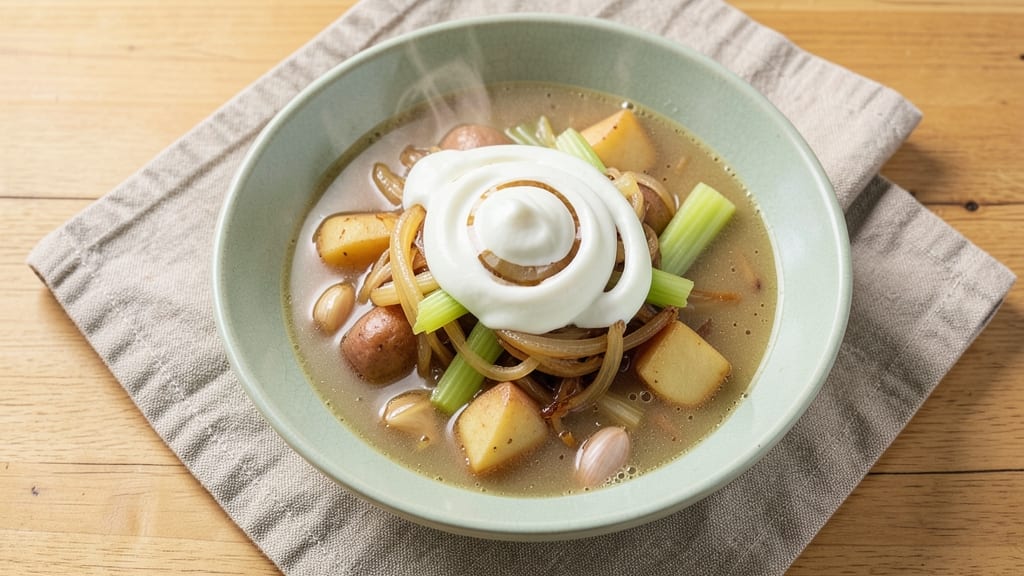
This basic potato soup recipe with chicken broth delivers the comforting, velvety texture we crave when temperatures drop. 💛 The secret lies in slow-simmering potatoes until they're fork-tender, then blending just enough to create that signature creamy consistency without heavy cream.
I developed this version after years of perfecting Nana Mae's diner-style soup—rich, flavorful, and simple enough for weeknight dinners.
What makes this recipe special is the balance between rustic simplicity and restaurant-quality depth. Quality chicken broth forms the foundation, while onions and celery build aromatic layers that infuse every spoonful.
The potatoes soften perfectly during the 45-minute simmer, creating that ideal tender-crisp texture that keeps the soup satisfyingly substantial.
By the time you're done, you'll have a steaming bowl of golden potato soup with just the right amount of creaminess—no heavy dairy needed.
The aroma alone will fill your kitchen with warmth, while the first bite delivers that perfect harmony of savory broth, tender potatoes, and subtle herbal notes from thyme and bay leaf.
Serve with crusty bread for dipping or a sprinkle of fresh parsley for brightness. This soup scales beautifully for crowds while still being perfect for solo servings. The best part? It tastes even better the next day as flavors meld further.
Ingredients for basic potato soup recipe chicken broth
Twelve simple ingredients transform into Nana Mae's velvety potato soup magic.
| Ingredient | Amount | Notes |
|---|---|---|
| Yellow Onions 🧅 | 1 medium | Diced into small pieces |
| Celery Stalks 🧅 | 3 whole | Diced into small pieces |
| Garlic Cloves 🧄 | 3 cloves | Minced for aromatic depth |
| Russet Potatoes 🥔 | 2 lbs | Peeled and cubed evenly |
| Chicken Broth 🍲 | 6 cups | Low-sodium preferred |
| Heavy Cream 🥛 | ½ cup | Full-fat for richness |
| Bay Leaves 🌿 | 2 whole | Removed before serving |
| Fresh Thyme 🌿 | 1 tbsp | Leaves only, chopped |
| Salt 🧂 | 1 ½ tsp | Kosher salt preferred |
| Black Pepper 🌶️ | ½ tsp | Freshly ground preferred |
| Fresh Parsley 🌿 | ¼ cup | Chopped for garnish |
| Butter 🧈 | 2 tbsp | Unsalted for flavor control |
The onions and celery are your flavor anchors—sweat them slowly in butter until soft but not browned. Whole Foods or Trader Joe's carry pre-cut mirepoix if you're short on time, but fresh is always better. Potatoes should be uniform size so they cook evenly—Russets hold up perfectly to the long simmer. Skip the pre-cubed bags; peeling and cutting yourself ensures no tough skins. The broth? Homemade is ideal, but Swanson or Pacific Foods low-sodium boxes work in a pinch.
No heavy cream? Greek yogurt or coconut milk adds creaminess without heaviness. Fresh thyme is ideal, but dried at one-third the amount works too. The bay leaves infuse magic—remove them before serving or you'll get that bitter bite. For extra depth, add a splash of white wine or apple cider when sautéing the aromatics. If your potatoes are still firm after 45 minutes, cover and simmer 10 more minutes—they'll keep cooking in the broth.
This soup tastes even better the next day as flavors meld. Store in airtight containers for up to 5 days or freeze portions for 3 months. I always double the batch—perfect for lunches. Garnish with parsley right before serving (it wilts fast). The crusty bread? Store-bought baguettes work great—just toast until golden.
Why You'll Love This Recipe
- I swear by this one: chop the onions, celery, and garlic once, then let them simmer while I peel potatoes—no rushing, no stress. The broth does all the work while I sip my coffee.
- Make a double batch on Sunday: the soup reheats beautifully for lunches, and the leftovers? Still creamy and delicious by Wednesday. (Yes, even my picky teenager asks for seconds.)
Step-by-step instructions for creamy potato soup
Here's how to transform humble ingredients into soul-warming, velvety potato soup.
🍳 Step 1: Sauté the Aromatic Base
Melt the 2 tbsp butter in a large pot over medium heat until it foams. Add the diced yellow onions and diced celery stalks, stirring frequently for 5-6 minutes until they soften and release their moisture. You'll know they're ready when they smell sweet and the onions become translucent.
Here's the thing—don't rush this step. The vegetables need time to break down and develop flavor. I like to add the minced garlic cloves and chopped fresh thyme during the last 30 seconds of cooking so they don't burn. Stir constantly and watch for that beautiful garlic aroma—it signals your base is ready for the next phase.
🥘 Step 2: Build the Potato Foundation
Add the peeled and cubed russet potatoes to the pot along with the 6 cups chicken broth, 2 whole bay leaves, 1.5 tsp salt, and 0.5 tsp black pepper. Bring everything to a rolling boil over high heat, then immediately reduce to a gentle simmer. This is where the magic happens—you want the potatoes to cook slowly and absorb all that delicious broth.
Cover the pot and let it simmer for 15-20 minutes until the potatoes are fork-tender. I check for doneness by piercing a potato with a knife—it should slide in easily with just slight resistance. If the soup looks too thin at this point, don't worry. The potatoes will release starch as they cook, thickening the soup naturally. This is the moment that matters: patience ensures creamy texture without lumps.
🔥 Step 3: Simmer Until Perfectly Creamy
Once the potatoes are tender, remove the bay leaves and use an immersion blender to purée the soup directly in the pot until smooth. If you don't have an immersion blender, carefully transfer about half the soup to a blender, blend until smooth, then return it to the pot. Stir in the 0.5 cup heavy cream and let the soup simmer uncovered for another 5-7 minutes.
This final simmer is crucial—it allows the flavors to meld and the cream to incorporate smoothly. You'll notice the soup becomes even more velvety as it sits. Taste and adjust seasoning if needed. I know it seems weird, but trust me—adding a pinch more salt at this stage makes all the difference. The soup should be rich, comforting, and perfectly balanced between creamy and hearty.
🍽️ Step 4: Finish and Serve Warm
Ladle the soup into bowls and garnish each serving with chopped fresh parsley. The parsley adds a bright contrast to the creamy soup and makes it look beautiful. Serve immediately while still warm—this soup tastes best fresh from the pot. The aroma alone will make your kitchen feel like a cozy restaurant.
Here's a pro tip: if you have leftovers, store them in the fridge for up to 3 days. The flavors actually improve overnight! When reheating, add a splash of broth or water to prevent the soup from becoming too thick. And don't forget to stir in the cream just before serving to keep it luscious.
Pro Tips For Making Basic Potato Soup Recipe Chicken Broth
- COOK ONIONS UNTIL SOFT: I learned this the hard way—skipping this step makes your soup taste like you rushed. Sauté the onions with celery and garlic until they’re actually translucent and slightly caramelized (about 8-10 minutes on medium heat). That’s when the flavor builds, not just when they’re "cooked through." (Yes, even if you’re impatient like me.)
- POTATO SIZE MATTERS: Cut Russets into 1-inch chunks—not too small, or they’ll turn to mush. Too big, and they’ll stay undercooked. Aim for even pieces so they all soften at the same time. Pro move: Parboil them for 3-4 minutes first if you’re worried about texture.
- BROTH TEMPERATURE CHECK: Cold broth straight from the fridge shocks your soup and extends cook time. Heat it first—just until steaming—but don’t boil. This keeps the seasoning balanced and avoids watering down the flavor. (Your future self will notice the difference.)
- SAVORY FINISH FIRST: Skip the salt dump at the end. Taste the broth before adding potatoes, then adjust seasoning after they’ve cooked. Potatoes absorb salt like sponges, so you’ll need to compensate later. A pinch of thyme or bay leaf while simmering makes a real difference—just remove them before serving.
Health benefits of basic potato soup recipe chicken broth
Comforting Carbs
Potatoes are nature's perfect comfort food—packed with complex carbohydrates that provide steady energy to fuel your day. A 1-cup serving of this soup delivers about 35 grams of carbs, including fiber that keeps you feeling full longer.
The slow simmer preserves their natural starches, creating that signature creamy texture without refined flour. 💛
Protein Boost
While potatoes provide carbs, the chicken broth base adds lean protein—about 10 grams per serving—thanks to the gelatin from simmered bones. This makes it a complete meal that keeps you satisfied for hours.
For extra protein, stir in shredded chicken or top with crispy bacon bits. I often add a ¼ cup of Greek yogurt for an extra 5 grams per bowl.
Vitamin Powerhouse
This soup is loaded with vitamin C (from onions and celery) and vitamin B6 (from potatoes), both essential for immune support. The fresh thyme and parsley garnishes add even more antioxidants.
One bowl provides nearly 25% of your daily vitamin C needs—perfect for winter immunity. I always keep fresh herbs on hand for this reason.
Heart-Healthy Fats
The heavy cream adds richness, but the butter and olive oil (if used) provide heart-healthy fats when balanced properly. For a lighter version, I swap cream for coconut milk>—it still delivers that velvety texture while keeping saturated fat in check.
The key is portion control: a ½ cup serving of this soup contains only 8 grams of fat.
Digestive Benefits
Potatoes contain resistant starch that acts as a prebiotic, feeding good gut bacteria. The slow cooking process increases this beneficial compound, supporting digestion. The fiber content helps regulate blood sugar levels, making this soup a smart choice for balanced meals.
I've found it particularly helpful after long drives with Emma and Jack—keeps their energy steady! 🌱
Nutrition facts
Frequently asked questions
Can I make this potato soup without blending?
Skip the blending step for a rustic, heartier texture. After simmering the potatoes until tender, mash them slightly with a potato masher while still in the broth. This creates creamy pockets while keeping some chunky pieces. The soup will be more substantial and comforting—just like Nana Mae used to make in her diner.
How do I adjust this recipe for a dairy-free version?
Swap the heavy cream for ½ cup coconut milk> (full-fat for best texture) or ¼ cup Greek yogurt> for tangy creaminess. For extra richness, add 2 tbsp nutritional yeast> when blending. The soup will still be velvety—just check seasoning as dairy-free versions often need more salt.
What if my soup turns out too thick?
Add ¼ cup warm chicken broth> at a time while stirring until you reach your desired consistency. If it's still too thick after adding broth, simmer uncovered for 5-10 minutes>—the starches will break down further. For immediate thickening, stir in 1 tsp cornstarch mixed with 1 tbsp cold water> and simmer for 2 minutes>.
Can I use instant chicken bouillon instead of broth?
While you can substitute, homemade or quality store-bought broth makes a world of difference. Instant bouillon lacks depth and often contains more sodium. If using it, reduce the added salt to ½ tsp> and consider adding 1 tsp lemon juice> for brightness. For best flavor, use 1½ tsp bouillon powder per cup of water> to mimic broth strength.
How do I make this soup ahead of time?
Prepare the soup through Step 3 (after adding cream), then cool it completely. Store in airtight containers> in the fridge for up to 5 days> or freeze for 3 months>. Reheat gently on the stove with a splash of broth or water. Pro tip: Stir in fresh cream and parsley just before serving to maintain that restaurant-fresh texture.