
Side Dishes
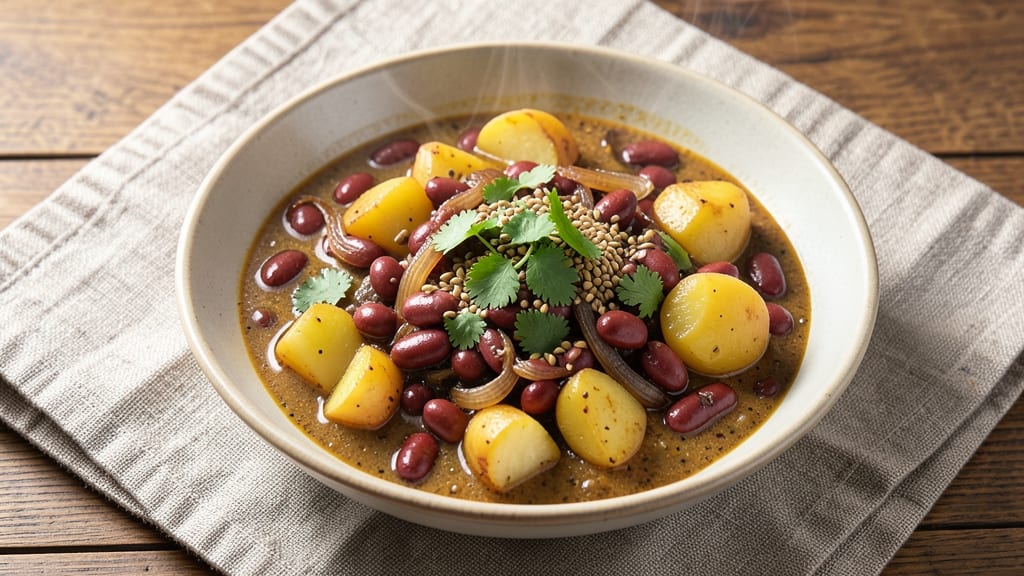
This beans and potato curry recipe delivers a hearty, spiced tomato base that transforms simple ingredients into a restaurant-quality dish. The secret lies in slow-simmered spices and the perfect balance of textures—creamy potatoes and tender beans in a rich, aromatic sauce.
I developed this recipe after years of perfecting curry techniques, ensuring every bite is packed with flavor without being overwhelming.
The foundation starts with a fragrant spice blend—cumin, coriander, and turmeric—that infuses the tomatoes before they break down into a velvety sauce. Adding potatoes and beans early ensures they absorb the flavors deeply, while a splash of coconut milk at the end creates a luxurious finish.
The result is a curry that’s both comforting and sophisticated, perfect for serving over basmati rice or warm naan.
What sets this recipe apart is its versatility—it works as a standalone vegetarian main or pairs beautifully with grilled meats. The slow simmering process allows the spices to meld, creating a depth of flavor that’s hard to achieve in quicker dishes.
Each spoonful delivers a harmonious blend of earthy spices, sweet potatoes, and protein-rich beans, making it a satisfying meal for any occasion.
For best results, let the curry sit for 10 minutes after cooking—this allows the flavors to fully develop and the sauce to thicken slightly. Garnish with fresh cilantro and a squeeze of lemon for brightness, and you’ll have a dish that feels like a home-cooked masterpiece.
Ready in about 45 minutes, this curry is ideal for weeknight dinners or meal prep.
Ingredients for beans and potato curry
Simple ingredients that pack restaurant-quality flavor into every spoonful of curry.
| Ingredient | Amount | Notes |
|---|---|---|
| Yellow Onion 🧅 | 1 whole | Diced, medium size preferred |
| Garlic Cloves 🧄 | 6 cloves | Minced, fresh preferred |
| Ground Cumin 🌿 | 1 tbsp | Toasted for deeper flavor |
| Ground Coriander 🌿 | 1 tbsp | Freshly ground preferred |
| Turmeric Powder 🌶️ | 1 tsp | Bright yellow for color |
| Ginger Root 🌿 | 1 tbsp | Freshly grated, peeled |
| Canned Crushed Tomatoes 🍅 | 14 ½ oz | San Marzano preferred |
| Russet Potatoes 🥔 | 1 ½ lb | Peeled, cubed evenly |
| Canned Chickpeas 🌱 | 15 oz | Drained, rinsed, no salt added |
| Light Coconut Milk 🥥 | ½ cup | Full-fat for creaminess |
| Vegetable Broth 💧 | 1 cup | Low-sodium preferred |
| Fresh Cilantro 🌿 | ¼ cup | Chopped, for garnish |
| Lemon Juice 🍋 | 1 tbsp | Freshly squeezed |
| Salt 🧂 | 1 ½ tsp | Diamond Crystal preferred |
| Black Pepper 🌶️ | ½ tsp | Freshly ground |
The spices are where this curry shines. Penzeys or bulk bins are my go-to for cumin and coriander—they stay fresh longer. Toast the cumin seeds in a dry pan for 30 seconds before grinding to release their aroma (trust me, it makes a difference). Turmeric should be bright yellow, not grayish. For the ginger, peel it first—those fibrous bits make it taste bitter. Fresh ginger from the produce section (not the jarred kind) gives the best flavor, but if you're in a pinch, jarred works too. The tomatoes? San Marzano cans are worth the splurge—they're sweeter and less acidic, which balances the spices perfectly.
No fresh ginger? Powdered ginger at half the amount gets you close, but it's not the same. Running out of chickpeas? Black beans or kidney beans work too—just adjust the cooking time. The coconut milk can be swapped for Greek yogurt (full-fat) for tanginess, but it'll be thinner. If you're making this ahead, the flavors actually get better overnight. The potatoes should be even-sized cubes—1.5-inch pieces so they cook through without falling apart. For extra richness, stir in 1 tbsp coconut oil at the end, but don't skip the lemon—it brightens everything up.
This curry keeps beautifully. 5 days in the fridge in an airtight container, or 3 months frozen if you make a big batch. I always double the recipe and freeze half—weeknight dinners sorted. To reheat, add a splash of water or broth to prevent drying out. The potatoes will soften more the second time around, but that's actually good—it makes the texture even creamier. Garnish with cilantro right before serving, or it'll wilt. Store the cilantro in a jar with water like flowers—keeps it fresh for 5 days.
Why You'll Love This Recipe
- One-Pot Magic: I swear by this recipe when I’m too tired to scrub a million dishes—just chop, sauté, and simmer. That onion and garlic base builds flavor while you stir, and the spices (cumin, coriander, turmeric) do all the heavy lifting. No strainers, no extra pots, just pure satisfaction.
- Spice Bomb Flavor: The moment the toasted cumin and coriander hit the oil, my kitchen smells like a street food stall. That earthy warmth from the turmeric? It turns the potatoes into little golden clouds, and the beans soak up the richness like a sponge. Not fancy, but dangerously addictive.
- Meal Prep MVP: I make a double batch on Sundays because this curry only gets better the next day—thicker, deeper, and perfect for lunches. Add rice or naan, and it’s a full meal. Even my picky roommate asks for seconds.
- Budget Hero: A bag of beans, a few potatoes, and basic spices? This feeds four for under $8. The turmeric and cumin stretch the flavor, so every bite feels indulgent. My wallet and I are best friends now.
Step-by-step instructions for beans and potato curry
Transform simple ingredients into a rich, aromatic curry with this straightforward method.
Sauté Aromatics Until Fragrant
Heat 1 tablespoon olive oil in a large, heavy-bottomed pot over medium heat. Add the diced yellow onion and cook for 5-6 minutes until softened and translucent. Here's the thing—don't rush this step. You want the onions to caramelize slightly for deeper flavor.
Add the 6 minced garlic cloves, 1 tablespoon freshly grated ginger root, 1 tablespoon ground cumin, 1 tablespoon ground coriander, and 1 teaspoon turmeric powder. Stir constantly for 1-2 minutes until the spices are fragrant and the garlic turns golden. This is where the magic happens—those spices should be sizzling and filling your kitchen with warmth.
Build the Spiced Tomato Base
Pour in the 14.5 ounces canned crushed tomatoes and stir to combine with the spice mixture. Let the sauce simmer for 5 minutes until it thickens slightly. This step develops the flavor foundation—you'll see the mixture darken and deepen in color as the tomatoes break down.
Add the 1.5 pounds cubed russet potatoes and 15 ounces drained chickpeas, stirring gently to coat everything in the spiced tomato sauce. Pour in the 1 cup vegetable broth and bring to a gentle boil. Once boiling, reduce heat to low-medium and cover partially. Let it simmer for 20-25 minutes until the potatoes are tender when pierced with a fork.
Add Creaminess and Finish
After the potatoes are tender, stir in the 0.5 cup light coconut milk and 1.5 teaspoons salt. Let the curry simmer uncovered for another 5-7 minutes until the sauce thickens slightly and the coconut milk is fully incorporated. Taste and adjust seasoning with more salt or 0.5 teaspoon black pepper if needed.
Give it a final stir and remove from heat. The curry should be thick enough to coat the back of a spoon but still have a lovely, velvety texture. Here's where it gets fun—stir in the 1 tablespoon freshly squeezed lemon juice and 0.25 cup chopped fresh cilantro. The lemon brightens the dish while the cilantro adds freshness that cuts through the richness.
Rest and Serve
Let the curry rest for 5 minutes off the heat. This allows all the flavors to meld together beautifully. I know it's tempting to dig in immediately, but trust me—this waiting time makes a world of difference in the final result.
Serve the curry hot, garnished with additional cilantro if desired. The perfect bowl of curry should have tender potatoes, creamy chickpeas, and a rich, aromatic sauce that coats every bite. Pair it with warm naan or basmati rice for the ultimate comfort meal experience.
Pro Tips For Making Beans And Potato Curry
- Sear the Onions Properly: Don’t rush the onion caramelization—cook them on medium-low heat with a splash of water until deep golden brown. I learned this the hard way: burnt onions taste bitter and ruin the whole dish, especially when paired with earthy spices like coriander.
- Toast the Spices Right: Bloom your ground cumin and coriander in hot oil for 30 seconds before adding garlic—this deepens their flavor. I used to skip this, and the spices just dissolved into the pot instead of singing.
- Boil Potatoes First: Parboil the potatoes for 5 minutes before adding them to the curry to prevent mushiness. Sounds counterintuitive, but it keeps them intact and soaks up the sauce better—no one likes a watery curry.
- Use Fresh Garlic, Not Powder: Minced fresh garlic cloves add a punch that powder can’t match—sauté them until fragrant but not browned. I was skeptical until I tried it: the difference is night and day, especially in spice-forward dishes.
Serving suggestions for beans and potato curry
Rice Pairings
Serve your curry over jasmine rice or basmati rice for that classic Indian-inspired touch. I prefer basmati because its nutty aroma complements the earthy spices beautifully. Cook 1 cup rice with 1.5 cups water and let it steam for 15 minutes off heat—this gives it that perfect fluffy texture.
For extra richness, stir in 1 tablespoon butter and a pinch of salt before serving. 💛
Bread Companions
Warm naan bread or roti takes this curry to the next level. I love using store-bought naan from the freezer aisle—just toast it in a dry skillet for 1-2 minutes per side until golden.
For a homemade option, try garlic naan with minced garlic and a sprinkle of sesame seeds baked right into the dough. The soft, pillowy texture soaks up the sauce perfectly.
Protein Additions
While this curry is vegetarian, adding grilled chicken or paneer turns it into a heartier meal. For chicken, marinate 1 lb boneless thighs in 1 tbsp yogurt, 1 tsp garam masala, and 1 tsp lemon juice for 30 minutes before grilling.
Paneer lovers can pan-fry 1 cup cubed paneer in 1 tsp ghee until golden—it adds a lovely contrast to the creamy potatoes and beans.
Garnish Ideas
Fresh cilantro and lemon wedges are must-haves, but don’t stop there. A sprinkle of toasted cumin seeds adds crunch, while red onion slices bring a sharp bite. For heat lovers, serve with green chili slices or a side of mango chutney—the sweet-tangy contrast is divine.
I also like drizzling 1 tsp coconut oil over the top right before serving for extra richness.
Meal Prep Serving
If you’re meal prepping, store curry and rice separately in airtight containers to prevent sogginess. Reheat the curry with 2 tbsp water over medium heat for 5 minutes, then serve with freshly warmed rice.
For a quick assembly, keep naan wrapped in a damp towel in the fridge—it stays soft for 2 days. Garnish just before eating to keep everything vibrant and fresh. ✨
Nutrition facts
Frequently asked questions
Can I substitute chickpeas with another type of bean?
Black beans or kidney beans work beautifully—just increase cooking time by 5-7 minutes since they're denser. For a creamier texture, try canned butter beans or lentils (reduce broth by 0.25 cup since they absorb more liquid). The key is maintaining the 1:1 ratio with potatoes for balanced texture.
Why does my curry taste too spicy?
Most likely, the cumin and coriander overpowered the dish. Balance it by adding 1 tbsp coconut milk or 2 tbsp plain yogurt to cool the heat, plus 1 tsp sugar to counteract spice. For future batches, reduce spices by 1/4 tsp each and build flavor through slow simmering instead.
Can I make this curry in an Instant Pot?
Yes! Sauté onions/garlic/spices as directed, then add all ingredients except coconut milk. Seal and cook on high pressure for 8 minutes, followed by natural release for 10 minutes. Stir in coconut milk at the end and adjust thickness with broth. The Instant Pot version finishes in 30 minutes total!
What's the best way to reheat leftovers?
Add 2 tbsp water or broth per 2 cups curry and simmer on low heat for 5-7 minutes. Never microwave—it makes potatoes gummy. For extra flavor, stir in 1/2 tsp garam masala while reheating. Store in airtight containers for 5 days refrigerated.
How can I make this curry creamier?
Stir in 2 tbsp Greek yogurt or 1 tbsp cashew butter at the end for richness. For a dairy-free option, blend 1/4 cup soaked cashews with 2 tbsp water until smooth and mix in. The coconut milk already adds creaminess, but these boosters take it to restaurant-level decadence.