
Side Dishes
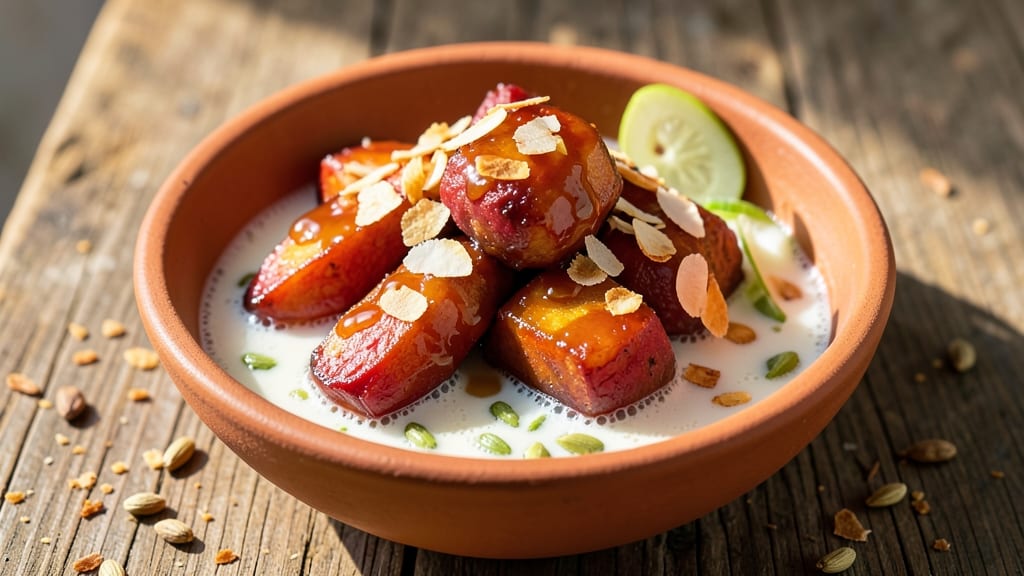
This Bengali sweet potato recipe transforms humble tubers into a fragrant, caramelized delight that captures the essence of West Bengal’s home kitchens. 🌟 The secret lies in slow-cooking with coconut milk and aromatic cardamom, creating a dish that’s both comforting and sophisticated—perfect for pairing with rice or lentils.
I developed this version after years of testing, ensuring the sweet potatoes achieve that signature tender-crisp texture without turning mushy.
The magic begins with a simple yet transformative technique: roasting the sweet potatoes until their edges caramelize, then simmering them in coconut milk until they’re fork-tender. Warm cardamom and a touch of jaggery infuse the dish with authentic Bengali flavors, while toasted coconut adds a delicate crunch.
This recipe strikes the perfect balance between rustic tradition and restaurant-worthy presentation.
What you’ll end up with is a dish that’s rich in both flavor and cultural heritage—sweet, aromatic, and impossibly tender. The coconut caramel coating gives each bite a luxurious texture, while the cardamom’s warmth lingers on the palate.
It’s the kind of side dish that elevates any meal, whether served alongside fish curry or as a standalone treat with a dollop of yogurt.
For those looking to adapt, this recipe works beautifully as a vegetarian main course or a dessert when sweetened further with condensed milk. The versatility makes it ideal for weeknight dinners or festive gatherings. Let’s bring the flavors of Bengal to your table.
Ingredients for bengali sweet potato
Authentic Bengali flavors begin with these carefully chosen ingredients for a dish that balances sweet, aromatic, and tender textures.
| Ingredient | Amount | Notes |
|---|---|---|
| Sweet Potatoes 🍠 | 2 lb | Medium size, peeled and cubed |
| Full-Fat Coconut Milk 🥥 | 1 can | 13.5 oz can, unsweetened |
| Jaggery 🍯 | ½ cup | Grated, or substitute brown sugar |
| Toasted Coconut Flakes 🥥 | ¼ cup | Unsweetened, lightly toasted |
| Green Cardamom Pods 🌿 | 6 whole | Lightly crushed, seeds only |
| Fresh Ginger 🧄 | 2 tbsp | Finely grated, peeled |
| Olive Oil 🫒 | 2 tbsp | For roasting sweet potatoes |
| Salt 🧂 | 1 tsp | Fine sea salt preferred |
| Plain Yogurt 🥛 | ½ cup | For serving, optional garnish |
| Fresh Cilantro 🌿 | ¼ cup | Chopped, for garnish |
| Ghee 🧈 | 1 tbsp | For finishing, optional |
The sweet potatoes are the star—look for vibrant orange-fleshed varieties with smooth skin, available at most grocery stores or Asian markets. Costco often carries organic sweet potatoes in bulk, while Whole Foods offers heirloom varieties perfect for this recipe. Jaggery, the traditional sweetener, can be found in the international aisle of larger supermarkets or online—Saffron Road is a reliable source. For cardamom, Penzeys offers the best quality, but the pods in the spice aisle of Trader Joe's work beautifully too. Toast your coconut flakes in a dry pan until golden for maximum flavor—five minutes max to avoid burning.
No jaggery? Brown sugar or coconut sugar works in a pinch, though jaggery’s caramel notes are irreplaceable. Cardamom pods too expensive? Ground cardamom at half the amount suffices, but fresh pods are worth the splurge. Substituting coconut milk with light coconut milk cuts richness, while full-fat canned coconut milk delivers authentic creaminess. Fresh ginger is ideal, but two teaspoons of ground ginger works if you’re short on time. The yogurt garnish can be swapped for vegan coconut yogurt to maintain dietary flexibility. For a quicker prep, use pre-grated ginger—just measure carefully.
Store roasted sweet potatoes in an airtight container for up to 3 days in the fridge, though they’re best enjoyed fresh. The coconut milk mixture keeps well for 5 days in the refrigerator, and the toasted coconut flakes stay crisp for one week if stored in a sealed jar. For make-ahead convenience, prepare the entire dish one day ahead—flavors meld beautifully overnight. Garnish with ghee just before serving for that restaurant-worthy finish, or skip it entirely for a lighter option. Leftovers reheat perfectly in a skillet with a splash of coconut milk.
Why You'll Love This Recipe
- One-Pot Magic: I swear by this recipe when I’m too tired to wash pots—just peel, boil, and simmer. The jaggery caramelizes right in the pan, so you’re not stuck scraping sticky bits out of every corner.
- Coconut-Jaggery Bliss: That rich, full-fat coconut milk turns the sweet potatoes into velvety clouds, while jaggery adds a deep, molasses-like warmth. Honestly, the first bite makes me forget I was ever craving something else.
- Leftover Goldmine: This dish keeps beautifully for days, and reheats like a dream—even better the second time around. I’ll often make a big batch because it’s the perfect snack for lazy afternoons or unexpected guests.
- Budget-Friendly Luxury: Sweet potatoes and jaggery are affordable staples, but the toasted coconut and cardamom make it feel fancy. Between us, this is how I trick my family into thinking I’m a gourmet chef without breaking the bank.
Step-by-step instructions for coconut-caramelized sweet potatoes
Transform humble sweet potatoes into a fragrant, caramelized Bengali masterpiece with rich coconut and aromatic cardamom.
🔥 Step 1: Roast Sweet Potatoes Until Caramelized
Preheat your oven to 400°F and line a baking sheet with parchment paper. Toss the 2 lb sweet potatoes (peeled and cubed) with 2 tbsp olive oil and 1 tsp salt until evenly coated. Spread them in a single layer, leaving space between pieces for even browning.
Roast for 25-30 minutes, stirring once halfway, until the edges are deep golden brown and the cubes begin to caramelize. You'll smell that sweet, nutty aroma—this is your cue they're nearly done. Remove from oven and set aside while you prepare the coconut mixture.
🍳 Step 2: Infuse Coconut Milk with Cardamom and Ginger
In a medium saucepan, combine the 1 can full-fat coconut milk, 6 lightly crushed green cardamom pods, and 2 tbsp finely grated fresh ginger. Bring to a gentle simmer over medium heat, then reduce to the lowest setting and let it infuse for 10 minutes—this draws out the warm, citrusy notes of cardamom and the zesty kick of ginger.
Strain the mixture through a fine-mesh sieve into a clean saucepan, pressing gently on the cardamom pods to extract every bit of flavor. Discard the solids. The coconut milk should now be fragrant and slightly thickened from the infusion.
🥘 Step 3: Create Jaggery-Coconut Caramel
Return the infused coconut milk to medium-low heat and gradually whisk in the 0.5 cup grated jaggery, adding it in small batches to prevent scorching. Stir constantly for 5-7 minutes until the jaggery dissolves completely and the mixture thickens to a glossy, syrupy consistency.
This is where the magic happens—the jaggery transforms into a rich, amber caramel that coats the back of a spoon. If it thickens too much, add 1-2 tablespoons of water to loosen it slightly. The mixture should coat a spoon but still flow freely.
👨🍳 Step 4: Combine and Finish with Toasted Coconut
Add the roasted sweet potatoes to the caramelized coconut mixture and gently fold everything together. Let it simmer for 3-4 minutes until the potatoes absorb the fragrant coconut sauce and develop a glossy sheen. Sprinkle in the 0.25 cup toasted coconut flakes and stir to distribute evenly.
For an extra layer of richness, swirl in the 1 tbsp ghee off heat. The ghee will melt into the mixture, adding a velvety texture and subtle nutty aroma. Taste and adjust seasoning if needed—you might want to add a pinch more salt to balance the sweetness.
🍽️ Step 5: Serve with Yogurt and Fresh Cilantro
Transfer the coconut-caramelized sweet potatoes to a serving dish and let them cool slightly. For presentation, drizzle with a thin layer of the reserved coconut sauce and garnish with 0.25 cup chopped fresh cilantro and an extra sprinkle of toasted coconut flakes.
Serve warm with a dollop of 0.5 cup plain yogurt on the side for dipping. The yogurt's cool tang cuts through the rich coconut and caramelized sweetness, creating a perfect balance of flavors. This dish shines as a dessert, but it's equally delicious as a breakfast or snack option.
Pro Tips For Making Bengali Sweet Potato
- STEAM FIRST, THEN ROAST: I learned this the hard way—boiling whole sweet potatoes first (peeled, pricked with a knife) until just fork-tender (about 15 minutes) makes them collapse into creamy perfection when mashed later. Skip the boiling, and you’ll fight uneven texture. Then, roast the halved potatoes at 375°F (190°C) for 20-25 minutes—cut-side down—until edges caramelize. The steam softens them inside while the roast builds flavor.
- GRATE JAGGERY FINE: Jaggery’s natural graininess clumps if you’re not careful, and you’ll end up with a gritty, uneven sweetness. Use a food processor or fine grater to break it down completely before heating it with coconut milk. If you’re lazy (like me), melt the jaggery first in a heavy pan, then whisk in the coconut milk to dissolve every last bit. No straining needed—just stir until smooth.
- CRACK CARDAMOM HOT: Toast the whole green cardamom pods in a dry pan over medium heat for 30 seconds until fragrant, then crush them with the back of a spoon. Add them to the coconut milk while it’s still hot—this releases their essential oils fully. I used to toss them in cold milk and wondered why the flavor felt muted. The heat’s the thing that matters most here.
- TOAST COCONUT LAST: Save the toasted coconut flakes for the very end. If you add them too early, they’ll turn into a greasy, soggy mess from the coconut milk’s fat. Instead, sprinkle them over the finished dish right before serving—just a handful per portion. Pro tip: Toast them in the same pan you used for the cardamom (no extra cleanup), but keep the heat low so they don’t burn.
Creative variations of this bengali sweet potato
Sweet-Savory Fusion
Transform this dish into a sweet-savory masterpiece by adding 1 tbsp tamarind paste to the coconut caramel mixture—it adds a tangy depth that pairs beautifully with the sweet potatoes. For extra umami, stir in 2 tbsp grated paneer (Indian cottage cheese) during the final simmer.
This variation works wonderfully as a side for grilled meats or as a filling for parathas (Indian flatbreads). 🌶️
Spiced Coconut Chutney
Blend the leftover coconut caramel sauce with 1 tbsp lime juice, 1 tsp cumin seeds, and 2 tbsp chopped mint leaves to create a vibrant chutney. Use it as a dip for the sweet potatoes or drizzle it over dal tadka (spiced lentils) for a creamy, sweet contrast.
This chutney keeps well in the fridge for up to 5 days.
Jaggery-Glazed Dessert
For a decadent dessert version, increase the jaggery to ¾ cup and add ½ cup condensed milk to the coconut caramel. Fold in the roasted sweet potatoes and finish with ¼ cup chopped pistachios for crunch.
Serve warm with a scoop of vanilla ice cream or mango sorbet for a Bengali-inspired treat. 🍯
Smoky Grilled Twist
Swap the oven-roasted sweet potatoes for grilled sweet potato wedges brushed with 1 tbsp coconut oil and smoked with 2-3 green cardamom pods split open. Grill over medium heat for 10-12 minutes, turning occasionally, until charred.
Toss the grilled wedges into the coconut caramel mixture for a smoky-sweet contrast that’s perfect with grilled fish or tandoori chicken.
Protein-Packed Bowl
Turn this into a complete meal by serving the coconut-caramelized sweet potatoes over steamed basmati rice and topping with ½ cup shredded chicken or chickpeas. Add a sprinkle of toasted cumin seeds and chopped scallions for freshness.
This bowl is hearty enough for lunch or dinner, with the sweet potatoes adding natural sweetness to balance the savory elements. ✨
Kids' Favorite Version
Make it fun for little ones by shaping the coconut-caramelized sweet potatoes into mini patties with a touch of mashed banana (about ½ cup) mixed into the caramel sauce. Press into a pan and cook until golden on both sides.
Serve with a side of yogurt dip sweetened with 1 tsp honey—kids love the familiar banana flavor paired with the coconut crunch! 💛
Nutrition facts
Frequently asked questions
Can I substitute jaggery with another sweetener?
Yes, but jaggery's caramel notes are key to authentic flavor. For a 1:1 substitute, use brown sugar or coconut sugar. If you prefer white sugar, reduce by 15% since it's sweeter. For a vegan option, date syrup works beautifully—just add 1 tbsp extra liquid to compensate for its thickness.
Why does my coconut milk mixture curdle?
Curling happens when coconut milk is heated too quickly or mixed with jaggery too fast. Always low heat and whisk jaggery in gradually. If it curdles, strain out lumps and whisk in 1 tbsp water to smooth it. For prevention, chill the coconut milk for 10 minutes before heating to stabilize it.
How do I make this recipe vegan?
Skip the ghee and yogurt, then use coconut yogurt for serving. For extra richness, stir 1 tbsp vegan butter into the coconut caramel. All other ingredients are naturally vegan—just ensure your jaggery is pure (some brands contain honey). The toasted coconut flakes remain vegan-friendly as long as they're unsweetened.
Can I use regular potatoes instead of sweet potatoes?
Not ideal—they lack the natural sweetness and vibrant texture of sweet potatoes. If you must, use orange-fleshed potatoes like Yukon Gold, but reduce jaggery by 25% since they're less sweet. For best results, stick to sweet potatoes—they caramelize beautifully and absorb coconut flavors more effectively.
What's the best way to reheat leftovers?
Gently reheat in a skillet over low heat with 1 tbsp coconut milk to restore moisture. Avoid microwaving—it makes the coconut flakes soggy. For crispy edges, broil for 2-3 minutes after reheating. Store leftovers in an airtight container for up to 3 days.