Side Dishes
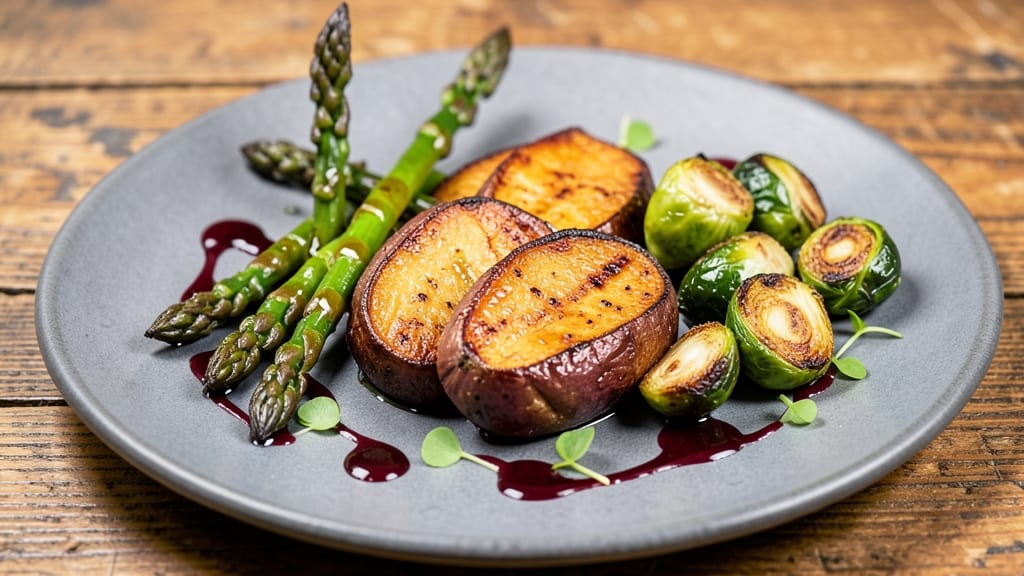
This sweet potato, asparagus, and Brussels sprouts recipe transforms humble vegetables into a restaurant-worthy side dish that’s packed with caramelized sweetness and savory depth. 🌟 The secret lies in roasting each ingredient separately—sweet potatoes develop a tender, golden crust, asparagus turns crisp-tender with smoky edges, and Brussels sprouts caramelize into crispy, flavorful bites.
I’ve perfected this method to ensure every component shines while balancing textures and flavors effortlessly.
The beauty of this recipe is its versatility—it works as a standalone vegetarian meal or pairs perfectly with grilled chicken, fish, or tofu.
A drizzle of maple glaze or balsamic reduction ties everything together, adding a touch of richness without overpowering the natural sweetness of the sweet potatoes or the earthy notes of the Brussels sprouts.
The asparagus, with its bright green color and subtle crunch, cuts through the richness, creating a harmonious bite every time.
What makes this dish truly special is how simple yet impressive it looks on the table. The roasted trio comes together in under 45 minutes, making it ideal for weeknight dinners or holiday sides.
The sweet potatoes caramelize beautifully, the Brussels sprouts develop a satisfying crispness, and the asparagus retains its vibrant color and snap. Serve it warm, garnished with a sprinkle of flaky salt and fresh herbs, and watch it disappear from the plate.
For an extra protein boost, toss in crispy tempeh or grilled tofu before serving—it adds a satisfying chew and keeps the dish hearty.
Whether you’re feeding a family or hosting a dinner party, this roasted trio delivers bold flavors, stunning presentation, and a side dish that feels like a main event. Ready to elevate your vegetable game? Let’s get roasting.
Ingredients for sweet potato asparagus and brussel sprouts
Roasted vegetables with caramelized sweetness and savory depth—just twelve ingredients transform simple produce into restaurant-quality bites.
| Ingredient | Amount | Notes |
|---|---|---|
| Sweet Potatoes 🍠 | 1 ½ lb | Medium-sized, peeled and cubed |
| Asparagus 🌱 | 1 lb | Fresh, trimmed woody ends |
| Brussels Sprouts 🥬 | 1 lb | Trimmed and halved |
| Extra-Virgin Olive Oil 🫒 | ¼ cup | High quality, fruity variety |
| Maple Syrup 🍯 | 2 tbsp | Pure grade B preferred |
| Balsamic Vinegar 🍶 | 1 tbsp | Aged for depth of flavor |
| Diamond Crystal Kosher Salt 🧂 | 1 ½ tsp | For seasoning and finishing |
| Fresh Thyme Leaves 🌿 | ½ tsp | Or 0.25 tsp dried thyme |
| Fresh Rosemary 🌿 | 1 tbsp | Finely chopped, fresh preferred |
| Garlic Cloves 🧄 | 4 cloves | Minced for even distribution |
| Smoked Paprika 🌶️ | ½ tsp | For subtle smoky depth |
| Black Peppercorns 🌶️ | ½ tsp | Freshly cracked for aroma |
| Crispy Tempeh 🍛 | ½ lb | Optional protein boost |
The sweet potatoes are the foundation—look for vibrant, firm ones with smooth skin, not blemished or soft spots. Trader Joe's and Whole Foods carry excellent organic varieties, but any quality grocery store will have good options. Peeled and cubed evenly, they roast to a tender, golden crust that's the star of this dish. For Brussels sprouts, trim the ends and halve them—smaller pieces caramelize faster without burning. Fresh asparagus should snap easily; discard the woody bottoms. The key to even cooking is cutting all vegetables to similar size—aim for 1.5-inch pieces for consistency. Smoked paprika adds depth without overpowering, while fresh rosemary and thyme bring bright, herbal notes that complement the earthy vegetables.
No maple syrup on hand? Agave nectar or date syrup works just as well for the glaze. For a tangier finish, swap balsamic vinegar for red wine vinegar—just reduce the amount by half to avoid over-acidifying. Short on fresh herbs? Dried thyme at one-third the amount keeps the flavor profile intact. The olive oil matters here—use a high-quality extra-virgin with fruity notes to enhance the natural sweetness of the sweet potatoes. For a protein boost, crispy baked tofu makes an excellent substitute for tempeh, though it has a slightly different texture. If you're roasting a crowd, double the quantities—just ensure your sheet pans are large enough to avoid overcrowding, which steams instead of caramelizes.
Store any leftovers in airtight containers for up to 4 days in the fridge, though they reheat best when warmed gently in the oven. For longer storage, freeze portions for up to 3 months—they thaw beautifully when reheated. The Brussels sprouts and asparagus hold their texture well when reheated, while the sweet potatoes may soften slightly. To serve, drizzle with the maple-balsamic glaze and sprinkle with flaky salt just before eating. Garnish with fresh herbs for a pop of color and brightness. This dish shines at room temperature too, making it perfect for meal prep or bringing to potlucks—pack it in a single layer to maintain crispness.
Why You'll Love This Recipe
- One-Pan Magic: Honestly, I swear by this recipe when I’m too tired to scrub pots—just toss everything on a sheet pan, drizzle with olive oil, and let the oven do the work. The sweet potatoes caramelize while the asparagus crisps, and the Brussels sprouts get that perfect char without a single extra dish.
- Sweet-Savory Balance: Between us, the maple syrup glaze is where this dish really shines—it cuts through the earthiness of the sprouts and sweetens the asparagus just enough to make it irresistible. (Yes, even on a Tuesday night.)
- Meal Prep MVP: I make double batches because it reheats like a dream—great for lunches or a quick side when I’ve got guests over. The flavors actually deepens the next day, which never happens with my usual roasted veggie mess.
- Budget-Friendly Powerhouse: Sweet potatoes and Brussels sprouts are my go-to affordable veggies, and asparagus stretches further than you’d think when roasted this way. Plus, olive oil and maple syrup are pantry staples that make it feel fancy without breaking the bank.
Step-by-step instructions for roasted sweet potato, asparagus, and Brussels sprouts
Transform humble root vegetables into a caramelized, flavor-packed trio with this professional technique.
🍳 Step 1: Prep and Season the Vegetables
Preheat your oven to 425°F and line two large baking sheets with parchment paper. Cut the 1.5 lb sweet potatoes into 1-inch cubes and toss them in a large bowl with 0.25 cup extra-virgin olive oil, 1 tbsp maple syrup, 0.5 tsp smoked paprika, and 0.5 tsp black peppercorns. Spread them in a single layer on one baking sheet.
For the 1 lb asparagus, trim the woody ends and toss with 1 tbsp olive oil, 0.5 tsp kosher salt, and 0.25 tsp black peppercorns. Arrange them on the second baking sheet in a single layer, stems facing down. Halve the 1 lb Brussels sprouts and toss with 1 tbsp olive oil, 0.5 tsp kosher salt, and 0.25 tsp black peppercorns, then spread them on the same sheet as the asparagus.
🔥 Step 2: Roast the Sweet Potatoes First
Place the sweet potatoes on the lower oven rack and roast for 20 minutes until they begin to soften and develop golden edges. I like to check them at the 15-minute mark—if they're browning too quickly, rotate the tray. The goal is caramelization without burning.
While they roast, finely chop the 1 tbsp fresh rosemary and 4 cloves garlic together. This aromatic blend will elevate the entire dish when tossed in later. The sweet potatoes should be tender when pierced with a fork but still hold their shape—this ensures they caramelize further in the final step.
🍳 Step 3: Roast Asparagus and Brussels Sprouts
After the sweet potatoes have roasted for 20 minutes, swap the trays and roast the asparagus and Brussels sprouts for 15-18 minutes until they're tender and slightly charred. The Brussels sprouts should be fork-tender with crispy edges, and the asparagus should be bright green with caramelized tips.
Here's the thing—don't overcrowd the pan. If your baking sheets are small, roast them in batches. Overcrowding steams the vegetables instead of browning them, which defeats the purpose of this technique. The asparagus should blister slightly at the tips, and the Brussels sprouts should develop deep golden spots.
🥘 Step 4: Combine and Glaze Everything
Remove all vegetables from the oven and transfer them to a single large bowl. Drizzle with the 1 tbsp balsamic vinegar and toss gently to combine. The acidity of the vinegar will balance the sweetness of the maple syrup and caramelized edges.
Return the vegetables to the oven for 5-7 minutes to finish caramelizing. This final step is where the magic happens—the maple syrup and balsamic create a glossy glaze that coats every piece. If the vegetables are browning too quickly, tent them loosely with foil to prevent burning.
👨🍳 Step 5: Finish with Fresh Herbs and Serve
Remove the vegetables from the oven and sprinkle with the 0.5 tsp fresh thyme leaves and any remaining 0.5 tsp kosher salt. Toss gently to distribute the herbs evenly. The thyme adds a bright, aromatic finish that cuts through the richness of the roasted vegetables.
Serve immediately with the 0.5 lb crispy tempeh on the side for added protein. The contrast between the crispy tempeh and the caramelized vegetables creates a perfect balance of textures. For an extra touch, drizzle with additional balsamic reduction if you have any left from the cooking process.
Pro Tips For Making Sweet Potato Asparagus And Brussel Sprouts
- CUT SPROUTS IN HALF LENGTHWISE: I learned this the hard way—whole Brussels sprouts take forever to soften and end up uneven. Halving them lengthwise (not just trimming the ends) guarantees they cook through while keeping the texture tender, not mushy. Just don’t skip trimming the tough bottoms first.
- ROAST SWEET POTATOES SEPARATELY: Sweet potatoes and asparagus have wildly different cooking times. Roast the sweet potatoes first at 400°F (20-25 mins) until fork-tender, then toss in the Brussels sprouts and asparagus for the last 12-15 mins. Otherwise, you’ll end up with charred asparagus and undercooked sprouts.
- USE MAPLE SYRUP SPARINGLY: A drizzle is enough—start with 1 teaspoon and taste before adding more. Too much syrup makes the dish cloyingly sweet, especially with the natural sweetness of roasted sweet potatoes. Warm it slightly before drizzling so it blends in better.
- SALT THE SPROUTS BEFORE ROASTING: Toss the halved Brussels sprouts with olive oil and a generous pinch of salt before they hit the pan. This prevents them from tasting bland even after roasting, which they will if you wait. (Yes, even if you’re impatient like me.)
Essential equipment for this dish
Oven Essentials
Your oven is the heart of this recipe, so invest in a high-quality oven thermometer to ensure accurate temperature readings—ovens often run hot or cold. I swear by the Thermoworks Oven Thermometer for its precision. Preheat for at least 15 minutes before roasting to guarantee even cooking. 🌡️
Use two large rimmed baking sheets (12x17 inches) to maximize surface area and prevent overcrowding. I recommend All-Clad Stainless Steel pans—they distribute heat evenly and handle high temperatures without warping. Line them with silicone baking mats for easy cleanup and even browning.
Roasting Tools
A sharp chef’s knife (like the Victorinox 8-inch) is essential for trimming asparagus and halving Brussels sprouts efficiently. I also keep a mandoline handy for evenly cubing sweet potatoes—just set it to ¼-inch thickness for consistency. A wooden spoon helps toss vegetables without scratching your pans.
Seasoning Kit
Gather small bowls for organizing seasonings—one for smoked paprika, another for freshly cracked black peppercorns, and a third for kosher salt. A microplane comes in handy for zesting citrus (if you add orange zest) or grating garlic finely.
I use Penzeys Spices for their high-quality smoked paprika and fresh herbs.
Glazing Supplies
For the maple-balsamic glaze, a small saucepan and whisk are perfect for combining 2 tbsp maple syrup and 1 tbsp balsamic vinegar over low heat. Reduce until slightly thickened—about 3-4 minutes. A fine-mesh strainer removes any herb bits if you prefer a smooth finish. 🍯
Serving Accessories
Serve the roasted trio on a large wooden board or slate platter for rustic appeal. Add fresh rosemary sprigs or thyme leaves as garnishes. For extra flair, use a small squeeze bottle to drizzle the glaze artistically. A tongs makes it easy to serve directly from the baking sheet.
Nutrition facts
Frequently asked questions
Can I substitute any of these vegetables?
Swap Brussels sprouts for red cabbage or broccoli—both roast beautifully with similar textures. For asparagus, try green beans or zucchini, though they cook faster. Sweet potatoes can be replaced with regular potatoes (use Yukon Gold for creaminess) or beets for a deeper earthy flavor. Just adjust roasting times—beets take 10-15 minutes longer to tenderize.
How do I prevent Brussels sprouts from burning?
Cut them into even halves (smaller pieces = faster cooking) and spread them in a single layer on the baking sheet. Roast at 425°F for only 15-18 minutes—check at 12 minutes and rotate the tray if browning too quickly. For extra insurance, tent with foil for the last 5 minutes if they're getting too dark.
Can I make this ahead of time?
Yes! Roast the vegetables up to 2 days ahead and store in airtight containers in the fridge. Reheat in a 350°F oven for 10-15 minutes until warmed through. The Brussels sprouts may soften slightly, but the sweet potatoes and asparagus hold their texture well. For best results, add fresh herbs and glaze just before serving to keep everything vibrant.
What's the best way to add protein?
For plant-based options, try crispy baked tofu or marinated tempeh—both add protein and texture. For meat lovers, sear chicken thighs or shrimp skewers separately and serve alongside. Pro tip: Toss protein with 1 tsp smoked paprika and ½ tsp garlic powder before cooking to tie into the dish's flavors.
Why do my Brussels sprouts taste bitter?
Bitterness usually means they're overcooked or underseasoned. Roast until fork-tender with crispy edges (not mushy) and season generously with kosher salt and black pepper before roasting. For extra depth, add ½ tsp cinnamon to the sweet potatoes' seasoning—it balances bitterness beautifully. Always use fresh, firm sprouts (avoid wilted ones).