
Side Dishes
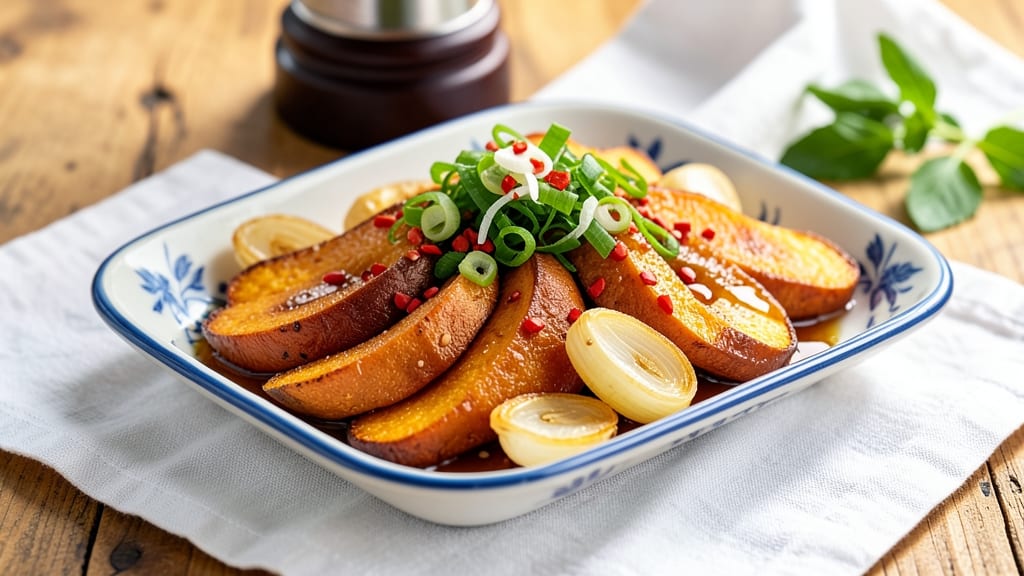
This Korean-style sweet potato banchan transforms humble ingredients into a side dish that steals the show at any Korean meal. 💛 The secret lies in balancing sweet, smoky, and savory flavors through simple techniques—boiling, pan-frying, and a quick stir-fry with just five core seasonings.
As someone who grew up with banchan as the heart of every meal, I know how these small but mighty dishes elevate an entire spread.
The recipe begins with sweet potatoes, which are boiled until tender yet firm enough to hold their shape. After a quick pan-fry for caramelized edges, they’re tossed with a minimalist seasoning blend of soy sauce, sesame oil, minced garlic, and green onions.
This method ensures the dish stays true to traditional banchan principles—simple, flavorful, and packed with umami without overpowering the main course. The result is a dish that’s both visually appealing and deeply satisfying.
What makes this banchan special is its versatility—it pairs perfectly with rice, grilled meats, or even tofu-based meals. The smoky aroma from the pan-frying step lingers long after serving, while the sweetness of the potatoes balances the savory notes.
For those adapting to vegan diets, simply omit sesame oil and use a neutral oil instead. The dish is ready in under 30 minutes, making it ideal for weeknight meals or holiday gatherings.
The key to success lies in the cooking technique: boiling first ensures tenderness, while the pan-fry adds depth and texture. The seasoning is applied just before serving to preserve freshness, and the dish can be prepped ahead and reheated gently.
This banchan isn’t just a side—it’s a celebration of Korean home cooking, where every bite tells a story of tradition and simplicity.
Ingredients for sweet potato banchan
Sweet potatoes and five simple seasonings create this Korean-style banchan that brings bold flavor to any meal.
| Ingredient | Amount | Notes |
|---|---|---|
| Sweet Potatoes 🍠 | 2 lbs | Medium-sized, peeled and cubed |
| Vegetable Oil 🫒 | ½ cup | For pan-frying, neutral flavor |
| Soy Sauce 🥢 | 2 tbsp | Korean or Japanese preferred |
| Sesame Oil 🫒 | 1 tbsp | Toasted for aroma (omit for vegan) |
| Garlic Cloves 🧄 | 4 cloves | Minced for seasoning |
| Green Onions 🧅 | 4 whole | Thinly sliced, white and green parts |
| Salt 🧂 | 1 tsp | Kosher or sea salt |
| Black Pepper 🌶️ | ½ tsp | Freshly ground |
| Brown Sugar 🍯 | 1 tbsp | Light or dark variety |
| Gochugaru (Korean Red Pepper Flakes) 🌶️ | 1 tsp | Adjust for spice preference |
| Toasted Sesame Seeds 🌾 | 1 tbsp | For garnish, optional |
Sweet potatoes are the heart of this dish—look for firm, vibrant orange ones with smooth skin, like the Japanese or Korean varieties sold at Asian markets. If you can't find them, regular sweet potatoes work fine, but they'll be slightly less sweet. Peeled and cubed evenly, they cook faster and more uniformly. For the sesame oil, Korean brands like Samyang or Dooyoung are ideal, but any toasted sesame oil will do. The gochugaru? This is non-negotiable for authentic flavor—Penzeys or Korean grocery stores carry it, and it's worth the hunt if you love Korean food. If you're avoiding sesame oil for dietary reasons, use a neutral oil like vegetable or canola instead.
No sesame oil? Avocado oil or grapeseed oil works just as well for frying. The soy sauce can be swapped for tamari if needed, but Korean soy sauce adds depth. Fresh garlic is ideal, but if you're short on time, garlic powder at half the amount gets you close. For the green onions, use whatever you have—scallions or chives work too. The brown sugar helps balance the smokiness, but maple syrup or agave works in a pinch. The gochugaru can be omitted entirely if you prefer no heat, or reduce to 0.5 tsp for mild spice. Toast your sesame seeds in a dry pan for 1-2 minutes before adding—they'll smell amazing and add extra crunch.
This banchan reheats beautifully—just warm in a skillet with a splash of water to keep it moist. Keeps 4-5 days in the fridge, covered, or 3 months frozen. For make-ahead prep, boil and pan-fry the potatoes ahead, then store seasoned separately. Toss right before serving to keep the green onions crisp. The dish tastes even better the next day as flavors meld. Portion into small containers for easy grab-and-go sides, or double the batch for holiday gatherings—it's always a crowd-pleaser.
Why You'll Love This Recipe
- One-Pan Magic: I swear by this—just toss those sweet potatoes in a hot pan with oil, let them caramelize a little, then hit them with garlic and soy. No chopping, no fuss, no extra bowls. That’s my kind of cooking.
- Umami Bomb: The garlic and sesame oil combo? Chef’s kiss. The soy sauce gives it that deep, savory punch, while the crispy edges on those sweet potatoes make it impossible to stop at one piece. Honestly, it’s the kind of flavor that sticks with you.
- Potluck Hero: Bring this to a gathering, and you’ll be the MVP. It’s hearty enough to stand alone but pairs perfectly with rice, grilled meats, or even in a bento box. Plus, it reheats like a dream—no soggy banchan here.
- Budget Win: Sweet potatoes are cheap, and this recipe stretches easily. Make a big batch, and you’ve got snacks for the week, a side for dinner, or even a quick lunch. Between us, it’s my go-to when I’m trying to save a few bucks without sacrificing taste.
Step-by-step instructions for Korean-style sweet potato banchan
Here's how to achieve that perfect balance of caramelized sweetness and smoky depth in every bite.
🔥 Step 1: Prep and Par-Cook the Sweet Potatoes
Cut the 2 lbs sweet potatoes into 1-inch cubes—uniform size ensures even cooking. Place them in a pot of cold, salted water (about 1 teaspoon salt) and bring to a boil over high heat. Once boiling, reduce to medium-high and cook for 8-10 minutes until the cubes are fork-tender but still hold their shape.
Drain immediately and transfer to a clean bowl. The potatoes should be soft enough to pierce easily with a fork but not falling apart. This par-cooking step prevents them from turning mushy during stir-frying—it's the secret to that perfect texture. Let them cool slightly before proceeding.
🍳 Step 2: Build the Smoky-Sweet Seasoning
In a small bowl, whisk together the 2 tablespoons soy sauce, 1 tablespoon brown sugar, 1 teaspoon gochugaru (Korean red pepper flakes), ½ teaspoon black pepper, and 1 tablespoon sesame oil. This mixture is the flavor foundation—don't skip the sesame oil, as it adds that authentic Korean aroma.
While the seasoning blends, mince the 4 cloves garlic and thinly slice the 4 green onions, separating the white and green parts. The garlic should be finely chopped so it distributes evenly, while the green onions add freshness at the end. Keep the seasoning mixture at room temperature until ready to use.
🔥 Step 3: Stir-Fry to Caramelized Perfection
Heat ½ cup vegetable oil in a large skillet over medium-high heat until shimmering—you should see small bubbles forming around the edges. Add the par-cooked sweet potatoes in a single layer, spreading them out evenly. Cook undisturbed for 3-4 minutes until the bottom layer develops a light golden crust. This initial sear locks in flavor.
After the first 3-4 minutes, gently stir the potatoes and pour the seasoning mixture over them. Cook for another 5-6 minutes until the potatoes are deep golden brown in spots and the edges begin to caramelize. The oil will bubble vigorously—this is normal. If the potatoes start sticking, add 1-2 tablespoons water to deglaze, but keep the heat high to maintain the sear.
🥘 Step 4: Finish with Aromatics and Garnish
Once the potatoes are caramelized and the liquid has mostly evaporated, reduce heat to medium. Add the minced garlic and the white parts of the green onions, stirring for 30 seconds until fragrant. The garlic should sizzle slightly but not burn—watch it closely. Immediately after, add the green parts of the onions and toss everything together for 1 minute to wilt the greens.
Remove from heat and sprinkle with the 1 tablespoon toasted sesame seeds, tossing gently to distribute evenly. The sesame seeds add a nutty crunch that contrasts beautifully with the soft potatoes. Taste and adjust seasoning if needed—you might want to add a touch more soy sauce or brown sugar depending on your preference. Serve immediately while still warm.
Pro Tips For Making Sweet Potato Banchan
- CUT UNIFORM SLICES: Use a sharp knife and slice the sweet potatoes lengthwise into ¼-inch thick pieces—thinner than you’d think. Thick slices steam unevenly, while consistent thickness guarantees even browning and crisp edges. I learned this the hard way after staring at a plate of half-mushy, half-crisp banchan.
- SALT THE SLICES: Sprinkle the sweet potatoes with a pinch of salt right after slicing, then let them sit for 10 minutes. This draws out moisture so they crisp up properly instead of turning soggy—no one wants a sad, limp banchan. (Yes, even if you’re impatient like me.)
- SEAR IN BATCHES: Crowd the pan, and you’ll steam the oil out of the sweet potatoes. Work in single-layer batches over medium-high heat for 3–4 minutes per side until golden. The first batch will teach you the right temperature—after that, it’s muscle memory.
- GARLIC FIRST, SESAME LAST: Sauté the minced garlic in oil until fragrant (30 seconds max—burnt garlic ruins everything), then pull the pan off heat before adding soy sauce and sesame oil. The residual heat finishes cooking the garlic without turning it bitter, and the sesame oil keeps its nutty aroma instead of burning off.
Essential equipment for perfect results
Skillet Essentials
You’ll need a 12-inch cast-iron skillet or stainless steel pan for that perfect caramelized crust—cast iron retains heat beautifully and builds flavor over time. I swear by my Lodge Pre-Seasoned Cast Iron skillet for this recipe, but any well-seasoned pan works.
Avoid nonstick unless you’re short on time, as it won’t develop the same depth of flavor. 🔥
Heat Control Tools
A kitchen thermometer is your secret weapon for nailing the right temperature. I use a Thermoworks Thermapen One to monitor oil heat—aim for 350-375°F for that ideal sear. Without one, watch for small bubbles forming around the edges of the oil (not big, rolling ones).
A tongs set with silicone tips is perfect for flipping the potatoes without tearing their edges.
Prep Station Setup
Gather a sharp chef’s knife (I love my Mercer Culinary Genesis) and cutting board for chopping garlic and green onions. A fine-mesh strainer speeds up draining the potatoes after boiling, and a small mixing bowl keeps your seasoning ingredients organized.
For extra efficiency, prep all aromatics while the potatoes cook—this keeps everything moving smoothly.
Optional Upgrades
Want to take it to the next level? A mini immersion blender lets you quickly emulsify any excess oil into the seasoning for a glossier finish. For make-ahead prep, glass storage containers with tight lids keep the banchan fresh for up to 5 days in the fridge.
I also recommend Korean gochugaru from Penzeys Spices—it’s the real deal for authentic heat and depth. 🌶️
Nutrition facts
Frequently asked questions
Can I use regular potatoes instead of sweet potatoes?
While you can substitute regular potatoes, the flavor and texture won't be the same. Sweet potatoes bring natural sweetness and a creamier texture that's essential for this Korean-style banchan. If you must substitute, try Yukon Gold potatoes—they're slightly sweeter than russets and hold up better during stir-frying. The dish will still work, but the caramelization won't be as rich.
How do I adjust the spice level?
The recipe includes 1 teaspoon gochugaru, which provides mild heat. For less spice, reduce to ½ teaspoon or omit entirely. For more heat, increase to 1.5 teaspoons or add an extra pinch of cayenne pepper. Remember, Korean red pepper flakes add both color and flavor—removing them completely will make the dish taste more one-dimensional.
Can I make this banchan ahead of time?
Yes! Prepare the sweet potatoes up to 2 days ahead by boiling and pan-frying them, then store them in an airtight container in the fridge. Reheat in a skillet with 1 tablespoon oil over medium heat for 3-4 minutes, then add the seasoning fresh. The green onions should be added right before serving to keep them crisp. The flavors actually improve overnight as the seasoning penetrates the potatoes.
What's the best way to serve this banchan?
This sweet potato banchan is designed to complement Korean meals, so serve it as a side with steamed white rice, grilled meats like bulgogi, or tofu-based dishes. For presentation, arrange the potatoes on a small plate and garnish with extra sesame seeds and green onions. In Korean culture, banchan are meant to be shared—prepare several small portions so everyone can try a bit of everything.
Why does my banchan taste bland?
Bland flavor usually means the seasoning wasn't balanced. First, check that you used toasted sesame oil—untosted oil won't provide that nutty depth. Second, ensure you caramelized the potatoes properly—the golden brown spots are where the flavor develops. Finally, taste as you go and adjust with more soy sauce for umami or brown sugar for sweetness. The green onions should add freshness, but if they're missing, add a squeeze of lemon juice for brightness.