
Side Dishes
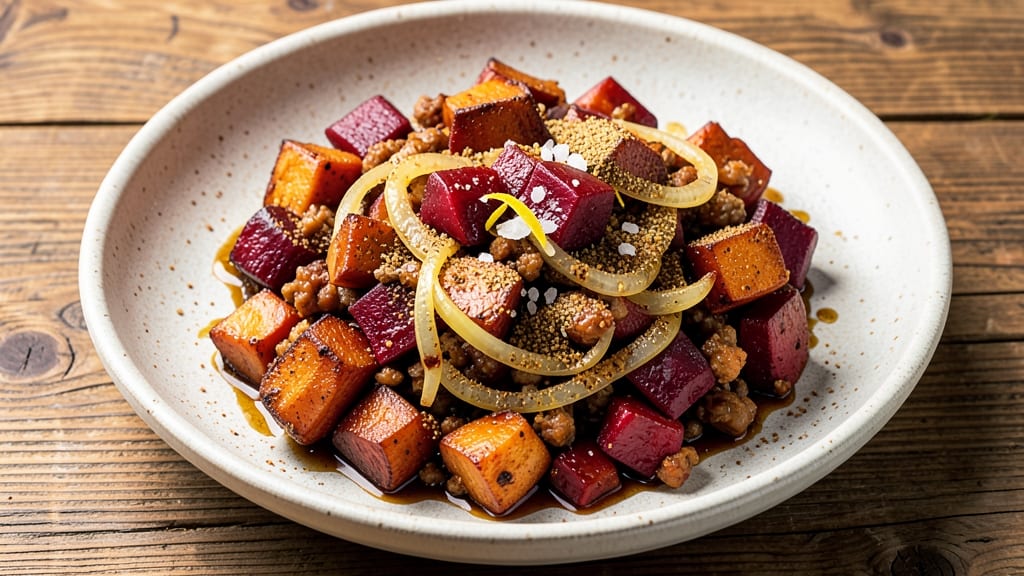
This sweet potato beet hash recipe transforms humble ingredients into crispy, earthy-sweet bites that pack a flavor punch in every mouthful.
The secret lies in high-heat searing that caramelizes the edges while keeping the centers tender—no fancy equipment needed, just a sturdy skillet and patience for the perfect golden crust. I developed this after realizing how quickly sweet potatoes and beets could become restaurant-quality sides with minimal effort.
The beauty of this hash is its versatility—it works as a standalone vegan main or pairs beautifully with eggs, tofu scrambles, or grilled proteins.
We'll build flavor through aromatic spices and a touch of acidity (thanks to a splash of apple cider vinegar), creating a balance that's both comforting and vibrant. The key technique? Cooking the potatoes and beets separately before combining them for even crispiness throughout.
What you'll end up with is a texturally perfect dish—crispy edges that give way to tender, slightly caramelized interiors, all infused with warm spices and a subtle sweetness. The earthy tones of the beets complement the sweet potatoes' natural caramelization, creating a visual and flavor harmony that's impossible to resist.
This recipe delivers restaurant-quality results with just one pan and 30 minutes of active time.
Serve immediately for maximum crispiness, or reheat gently to maintain that satisfying crunch. The optional additions—like crispy onions or fresh herbs—let you customize it to your taste while keeping the core technique foolproof.
Let's create this flavorful, satisfying hash that's as good for weeknight dinners as it is for special occasions.
Ingredients for sweet potato beet hash
Restaurant-quality crispiness starts with these earthy, vibrant ingredients—simple yet transformative.
| Ingredient | Amount | Notes |
|---|---|---|
| Sweet Potatoes 🍠 | 2 lbs | Medium, peeled and cubed (1-inch pieces) |
| Beets 🍠 | 1 ½ lbs | Medium, peeled and cubed (1-inch pieces) |
| Extra-Virgin Olive Oil 🫒 | ½ cup | High-quality, fruity variety |
| Yellow Onions 🧅 | 1 whole | Thinly sliced, for crispy topping |
| Apple Cider Vinegar 🍏 | 1 tbsp | For brightness and acidity balance |
| Ground Cumin 🌿 | 1 tsp | Toasted for deeper aroma |
| Smoked Paprika 🌶️ | 1 tsp | For earthy, smoky depth |
| Ground Coriander 🌿 | ½ tsp | Citrusy warmth |
| Salt 🧂 | 1 tsp | Diamond Crystal preferred |
| Black Pepper 🌶️ | ½ tsp | Freshly ground |
| Fresh Thyme Leaves 🌿 | ¼ cup | Chopped, for aromatic finish |
| Fresh Parsley 🌿 | ¼ cup | Chopped, for freshness |
| Vegan Butter 🧈 | 1 tbsp | For crispy onion topping |
The sweet potatoes and beets are the stars here—choose firm, vibrant produce with no soft spots. Trader Joe's and Whole Foods carry excellent organic options, but any well-stocked grocery store will have suitable varieties. For the best texture, cube them evenly (about 1-inch pieces) so they cook uniformly. The key to crispy edges is high heat and patience—don't rush this step. If using pre-peeled beets, rinse them thoroughly to remove any dirt from the peeling process, as beets absorb flavors easily. For the onions, yellow or red work equally well, but avoid sweet onions as they can overpower the dish.
No fresh thyme or parsley? Dried thyme at one-third the amount works in a pinch, though fresh is ideal for that aromatic finish. Substituting beets? Carrots or parsnips add sweetness but won't provide the same earthy depth. For the vinegar, white wine vinegar is a suitable swap, but apple cider adds a subtle sweetness that complements the dish beautifully. The vegan butter for crispy onions can be replaced with olive oil, though it won't caramelize as richly. If you prefer a smokier flavor, increase the smoked paprika to 1.5 teaspoons—just be aware it'll intensify the smokiness. For a quicker prep, you can use pre-cut frozen sweet potato cubes, though fresh yields superior texture.
This hash is best served immediately for maximum crispiness, but leftovers reheat beautifully in a 350°F oven for 10-15 minutes, covered loosely with foil. Store in an airtight container in the fridge for 4-5 days, though the texture will soften slightly upon reheating. For meal prep, portion into individual containers with a sprinkle of fresh parsley to maintain freshness. The flavors actually improve slightly the next day as the spices meld together—perfect for busy weeknights. Freeze portions for up to 3 months by spreading in a single layer first to prevent clumping, then transferring to a sealed bag.
Why You'll Love This Recipe
- One-Pan Magic: I swear by this—just toss everything on one sheet pan, roast it, and walk away. The sweet potatoes caramelize while the beets stay tender, and that golden crust? Pure reward with zero extra dishes.
- Earthy Sweet Crunch: The combo of roasted beets and sweet potatoes is ridiculously good—naturally sweet with a deep, almost smoky edge from the olive oil. A splash of apple cider vinegar at the end? That’s the secret to cutting through the richness without overpowering it.
- Breakfast or Dinner: Honestly, I make this for both. Serve it with a fried egg for breakfast, or pile it high on toast with avocado for a hearty dinner. The flavors hold up all day, and it’s just as welcome at 8 AM as it is at 8 PM.
- Budget Meal Stretch: Between us, sweet potatoes and beets are some of the most affordable veggies out there. This hash feeds four for under $10, and leftovers reheat like a dream—no soggy edges, just that same satisfying texture. My wallet and my freezer thank me every time.
Step-by-step instructions for sweet potato beet hash
Here's the method for achieving perfectly crispy, caramelized edges and tender interiors every time.
Prep and Par-Cook the Root Vegetables
Preheat your oven to 425°F and line a baking sheet with parchment paper. In a large bowl, toss the 2 lbs sweet potatoes and 1.5 lbs beets (both cubed to 1-inch pieces) with 0.5 cup extra-virgin olive oil, 1 tsp salt, 0.5 tsp black pepper, 1 tsp ground cumin, and 1 tsp smoked paprika. Spread them in a single layer on the prepared baking sheet.
Roast for 15 minutes until the edges begin to soften and the vegetables release easily from the baking sheet. This partial cooking ensures they'll finish perfectly in the skillet without turning mushy. The vegetables should be tender when pierced with a fork but still hold their shape—this is the ideal starting point for crisping.
Build Flavor with Aromatics and Spices
While the vegetables par-cook, heat a large cast-iron skillet over medium heat (no oil needed). Add the 1 whole yellow onion (thinly sliced) and cook for 5-6 minutes until softened and beginning to caramelize. Stir in 0.5 tsp ground coriander and cook for another 30 seconds until fragrant.
Here's the thing—don't walk away. The onions should develop a deep golden color and sweet aroma. This step forms the flavor base for your hash. When the onions are ready, remove them from the skillet and set aside, leaving the rendered onion oil in the pan—this is pure flavor gold.
Crisp the Vegetables in the Skillet
Return the par-cooked sweet potatoes and beets to the skillet, spreading them in an even layer. Cook over medium-high heat for 8-10 minutes, stirring occasionally, until the edges develop a deep golden-brown crust. You're looking for that perfect balance—tender centers with crispy exteriors.
I press down gently on the vegetables during the first minute of cooking—this prevents them from curling and ensures even contact with the pan. The pan should sizzle audibly, and you'll see those beautiful caramelized edges forming. If the vegetables aren't browning quickly enough, increase the heat slightly but watch carefully to avoid burning.
Finish with Brightness and Fresh Herbs
Reduce heat to medium and stir in the 1 tbsp apple cider vinegar and 1 tbsp vegan butter. Cook for another 2 minutes until the butter melts and the vinegar evaporates, leaving behind a bright, balanced flavor. The acidity cuts through the richness of the roasted vegetables and butter, creating a perfect balance.
Remove from heat and stir in the 0.25 cup fresh thyme leaves and 0.25 cup fresh parsley. The herbs add a fresh, aromatic finish that brightens the earthy sweetness of the vegetables. Taste and adjust seasoning if needed—you might want to add a pinch more salt to enhance all the flavors.
Serve Immediately for Maximum Crispiness
Transfer the hash to serving plates while it's still hot. The vegetables will continue to crisp slightly as they cool, but serving immediately ensures that first bite delivers maximum texture contrast. The hash should have deep golden-brown edges that give way to tender, caramelized interiors with pockets of crispy bits.
This dish pairs beautifully with a fried egg on top or alongside avocado slices for extra richness. The crispy edges will hold their texture for about 10 minutes, so serve promptly. The flavors develop even more as the hash sits, but the texture will soften if left too long.
Pro Tips For Making Sweet Potato Beet Hash
- ROAST FIRST, HASH SECOND: Cook your sweet potatoes and beets separately at 400°F (200°C) for 25-30 minutes until fork-tender—don’t skip this. Cold, raw chunks in the pan will steam instead of caramelize, leaving you with sad, mushy hash. (Yes, even if you’re impatient like me.)
- PEEL BEETS LIKE A PRO: Use a paring knife to slice off the stem end first, then roll the beet on the cutting board to peel in one smooth motion—no peeling the whole thing first. The skin’s tougher than it looks, and you’ll save your hands from slipping. (And no, you don’t need to wear gloves, but if you do, I won’t judge.)
- CRISP THE ONIONS LOW: After sweating the onions in olive oil, crank the heat to medium-high and let them brown for 5-7 minutes—don’t walk away. If you leave them unattended, they’ll turn bitter faster than you can say “burnt breakfast.” A wooden spoon helps scrape up the stuck bits without burning your fingers.
- BRINE THE BEETS: Toss peeled beets in a bowl with 1 tablespoon apple cider vinegar and 1 teaspoon salt for 10 minutes before roasting. This keeps them from drying out and makes them sweeter when roasted. (I learned this the hard way after overcooking them into leather.)
Storing and reheating this recipe
Refrigerator Storage
Let your hash cool completely before storing in an airtight container—I prefer glass with a tight-sealing lid to maintain crispiness longer. Keep it refrigerated at 40°F or below for up to 4-5 days.
The flavors actually deepen overnight as the spices meld together, making leftovers even more delicious. Just remember: the texture will soften slightly after reheating, but it's still packed with flavor. 💛
Freezer Prep
For longer storage, spread the cooled hash in a single layer on a baking sheet and freeze for 1 hour to prevent clumping. Transfer to a freezer-safe bag with all air squeezed out, then store for up to 3 months.
When ready to eat, thaw overnight in the fridge before reheating. This method preserves the best texture possible after freezing.
Oven Reheating
For the best results, reheat in a 350°F oven for 10-15 minutes on a baking sheet lined with parchment paper. Cover loosely with foil to retain moisture but allow some crisping.
The oven method helps restore some of that satisfying crunch while keeping the interior tender. Add a drizzle of olive oil before reheating if you want extra crispiness. ✨
Stovetop Refresh
If you're short on time, use a non-stick skillet over medium heat with 1 tablespoon olive oil. Reheat for 5-7 minutes, stirring occasionally, until warmed through. The oil helps recreate some of the crispy edges, though it won't match oven-reheated results.
Add a splash of water or broth if the hash looks dry during reheating.
Microwave Shortcut
For quick meals, cover the hash with a damp paper towel and microwave on 50% power for 1-2 minutes, stirring halfway. This gentle approach prevents drying out while warming through.
Finish with a sprinkle of fresh parsley to brighten the flavors after reheating. It's not as crispy as oven methods, but it's perfect for busy weeknights.
Texture Tips
To maintain crispiness when reheating, always start with room-temperature hash—transfer from fridge to counter for 10-15 minutes before reheating. For extra crunch, broil for 1-2 minutes at the end of oven reheating.
The key is balancing heat and moisture to avoid soggy results while restoring some of that golden-brown perfection. 🔥
Nutrition facts
Frequently asked questions
Can I make this hash without roasting the vegetables first?
You can try, but roasting first creates the perfect texture foundation. The partial cooking ensures tender centers while the skillet step builds those crispy edges. If you skip roasting, cook the cubed vegetables directly in the skillet for 12-15 minutes over medium-high heat, stirring occasionally, until tender with crispy edges—but you'll lose some of that caramelized depth.
What's the best way to store leftovers to keep them crispy?
Store in an airtight container with parchment paper between layers to prevent sogginess. For reheating, use the oven method (350°F for 10-15 minutes) with a drizzle of olive oil to restore crispiness. Never microwave without covering with a damp paper towel—this traps moisture and turns your hash into a mushy mess.
Can I substitute butternut squash for sweet potatoes?
Yes! Butternut squash works beautifully and adds a nutty sweetness that complements beets. Use 2 lbs cubed butternut squash and reduce roasting time to 12 minutes (it's more delicate than sweet potatoes). The texture will be slightly softer but still delicious—just expect less crispiness in the final hash.
How do I prevent the hash from getting soggy when reheating?
Always reheat from room temperature (let it sit 10-15 minutes before reheating) and use dry heat methods. For oven reheating, spread hash on a baking sheet with parchment paper and broil for 1-2 minutes at the end. For stovetop, use a dry non-stick skillet and cook over medium heat—adding moisture will ruin the texture.
What's the secret to getting extra crispy edges?
Three things: high heat, even spreading, and patience. Use medium-high heat and press down gently on the vegetables during the first minute of skillet cooking. Let them cook undisturbed for 2-3 minutes before stirring—this builds maximum crust. A well-seasoned cast-iron skillet helps too, as it retains heat better than stainless steel.