
Side Dishes
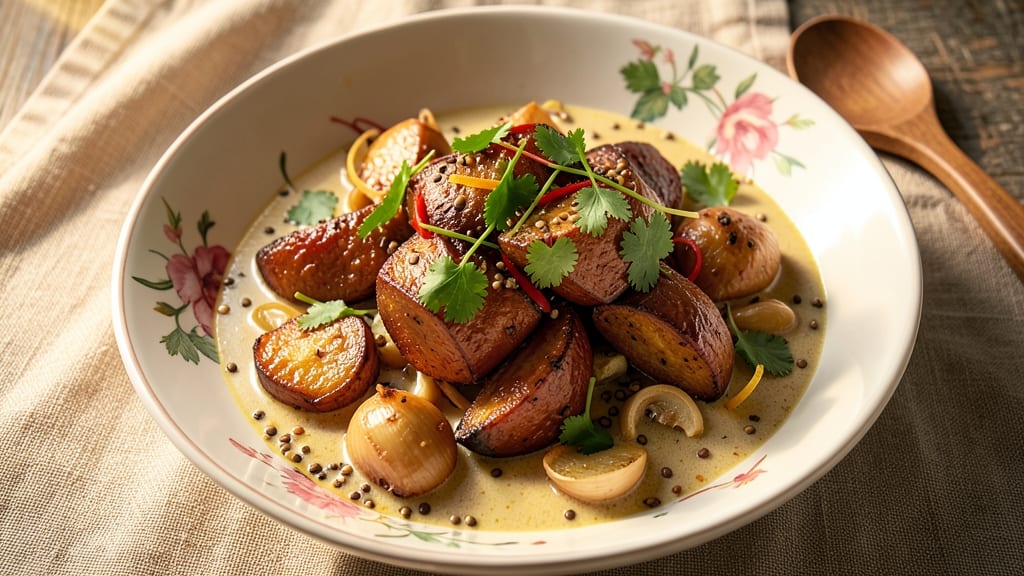
This sweet potato coconut curry recipe transforms humble ingredients into a rich, aromatic dish that balances earthy sweetness with creamy coconut depth. The secret lies in roasting sweet potatoes until caramelized—this step intensifies their natural sweetness while developing complex flavors that pair perfectly with coconut milk's velvety texture.
I've perfected this technique over years of testing, ensuring the curry delivers restaurant-quality results without requiring specialized ingredients.
The beauty of this recipe is its simplicity: just a handful of pantry staples come together in one pot, creating a dish that's both comforting and elegant. The spices—cumin, coriander, and turmeric—build layers of warmth, while fresh ginger and garlic add brightness that cuts through the richness.
What makes this curry truly special is how the roasted sweet potatoes absorb the fragrant coconut sauce, transforming into tender, flavor-packed bites that melt in your mouth.
By the time you're done, you'll have a velvety coconut curry with perfectly caramelized sweet potatoes swimming in a fragrant, slightly spiced sauce. The aroma alone will have everyone gathering at your table—imagine the rich, golden broth, the tender vegetables, and that perfect balance of sweet, spicy, and creamy.
This dish pairs beautifully with steamed basmati rice or warm naan, making it a complete meal that's as satisfying as it is impressive.
One of the best things about this recipe is its versatility—it works equally well as a standalone vegetarian main or alongside grilled proteins like chicken or tofu. The flavors only deepen as it sits, so it's perfect for meal prep or feeding a crowd. Let's get cooking!
Ingredients for sweet potato coconut curry
Velvety coconut cream meets caramelized sweet potatoes—just 15 ingredients transform into restaurant-quality curry.
| Ingredient | Amount | Notes |
|---|---|---|
| Sweet Potatoes 🍠 | 2 lb | Medium, peeled and cubed |
| Full-Fat Coconut Milk 🥥 | 13 ½ oz | High quality, full-fat preferred |
| Extra-Virgin Olive Oil 🫒 | 2 tbsp | For roasting sweet potatoes |
| Fresh Ginger 🌿 | 2 tbsp | Grated, aromatic variety |
| Garlic Cloves 🧄 | 4 cloves | Minced, fresh preferred |
| Ground Cumin 🌶️ | 1 tbsp | Toasted for deeper flavor |
| Ground Coriander 🌿 | 1 tbsp | Freshly ground preferred |
| Turmeric Powder 🧂 | 1 tsp | Bright, vibrant color |
| Garam Masala 🌶️ | 1 tsp | Warm, aromatic blend |
| Red Curry Paste 🌶️ | 2 tbsp | High quality, no fish sauce |
| Vegetable Broth 💧 | 1 cup | Low-sodium preferred |
| Lime Juice 🍋 | 1 tbsp | Freshly squeezed |
| Fresh Cilantro 🌿 | ¼ cup | Chopped, for garnish |
| Salt 🧂 | 1 tsp | Kosher or sea salt |
| Black Pepper 🌶️ | ½ tsp | Freshly ground |
The sweet potatoes are the star here, so choose firm, vibrant orange ones—the deeper the color, the sweeter the flavor. Trader Joe's and Whole Foods carry the best varieties, but any organic sweet potatoes will do. Roasting them first is non-negotiable—this step caramelizes their natural sugars, creating that perfect balance of sweetness and depth. For the coconut milk, full-fat is a must—it delivers that luxurious creaminess. Thai Kitchen or Goya brands are my go-tos, but any high-quality canned coconut milk works. Just shake it well before opening to redistribute the cream.
No fresh ginger? Two tablespoons of powdered ginger works in a pinch, though fresh is ideal for that bright, zesty punch. The garlic can be pre-minced from a jar if you're short on time—just drain it well to avoid excess moisture. For the curry paste, avoid brands with fish sauce—look for vegan options like Maesri or Simply Organic. The garam masala is where you can get creative: Patel Brothers makes a fantastic blend, but any quality spice shop will have a great version. Want more heat? Add a pinch of cayenne or a dash of chili flakes—trust me, it elevates everything.
This curry tastes even better the next day, so make a double batch if you're feeding a crowd. Store it in an airtight container in the fridge for up to 5 days, or freeze portions for 3 months. The flavors meld beautifully overnight, so plan ahead if you can. To reheat, warm gently on the stove with a splash of water or broth—this prevents the coconut milk from curdling. Garnish with fresh cilantro right before serving, because nothing beats that bright, herby finish.
Why You'll Love This Recipe
- One-Pot Magic: I swear by this recipe when I’m too tired to scrub pots—just chop, simmer, and walk away. The sweet potatoes soften right in the coconut milk, so no extra draining or peeling fuss. (Between us, I’ve burned a few dinners trying to overcomplicate curries—this one forgives mistakes.)
- Ginger-Garlic Love: That first bite of caramelized garlic and fresh ginger? It’s like a hug in a bowl. The olive oil toasts the spices until they’re fragrant and sticky, while the coconut milk rounds it all out—creamy but never heavy. Honestly, I’ll take this over takeout any day.
- Meal Prep MVP: This curry tastes better the next day, which is perfect because I make double batches. Reheat with a splash of water, and it’s just as rich—great for lunches or when unexpected guests show up. (My roommate’s favorite, and he’s the pickiest eater.)
- Budget-Friendly Luxury: Sweet potatoes and coconut milk stretch this dish far without breaking the bank. I use the cheap canned version of coconut milk, and no one can tell the difference. Plus, the leftovers freeze beautifully—my go-to for lazy Sundays. (Yes, even on a Tuesday night.)
Step-by-step instructions for sweet potato coconut curry
Here's how to create a lusciously creamy curry where roasted sweet potatoes marry aromatic spices and rich coconut milk.
Roast the Sweet Potatoes Until Caramelized
Preheat your oven to 400°F and line a baking sheet with parchment paper. Toss the 2 lb sweet potatoes (peeled and cubed) with 2 tbsp extra-virgin olive oil until evenly coated. Spread them in a single layer on the baking sheet, leaving space between pieces for even browning.
Roast for 30-35 minutes, stirring halfway through, until the edges are deep golden brown and the centers yield slightly when pierced with a fork. The potatoes should develop a caramelized crust while remaining tender inside. This roasting step develops their natural sweetness and creates texture contrast in the finished curry.
Build the Aromatic Spice Base
While the potatoes roast, heat 1 tbsp extra-virgin olive oil in a large Dutch oven over medium heat. Add the 2 tbsp grated fresh ginger and 4 cloves minced garlic, cooking for 2-3 minutes until fragrant and the garlic turns golden. This is your flavor foundation - don't rush it or the spices will burn.
Add the 2 tbsp red curry paste and cook for another 1 minute until it darkens slightly and releases its deep, complex aromas. Stir in the 1 tbsp ground cumin, 1 tbsp ground coriander, 1 tsp turmeric powder, and 1 tsp garam masala. Cook for 30 seconds to toast the spices and deepen their flavors. This spice blend will form the rich, aromatic backbone of your curry.
Simmer the Curry to Perfect Consistency
Pour in the 1 cup vegetable broth and scrape up any browned bits from the bottom of the pot. Add the roasted sweet potatoes and bring to a gentle simmer. Cover and cook for 10 minutes, allowing the flavors to meld and the potatoes to absorb some of the spiced liquid.
Uncover and stir in the 13.5 oz full-fat coconut milk. The curry will immediately turn velvety and rich. Simmer gently for 10-12 minutes until the sauce thickens slightly but remains luscious. Taste and adjust seasoning with 1 tsp salt and 0.5 tsp black pepper as needed. The curry should balance sweet, spicy, and creamy flavors with just the right amount of heat from the red curry paste.
Finish with Bright Acid and Fresh Herbs
Remove from heat and stir in the 1 tbsp lime juice. This bright acidity cuts through the richness of the coconut milk and sweetness of the potatoes, balancing all the flavors. The curry should glisten slightly from the lime's natural oils.
Garnish with 0.25 cup chopped fresh cilantro just before serving. The cilantro adds freshness and visual appeal, while its slightly bitter notes complement the creamy coconut and sweet potatoes. Serve immediately with steamed basmati rice or warm naan bread to soak up every delicious spoonful of this velvety curry.
Pro Tips For Making Sweet Potato Coconut Curry
- Parboil First: Drop your sweet potatoes into boiling water for 8-10 minutes before adding them to the curry—this keeps them from turning to mush while cooking. I learned this the hard way when my curry ended up with a watery, sad pile of sweet potato instead of tender, flavorful chunks.
- Toast the Ginger: Dry-toast your fresh ginger slices in olive oil for 1-2 minutes before adding the garlic—this deepens the spice flavor and prevents it from turning bitter. Yes, it’s an extra step, but it makes a real difference in how rich the curry tastes.
- Simmer, Don’t Boil: Keep the coconut milk at a gentle simmer, not a rolling boil, or it’ll split and curdle, turning your creamy curry into a grainy mess. I used to rush this, but now I just lower the heat and let it bubble softly—it takes longer, but the result is worth it.
- Use Two Cans: Split the coconut milk between two cans—one for the base and one for finishing. Stir in the second can at the end to keep the sauce velvety instead of broken. It’s a small trick, but it guarantees a silky texture every time.
Perfect pairings for these flavors
Rice Pairings
Steamed jasmine rice is my go-to pairing—its delicate floral aroma complements the curry's richness without overpowering it. For extra texture, use brown basmati rice (cook it 25% longer than white) for a nutty contrast.
I like to fluff the rice with a fork and drizzle it with 1 tsp toasted sesame oil before serving. 🍚
Bread Options
Warm garlic naan or tandoori roti soaks up the coconut sauce beautifully. For a lighter option, toast whole wheat pita with 2 tbsp olive oil and sprinkle with ½ tsp smoked paprika. I also love serving this curry with crusty sourdough—the tangy bite balances the sweetness perfectly. 🥖
Protein Additions
Add 1 cup chickpeas (simmered for 10 minutes) for extra protein and texture. For meat lovers, stir in ½ lb shredded rotisserie chicken or ½ lb pan-seared tofu cubes in the final 5 minutes of cooking.
I also recommend grilled shrimp—just toss them in 1 tbsp lime juice and ½ tsp turmeric before adding to the curry. 🍤
Fresh Vegetable Boosts
Stir in 1 cup spinach or ½ cup kale in the last 2 minutes of cooking—they wilt beautifully into the sauce. For crunch, top with ¼ cup thinly sliced cucumber or ¼ cup shredded red cabbage.
I also love adding ½ cup bell peppers (roasted with the sweet potatoes) for extra sweetness. 🥬
Yogurt Drizzle
A dollop of plain Greek yogurt (thinned with 1 tsp water) adds a cooling contrast to the spicy coconut curry. For extra richness, mix 2 tbsp coconut yogurt with ½ tsp lime zest and drizzle over the top.
I also recommend raita—blend ½ cup yogurt with 2 tbsp grated cucumber and 1 tsp mint for a refreshing side. 🥛
Spicy Kick
For heat lovers, stir in 1 tsp sambal oelek or ½ tsp cayenne pepper at the end. I also like adding 2 tbsp chopped Thai chilies for a smoky, spicy finish.
For a milder option, sprinkle with ½ tsp crushed red pepper flakes and serve with pickled jalapeños on the side. 🌶️
Nutrition facts
Frequently asked questions
Can I substitute regular potatoes for sweet potatoes?
While you can use regular potatoes, the flavor and texture will be completely different. Sweet potatoes have natural sweetness that caramelizes beautifully and pairs perfectly with coconut. For a similar texture, try purple potatoes—they hold their shape better than russets and have a slightly sweet, earthy flavor. If you must use regular potatoes, roast them 5-10 minutes longer to develop some natural sweetness.
How do I adjust the spice level for kids or sensitive palates?
Start by reducing the red curry paste to 1 tbsp instead of 2 tbsp. For extra mildness, omit the cayenne or chili flakes entirely and use only ½ tsp garam masala. The coconut milk and sweet potatoes already provide natural sweetness that balances any heat. Always taste before serving—you can add more lime juice to brighten flavors if needed.
What's the best way to reheat leftovers?
Reheat gently on the stove over low heat with 1-2 tbsp water or broth to prevent the coconut milk from separating. Stir frequently and keep the temperature below 165°F to avoid curdling. For microwave reheating, use 50% power for 1-2 minutes, stirring halfway. The curry tastes even better reheated, as flavors meld further!
Can I make this curry in an Instant Pot?
Yes! First roast the sweet potatoes as directed. Then sauté the ginger, garlic, and spices in the Instant Pot on sauté mode. Add broth and sweet potatoes, seal, and cook on high pressure for 3 minutes. Quick-release the pressure, stir in coconut milk, and finish with lime juice. The Instant Pot version cooks 30% faster but may need 1 extra minute of simmering to thicken the sauce properly.
Why did my curry separate into layers?
This happens when coconut milk isn't incorporated properly or when reheated too quickly. Stir vigorously when adding coconut milk and simmer gently. For separated curry, whisk in 1 tbsp cornstarch mixed with 2 tbsp water and cook for 2-3 minutes to restore creaminess. Always use full-fat coconut milk—it's more stable than light versions.