
Side Dishes
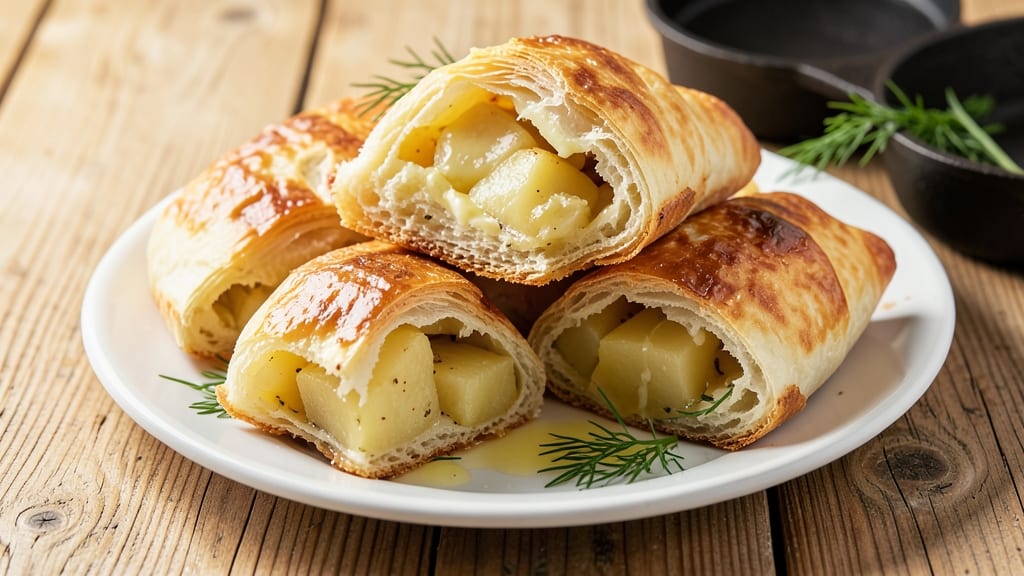
This Armenian potato piroshki recipe delivers flaky, golden dough wrapped around herbed spuds—just like the ones from Yerevan’s bustling street markets. 🌟 The secret lies in a simple yet robust dough that stays tender yet crisp, combined with a filling of boiled potatoes, onions, and aromatic spices that transform a simple side into a satisfying meal.
Unlike store-bought versions, this recipe captures the authentic texture and flavor that make piroshki a staple in Armenian cuisine.
The dough requires just five ingredients—flour, yeast, water, salt, and a touch of oil—to create a light, airy texture that’s both easy to work with and impressive to serve.
While traditional recipes often call for boiling or baking, I’ve included a frying method for extra crispiness, giving you flexibility based on your preferred texture.
The filling is where the magic happens: boiled potatoes tossed with onions, fresh dill, and a pinch of salt, creating a flavorful center that pairs perfectly with the dough’s flaky layers.
What you’ll end up with is a dish that’s hearty enough to stand alone or light enough to complement grilled meats and salads. The aroma of warm, herbed potatoes wafting from the oven—or sizzling in oil—is enough to draw everyone to the table.
Whether you’re serving a crowd or just craving a taste of Armenia, this recipe delivers restaurant-quality results with minimal effort.
For those who love customization, you can easily add ground meat or cheese to the filling, or even swap in other vegetables like mushrooms or spinach.
The dough itself can be prepped ahead and refrigerated, making this a perfect make-ahead dish for gatherings. Let’s get started on creating these delicious, handheld delights!
Ingredients for armenian potato piroshki
Five simple ingredients make the dough, while herbed spuds bring the filling to life.
| Ingredient | Amount | Notes |
|---|---|---|
| All-Purpose Flour 🌾 | 3 ½ cups | Spooned and leveled, not packed |
| Active Dry Yeast 🍞 | ¼ tsp | Fresh yeast if available |
| Granulated Sugar 🍚 | 1 tsp | For yeast activation |
| Warm Water 💧 | 1 cup | 105-110°F for yeast |
| Unsalted Butter 🧈 | ½ cup | Cold, cubed for dough |
| Large Russet Potatoes 🥔 | 2 whole | Boiled, peeled, cubed |
| Yellow Onion 🧅 | 1 whole | Diced, sautéed golden |
| Fresh Dill 🌿 | ¼ cup | Chopped, stems removed |
| Kosher Salt 🧂 | 1 ½ tsp | Divided for dough/filling |
| Vegetable Oil 🫒 | ½ cup | For frying, high smoke point |
| Black Pepper 🌶️ | ½ tsp | Freshly cracked preferred |
| Allspice Berries 🌶️ | ¼ tsp | Crushed, optional for warmth |
The flour is non-negotiable here—King Arthur or Gold Medal for that perfect flaky texture. I always grab the 5-pound bag from WinCo when I'm making a big batch, but regular grocery store brands work fine. The yeast? Fresh is best if you can find it at your local market, but active dry works in a pinch. Just make sure it's not expired—yeast goes bad faster than you'd think. For the potatoes, Russets are your friends—they hold up better to boiling than Yukon Golds. If you're feeling fancy, grab a few extra and boil them all at once for other meals.
No fresh dill? Dried works at half the amount, but honestly, the fresh stuff makes all the difference. The allspice is optional but worth it—Penzeys Spices sells it whole, which you can crush yourself. No vegetable oil? Peanut or canola oil works just as well. The onions can be swapped for shallots if you're feeling adventurous, but I stick with yellow for that classic Armenian flavor. For the filling, if you're adding meat, ground lamb or beef cooks up beautifully—just brown it first before mixing with the potatoes. And if you're short on time, instant potatoes are a lifesaver (use half the amount and add extra water).
The dough keeps beautifully in the fridge for up to 2 days—just wrap it tightly in plastic wrap. For longer storage, freeze it for up to 3 months. The filling can be prepped ahead too, but add the fresh dill just before assembling. When reheating, 350°F for 10-12 minutes keeps everything crispy. I always make a double batch—one for dinner, one for lunch the next day. These freeze well too, just reheat from frozen at 375°F for 15-18 minutes.
Why You'll Love This Recipe
- No-Knead Magic: I swear, mixing the dough with just flour, yeast, sugar, and warm water takes five minutes—no standing at the counter waiting for it to rise. The butter keeps it tender, and honestly? It’s the kind of dough that forgives mistakes.
- Crispy-Creamy Payoff: That golden, buttery crust gives way to fluffy dough, and inside? Warm, herby potatoes that melt in your mouth. The contrast is what makes it ridiculous—crunchy outside, pillowy inside, with every bite packed with flavor.
- Picnic or Potluck Hero: Between us, these are my go-to for parties, lunchboxes, or even a lazy Sunday spread. They freeze like champs, so I batch-make them and reheat whenever. (Yes, even on a Tuesday night.)
- Budget-Friendly Staple: Flour, yeast, butter—these are pantry basics that stretch across meals. A single dough batch feeds six, and leftovers reheat beautifully. My wallet and I both approve.
Step-by-step instructions for Armenian potato piroshki
Here's how to create pillowy, golden-brown piroshki with layers of herbed potato filling.
👨🍳 Step 1: Activate the Yeast and Make the Dough
In a small bowl, whisk together the 1 cup warm water, 1 tsp granulated sugar, and 0.25 tsp active dry yeast. Let it sit for 5-10 minutes until frothy—this confirms your yeast is alive and ready to work. If it doesn't bubble, start over with fresh yeast.
In the bowl of a stand mixer fitted with the dough hook, combine the 3.5 cups all-purpose flour and 1 tsp kosher salt. Add the yeast mixture and mix on low speed until combined. Then add the 0.5 cup cold cubed unsalted butter and mix until the butter is fully incorporated and the dough begins to pull away from the sides of the bowl.
Increase the speed to medium and knead for 5-7 minutes until the dough is smooth and elastic. If it's too sticky, add 1 tablespoon flour at a time until it comes together. The dough should be soft but not wet—you'll know it's ready when it springs back slowly when poked.
🥘 Step 2: Prepare the Potato and Onion Filling
While the dough rests, peel and cube the 2 whole large russet potatoes into ½-inch pieces. Boil them in salted water for 10-12 minutes until fork-tender. Drain well and set aside.
In a large skillet, heat 2 tablespoons vegetable oil over medium heat. Add the diced yellow onion and cook for 5-6 minutes until golden brown and caramelized. Add the cooked potatoes, 0.25 cup chopped fresh dill, 0.5 tsp black pepper, and 0.25 tsp crushed allspice berries. Cook for another 3-4 minutes until the potatoes are heated through and the flavors meld.
Remove from heat and let cool slightly. Season with the remaining 0.5 tsp kosher salt to taste. The filling should be flavorful but not wet—if it's too moist, spread it on a paper towel to absorb excess liquid before using.
🔪 Step 3: Shape the Dough and Assemble Piroshki
Lightly flour a clean surface and roll out the dough into a ¼-inch thick rectangle. Cut it into 8 equal squares (about 4x4 inches each). Keep the remaining squares covered with a damp towel to prevent drying.
Place 2 tablespoons of the potato filling in the center of each dough square. Fold one corner of the dough over the filling, then fold in the opposite corner to form a triangle. Pinch the edges tightly to seal, then roll the piroshki gently between your palms to smooth the surface. Place them seam-side down on a floured baking sheet.
Let the assembled piroshki rest for 15 minutes while you prepare the frying oil. This resting period helps them hold their shape better during cooking. Cover them loosely with a towel to prevent drying.
🔥 Step 4: Fry to Golden Perfection
Heat 0.5 cup vegetable oil in a deep skillet or Dutch oven over medium-high heat until it reaches 350°F—use a thermometer for accuracy. Fry 4 piroshki at a time, turning occasionally, for 3-4 minutes per side until they're golden brown and crispy.
Watch carefully—they'll rise slightly as they cook, so don't overcrowd the pan. If the oil smokes excessively, reduce the heat slightly. Drain on a paper towel-lined plate and keep warm in a 200°F oven while you fry the remaining piroshki.
Serve immediately while still hot and crispy. The flaky layers should give way to reveal the herbed potato filling inside. For extra flavor, sprinkle with additional chopped fresh dill and a pinch of kosher salt before serving.
Pro Tips For Making Armenian Potato Piroshki
- Use Cold Butter for Dough: I learned this the hard way—mixing softened butter into the dough makes it gummy and hard to handle. Cut that unsalted butter into small cubes and keep it in the fridge until the very last moment when shaping the piroshki. The dough will be easier to roll, and the butter won’t melt into a sticky mess.
- Boil Potatoes Until Fork-Tender: Overcooked mashed potatoes turn gluey, and undercooked ones stay chalky. Boil the potatoes until they’re just fork-tender—about 12-15 minutes for waxy varieties—then drain and mash while still hot. A splash of warm milk or a pat of butter helps keep them light and fluffy.
- Rest Dough Before Rolling: Skipping the rest makes the dough fight you. Let it sit for at least 30 minutes after kneading—covered with a damp towel—so the gluten relaxes. This prevents cracking when you roll it out thin for those delicate piroshki wrappers.
- Prevent Overfilling the Piroshki: Stuff them too much, and the filling bursts out when baking. Use about 2-3 tablespoons of potato filling per half-circle dough, then fold and seal tightly before crimping the edges. Trust me, the last thing you want is a buttery mess on your counter.
Flavor customization for this dish
Herbed Potato Variations
Swap the classic dill for fresh parsley or cilantro if you prefer brighter notes. I like adding ½ tsp dried tarragon for an earthy twist, especially when serving with lamb dishes. For extra depth, mix in 1 tbsp finely chopped mint—it pairs beautifully with the allspice warmth. 🌿
Meat-Inspired Fillings
Add ½ lb ground lamb or beef to the filling for a heartier version. Brown the meat first in 1 tbsp oil until fully cooked, then mix with the potatoes.
A pinch of ground cumin (about ¼ tsp) enhances the savory profile. For a vegetarian option, try crumbled feta or goat cheese instead.
Spice Level Boost
For heat lovers, add ½ tsp smoked paprika or red pepper flakes to the filling. I also like tossing in 1 tbsp finely chopped jalapeño for a subtle kick. Balance the heat with an extra tbsp of sour cream or Greek yogurt when serving. 🌶️
Dairy Twists
Stir ¼ cup crumbled blue cheese or aged cheddar into the filling for a tangy, melty center. For a creamy variation, mix in 2 tbsp sour cream with the potatoes before assembling. The dairy adds richness that pairs perfectly with the flaky dough.
Vegetable Additions
Boost nutrition by mixing in ½ cup sautéed mushrooms or spinach with the potatoes. I also love adding ¼ cup finely chopped bell peppers for sweetness. Roasted garlic (about 1 clove) adds a mellow depth that complements the onions beautifully.
Sweet-Savory Fusion
For a dessert-inspired twist, add ¼ cup finely chopped apples or pears to the filling. A pinch of cinnamon (about ⅛ tsp) balances the savory spices. Serve with a drizzle of honey or maple syrup for a sweet finish. 🍏
Nutrition facts
Frequently asked questions
Can I make Armenian potato piroshki without yeast?
Yes! For a quick version, use 1 cup all-purpose flour, ½ tsp baking powder, ½ tsp salt, 3 tbsp cold butter, and 2-3 tbsp ice water to form a stiff dough. Roll out thin, fill with the potato mixture, fold into triangles, and bake at 400°F for 15-18 minutes until golden. The texture will be more like a flatbread than traditional flaky dough.
How do I prevent the dough from tearing when shaping?
Keep the dough and your work surface lightly floured, but don't overdo it—too much flour makes the dough dry and brittle. Let the dough rest for 30 minutes after kneading to relax the gluten. When rolling, use gentle pressure and avoid stretching the dough. If it cracks, simply press the edges together before sealing.
Can I bake these instead of frying?
Brush the assembled piroshki with 1 tbsp melted butter or olive oil, then bake at 400°F for 18-20 minutes until golden brown. For extra crispiness, place them on a baking sheet lined with parchment paper. Baking gives a lighter texture compared to frying, but they'll still be delicious.
Why did my piroshki turn out dense instead of flaky?
Overworking the dough or using too much flour can make them dense. Make sure your yeast is active (it should foam within 5-10 minutes in warm water). Also, don't skip the resting time after shaping—this helps the dough relax and develop layers. If the filling was too wet, drain it well before assembling to prevent a soggy texture.
How long can I store leftover piroshki?
Store in an airtight container at room temperature for 1 day, or refrigerate for up to 3 days. To reheat, bake at 375°F for 10-12 minutes or fry in oil for 2-3 minutes until crispy again. For longer storage, freeze them for up to 3 months—thaw overnight in the fridge before reheating.