
Desserts
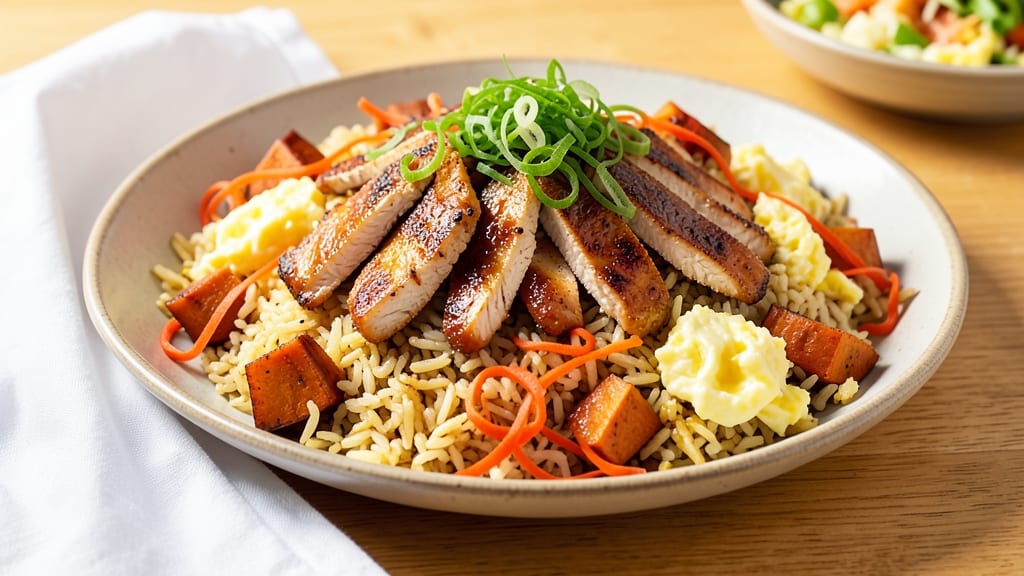
This sweet potato fried rice recipe transforms simple ingredients into a dish that balances caramelized sweetness with savory stir-fry perfection. The secret lies in perfectly cooked rice with tender sweet potatoes that develop a subtle caramelized edge, while aromatics and protein add depth.
I developed this version after years of experimenting with textures and flavor combinations—it’s the one that finally nailed that ideal harmony between sweet and savory.
The foundation starts with day-old rice that absorbs flavors beautifully, paired with sweet potatoes cut into even cubes for consistent cooking.
A quick stir-fry in a hot wok or skillet creates those signature wok hei flavors, while soy sauce, sesame oil, and a touch of honey balance the sweetness with umami. The protein—whether shrimp, chicken, or tofu—adds substance without overpowering the dish’s natural sweetness.
What you’ll end up with is a vibrant, fragrant dish where each bite delivers tender rice, caramelized sweet potatoes, and perfectly seasoned protein. The colors are striking—golden sweet potatoes against white rice, bright green veggies, and glossy sauce—making it as visually appealing as it is delicious.
This recipe is designed to impress without requiring advanced skills.
Best served fresh with a sprinkle of sesame seeds and green onions, this fried rice works equally well as a weeknight dinner or a showstopping dish for guests. The technique is straightforward, but the result feels like a restaurant-quality meal. Let’s get cooking!
Ingredients for sweet potato fried rice
Perfectly balanced ingredients create this restaurant-quality sweet potato fried rice with caramelized edges and vibrant flavors.
| Ingredient | Amount | Notes |
|---|---|---|
| Day-Old Cooked White Rice 🍚 | 4 cups | Cold, preferably jasmine or basmati |
| Sweet Potatoes 🍠 | 1 ½ lb | Organic, peeled and cubed evenly |
| Large Eggs 🥚 | 3 whole | Freshly beaten for stir-fry |
| Boneless Chicken Breast 🍗 | 1 lb | Thinly sliced, marinated optional |
| Green Onions 🧅 | ½ cup | White and green parts separated |
| Fresh Ginger 🌿 | 1 tbsp | Finely grated, aromatic |
| Garlic Cloves 🧄 | 4 cloves | Minced, fresh preferred |
| Sesame Oil 🫒 | 1 tbsp | Toasted, for aroma |
| Light Soy Sauce 🥄 | 3 tbsp | Low-sodium preferred |
| Dark Soy Sauce 🥄 | 1 tbsp | For depth of color |
| Honey 🍯 | 1 tbsp | Raw or wildflower |
| Vegetable Oil 🫒 | 2 tbsp | High smoke point |
| Toasted Sesame Seeds 🌾 | 1 tbsp | For garnish |
| Diamond Crystal Kosher Salt 🧂 | ½ tsp | Adjust to taste |
| Freshly Ground Black Pepper 🌶️ | ¼ tsp | Lightly seasoned |
The sweet potatoes are the heart of this dish—organic varieties like Jewel or Garnet develop the best caramelization. Look for firm, unblemished tubers at Whole Foods or your local farmers market. Cut them into even 1/2-inch cubes for consistent cooking; larger pieces stay undercooked, while smaller ones burn. The chicken breast should be thinly sliced against the grain for maximum tenderness. If you're using shrimp, opt for medium-sized, peeled tails for quick cooking. Fresh ginger and garlic are non-negotiable here—they're the aromatic foundation that transforms this into something special.
No sesame oil? Avocado oil at half the amount works in a pinch, though it lacks the nutty aroma. Substituting chicken for shrimp? Use the same quantity but reduce cooking time by half. The soy sauces can be swapped for coconut aminos, though the color will be lighter. For a vegetarian version, replace the chicken with extra-firm tofu pressed and cubed. The honey adds just enough sweetness to balance the savory notes—maple syrup works equally well. If you're using day-old rice, break up any clumps with your fingers before adding to the wok. The rice should be completely cold to prevent steaming during stir-frying.
This dish tastes even better the next day as flavors meld together. Store leftovers in an airtight container in the fridge for up to 4 days. For freezing, portion into single servings and freeze for up to 3 months. Reheat gently in a skillet with a splash of water to restore crispness. The sesame seeds and green onions should be added fresh when serving—they keep best in the fridge for 5 days when stored in separate containers. For a smoky twist, add a pinch of smoked paprika to the soy sauce mixture before tossing with the rice.
Why You'll Love This Recipe
- I swear by this trick: toss in day-old rice and sweet potato cubes that almost got tossed. The rice stays separate but soaks up the eggy, savory sauce like a dream—no sad, soggy scraps here.
- No Leftover Waste: I swear by this trick: toss in day-old rice and sweet potato cubes that almost got tossed. The rice stays separate but soaks up the eggy, savory sauce like a dream—no sad, soggy scraps here.
- Sweet & Savory Magic: That caramelized sweet potato meets the umami from chicken and the bright green onions—it’s the kind of combo that makes you pause mid-bite. Honestly, the crispy edges on the sweet potato? My favorite part.
- Lunchbox Hero: Pack this cold or reheated—it’s just as good both ways. Throw in a fried egg on top for protein, and suddenly you’ve got a meal that fuels a busy day without the fuss of a hot lunch.
Step-by-step instructions for sweet potato fried rice
Here's how to transform simple ingredients into a restaurant-worthy stir-fry with caramelized sweet potatoes and savory depth.
Prepare the Sweet Potatoes for Caramelization
Peel the 1.5 lb sweet potatoes and cut them into ½-inch cubes for even cooking. Spread them on a parchment-lined baking sheet and toss with 1 tbsp vegetable oil and 0.25 tsp freshly ground black pepper. Roast at 400°F for 25-30 minutes, stirring halfway, until edges are golden brown and centers yield slightly to pressure.
Remove from oven and immediately toss with 1 tbsp honey and 1 tbsp dark soy sauce while still hot. The residual heat will create a glossy caramelized coating. Let cool completely before using—this prevents the rice from becoming mushy when combined later.
Cook the Chicken and Aromatics
Heat 1 tbsp vegetable oil in a wok or large skillet over medium-high heat. Add the 1 lb boneless chicken breast sliced into thin strips and cook for 4-5 minutes until just cooked through (about 165°F internally). Remove and set aside.
In the same pan, add 1 tbsp sesame oil and 1 tbsp vegetable oil. Sauté the 1 tbsp finely grated fresh ginger and 4 cloves minced garlic cloves for 30 seconds until fragrant. Add the 0.5 cup green onions (white parts only) and cook for 1 minute until softened. This aromatic base forms the flavor foundation of the dish.
Scramble the Eggs and Combine Ingredients
Push the aromatics to one side of the pan and add 2 tbsp vegetable oil to the empty space. Pour in the 3 whole large eggs that have been beaten until frothy. Scramble rapidly over medium-high heat for 1-2 minutes until just set but still slightly moist. Remove and set aside with the chicken.
Add the 4 cups day-old cooked white rice to the pan, breaking up any clumps with a spatula. Stir-fry for 2-3 minutes until the rice is heated through and begins to sizzle. Add the caramelized sweet potatoes, 3 tbsp light soy sauce, and 0.5 tsp diamond crystal kosher salt. Toss everything together for 3-4 minutes until the rice is evenly coated and the sweet potatoes are heated through.
Finish with Garnishes and Serve
Return the chicken and eggs to the pan, mixing gently to combine. Taste and adjust seasoning if needed—you may want to add a splash of water or more soy sauce for desired consistency. Remove from heat and immediately garnish with the 0.5 cup green onions (green parts only) and 1 tbsp toasted sesame seeds.
Serve immediately while hot. The dish should have a perfect balance of caramelized sweetness from the sweet potatoes, savory depth from the soy sauces, and a satisfying texture from the slightly crispy rice and tender chicken. Each bite should deliver a harmonious blend of flavors and temperatures.
Pro Tips For Making Sweet Potato Fried Rice
- STEAM, DON’T BOIL, THE SWEET POTATO: I learned this the hard way—boiling sweet potatoes turns them mushy and waterlogged, which ruins the texture in fried rice. Instead, cut them into ½-inch cubes, toss in a steamer basket, and cook for 8-10 minutes until fork-tender but still holding shape. The slight firmness keeps them from turning to glue in the wok.
- CUT CHICKEN THIN, NOT SMALL: Thin slices cook faster and stay juicier than bite-sized chunks. Pound the chicken breast to ¼-inch thickness, then slice against the grain into long, paper-thin strips. They’ll sear in seconds and absorb flavors better—no more dry, overcooked chicken in your rice.
- SCRAMBLE EGGS SEPARATELY: Mixing eggs into the wok too early makes them rubbery. Push the rice to one side, scramble the beaten eggs in the empty space with a splash of oil, then fold them in at the very end. The eggs stay creamy, not scrambled into oblivion like they often do when tossed in too soon.
- USE COLD RICE, NOT WARM: Day-old rice is non-negotiable, but cold rice from the fridge is worse—it’ll steam and turn mushy. Spread freshly cooked rice on a tray, let it cool to room temp (about 30 minutes), then refrigerate overnight. The slightly warm, slightly dry texture is perfect for frying.
Common mistakes when making this dish
Overcooking Sweet Potatoes
Sweet potatoes are delicate when stir-fried—they burn easily and lose their natural sweetness. I’ve ruined this dish more times than I’d like to admit by overcooking them in the wok.
Once your sweet potatoes are caramelized (from the roasting step), add them to the rice last—they only need 2-3 minutes to warm through. If they start to darken too quickly, remove them immediately and set aside until serving. 🍠
Using Fresh Rice
Freshly cooked rice releases steam when stir-fried, turning your fried rice into a mushy mess. The recipe calls for day-old rice because it’s drier and absorbs flavors better. If you’re in a pinch, spread freshly cooked rice on a tray and refrigerate for 30 minutes to dry it out.
Never skip this step—it’s the difference between a great dish and a sad one. ❄️
Skipping the Aromatics
Ginger and garlic might seem like small details, but they’re the flavor anchors of this dish. I’ve made the mistake of rushing this step, and the result was flat, one-dimensional fried rice.
Sauté them for full 30 seconds until fragrant—this builds layers of flavor that tie everything together. Pro tip: Use fresh ginger instead of powdered; the difference is night and day. 🌿
Underseasoning the Rice
Many home cooks hold back on soy sauce, thinking it’ll make the dish too salty. Trust me, you cannot over-season fried rice—it’s designed to be bold. Start with the full 3 tbsp light soy sauce and 1 tbsp dark soy sauce, then taste as you go.
If it needs more, add another ½ tbsp—you won’t regret it. The balance of sweet (honey), savory (soy), and umami (eggs) is what makes this dish sing. 🎶
Crowding the Wok
Overfilling your wok or skillet causes steam buildup, which makes your rice soggy instead of crispy. Work in batches if needed—start with half the rice, stir-fry until golden, then add the rest. A 14-inch wok is ideal for this recipe, but a large nonstick skillet works in a pinch.
The goal is to get that wok hei (breath of the wok) flavor, which only happens with proper airflow. ⚡
Ignoring the Egg Technique
Scrambling the eggs too slowly or at low heat results in rubbery, dry eggs that ruin the dish. Beat them first, then scramble over medium-high heat for just 1-2 minutes—they should be soft-set, not fully cooked.
Remove them immediately and set aside until the final step. This keeps them creamy and prevents them from drying out when mixed back in. 🥚
Nutrition facts
Frequently asked questions
Can I use regular potatoes instead of sweet potatoes?
While you can substitute regular potatoes, you'll lose the natural sweetness and vibrant color that makes this dish special. Sweet potatoes caramelize beautifully and add a unique depth of flavor. If you must use regular potatoes, roast them first to develop some sweetness, then proceed with the recipe. Yukon gold potatoes work best as a compromise.
How do I make this vegetarian or vegan?
Swap the chicken for extra-firm tofu pressed and cubed, or use mushrooms for umami depth. Replace eggs with silken tofu scrambled in the same way, and use vegan soy sauce (like tamari) to keep it plant-based. The honey can be replaced with maple syrup for vegan sweetness.
Why does my fried rice turn out mushy?
Using fresh rice is the #1 cause of mushiness—it releases too much steam when stir-fried. Always use day-old rice (or freshly cooked rice chilled for 30 minutes). Also, avoid overcrowding your pan—work in batches if needed to maintain that crispy texture.
Can I make this dish ahead of time?
This fried rice tastes even better the next day as flavors meld together! Store leftovers in an airtight container in the fridge for up to 4 days. For reheating, warm gently in a skillet with a splash of water or broth to restore crispness. Garnishes like sesame seeds and green onions should be added fresh when serving.
What's the secret to getting that restaurant-quality wok hei flavor?
The secret lies in your cooking technique: use a hot wok or skillet and work quickly over medium-high heat. Keep ingredients moving constantly to prevent sticking and create steam that infuses flavor. A splash of sesame oil at the end adds that signature nutty aroma. Practice makes perfect—don't be afraid to experiment with timing!