
Side Dishes
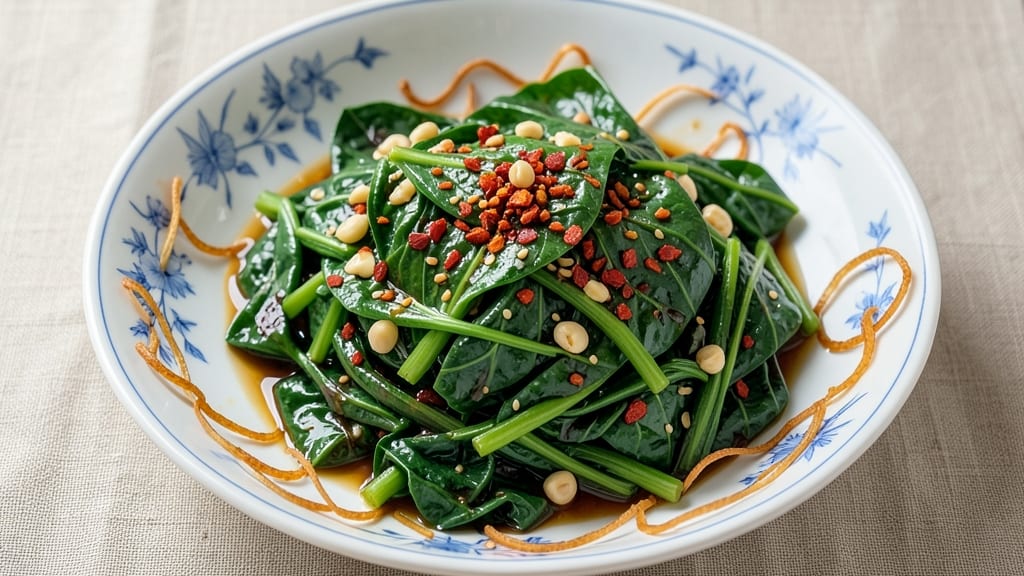
This sweet potato leaves Chinese recipe transforms humble greens into a vibrant, aromatic side dish that pairs perfectly with rice or stir-fried proteins. The key lies in proper blanching—removing bitterness while preserving texture—before stir-frying with garlic, chili, and a touch of soy sauce for depth.
What starts as simple leaves becomes a restaurant-worthy accompaniment with crisp-tender edges and fragrant heat.
The process begins with blanching the leaves in boiling water for just 30 seconds, then shocking them in ice water to lock in their bright green color and delicate texture.
From there, a quick stir-fry in hot oil with minced garlic and chili transforms them into a dish that's both bold in flavor and light in texture. The secret? High heat and constant tossing to prevent wilting.
What you’ll end up with is a dish that’s packed with umami from the garlic and chili, balanced by the natural sweetness of the leaves. The aroma alone—garlicky, slightly spicy, and fresh—will have everyone at the table reaching for seconds.
This isn’t just a side; it’s a flavor experience that elevates any Chinese meal.
Serve alongside steamed rice, braised tofu, or grilled pork for a complete, authentic spread. The leaves hold their shape beautifully, making them perfect for batch cooking or meal prep. Let’s get started—your taste buds (and dinner guests) will thank you.
Ingredients for sweet potato leaves chinese
Fresh greens, bold aromatics, and a quick stir-fry—this dish turns simple leaves into restaurant-quality flavor.
| Ingredient | Amount | Notes |
|---|---|---|
| Sweet Potato Leaves 🌿 | 12 oz | Fresh, stems removed, washed |
| Garlic Cloves 🧄 | 4 cloves | Minced for aromatic base |
| Dried Chili Flakes 🌶️ | 1 tbsp | Adjust for spice preference |
| Light Soy Sauce 🥢 | 2 tbsp | Kikkoman preferred for balance |
| Sesame Oil 🫒 | 1 tbsp | Toasted for nutty aroma |
| Neutral Oil (Vegetable or Peanut) 🫒 | 3 tbsp | High smoke point preferred |
| Salt 🧂 | ½ tsp | Diamond Crystal for purity |
| White Peppercorns 🌶️ | ¼ tsp | Freshly ground for subtle heat |
| Sesame Seeds 🌾 | 1 tbsp | Toasted for garnish |
| Lime Wedges 🍋 | 2 whole | For serving, optional |
| Ice Cubes ❄️ | 2 cups | For shocking blanched leaves |
Sweet potato leaves are the star—look for vibrant, dark green leaves at Asian markets or well-stocked grocery stores. The younger the leaves, the more tender, so check the stems for any woody bits. If you can't find fresh, frozen leaves work in a pinch (thaw and drain well first). For garlic, elephant garlic adds a milder sweetness, but regular works too. Chili flakes should be bright red and fragrant—if they smell stale, it's time to replace them. I grab mine from Trader Joe's in the bulk section, where they stay fresh longer.
No sesame oil? Toasted peanut oil gives a similar nutty depth, though the aroma won't be identical. Short on soy sauce? Coconut aminos in a 1:1 ratio works for a gluten-free swap. The leaves need that quick blanch—30 seconds max—or they'll turn mushy. For extra umami, add 1 tsp fish sauce (if not vegetarian) or 1 tsp mushroom powder to the stir-fry. The sesame seeds? Toast them in a dry pan for 30 seconds until fragrant—they make all the difference in that final garnish. Lime wedges brighten the dish, but skip them if you're serving with something already tangy like pickled vegetables.
Blanched leaves keep for 2 days in the fridge, stored in a sealed container with a paper towel to absorb moisture. For the full dish, it reheats beautifully—30 seconds in a hot pan with a splash of water revives the crisp texture. I like to portion mine into small glass containers for easy grab-and-go lunches. The oil and soy sauce mixture can be made ahead, but add the sesame oil fresh before serving. Freeze blanched leaves for up to 3 months—just thaw and blanch again before cooking.
Why You'll Love This Recipe
- One-Pan Magic: I swear by this recipe when I’m too tired to wash dishes—just toss the leaves in a hot wok with garlic, a splash of soy, and those chili flakes, and stir. Fifteen minutes later, my kitchen’s clean, and the aroma’s already making me hungry.
- Umami Bomb: That first bite? The garlic hits first, sharp and bright, then the sweetness of the leaves soaks in while the chili flakes linger like a whisper of heat. Honestly, it’s the kind of flavor that makes you pause mid-bite—even my picky son asks for seconds.
- Leftover Hero: This dish actually improves the next day. Reheat it with a drizzle of sesame oil, and the flavors meld into something deeper, richer. I meal prep it all the time—just portion it into containers, and you’ve got a week’s worth of easy lunches.
- Pocketbook Friendly: Sweet potato leaves are dirt cheap, and you’re using every part of the plant—no waste. A single bunch stretches across three meals, and the other ingredients? Basic pantry staples. Between us, this is how I feed my family for under $5.
Step-by-step instructions for stir-fried sweet potato leaves
Here's how to transform tender sweet potato leaves into a vibrant, aromatic Chinese stir-fry with perfect texture and bold flavors.
Blanch the Sweet Potato Leaves
Fill a large pot with water and bring to a rolling boil. Add the 12 oz sweet potato leaves and cook for 30 seconds—just enough time to soften them slightly without fully cooking. Immediately drain and transfer the leaves to a large bowl filled with 2 cups ice cubes to shock them and stop the cooking process. This preserves their vibrant green color and tender texture. Drain again once fully chilled, then squeeze out any excess water using your hands.
I find this blanching step absolutely essential for achieving the perfect texture. The ice bath might seem dramatic, but it makes all the difference in the final result—crisp-tender leaves instead of limp, overcooked greens. Work quickly here to maintain the leaves' freshness and color.
Prepare the Garlic-Chili Base
Heat 3 tablespoons neutral oil in a wok or large skillet over medium-high heat until shimmering. Add the 4 cloves minced garlic and stir constantly for 30 seconds until fragrant but not browned. Immediately add the 1 tablespoon dried chili flakes and cook for another 15 seconds, stirring vigorously to prevent burning.
Here's where the magic happens—the garlic should smell intoxicating and the chili flakes should be aromatic but not bitter. If you notice any burning, reduce the heat slightly. This aromatic base forms the flavor foundation for your stir-fry, so don't rush this step. The chili flakes will add just the right amount of heat without overpowering the delicate leaves.
Stir-Fry the Leaves
Add the drained sweet potato leaves to the wok in batches, tossing continuously with tongs for 2-3 minutes until they begin to wilt and turn vibrant green. Pour in the 2 tablespoons light soy sauce and 1 tablespoon sesame oil, stirring constantly to coat the leaves evenly. Cook for another 1-2 minutes until the leaves are tender but still hold their shape.
This is where you need to pay attention—the leaves should be bright green and just beginning to crisp at the edges. If they start to brown too quickly, reduce the heat slightly. The continuous stirring ensures even cooking and prevents any part from overcooking while the rest remains underdone. You're aiming for that perfect al dente texture that's characteristic of great Chinese stir-fries.
Season and Finish
Remove the wok from heat and sprinkle in the 0.5 teaspoon salt and 0.25 teaspoon white peppercorns, tossing gently to distribute evenly. The heat will help the seasoning meld with the leaves. For the final touch, drizzle with an additional 1 teaspoon sesame oil and toss once more to enhance the nutty aroma.
Here's the thing—this dish tastes best served immediately while the leaves are still vibrant and the aromatics are fresh. The sesame oil adds a beautiful sheen and depth of flavor that complements the garlic and chili perfectly. If you're serving with rice, now's the time to plate it alongside your stir-fried greens, garnished with 1 tablespoon toasted sesame seeds and served with the 2 lime wedges on the side for a bright contrast.
Pro Tips For Making Sweet Potato Leaves Chinese
- STRIP THE STALKS FIRST: Sweet potato leaves are stubborn—those thick stems take forever to cook. Snip them off with kitchen shears before washing, or they’ll turn to mush while the leaves stay crisp. (Yes, it’s extra work, but your dish won’t taste like overcooked broccoli stems.)
- BLOOM THE GARLIC IN SESAME OIL: Toss minced garlic into the hot wok before the leaves, then let it sizzle until fragrant—about 20 seconds. This builds flavor fast, and the sesame oil’s nutty aroma clings to the greens instead of burning. (I used to add it later and wondered why my dish tasted flat.)
- DON’T OVERWASH THE LEAVES: A quick rinse under cold water removes dirt, but scrubbing them like spinach leaches bitterness. Pat them very dry with a towel—wet leaves steam instead of wok-frying, and you’ll end up with sad, limp piles.
- USE CHILI FLAKES LAST: Sprinkle dried chili flakes after the leaves wilt but before tossing with soy sauce. This keeps their heat sharp and visible, not dissolved into the sauce. (Pro move: Toast them in the empty wok for 10 seconds first—they’ll smell like a street stall.)
Flavor customization for this dish
Spice Level Control
Adjust the heat by modifying the dried chili flakes—start with ½ tbsp for mild, 1 tbsp for medium, or 1½ tbsp for spicy. For extra depth, toast the chili flakes in a dry pan for 10 seconds before adding to intensify their aroma.
I love adding ½ tsp Sichuan peppercorns for a tingling numbing effect alongside the heat—just crush them lightly before stir-frying. 🌶️
Sweetness Balance
Enhance the natural sweetness of the leaves by adding 1 tsp rock sugar or 1 tsp honey during the final stir-fry. This works especially well if your leaves taste slightly bitter.
For a savory-sweet contrast, toss in 1 tbsp preserved mustard greens (yan cai) at the end—they add a tangy, umami punch that balances the garlic and chili. 🍯
Umami Boosters
Elevate the dish with 1 tsp fish sauce (if not vegetarian) or 1 tsp mushroom powder for extra umami depth. I also like adding 1 tbsp fermented black beans (char siu tau yu) for a salty, funky dimension.
For a vegetarian option, 1 tsp soy sauce + ½ tsp miso paste creates a similar rich flavor profile. 🍄
Texture Variations
For extra crunch, stir-fry 1 tbsp crushed peanuts or 1 tbsp fried shallots into the leaves during the last 30 seconds of cooking. If you prefer a softer texture, reduce the stir-fry time to 1-2 minutes total and add 1 tbsp water to steam the leaves gently.
The key is to keep tossing continuously for even cooking. 🥜
Herbal Infusions
Brighten the dish with 1 tbsp chopped cilantro or 1 tbsp Thai basil during the final toss for a fresh herbal note. For a more traditional Chinese flavor, add ½ tsp dried tangerine peel (chen pi) while stir-frying—it adds a subtle citrusy aroma that pairs beautifully with the garlic. 🌿
Regional Twists
For a Sichuan-style version, add 1 tsp doubanjiang (fermented chili bean paste) and ½ tsp goji berries for a sweet-spicy balance. In Cantonese cooking, a splash of 1 tsp Shaoxing wine enhances the garlic's aroma.
For a Hunan twist, include 1 tsp dried chili stems (la jiao) for extra heat and complexity. 🗺️
Nutrition facts
Frequently asked questions
What are sweet potato leaves and where can I find them?
The leaves come from the sweet potato plant (Ipomoea batatas) and are commonly used in Chinese cuisine for their mild, slightly sweet flavor. Look for them in the produce section of Asian markets or well-stocked grocery stores. They're often sold in bunches with stems attached. If unavailable fresh, frozen leaves work too—just thaw and drain well before using.
Why do I need to blanch the leaves before stir-frying?
Blanching removes any bitterness and softens the leaves slightly, while the ice bath preserves their vibrant color and crisp texture. Skipping this step can result in tough, overcooked greens. The 30-second boil followed by ice water is key for that perfect al dente finish. Think of it as pre-cooking to lock in freshness.
Can I make this dish without chili flakes?
Swap the chili flakes for ½ tsp ground Sichuan peppercorns (for numbing heat) or 1 tsp dried thyme (for earthy flavor). For no heat at all, use ½ tsp smoked paprika instead. The garlic and soy sauce will still provide plenty of flavor—just adjust the seasoning to taste.
How do I store leftovers and reheat them?
Store cooked leaves in an airtight container for up to 3 days in the fridge. To reheat, toss with 1 tsp oil in a hot pan for 1-2 minutes until warmed through. For extra crispness, add 1 tsp water and cover for 30 seconds to steam gently. They won't be quite as vibrant as fresh, but still delicious!
What other proteins pair well with this dish?
This stir-fry works beautifully with mild proteins that won't overpower the greens. Try pan-seared shrimp, braised tofu, or grilled pork belly. For a vegetarian option, serve with steamed rice and fermented black beans. The dish's garlic-chili flavor balances rich meats perfectly while complementing lighter plant-based options.