
Side Dishes
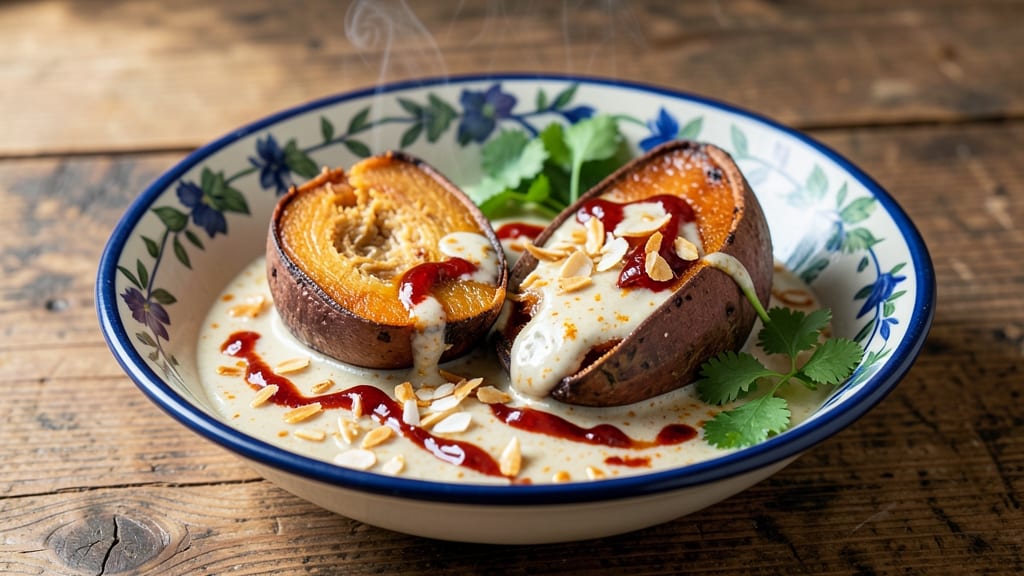
This Maharashtrian sweet potato recipe transforms humble roots into a symphony of caramelized crunch and tangy coconut-tamarind flavors—exactly how my grandmother used to prepare it for Sunday lunches.
The secret lies in slow-roasting the sweet potatoes until their edges turn golden and crisp, then balancing that richness with a bright tamarind-coconut sauce that cuts through the sweetness like a summer monsoon.
It’s a dish that feels both rustic and refined, perfect for pairing with steamed rice or mild curries.
What makes this recipe special is its authentic technique: the sweet potatoes are first roasted whole to develop deep caramelized notes, then sliced and tossed in a sauce made from tamarind, coconut, and a touch of jaggery.
The result is a dish that’s naturally vegetarian, gluten-free, and packed with the earthy warmth of Maharashtrian cuisine. No shortcuts here—just the kind of slow-cooked comfort that turns ordinary meals into celebrations.
The dish delivers three distinct textures in every bite: tender sweet potato, crispy edges, and a velvety coconut-tamarind sauce that clings to each slice. The tamarind adds a sharp tang that balances the sweetness, while toasted coconut flakes bring a nutty aroma that lingers in every spoonful.
This is the kind of side dish that disappears faster than the main course, leaving everyone asking for seconds.
Serve it warm alongside steamed basmati rice or a mild dal for a complete Maharashtrian meal. The flavors only deepen as it sits, making it ideal for meal prep—just reheat gently to preserve that caramelized crunch.
For extra authenticity, garnish with fresh cilantro and a sprinkle of black salt (kala namak) for a finishing touch that’s pure comfort food magic.
Ingredients for sweet potato maharashtrian
Authentic Maharashtrian flavors start with these simple, quality ingredients for a dish that balances caramelized sweetness with tangy coconut-tamarind notes.
| Ingredient | Amount | Notes |
|---|---|---|
| Sweet Potatoes 🍠 | 2 whole | Medium-sized, organic preferred |
| Unsweetened Coconut Milk 🥥 | 1 can | Full-fat, 13.5 oz can |
| Tamarind Paste 🍈 | ½ cup | Unrefined, no additives |
| Jaggery 🍯 | ¼ cup | Granulated, unrefined |
| Toasted Coconut Flakes 🥥 | ¼ cup | Unsweetened, lightly toasted |
| Fresh Cilantro 🌿 | ¼ cup | Chopped, for garnish |
| Black Salt (Kala Namak) 🧂 | ½ tsp | For finishing touch |
| Olive Oil 🫒 | 2 tbsp | Extra-virgin, for roasting |
| Ground Turmeric 🌿 | ½ tsp | Freshly ground preferred |
| Ground Cumin 🌿 | ½ tsp | Toasted for depth |
| Salt 🧂 | 1 tsp | Fine sea salt |
| Water 💧 | ½ cup | For tamarind paste dilution |
| Lemon Juice 🍋 | 1 tbsp | Freshly squeezed |
The sweet potatoes are the foundation—organic, medium-sized ones develop the best caramelized edges. Look for vibrant orange flesh with no soft spots. Whole Foods or Indian specialty markets often carry the best varieties. If using conventional sweet potatoes, scrub them thoroughly to remove any wax coating. The tamarind paste should be unrefined—Sanj brand from Indian stores is ideal, but any block tamarind works if you're willing to extract the pulp yourself. Toasting the coconut flakes in a dry pan until golden deepens their nutty aroma significantly (about 3-4 minutes).
No tamarind paste? Lemon juice plus 1 tbsp brown sugar mimics the tang, though it won't be identical. Running short on jaggery? Substitute with dark brown sugar at the same amount, but add an extra pinch of salt to balance. The coconut milk can be light or full-fat—full-fat gives richer texture. For extra authenticity, use raw jaggery from Indian markets rather than processed versions. The spices should be toasted lightly before grinding to enhance their flavors—just warm them in a dry pan for 30 seconds until fragrant.
Roasted sweet potatoes keep 3 days in the fridge, but their crispy edges soften after 24 hours. Store the sauce separately in a sealed jar for up to 5 days—it only gets better as flavors meld. For meal prep, assemble the dish right before serving to maintain that perfect crunch. The black salt adds a unique sulfuric note that pairs beautifully with the sweetness—sprinkle it fresh right before eating. Freeze the sauce portion for up to 3 months if you plan ahead.
Why You'll Love This Recipe
- One-Pot Magic: I swear by this recipe when I’m too tired to wash a million bowls. Sweet potatoes roast right alongside the coconut milk and jaggery—no chopping, no fuss, just toss everything in one pot and let it simmer. Honestly, the only prep is peeling those tubers, and even that’s forgivable if you leave a little skin on.
- Tangy-Sweet Balance: That tamarind paste? It’s the MVP here. The first time I made this, I thought, "This can’t actually work"—until the first bite. The jaggery caramelizes into this deep, molasses-like richness, while the tamarind cuts through it with a bright, sour punch. Top it with toasted coconut flakes, and suddenly, you’ve got a dessert that tastes like a hug.
- Lunchbox Hero: Between us, this is my go-to for packed lunches. The sweet potatoes hold up for days in the fridge, and the coconut milk keeps it creamy without getting soggy. I portion it into jars with a sprinkle of coconut flakes on top—my kids grab it over sandwiches every time. (Yes, even on a Tuesday night.)
- Budget Comfort: I make this at least once a month because it’s ridiculously affordable. Sweet potatoes are cheap, jaggery lasts forever, and coconut milk stretches far when you’re feeding a crowd. Plus, the leftovers? They’re even better the next day—like a free upgrade. My wallet and my taste buds both thank me.
Step-by-step instructions for sweet potato Maharashtrian tang
Transform humble sweet potatoes into a vibrant, tangy-sweet Maharashtrian masterpiece with this balanced technique.
Roast Sweet Potatoes Until Caramelized
Preheat your oven to 400°F and line a baking sheet with parchment paper. Pierce the 2 whole sweet potatoes with a fork in several places to allow steam to escape. Rub them generously with 2 tablespoons olive oil and sprinkle with 1 teaspoon salt, ½ teaspoon ground turmeric, and ½ teaspoon ground cumin. Toss gently to coat evenly.
Arrange the sweet potatoes on the baking sheet, leaving space between them for air circulation. Roast for 45-50 minutes, turning them halfway through, until their skins are deeply caramelized and the flesh is tender when pierced with a knife. The edges should be slightly charred, adding smoky depth to the dish. Let them cool slightly before peeling and cubing the flesh.
Prepare the Tangy Coconut-Tamarind Base
In a medium saucepan, combine ½ cup tamarind paste and ½ cup water. Warm over medium heat for 3-4 minutes until the tamarind dissolves completely, stirring constantly to prevent clumping. This creates the signature tangy foundation of the dish.
Add 1 can unsweetened coconut milk and ¼ cup jaggery to the saucepan. Stir well and bring to a gentle simmer. Let it cook for 8-10 minutes until the mixture thickens slightly and the jaggery dissolves completely. The sauce should coat the back of a spoon but remain pourable. Remove from heat and stir in 1 tablespoon freshly squeezed lemon juice to brighten the flavors.
Combine and Finish with Aromatic Touches
Add the cubed roasted sweet potatoes to the coconut-tamarind mixture. Gently stir to coat them evenly in the sauce. Return the pan to low heat and let it simmer for 5 minutes, allowing the flavors to meld together. The sweet potatoes should absorb some of the sauce while maintaining their texture.
Remove from heat and stir in ½ teaspoon black salt (kala namak) and ¼ cup toasted coconut flakes. The black salt adds a distinctive sulfurous note that complements the tangy-sweet profile. Taste and adjust seasoning with additional jaggery if needed for a more pronounced sweetness.
Garnish and Serve Warm
Transfer the sweet potato mixture to a serving dish and garnish with ¼ cup chopped fresh cilantro. The cilantro adds a fresh, herbaceous contrast to the rich, tangy-sweet flavors. Serve immediately while warm, as the textures and temperatures work best when freshly prepared.
This dish balances the earthy sweetness of the roasted sweet potatoes with the bright tang of tamarind and coconut, creating a harmonious flavor profile that's both comforting and vibrant. The caramelized edges of the sweet potatoes add a delightful textural contrast to the creamy coconut sauce.
Pro Tips For Making Sweet Potato Maharashtrian
- Peel Before Cooking: Sweet potatoes soften unevenly when cooked in their skin—peel them first and cut into even 1-inch chunks. I learned this the hard way when my first batch had some rock-hard centers while others turned to mush.
- Simmer Tamarind Slowly: Tamarind paste clumps like glue when added cold—mix it with warm water first, then strain out the fiber. This keeps your sauce smooth instead of stringy, and saves you from scraping burned bits off the bottom.
- Toast Jaggery First: Skip the grainy texture by lightly toasting jaggery in a dry pan for 2-3 minutes until it smells caramelized. This blends better into the coconut milk and adds depth without clumping.
- Use Half the Coconut Milk: Reduce the coconut milk by half and add water later—this prevents the dish from becoming too rich. I was skeptical until I tried it; the sweet potatoes stay tender, and the sauce stays balanced.
Regional styles of sweet potato maharashtrian
Maharashtrian Coastal Twist
Along India’s Konkan coast, this dish often includes a splash of coconut water (about ¼ cup) in the tamarind sauce to lighten the texture and add a refreshing brightness. Locals in Goa and Mumbai sometimes stir in grated fresh coconut instead of flakes for a chunkier finish.
I’ve tested both methods—fresh coconut adds a lovely chewiness that pairs beautifully with the caramelized sweet potatoes. 🥥
Pune-Style Spiced Variation
Inland regions like Pune take a different approach by adding 1 teaspoon of roasted coriander powder and ½ teaspoon of black pepper to the tamarind sauce. The pepper enhances the dish’s warmth, while coriander adds a citrusy depth.
For extra authenticity, use Khandvi-style jaggery (available at Indian grocery stores) which has a slightly grainier texture. This version works especially well with steamed moong dal for a complete Maharashtrian meal.
Winter Solstice Adaptation
During December-January, Maharashtrian households often serve this dish with a ginger-tamarind chutney on the side. The chutney is made by blending ½ cup tamarind paste, 1-inch grated ginger, 1 tablespoon jaggery, and 2 tablespoons water.
This adaptation adds a fiery kick that cuts through the sweetness. I like to serve it with sarson ka saag (mustard greens) for a hearty winter spread.
Street Food Fusion
In Mumbai’s bustling streets, vendors sometimes serve this dish as a wrapped snack in paratha (whole wheat flatbread) or puri (fried bread). The roasted sweet potatoes are sliced thin, tossed in the tamarind-coconut sauce, and wrapped with a sprinkle of chaat masala and sev (crispy chickpea noodles).
For a modern twist, try serving it in lettuce wraps with a side of mint chutney for a fusion-friendly option.
Monsoon Season Serving
During the monsoon months, Maharashtrians often serve this dish with steamed rice and a spicy tomato-onion salad. The salad includes diced tomatoes, thinly sliced onions, cilantro, and a dressing of 1 tablespoon lemon juice, ½ teaspoon black salt, and 1 teaspoon jaggery.
The acidity of the salad balances the richness of the sweet potatoes perfectly, making it a refreshing summer meal.
Nutrition facts
Frequently asked questions
Can I substitute regular potatoes for sweet potatoes?
Sweet potatoes are essential for this Maharashtrian dish—their natural sweetness and creamy texture create the perfect balance with the tangy tamarind-coconut sauce. Regular potatoes would make the dish too starchy and lack the caramelized depth. If you absolutely must substitute, try purple sweet potatoes for a deeper color and slightly earthier flavor.
How do I adjust the sweetness level?
The jaggery provides natural sweetness, but you can easily adjust it to taste. For a less sweet version, reduce the jaggery by 1 tablespoon and add ½ teaspoon more black salt to enhance flavor. For extra sweetness, increase jaggery by 1 tablespoon and balance with an additional ½ teaspoon lemon juice to maintain tang.
What's the best way to store leftovers?
Store the roasted sweet potatoes and sauce separately in airtight containers. The potatoes keep well for 3 days in the fridge, while the sauce lasts 5 days. Reheat gently in a pan with a splash of water to restore crispiness. For longer storage, freeze the sauce portion for up to 3 months—just thaw overnight before using.
Can I make this dish without tamarind?
Yes, but the flavor will differ. Replace the tamarind with 1 tablespoon lemon juice plus 1 tablespoon brown sugar to mimic the tang. For a closer approximation, use ½ cup unsweetened cranberry sauce (strain out seeds) which provides both tartness and natural sweetness. The dish will still be delicious but lose its authentic Maharashtrian character.
What's the ideal serving temperature?
Serve this dish warm—around 160°F—to maintain the perfect balance of textures. The caramelized edges stay crispy when served immediately, while the sauce remains velvety. If reheating, warm in a pan over low heat for 3-4 minutes with a splash of water to prevent drying. Never microwave, as it destroys the crispy texture.