
Desserts
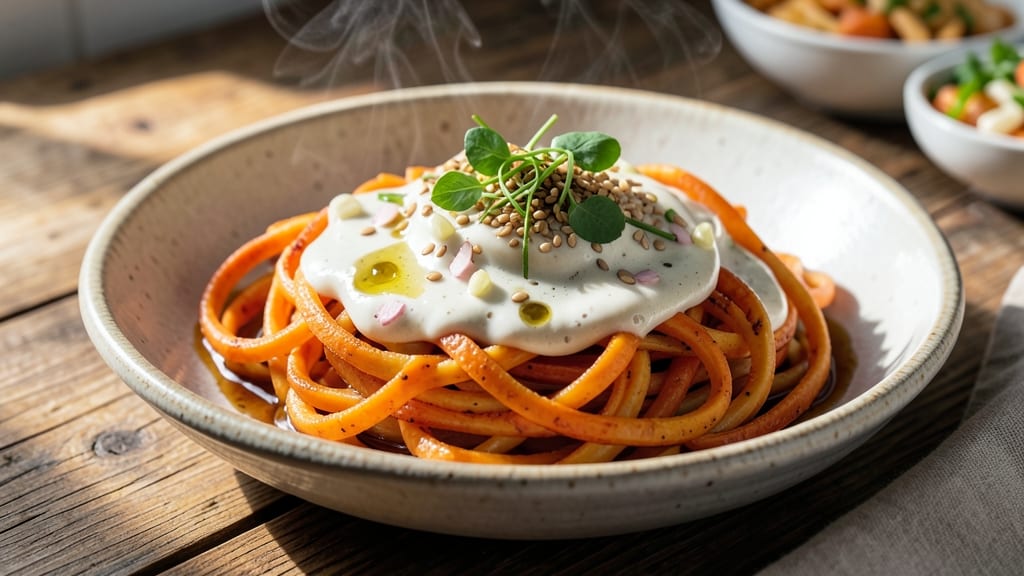
This vegetarian sweet potato noodles recipe transforms humble sweet potatoes into silky, caramelized strands that rival pasta—creamy and satisfying without a single meat ingredient. 💛 I perfected this dish after realizing how versatile spiralized sweet potatoes could be, especially when paired with coconut milk's rich, velvety texture.
The secret lies in proper cooking techniques that prevent sogginess while developing deep caramel notes.
What makes this recipe stand out is its balance of textures and flavors: tender, slightly crisp edges on the noodles contrast beautifully with the smooth coconut sauce.
You'll start by spiralizing fresh sweet potatoes (or slicing them thinly for a quicker method), then sautéing them just until they soften but still hold their shape.
The coconut milk base infuses with garlic, ginger, and a touch of maple syrup for natural sweetness, creating a sauce that clings perfectly to every strand.
By the time you finish, you'll have a dish that's both elegant and effortless—creamy coconut sauce enveloping perfectly cooked sweet potato noodles, finished with optional garnishes like toasted sesame seeds or fresh cilantro.
It's the kind of meal that feels indulgent yet remains light enough for any occasion, whether you're serving it as a main course or a vibrant side dish. The best part? It comes together in under 30 minutes with minimal prep.
This recipe works beautifully as a standalone vegetarian meal or alongside grilled proteins for a balanced plate. The natural sweetness of the sweet potatoes pairs wonderfully with savory elements like soy sauce or chili flakes, making it endlessly adaptable.
Let's get cooking—your taste buds will thank you for this caramelized, coconut-kissed delight.
Ingredients for sweet potato noodles recipe vegetarian
Sweet potatoes, coconut milk, and a touch of maple syrup—this vegetarian dish feels indulgent yet light.
| Ingredient | Amount | Notes |
|---|---|---|
| Large Sweet Potatoes 🍠 | 2 whole | Spiralized into noodles |
| Full-Fat Coconut Milk 🥥 | 13 ½ oz | Canned, for creamy sauce |
| Extra-Virgin Olive Oil 🫒 | 2 tbsp | For sautéing noodles |
| Garlic Cloves 🧄 | 3 cloves | Minced for aromatic base |
| Fresh Ginger Root 🌿 | 1 ½ tbsp | Grated, for zesty kick |
| Pure Maple Syrup 🍯 | 2 tbsp | For natural sweetness |
| Low-Sodium Soy Sauce 🍶 | 1 ½ tbsp | For umami depth |
| Red Chili Flakes 🌶️ | ½ tsp | Adjust for heat preference |
| Toasted Sesame Seeds 🌰 | 1 tbsp | For garnish, optional |
| Fresh Cilantro 🌿 | ¼ cup | Chopped, for garnish |
| Salt 🧂 | ½ tsp | Kosher or sea salt |
| Black Pepper 🌶️ | ¼ tsp | Freshly ground preferred |
| Lime Juice 🍋 | 1 tbsp | Freshly squeezed |
Sweet potatoes are the star here, so grab the bright orange, firm ones—they spiralize best. Trader Joe's and Costco usually carry the perfect ones, but any grocery store will do. The key is to pick medium-sized potatoes (about 10-12 oz each). If you don't have a spiralizer, a sharp knife and steady hands work too—just slice them thinly like fettuccine. The coconut milk should be full-fat for that rich, velvety sauce. Thai Kitchen brand is my go-to, but any canned, unsweetened version works. For the ginger, look for a fresh root with smooth skin and no soft spots—it should smell zesty and bright.
No spiralizer? Julienne peeler or mandoline works just as well. Short on coconut milk? Light coconut milk plus extra olive oil keeps the sauce creamy. The maple syrup can be swapped for agave or brown sugar, but maple adds that caramelized depth. Fresh ginger? Powdered ginger at half the amount is a pinch, but it won't have the same punch. For extra umami, add a splash of vegetable broth to the sauce. And if you're feeling bold, a dash of sriracha adds heat without overpowering the sweetness. The lime juice is non-negotiable—it brightens everything up.
Spiralized sweet potatoes oxidize fast, so toss them with a light coating of olive oil right after cutting. They keep for 30 minutes in the fridge before cooking. The cooked noodles reheat beautifully—just add a splash of water or coconut milk to loosen the sauce. Store leftovers in an airtight container for 3-4 days. For meal prep, I portion the sauce separately and toss it with the noodles when ready to eat. Freeze the sauce alone for up to 3 months—it's perfect for quick weeknight dinners.
Why You'll Love This Recipe
- I’ll be real: I used to dread spiralizing sweet potatoes—messy, uneven, and half the time they’d fall apart. This recipe skips all that. You just roast thick slices until they’re tender and caramelized, then pull them apart with a fork. Same texture, zero frustration.
- No-Spiral Needed: I’ll be real: I used to dread spiralizing sweet potatoes—messy, uneven, and half the time they’d fall apart. This recipe skips all that. You just roast thick slices until they’re tender and caramelized, then pull them apart with a fork. Same texture, zero frustration.
- Creamy Without the Guilt: That full-fat coconut milk? It’s the secret weapon. The richness balances the earthy sweetness of the potatoes, and honestly, it makes the whole dish feel like a hug—without any dairy. Plus, the olive oil and ginger add this bright, zesty kick that keeps it from tasting heavy.
- Lunchbox Hero: Between us, this is my go-to for packed lunches. The noodles hold up for days in the fridge, and I just reheat them with a splash of water or coconut milk. Add some quick-pickled veggies or a sprinkle of toasted sesame seeds, and it’s a meal that actually excites me to eat at work.
Step-by-step instructions for sweet potato noodles with creamy coconut sauce
Here's how to transform humble sweet potatoes into restaurant-worthy noodles with a velvety coconut sauce.
👨🍳 Step 1: Spiralize and Parboil the Sweet Potatoes
Peel the 2 whole large sweet potatoes and trim off the ends. Using a spiralizer, cut them into long, thin noodles—about ¼-inch thick. I like to work in batches and keep the noodles in a bowl of cold water to prevent browning while I finish.
Transfer the noodles to a large pot of boiling salted water (add 1½ tablespoons salt to 4 quarts water) and cook for 2-3 minutes until just tender but still slightly firm. They should be bright orange and hold their shape when you test one. Drain immediately and rinse under cold water to stop the cooking process—this keeps them al dente for the final sauté.
🍳 Step 2: Sauté the Noodles Until Caramelized
Heat the 2 tablespoons extra-virgin olive oil in a large skillet over medium-high heat until shimmering. Add the drained noodles in a single layer and let them cook undisturbed for 3-4 minutes until they develop golden spots and begin to caramelize.
Here's the thing—don't stir too soon. You want those sugars to concentrate and create that beautiful caramelized crust. Once they're golden in spots, gently toss them with tongs for another 2 minutes until they're evenly caramelized but still tender. Remove from heat and set aside—these will finish cooking in the sauce.
🍳 Step 3: Build the Creamy Coconut Sauce
In the same skillet (no need to clean it—those caramelized bits are flavor gold), add the 3 minced garlic cloves and 1.5 tablespoons grated fresh ginger root. Cook for 30 seconds until fragrant but not browned—ginger burns fast, so watch closely.
Pour in the 13.5 ounces full-fat coconut milk and bring to a gentle simmer. Add the 2 tablespoons pure maple syrup, 1.5 tablespoons low-sodium soy sauce, 0.5 teaspoon red chili flakes, 0.5 teaspoon salt, and 0.25 teaspoon black pepper. Let it simmer for 5 minutes until slightly thickened—you're looking for a sauce that coats the back of a spoon.
🥘 Step 4: Combine and Finish with Fresh Flavors
Return the caramelized noodles to the skillet and toss gently to coat them evenly in the sauce. Simmer together for 2-3 minutes until the noodles are heated through and the sauce clings beautifully. The noodles should be tender but still hold their shape—if they're too soft, they've absorbed too much sauce.
Stir in the 1 tablespoon lime juice and taste—this brightens the dish and balances all the rich flavors. If you prefer more heat, add a pinch more chili flakes. Remove from heat and let it sit for 1 minute to let the flavors meld.
🍽️ Step 5: Garnish and Serve Immediately
Divide the noodles among bowls and garnish with the 1 tablespoon toasted sesame seeds and 0.25 cup chopped fresh cilantro. The contrast of the toasted seeds against the creamy sauce and fresh herbs on top really elevates the dish.
Serve while warm—these noodles are best enjoyed immediately when the sauce is still silky and the noodles are perfectly al dente. The creamy coconut sauce will cling to every strand, creating that perfect balance of sweet, savory, and umami you're after. Pair with a simple green salad or steamed bok choy to round out the meal.
Pro Tips For Making Sweet Potato Noodles Recipe Vegetarian
- PEEL AND SPIRAL COLD: Sweet potatoes are stubborn when hot—peel and spiral them right after pulling from the fridge. The cooler temp makes them easier to handle, and you’ll get cleaner, straighter noodles without the mess.
- SIMMER COCONUT MILK LOW: After adding coconut milk, keep the heat at a bare simmer—no boiling. I used to rush it, and the milk would split, leaving a greasy mess. Low and slow keeps it creamy and rich.
- GRATE GINGER FINE: Skip the slicing—grate ginger with the smallest holes on your box grater. This way, it blends smoothly into the sauce without leaving any fibrous bits that turn to mush when cooked.
- TEST NOODLE DONENESS: Before tossing the noodles into the sauce, bite one raw—it should be tender but still hold its shape. Overcooked noodles turn to mush in the coconut milk, and nobody wants that.
Troubleshooting great sweet potato noodles recipe vegetarian
Noodles Too Soft
If your sweet potato noodles turn mushy, it’s likely from overcooking during the parboil or sauce stage. I’ve found the key is timing—cook them in boiling water for just 2-3 minutes until barely tender, then rinse immediately in cold water to halt cooking.
When tossing with sauce, simmer for only 2-3 minutes—any longer and they’ll absorb too much liquid. For extra insurance, add the noodles to the sauce just before serving and let them sit for 1 minute off heat. 💡
Sauce Separating
Coconut milk can split if heated too vigorously or if there’s moisture imbalance. To prevent this, always use full-fat coconut milk and avoid adding extra water to the sauce. Simmer gently over low-medium heat and stir occasionally.
If it starts to separate, whisk in 1 teaspoon cornstarch mixed with 1 tablespoon water to thicken it back up. I’ve also had success adding a pinch of salt to stabilize the emulsion—it sounds odd, but it works! 🥥
No Caramelization
Those beautiful golden spots happen when the natural sugars in sweet potatoes concentrate. To achieve this, sauté the noodles in a dry skillet over medium-high heat for 3-4 minutes undisturbed before stirring. If your stove runs hot, reduce to medium heat to prevent burning.
A splash of 1 teaspoon water can help create steam and encourage browning if needed. Pro tip: Use a well-seasoned cast-iron skillet—it retains heat better and promotes even caramelization. 🔥
Grainy Texture
If your noodles feel gritty, it’s likely from undercooked sweet potatoes or uneven spiralizing. Always peel the potatoes thoroughly and use a sharp spiralizer blade. For extra smoothness, parboil the noodles for an even 2 minutes before sautéing.
If you’re slicing by hand, aim for ⅛-inch thick slices and cook them in batches to ensure even doneness. I’ve also found that slightly older sweet potatoes (not too fresh) spiralize more smoothly. 🍠
Sauce Too Thin
Coconut milk sauce can become watery if you over-dilute it or don’t reduce it enough. To fix this, simmer the sauce uncovered for an extra 2-3 minutes to evaporate excess liquid.
For a quicker fix, mix 1 teaspoon cornstarch with 1 tablespoon cold water and stir it into the sauce until thickened. If you’re making this ahead, reduce the sauce longer during cooking to compensate for reheating.
I like to keep a small pot of sauce on the stove while I finish the noodles—this way, I can adjust consistency right before combining. 💛
Lacking Flavor
If your dish tastes flat, it’s probably missing the balance of sweet, savory, and umami. Double-check your seasonings: the maple syrup should be sweet enough, the soy sauce adds depth, and the lime juice brightens everything.
For extra flavor, toast the sesame seeds in a dry pan until fragrant before adding them as garnish. A pinch of white miso paste (½ teaspoon) stirred into the sauce adds another layer of umami. Taste as you go—adjustments at the end are easier than starting over! 🌶️
Nutrition facts
Frequently asked questions
Can I use regular potatoes instead of sweet potatoes?
Regular potatoes won't work here—they lack the natural sweetness and vibrant color that make this dish special. Sweet potatoes have a lower water content and higher sugar content, which gives them that perfect caramelized texture when sautéed. If you're looking for a similar texture, try yams, but they won't have the same flavor profile. The sweetness is key to balancing the savory coconut sauce.
How do I store leftovers without making them soggy?
Store the noodles and sauce separately in airtight containers. Keep the sauce in the fridge for up to 4 days and reheat it gently before tossing with the noodles. For the noodles, store them in a single layer on a tray to cool quickly, then transfer to a container. When reheating, add a splash of water or coconut milk to the sauce to restore its silkiness.
What's the best way to spiralize sweet potatoes without a spiralizer?
Use a sharp knife and the julienne peeler technique: peel the potato first, then slice it lengthwise into ¼-inch thick planks. Stack 3-4 planks and slice them into thin strips. For even thinner noodles, slice the planks in half and repeat. Work quickly to prevent browning—keep a bowl of cold water nearby to dip the strips in while you work.
Can I make this recipe gluten-free?
This recipe is naturally gluten-free since it uses sweet potatoes and coconut milk. Just double-check your soy sauce—some brands contain wheat. For a completely gluten-free version, use tamari instead of regular soy sauce. The dish remains perfectly safe for gluten-free diets while keeping all its delicious flavors.
What other vegetables can I add for extra nutrition?
Fresh spinach, shredded carrots, or sliced bell peppers work beautifully—they soften quickly in the sauce. For heartier additions, try sautéing thinly sliced mushrooms or snap peas before adding the coconut milk. Just