
Side Dishes
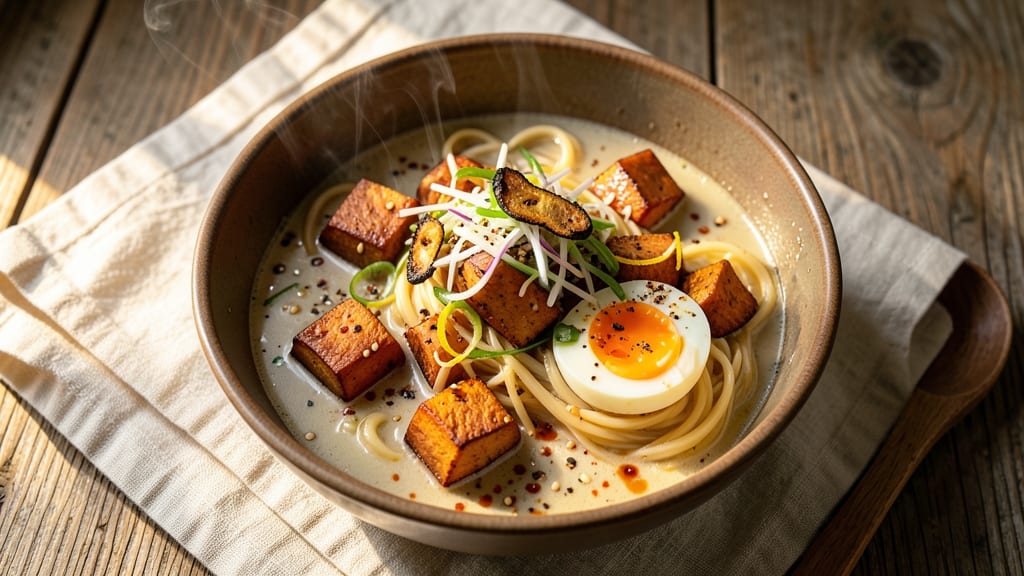
This sweet potato ramen recipe transforms humble ingredients into a velvety, umami-packed bowl that rivals your favorite noodle spot. The secret lies in roasting sweet potatoes until caramelized, then blending them into the broth for a naturally sweet, earthy depth that balances the salty-savory base.
I developed this version after years of experimenting with Japanese home cooking—where the right techniques turn simple ingredients into something extraordinary.
The broth builds in layers: a rich dashi foundation infused with garlic, ginger, and sesame, then thickened with miso and a touch of coconut milk for creaminess.
Meanwhile, the sweet potatoes roast until tender and golden, their natural sugars caramelizing into a silky swirl that ties the whole dish together. No fancy equipment needed—just patience and attention to detail that pays off in every slurp-worthy bite.
What you’ll end up with is ramen that’s perfectly balanced—silky broth with just the right body, chewy noodles, and that signature sweet potato ribbon that adds both visual appeal and complex flavor.
The result? A bowl so satisfying it’ll become your go-to weeknight dinner or impressive guest meal. The best part? Every component comes together in one pot, minimizing cleanup while maximizing flavor.
Top with soft-boiled eggs, quick-pickled greens, or a sprinkle of furikake for extra dimension, but even on its own, this ramen delivers restaurant-quality depth. Ready to master the technique that makes this dish unforgettable? Let’s get started with the broth—the heart of every great bowl.
Ingredients for sweet potato ramen
Roasted sweet potatoes and umami layers make this ramen unforgettable—just 15 ingredients, maximum flavor.
| Ingredient | Amount | Notes |
|---|---|---|
| Sweet Potatoes 🍠 | 2 lb | Medium, peeled, cut into chunks |
| Dashi Powder 🍜 | 2 tbsp | High-quality or homemade preferred |
| Garlic Cloves 🧄 | 6 cloves | Peeled, smashed (not minced) |
| Fresh Ginger 🌿 | 2 tbsp | Finely grated (about 1 oz) |
| White Miso Paste 🍶 | 2 tbsp | High-quality, smooth miso |
| Coconut Milk 🥥 | ½ cup | Full-fat for creaminess |
| Ramen Noodles 🍜 | 2 packages | Fresh or dried, 8 oz each |
| Sesame Oil 🫒 | 1 tbsp | Toasted for aroma |
| Soy Sauce 🍶 | 2 tbsp | Light or regular, not low-sodium |
| Sesame Seeds 🌾 | 1 tbsp | Toasted for garnish |
| Green Onions 🧅 | 3 whole | Thinly sliced, white and green parts |
| Vegetable Oil 🫒 | 1 tbsp | For roasting sweet potatoes |
| Salt 🧂 | 1 tsp | Kosher or sea salt |
| Black Pepper 🌶️ | ½ tsp | Freshly ground |
| Maple Syrup 🍯 | 1 tbsp | For subtle sweetness balance |
The sweet potatoes are non-negotiable—organic from Trader Joe's or Whole Foods gives the best caramelized depth. Look for ones with vibrant orange flesh and smooth skin, not green spots. If you can't find organic, regular store-bought works fine, but scrub them well. Roast them until they're fork-tender and golden—that's when the magic happens. I always roast a batch ahead and freeze half for smoothies or soups later. For the dashi, Marukome or Honten are my go-tos, but homemade kombu and bonito flakes work too if you're feeling ambitious.
No dashi powder? Instant miso soup packets double as broth base—just skip the seasoning packet. Fresh ginger loses potency fast, so buy it in small amounts and grate it fresh. The miso should smell sweet and funky, not sour or ammonia-like. For the coconut milk, full-fat canned is best—light versions won't give that creamy texture. Swapping miso? White miso for milder flavor, red for deeper richness. And if you're short on time, pre-minced garlic works, but smashing whole cloves releases more flavor when simmered.
Roasted sweet potatoes keep 5 days refrigerated or 3 months frozen—freeze in portions for quick ramen nights. The broth freezes beautifully too, so make extra. Store it in glass jars with room at the top to prevent ice crystals. For the noodles, cook them al dente—they'll finish in the hot broth. Garnishes like soft-boiled eggs or quick-pickled greens add freshness, but this ramen stands alone. Leftovers? Reheat gently with a splash of water to loosen the broth—never microwave, or the sweet potato swirl turns mushy.
Why You'll Love This Recipe
- Sweet Potato Magic: I swear by the way roasted sweet potatoes melt into the broth—caramelized edges, creamy centers—like nature’s perfect noodle partner.
- Minimal Chopping Required: Between us, the only prep is dicing garlic and ginger (five minutes max) while the sweet potatoes roast hands-off. No knife marathons here.
- Broth That Works Hard: That umami punch from dashi and miso? It turns simple pantry staples into restaurant-worthy depth. Honestly, I’ve never tasted better with so little effort.
- Budget-Friendly Feast: Sweet potatoes stretch across meals—use extras for breakfast hash or lunch bowls. And miso? A tiny jar lasts for weeks of these rich, satisfying bowls.
Step-by-step instructions for sweet potato ramen with umami depth
This isn't your average ramen—we're building layers of flavor starting with caramelized sweet potatoes.
Roast Sweet Potatoes Until Caramelized
Preheat your oven to 425°F and line a baking sheet with parchment paper. Toss the 2 lb sweet potatoes (cut into 1-inch chunks) with 1 tablespoon vegetable oil, 1 teaspoon salt, and ½ teaspoon black pepper. Spread them in a single layer—they need room to caramelize.
Roast for 30-35 minutes, flipping halfway, until edges are deeply browned and they smell like a spice market. You want them tender enough to mash slightly but still holding their shape. This caramelization builds the broth's sweet-savory foundation.
Real talk: If you see steam instead of browning, crank the oven to 450°F for the last 10 minutes. The deeper the color, the richer the flavor.
Build the Umami Broth Base
While the sweet potatoes roast, heat 1 tablespoon vegetable oil in a large pot over medium heat. Add the 6 smashed garlic cloves and 2 tablespoons fresh ginger, cooking for 2 minutes until fragrant but not browned. Here's where it gets good—add the 2 tablespoons dashi powder and stir for 30 seconds to toast the flavors.
Pour in 4 cups water (yes, it looks like too much, but trust me) and bring to a boil. Reduce to a simmer, then add the roasted sweet potatoes, 2 tablespoons white miso paste, 2 tablespoons soy sauce, and 1 tablespoon maple syrup. Simmer uncovered for 20 minutes—this lets the sweet potatoes break down and infuse the broth with their natural sweetness.
Don't walk away. The broth should reduce slightly and develop a rich, caramel color. If it gets too thick, add a splash of water. Your goal is a velvety consistency that coats the back of a spoon.
Finish with Creamy Coconut Swirl
Strain the broth through a fine-mesh sieve into a clean pot, pressing the solids to extract every last drop of flavor. Return to medium-low heat and stir in the ½ cup coconut milk until smooth. The temperature should stay below 180°F—any hotter and the coconut will curdle. Taste and adjust seasoning with more soy sauce or salt if needed.
Here's the secret: Let the broth sit off heat for 5 minutes while you prep the noodles. This resting period allows the flavors to meld completely. The coconut milk should create a silky sheen on top—this is your visual cue that it's ready.
Assemble Bowls with Perfect Texture
Cook the 2 packages ramen noodles according to package instructions, but drain them 2 minutes early—they'll finish cooking in the hot broth. Divide the noodles among bowls, then ladle the hot broth over them. The contrast of hot broth and slightly undercooked noodles creates that signature ramen texture.
Drizzle with 1 tablespoon sesame oil, sprinkle with 1 tablespoon toasted sesame seeds, and top with sliced 3 green onions. Serve immediately—this ramen tastes best piping hot, when the noodles are al dente and the broth is steaming.
Pro tip: If the broth seems too thin after assembly, stir in a cornstarch slurry (1 tsp cornstarch + 1 tbsp water) to thicken it slightly. The goal is a balance between silky and substantial.
Pro Tips For Making Sweet Potato Ramen
- CHAR THE SWEET POTATO: Roast the sweet potatoes until they’re fork-tender with a few crispy edges—not mushy. I used to steam them, but roasting at 400°F (200°C) for 25-30 minutes (cut into 1-inch chunks) caramelizes the sugars and makes them melt in the broth. Flip them halfway, or they’ll stick like glue.
- PEEL GINGER LIKE A PRO: Use a spoon to scoop off the thick outer skin first, then slice thinly—about 1/8-inch thick—so it infuses the broth without turning it bitter. I learned this the hard way after choking on a chunk while mincing. A microplane works, but a sharp knife saves your throat.
- BLOOM THE MISO FIRST: Whisk the white miso paste into warm broth (never boiling) to activate its umami—just 110°F (43°C) is enough. Dumping it into hot liquid kills the beneficial bacteria and makes the flavor flat. Stir for 30 seconds before adding anything else, or it’ll clump like cement.
- SAVE THE STARTER BROTH: Keep 1 cup of the dashi-miso base separate before adding the sweet potatoes and garlic. Reheat it later to adjust seasoning—sometimes the potatoes soak up too much salt, and this lets you tweak without overpowering the dish. It’s the difference between "good" and "restaurant-quality."
Troubleshooting your sweet potato ramen
Broth Too Thin?
If your broth lacks body, simmer it uncovered for an extra 5-10 minutes—this evaporates excess water while concentrating flavors. For instant thickness, whisk 1 teaspoon cornstarch with 2 tablespoons cold water, then stir into the hot broth.
Let it simmer for 1 minute—don't boil, or it'll turn gluey. I've rescued many a thin broth this way, especially when using too much water initially. 🌡️
Sweet Potatoes Tasting Raw?
Under-roasted sweet potatoes make broth taste bland and starchy. They should be fork-tender with caramelized edges—425°F for 30-35 minutes is ideal. If they're still firm, return them to the oven for 10 more minutes at 450°F.
The Maillard reaction (browning) creates depth—don't skip it! I once burned a batch by checking too early; now I wait for that sweet, nutty aroma. 🍠
Broth Too Salty?
Add ¼ cup cold water to dilute, then taste again. For deeper flavor without salt, stir in 1 teaspoon maple syrup or a pinch of white miso paste. If using store-bought dashi or miso, check labels—some brands are saltier than others.
I keep a small bowl of water nearby to adjust as I go, saving the broth for later if needed. 🧂
Noodles Mushy?
Overcooked noodles ruin texture. Cook them 2 minutes less than package instructions, then finish in the hot broth. For extra chew, use fresh ramen noodles (like Nissin or Maruchan fresh); dried noodles need precise timing. I always taste-test a noodle—it should resist slightly when bitten. 🍜
Coconut Milk Curdling?
Heat coconut milk gently—never above 180°F. If it separates, whisk in 1 teaspoon arrowroot powder dissolved in 1 tablespoon water. For a smoother finish, strain the coconut milk through a fine sieve before adding. I've also had success using light coconut milk (though full-fat gives richer texture). 🥥
Lacking Sweetness?
Boost natural sweetness with ½ teaspoon maple syrup or 1 teaspoon honey per bowl. For deeper caramel notes, roast sweet potatoes at 450°F for the last 10 minutes.
If using store-bought dashi, add ½ teaspoon sugar to balance umami. I often save a little sweet potato purée to swirl on top—it adds visual appeal and flavor. 🍯
Nutrition facts
Frequently asked questions
Can I make this sweet potato ramen vegetarian?
Replace the dashi powder with 2 tablespoons vegetable bouillon or a kombu seaweed broth. Use white miso paste as the primary umami source and add 1 tablespoon soy sauce for depth. For extra richness, stir in 1 tablespoon tahini or ½ cup silken tofu purée instead of coconut milk. The sweet potatoes and miso will still provide all the signature flavors without animal products.
How do I store leftover sweet potato ramen?
Store the broth and noodles separately in airtight containers. The broth keeps for 5 days refrigerated or 3 months frozen—it freezes beautifully! Reheat the broth gently, then add fresh noodles cooked al dente. Never reheat the assembled bowl, or the noodles will turn mushy. For extra flavor, add a splash of water or broth when reheating to prevent drying.
Can I use regular potatoes instead of sweet potatoes?
Regular potatoes won't work—they lack the natural sweetness and caramelization that makes this dish special. Sweet potatoes develop a deeper, earthier flavor when roasted, creating that signature umami-sweet balance. If you're desperate, try purple sweet potatoes for extra antioxidants, but stick with orange-fleshed for classic flavor. The texture difference is also key—sweet potatoes hold their shape better in the broth.
What's the best way to make this gluten-free? Use gluten-free tamari instead of soy sauce and check your miso paste for gluten-free certification. For noodles, opt for rice noodles or certified gluten-free ramen brands like Nongshim or Sapporo Ichiban. The broth will still be rich and flavorful—just ensure all ingredients are labeled gluten-free.
How do I adjust the spice level for kids?
Skip the black pepper and reduce the soy sauce to 1 tablespoon. For extra mildness, add ½ cup more coconut milk to balance flavors. Kids often enjoy the sweet potato element—roast an extra batch to serve as a side or in sweet potato fries! The broth can be made less salty while still keeping all the umami richness from the miso and dashi.