
Side Dishes
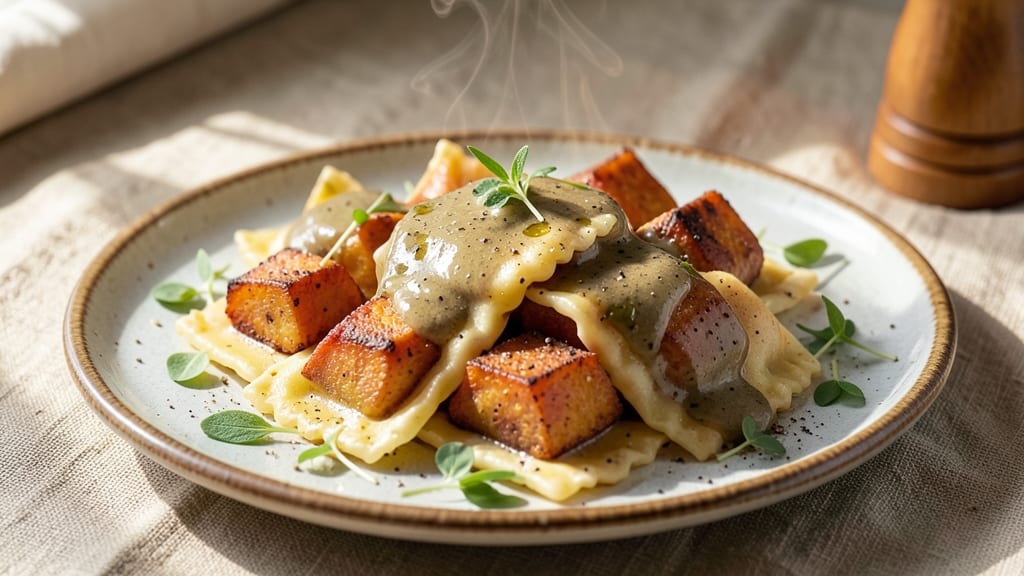
This sweet potato ravioli filling recipe transforms humble ingredients into nutmeg-spiced velvety dumplings that feel like a gourmet indulgence. The secret lies in roasting sweet potatoes until caramelized—this deepens their natural sweetness and creates a texture that’s impossibly tender yet structured enough to hold its shape when sealed in pasta.
I’ve perfected this filling over years of testing, balancing spices so the nutmeg shines without overpowering the earthy sweetness of the potatoes.
The process is methodical but straightforward: roast the sweet potatoes until fork-tender, then blend them into a smooth, vibrant purée. A touch of olive oil and a pinch of salt at this stage ensures the filling stays cohesive and flavorful.
The dough—whether classic egg pasta or a vegan alternative—needs to be rolled thin enough to encase the filling without cracking, yet sturdy enough to hold its form during boiling. This is where precision meets patience, and the results are always worth it.
What you’ll end up with are golden, pillowy ravioli with a filling that’s rich, aromatic, and just sweet enough to balance the savory elements of any dish.
The nutmeg adds warmth that lingers on the palate, while the caramelized sweet potatoes bring a depth of flavor that’s both comforting and sophisticated. These ravioli are perfect as a standalone vegetarian main or paired with sage brown butter and a crisp arugula salad for a complete, restaurant-worthy meal.
Storage is simple: keep cooked ravioli in an airtight container in the fridge for up to 3 days, or freeze them for longer storage. When reheating, a quick dip in boiling water ensures they’re crisp and ready to serve.
This recipe isn’t just about the filling—it’s about the entire experience, from the first bite of that velvety interior to the final elegant presentation on your plate.
Ingredients for sweet potato ravioli filling
Caramelized sweet potatoes meet aromatic spices in this velvety filling—transforming simple ingredients into gourmet ravioli.
| Ingredient | Amount | Notes |
|---|---|---|
| Sweet Potatoes 🍠 | 2 lbs | Medium, peeled and cubed |
| Extra-Virgin Olive Oil 🫒 | 2 tbsp | For roasting and blending |
| Ground Nutmeg 🌿 | ½ tsp | Freshly grated preferred |
| Sea Salt 🧂 | 1 tsp | Diamond Crystal preferred |
| Freshly Ground Black Pepper 🌶️ | ¼ tsp | For seasoning |
| All-Purpose Flour 🌾 | 2 cups | For dough (optional) |
| Large Eggs 🥚 | 2 whole | For dough (optional) |
| Unsalted Butter 🧈 | 1 tbsp | For dough (optional) |
| Cinnamon 🌿 | ¼ tsp | Optional for warmth |
| Vanilla Extract 🍯 | ½ tsp | Pure vanilla preferred |
| Brown Sugar 🍚 | 1 tbsp | Lightly packed |
| Fresh Rosemary 🌿 | 1 tbsp | Chopped, optional garnish |
The sweet potatoes are the foundation—choose firm, vibrant orange ones with no soft spots. Whole Foods or Trader Joe's carry the best varieties, but any standard grocery store will do. Roasting them until caramelized (about 45-50 minutes at 400°F) deepens their natural sweetness and creates that luxurious texture. For the nutmeg, freshly grated makes all the difference—pre-ground loses potency quickly. If you can't find fresh, a high-quality jarred nutmeg works, but toast it lightly in a dry pan first to wake up the flavor. The olive oil should be extra-virgin—it adds richness that cuts through the sweetness.
No nutmeg? Allspice at half the amount gives a similar warmth, though the flavor profile shifts slightly. Swapping out the sweet potatoes for butternut squash (same quantity) works well, though the texture will be slightly denser. For the dough, if you're making classic egg pasta, King Arthur flour is my go-to for consistent results. Vegan? Use flax eggs (2 tbsp ground flaxseed + 6 tbsp water per egg) and vegan butter. The brown sugar is optional but adds a subtle caramel note that complements the nutmeg beautifully. If you're short on time, maple syrup at half the amount works in a pinch, though it lacks the depth of brown sugar.
Roasted sweet potatoes keep for 5 days in the fridge, but blend them into filling within 2 days for best texture. The filling itself can be stored in an airtight container for 3 days or frozen for 3 months. For freezing, portion into 1-tbsp dollops on a parchment-lined tray, freeze solid, then transfer to a bag. This prevents clumping and makes assembly easier later. Reheat gently in a dry pan or microwave—no boiling, or the filling will break down. The dough, if pre-made, keeps for 3 days wrapped in plastic or 1 month frozen.
Why You'll Love This Recipe
- No Peel, No Stress: I swear by this trick—just roast the sweet potatoes whole, then scoop out the flesh. The skin stays put, and I’m not scrubbing my nails raw for 10 minutes.
- Warm Spice Magic: That pinch of nutmeg? It’s the secret weapon. Earthy, cozy, and just sweet enough—like a hug in your mouth, but better than actual hugs (no judgment).
- Leftovers Reinvented: Turns into breakfast hash, lunch wraps, or even a quick soup. I’ve frozen portions for months, and they still taste like I slaved over them (but I didn’t).
- Pantry Staple Power: Four ingredients, zero weird swaps. Olive oil, salt, pepper—stuff you already have. Budget-friendly, fuss-free, and still feels special enough for company.
Step-by-step instructions for sweet potato ravioli filling
Transform simple ingredients into velvety, nutmeg-kissed sweet potato filling perfect for ravioli.
Roast Sweet Potatoes Until Tender and Caramelized
Preheat your oven to 400°F and line a baking sheet with parchment paper. Toss the 2 lbs of peeled and cubed sweet potatoes with 2 tablespoons of extra-virgin olive oil, 1 teaspoon of sea salt, and ¼ teaspoon of freshly ground black pepper. Spread them in a single layer, leaving space between cubes for even browning.
Roast for 25-30 minutes, stirring halfway through, until the edges are golden brown and the cubes are fork-tender with just a slight resistance in the center. The sweet potatoes should smell deeply caramelized and sweet—this is your cue they're ready. Let them cool slightly before blending, as hot potatoes will make the filling too thin and watery.
Blend Roasted Sweet Potatoes with Warm Spices
Transfer the roasted sweet potatoes to a food processor or high-speed blender. Add ½ teaspoon of ground nutmeg, 1 tablespoon of brown sugar, ½ teaspoon of vanilla extract, and ¼ teaspoon of cinnamon (if using). Pulse a few times to break up the potatoes, then blend until completely smooth, scraping down the sides as needed.
The filling should be velvety with a vibrant orange hue and a rich, aromatic scent. If it's too thick, add 1 tablespoon of water at a time until it reaches a spreadable consistency—it should coat the back of a spoon smoothly. Taste and adjust seasoning with more salt or nutmeg if needed. This is where the magic happens: the nutmeg and vanilla deepen the sweet potato flavor into something truly luxurious.
Prepare the Dough for Ravioli Wraps
In a large bowl, whisk together the 2 cups of all-purpose flour and 1 teaspoon of sea salt. Make a well in the center and add the 2 whole large eggs and 1 tablespoon of unsalted butter, softened. Using a fork, gradually incorporate the flour into the wet ingredients until a shaggy dough forms.
Turn the dough onto a lightly floured surface and knead for 5-7 minutes until smooth and elastic. Wrap it in plastic wrap and let it rest for 30 minutes at room temperature. This resting period relaxes the gluten, making it easier to roll thin and even. If the dough feels sticky, add just enough flour to handle it—don't overdo it, or the ravioli will be tough.
Assemble and Fill the Ravioli
Roll out the rested dough to 1/16-inch thickness using a pasta machine or rolling pin. Cut into 3-inch squares using a pizza cutter or sharp knife. Place 1 teaspoon of sweet potato filling in the center of each square, leaving a ½-inch border around the edges. Fold the dough over the filling, pressing the edges firmly with a fork to seal.
For a professional finish, use a ravioli mold or gently press the edges with your fingers to create a neat half-moon shape. If the filling leaks through the dough, your squares might be too thin—roll the dough slightly thicker next time. The ravioli are now ready to cook or freeze for later use. The nutmeg-spiced filling will infuse the pasta with warm, aromatic depth, making every bite unforgettable.
Pro Tips For Making Sweet Potato Ravioli Filling
- Boil Until Fork-Tender: Sweet potatoes straight from the oven? Nope. For ravioli filling, you need them collapsed like a sad marshmallow—boil peeled cubes in salted water until they mash with zero resistance. I learned this the hard way when my first batch turned out grainy and stubborn. Test with a fork: if it slides in like butter, you’re golden.
- Toast the Nutmeg First: That jarred nutmeg tastes like sawdust. Toast a pinch in a dry pan for 30 seconds until it smells warm and alive—then grind it fresh. Skip this, and your filling will taste flat, like someone forgot to season. (Yes, even if you’re using “good” nutmeg.)
- Salt the Boiling Water: You’d be shocked how often people skip this. Salted water = faster cooking + better flavor absorption. Use 1 tablespoon per quart—enough to make the water taste like the sea, not like tap. Trust me, your filling will thank you when it’s silky smooth.
- Mash While Warm, Not Hot: Let the sweet potatoes cool just enough to handle (about 5 minutes off heat) before mashing. Hot potatoes release starch like a flood, and your filling will turn gluey. Warm hands, smooth texture—no one wants to fight their masher.
Essential equipment for this recipe
Food Processor
You absolutely need a high-speed food processor or blender to achieve that silky-smooth texture. I use my Ninja BN601—it handles the roasted sweet potatoes like a dream, blending them into a velvety purée without turning to mush.
If you're on a budget, the Cuisinart Mini-Prep works well for smaller batches. Avoid hand mixers or regular blenders; they struggle with the fibrous texture of roasted sweet potatoes. 💫
Pasta Machine
A pasta machine is non-negotiable for even, thin sheets of dough. My go-to is the Imperia Pasta Machine, which gives me precise control over thickness—critical for delicate ravioli. If you're new to pasta-making, start with the Marcato Atlas 150, which has adjustable settings for beginners.
For hand-rolling, invest in a rolling pin with a marble base (like the OXO Good Grips) for consistent thickness. Never skip this step—thin dough is key to pillowy ravioli.
Baking Sheet
Use a rimmed baking sheet lined with parchment paper to roast your sweet potatoes. I swear by Nordic Ware Natural Aluminum—it heats evenly and prevents sticking. Avoid glass or non-stick pans; they don’t distribute heat as well, leading to uneven caramelization.
Pro tip: Spread sweet potatoes in a single layer with space between cubes for maximum browning. 🔥
Ravioli Mold
A ravioli mold (like the Marcato Ravioli Maker) ensures professional-looking shapes every time. It crimps the edges neatly, preventing leaks during cooking. If you don’t have one, use a pizza cutter or sharp knife to cut squares and press edges with a fork.
For extra flair, dip the fork in water before pressing—it creates a decorative crimp. This tool is optional but makes assembly 10x faster.
Mixing Bowls
Invest in two medium mixing bowls—one for dough and one for filling. I use stainless steel Pyrex bowls because they’re non-reactive and easy to clean. For the dough, a wide, shallow bowl (like the OXO Good Grips Mixing Bowl) makes kneading easier.
Avoid glass for dough prep—it can crack under pressure. Keep one bowl dedicated to wet ingredients (eggs, butter) and another for dry (flour, salt) to avoid cross-contamination.
Measuring Tools
Precision matters! Use a digital kitchen scale (like the OXO Good Grips) for accurate measurements of flour and filling. For liquids, a liquid measuring cup with spouts ensures clean pours.
A microplane (for nutmeg) and fine-mesh strainer (for blending) are small but game-changing tools. Never eyeball measurements—especially with nutmeg, where too much can overpower the filling. 💡
Nutrition facts
Frequently asked questions
Can I make this filling without a food processor?
Yes, but with some extra effort! Mash the roasted sweet potatoes with a potato masher or fork until completely smooth, then transfer to a bowl. Use an immersion blender to blend until velvety. For the smoothest texture, strain through a fine-mesh sieve to remove any fiber. The filling won't be quite as silky, but it'll still taste delicious!
How do I prevent the ravioli from leaking filling?
First, ensure your dough is rolled to 1/16-inch thickness—thicker dough is more forgiving. Use 1 teaspoon of filling per ravioli and leave a ½-inch border around the edges. Seal edges firmly with a fork or ravioli mold. If filling leaks during boiling, your dough might be too thin—try rolling it slightly thicker next time.
What's the best way to store leftover ravioli?
Cooked ravioli keep in an airtight container in the fridge for 3 days. For longer storage, freeze them on a parchment-lined tray until solid, then transfer to a bag. Thaw overnight in the fridge before reheating. To reheat, boil for 2-3 minutes or pan-fry in olive oil until golden. Never microwave frozen ravioli directly—it makes them rubbery!
Can I make this vegan?
Replace the eggs with 2 flax eggs (2 tbsp ground flaxseed + 6 tbsp water) and use vegan butter. For extra richness, add 1 tablespoon of aquafaba to the dough. The filling stays the same—it's already vegan! The texture might be slightly different, but the flavor remains just as warm and spiced.
What's the ideal serving size for these ravioli?
This recipe makes about 24-28 ravioli, perfect for 4 servings as a main dish or 6 as an appetizer. For a lighter meal, serve with a simple arugula salad. For a heartier plate, pair with sage brown butter or a creamy ricotta sauce. Each ravioli is about 1.5 inches wide—great for sharing!