
Side Dishes
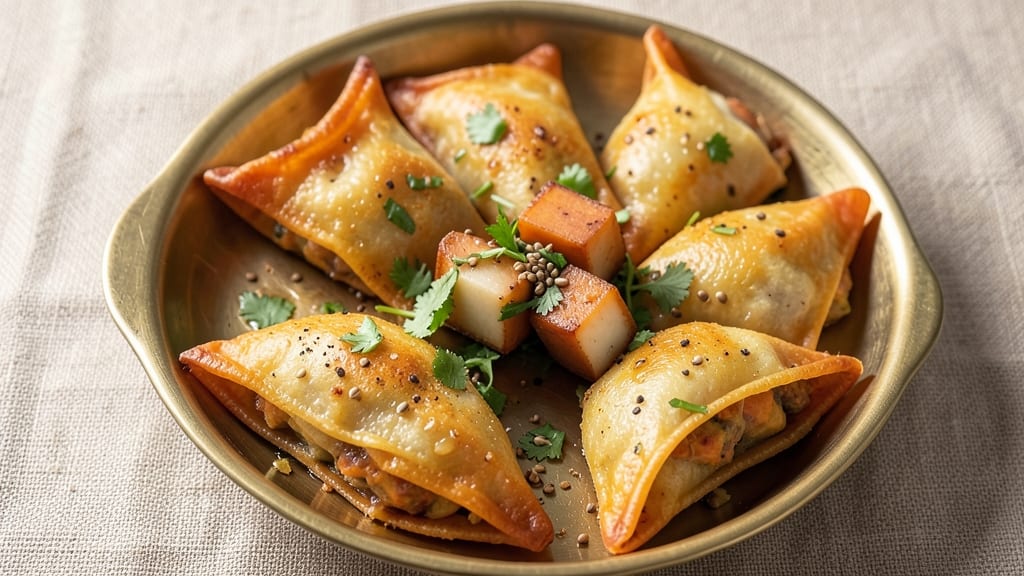
This sweet potato samosa recipe transforms humble ingredients into crispy, golden triangles packed with aromatic spiced filling. The secret lies in perfectly balanced flavors—sweet potatoes roasted until tender, layered with warm spices like cumin and coriander, all encased in a delicate, flaky dough.
I've perfected this technique to ensure every bite delivers that satisfying crunch followed by creamy, spiced goodness.
The magic happens in two key steps: roasting the sweet potatoes until caramelized (which intensifies their natural sweetness) and sealing the samosa edges with a tiny bit of water to create an airtight seal. This prevents leaks during frying while maintaining that signature crispy exterior.
The dough is simple—just flour, water, and a touch of oil—but the way you roll and fold it determines how crispy your samosas will be.
What you'll end up with are samosas that are crispy on the outside, tender on the inside, and bursting with warm spices. The aroma alone will have everyone gathering around your kitchen, and the first bite delivers that perfect balance of sweet, savory, and spicy.
This recipe is foolproof for beginners but impressive enough for gatherings.
Serve these samosas with mint chutney or tamarind sauce for dipping, or pair them with a cooling yogurt-based raita. The best part? You can make the filling and dough ahead of time, so assembly is quick when you're ready to fry. Let's get started on creating these crispy, flavorful triangles!
Ingredients for sweet potato samosa
Sweet potatoes, warm spices, and flaky dough—this simple lineup delivers restaurant-quality samosas.
| Ingredient | Amount | Notes |
|---|---|---|
| Sweet Potatoes 🍠 | 3 lbs | Medium-sized, peeled and cubed |
| All-Purpose Flour 🌾 | 4 cups | For dough, plus extra for dusting |
| Vegetable Oil 🫒 | ½ cup | For frying, high smoke point |
| Ground Cumin 🌿 | 1 ½ tbsp | Toasted for deeper flavor |
| Ground Coriander 🌿 | 1 tbsp | Freshly ground preferred |
| Turmeric Powder 🌶️ | ½ tsp | Vibrant color indicator |
| Garam Masala 🌶️ | 1 tbsp | Homemade or store-bought blend |
| Red Chili Powder 🔥 | ½ tsp | Adjust for heat preference |
| Salt 🧂 | 1 ½ tsp | Diamond Crystal preferred |
| Water 💧 | ¾ cup | For dough and sealing |
| Ghee or Vegetable Oil 🫒 | 2 tbsp | For brushing dough |
| Fresh Cilantro 🌿 | ¼ cup | Chopped, for garnish |
| Lemon Juice 🍋 | 1 tbsp | Freshly squeezed |
The sweet potatoes are the heart of this recipe. Choose orange-fleshed varieties—they're naturally sweeter and hold up better to roasting. Whole Foods or Trader Joe's usually carry the best ones, but any grocery store's produce section should work. Roast them until caramelized (about 30 minutes at 400°F) for that perfect sweetness. The spices? Penzeys or local Indian markets have the best blends, but don't stress if you can't find them—regular ground spices work too. Just toast the cumin and coriander in a dry pan for 30 seconds before adding to the filling for extra depth.
No garam masala? Mix 1 tsp each of cinnamon, cardamom, and cloves for a quick substitute. The dough is foolproof—just flour, water, and a pinch of salt. Add a splash of lemon juice (about 1 tsp) to the dough water for extra tenderness. For the filling, if your sweet potatoes are extra moist, pat them dry thoroughly before mixing with spices. The secret to crispy samosas is sealing the edges with water before frying—a tiny drop on each fold creates that airtight seal. No cilantro? Fresh parsley works in a pinch, though it won't have that same bright flavor.
Make the filling and dough ahead—they keep well for 2 days in the fridge. The dough can even be frozen for 1 month wrapped in plastic. For frying, maintain oil at 350°F—too hot and they'll burn before cooking through. Fry in batches so the oil doesn't cool too much. These samosas reheat beautifully—350°F for 10 minutes brings back that crispy texture. Store leftovers in an airtight container, but honestly? They disappear fast—everyone will want seconds.
Why You'll Love This Recipe
- No-Fuss Filling: The sweet potatoes roast until they’re tender and sweet—no peeling, no fuss. Just cube, toss with oil and spices, and let the oven do the work while you mix the dough.
- Earthy Warmth: That combo of cumin and coriander? It’s like a hug in spice form. The flour crust stays crispy just enough to hold the creamy, spiced sweet potato inside—no soggy corners here.
- Picnic-Proof Packable: These hold up like champs. Toss a few in a lunchbox for work, pack them in a cooler for a day out, or even freeze extras for when you’re too tired to cook. The flavor doesn’t skip a beat.
- Budget Bright Spot: Sweet potatoes stretch further than you’d think, and the spices cost pennies. I’ve made a whole tray for under $5—perfect for feeding the family without breaking the bank. Plus, leftovers reheat like a dream.
Step-by-step instructions for sweet potato samosa
Here's how to make golden, crispy samosas with a perfectly spiced sweet potato filling.
Cook the Sweet Potato Filling
Peel and cube the 3 lbs sweet potatoes into ½-inch pieces—uniform size ensures even cooking. Boil them in salted water for 15-20 minutes until fork-tender but not mushy. Drain well and let them cool slightly before handling.
In a large skillet, heat 2 tablespoons ghee or vegetable oil over medium heat. Add the cooked sweet potatoes and sauté for 5 minutes to dry them out completely. This step is crucial—wet filling makes the samosas soggy.
Add the 1.5 tablespoons ground cumin, 1 tablespoon ground coriander, ½ teaspoon turmeric powder, 1 tablespoon garam masala, ½ teaspoon red chili powder, and 1.5 teaspoons salt. Stir well and cook for 3-4 minutes until the spices are fragrant and the filling is well-coated. Let it cool completely before assembling.
Prepare the Samosa Dough
In a large mixing bowl, combine the 4 cups all-purpose flour and ½ cup vegetable oil. Rub the oil into the flour with your fingertips until the mixture resembles coarse crumbs with pea-sized oil droplets. This creates flaky layers in the final samosa.
Gradually add the ¾ cup water while mixing with a fork until the dough comes together. Knead lightly for 2-3 minutes until smooth but not sticky. If it feels too dry, add 1 teaspoon water at a time. Wrap the dough in plastic wrap and let it rest for 30 minutes at room temperature.
Divide the dough into 12 equal portions (about 2 ounces each). Roll each portion into a 6-inch circle on a floured surface, keeping the edges slightly thicker than the center. This ensures the samosa holds its shape when filled.
Assemble and Seal the Samosas
Place 2 tablespoons of the cooled sweet potato filling in the center of each dough circle. Fold the dough over the filling to form a ½-inch pleat along one edge, then fold the sides inward to create a triangle. Press the edges firmly to seal, leaving a small opening at the top for steam to escape.
Brush the sealed edges with a little water to help them stick, then crimp with your fingers. Repeat until all 12 samosas are assembled. Let them rest for 15 minutes before frying to prevent filling from leaking.
Fry to Golden Perfection
Heat ½ cup vegetable oil in a deep skillet or pot over medium heat until it reaches 350°F—test with a wooden chopstick. Fry 3-4 samosas at a time, turning occasionally, for 4-5 minutes until golden brown on all sides. The oil temperature is critical—too hot, and they burn; too cool, and they absorb oil.
Drain on a paper towel-lined plate to remove excess oil. For extra crispiness, sprinkle with a pinch of salt while still hot. Garnish with ¼ cup chopped fresh cilantro and a drizzle of 1 tablespoon lemon juice just before serving to brighten the flavors.
Serve Warm and Enjoy
Serve the samosas immediately while they're still crispy. Pair them with mint chutney or tamarind sauce for dipping. The filling should be warm, fragrant, and slightly spicy, with a perfect balance of sweetness from the potatoes and warmth from the spices.
If storing, keep them in an airtight container for up to 2 days, but reheat in a 350°F oven for 5-7 minutes to restore crispiness. The secret to these samosas is patience—don’t rush the frying, and always let the dough rest. Trust the process, and you’ll get that restaurant-quality crunch every time!
Pro Tips For Making Sweet Potato Samosa
- Boil Sweet Potatoes Until Fork-Tender: Sweet potatoes should break apart when pierced with a fork—not just soft on the outside. I learned this the hard way: mushy filling means soggy samosas. Boil them cut-side down in salted water for 15-20 minutes, then mash while still hot for better texture.
- Toast Spices in Oil First: Warm ground cumin and coriander in oil for 30 seconds before adding sweet potatoes. This blooms their flavor and prevents that dull, raw spice taste. (Yes, it’s an extra step, but your filling will actually taste like spices, not just flour.)
- Chill Dough Before Rolling: Wrap the flour dough in plastic and refrigerate for at least 30 minutes. Cold dough rolls smoother, sticks less, and seals better when frying—no more oil leaks or uneven crispiness. (Trust me, your future self will curse you if you skip this.)
- Use a Mixer for Filling, Not Just Hands: After mashing sweet potatoes, pulse them in a food processor with spices for 10 seconds. This distributes cumin and coriander evenly without overworking the texture. Hand-mashing? You’ll end up with clumps—no matter how hard you stir.
Dietary considerations for this dish
Vegetarian-Friendly
This sweet potato samosa recipe is naturally vegetarian, making it perfect for plant-based diets or gatherings with mixed dietary needs. The filling relies entirely on roasted sweet potatoes, aromatic spices, and ghee or oil for richness—no meat or dairy is required.
For an extra protein boost, consider adding ½ cup cooked chickpeas or ¼ cup crumbled paneer to the filling before assembling. 🌱
Gluten-Free Adaptation
To make gluten-free samosas, replace the all-purpose flour with a 1:1 gluten-free flour blend like Bob's Red Mill or King Arthur. Add ½ teaspoon xanthan gum to help bind the dough.
For the filling, ensure all spices are certified gluten-free (some blends contain wheat). The texture will be slightly different but still delicious—just expect a marginally softer crust. 🥔
Spice Level Control
The recipe includes ½ teaspoon red chili powder, but you can easily adjust this to suit your heat preference. For mild samosas, reduce to ¼ teaspoon or omit entirely. If you love spice, add ½ teaspoon cayenne pepper or a pinch of freshly chopped green chili to the filling.
Always taste the filling before assembling to ensure the perfect balance of sweet, spicy, and savory. 🌶️
Allergen Considerations
This recipe contains wheat flour and tree nuts (if using ghee made with nut oils). For nut-free versions, substitute ghee with vegetable oil. If serving to guests with allergies, clearly label the dish and offer alternatives like rice flour samosas (though they won’t be as crispy).
Always check spice blends for hidden allergens like soy or dairy. 🚫
Nut-Free Option
For a nut-free version, skip the ghee entirely and use 100% vegetable oil for both the dough and frying. This works especially well if you’re using a gluten-free flour blend that doesn’t contain nut-based additives.
The flavor remains rich and satisfying—just ensure all ingredients are certified nut-free to avoid cross-contamination. 🥜
Make-Ahead Tips
The filling and dough can be prepped up to 2 days ahead and stored in airtight containers. For gluten-free or nut-free versions, keep components separate to avoid cross-contamination. Assemble samosas the day of serving, but store uncooked dough and filling in the fridge.
When ready to fry, bring the oil to 350°F and cook as directed—no need to adjust timing. 📅
Nutrition facts
Frequently asked questions
Can I use regular potatoes instead of sweet potatoes?
Sweet potatoes are ideal because their natural sweetness balances the spices beautifully, but you can substitute regular potatoes if needed. For best results, roast them until caramelized (about 400°F for 30 minutes) to enhance their flavor. Regular potatoes will be less sweet, so you might want to add a pinch more sugar or honey to the filling to match the sweetness level.
Why is my samosa dough cracking when frying?
Dough cracks usually happen when the oil is too hot or the dough hasn't rested long enough. Maintain oil at 350°F and ensure your dough has rested for at least 30 minutes before rolling. If cracks appear, gently press them down with a fork while frying—this helps seal the edges and prevents filling leaks.
How do I prevent the filling from leaking during frying?
The key is proper sealing! After folding, brush the edges with a tiny drop of water before crimping. This creates an airtight seal that traps steam inside. Also, ensure your filling is completely cooled before assembling—warm filling expands and can burst through weak seals. For extra security, let assembled samosas rest for 15 minutes before frying.
Can I bake these samosas instead of frying?
Baking is possible but won't give the same crispy texture. Preheat oven to 400°F and brush samosas with oil before baking on a wire rack for 15-20 minutes until golden. For better results, spray with oil halfway through. They'll be softer than fried versions but still delicious—great for a healthier option or when frying isn't practical.
What's the best way to store leftover samosas?
Store in an airtight container at room temperature for up to 2 days. For longer storage, freeze uncooked samosas on a tray first (to prevent sticking), then transfer to a bag for up to 1 month. To reheat, bake at 350°F for 10-12 minutes or air fry at 375°F for 5 minutes to restore crispiness. Avoid microwaving—it makes them soggy!