
Side Dishes
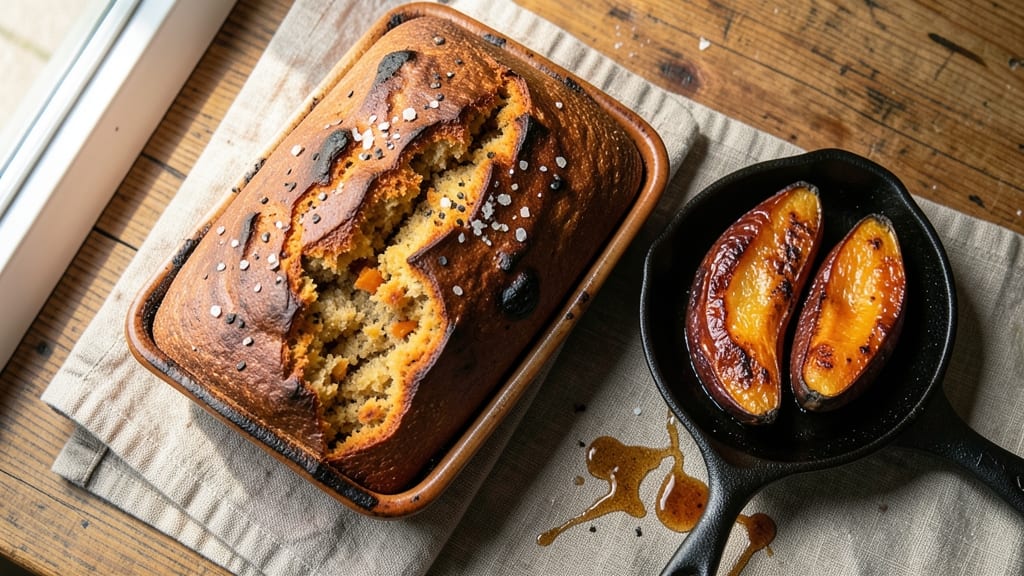
This sweet potato sourdough bread recipe transforms humble ingredients into a loaf that balances earthy sweetness with tangy sourdough complexity. The secret lies in roasting sweet potatoes until caramelized, then blending them into the dough for natural sweetness and moisture—no added sugar needed.
I developed this recipe after years of baking sourdough, adjusting techniques to preserve that signature tang while incorporating the warm, spiced notes of sweet potatoes.
What makes this bread special is its texture: a crisp, golden crust that gives way to a tender, moist crumb infused with sweet potato flavor. The sourdough starter provides structure and depth, while the roasted sweet potatoes add natural sweetness and a velvety texture.
Unlike traditional sourdough, this version stays moist for days, making it perfect for toast, sandwiches, or serving alongside soups.
The process combines classic sourdough methods with a few key adaptations. You'll activate your starter, mix in roasted sweet potato purée, and shape the dough into a classic boules or batard.
Proofing and baking follow traditional sourdough techniques, but the sweet potato addition creates a loaf that's both comforting and sophisticated.
Once baked, the aroma of warm spices and caramelized sweet potatoes fills your kitchen, and every slice delivers that perfect balance of crusty crunch and tender crumb.
This recipe is ideal for those who love sourdough but want to add natural sweetness without compromising texture or flavor. Let's get started on creating your loaf.
Ingredients for sweet potato sourdough bread
A perfect blend of earthy sweet potatoes and tangy sourdough for a loaf that's both comforting and sophisticated.
| Ingredient | Amount | Notes |
|---|---|---|
| Sweet Potatoes 🍠 | 2 medium | Roasted until caramelized |
| Active Sourdough Starter 🍞 | 1 cup | Fed and bubbly |
| All-Purpose Flour 🌾 | 3 ½ cups | Bread flour preferred |
| Whole Wheat Flour 🌾 | ½ cup | For added texture |
| Granulated Sugar 🍚 | ¼ cup | Optional for slight sweetness |
| Instant Yeast 🍞 | ½ tsp | Ensures proper rise |
| Salt 🧂 | 1 ½ tsp | Diamond Crystal preferred |
| Extra-Virgin Olive Oil 🫒 | ½ cup | For dough moisture |
| Cinnamon 🌿 | 1 tsp | Ground for warmth |
| Ground Nutmeg 🌿 | ½ tsp | Freshly grated preferred |
| Ground Ginger 🌿 | ½ tsp | For depth of flavor |
| Water 💧 | 1 ¼ cups | Room temperature |
| Cornmeal 🌽 | ¼ cup | For dusting |
The sweet potatoes are the heart of this recipe—look for vibrant, firm ones at the grocery store, not those with soft spots. Whole Foods or local farms often carry the best varieties. Roast them until deeply caramelized; that's where the natural sweetness comes from. For the flour, King Arthur bread flour gives the best structure, but all-purpose works in a pinch. The sourdough starter should be active and bubbly—if it's sluggish, feed it 12 hours before using. I always make extra starter to use in other recipes, so I never run out when I need it.
No sourdough starter? Use 1 packet of instant yeast plus 1/4 cup warm water as a substitute, but the flavor won't be quite the same. Running short on whole wheat flour? Substitute with more all-purpose, but the texture will be slightly less dense. The spices are non-negotiable for that warm, cozy flavor—Penzeys has the best quality, but regular grocery store brands work fine. If you're feeling adventurous, add a pinch of cardamom for an exotic twist. The olive oil should be extra-virgin; cheaper varieties lack the fruity notes that elevate this bread.
Store the baked loaf in a paper bag at room temperature for up to 3 days to maintain freshness. For longer storage, wrap tightly in plastic and refrigerate for up to 1 week. Freeze slices for up to 3 months—just toast straight from frozen. The crust stays crisp for days, while the crumb remains moist. I always bake two loaves; one for the week and one to freeze for lazy mornings. The aroma alone makes this bread worth every minute of waiting time.
Why You'll Love This Recipe
- Sweet Potato Swap: I’ve got a sourdough starter that’s been begging for love, and roasted sweet potato purée turns this into something ridiculously easy—no fancy kneading, no waiting for hours. Just blend, mix, and let the starter do the work while you sip coffee.
- Caramel-Kissed Crust: That touch of granulated sugar? Oh, it’s not just for sweetness—it caramelizes into a golden, slightly crispy shell while keeping the inside tender. Honestly, I’ve made regular sourdough, but this? It’s the kind of bread you’ll sneak bites of before breakfast.
- Breakfast to Brunch: Make a big batch on Sunday and watch it disappear: toasted with butter, slathered in jam, or even as a base for avocado toast. My kids grab it for lunchboxes, and I save slices for French toast by Wednesday—no waste, just flavor.
- Budget-Friendly Stretch: Sweet potatoes are cheap, and using half whole wheat flour cuts costs without sacrificing texture. I’ll be real: this recipe feeds my family of four for days, and the leftovers? They’re the reason I don’t stress about grocery bills. Win.
Step-by-step instructions for sweet potato sourdough bread
Here's how to transform roasted sweet potatoes into a fragrant, crusty loaf with a tender crumb.
Roast the Sweet Potatoes Until Caramelized
Preheat your oven to 400°F and pierce the 2 medium sweet potatoes with a fork in several places. Place them directly on the oven rack or on a parchment-lined sheet. Roast for 45-50 minutes until the skin is crispy and the flesh collapses easily when pressed with a fork.
The potatoes should be soft enough to mash completely with a fork, but still hold their shape slightly. You're looking for a deep caramelization on the skin and edges—this adds incredible flavor to your bread. Let them cool for 10 minutes before handling, then scoop out all the flesh, discarding the skins. You should have about 1 cup of roasted potato puree.
Mix the Dough with Roasted Sweet Potato Puree
In a large mixing bowl, combine the 1 cup roasted sweet potato puree, 1 cup active sourdough starter, 0.5 cup extra-virgin olive oil, and 1.25 cups room temperature water. Mix vigorously with a wooden spoon until fully incorporated. The mixture should be smooth with no lumps remaining.
In a separate bowl, whisk together the 3.5 cups all-purpose flour, 0.5 cup whole wheat flour, 0.25 cup granulated sugar, 0.5 tsp instant yeast, 1.5 tsp salt, 1 tsp cinnamon, 0.5 tsp ground nutmeg, and 0.5 tsp ground ginger. Gradually add the dry ingredients to the wet mixture, stirring continuously until a shaggy dough forms. The dough will be quite sticky at this stage—this is normal.
Knead and Develop the Gluten
Turn the dough out onto a lightly floured surface and knead for 8-10 minutes until smooth and elastic. You'll know it's ready when it springs back slowly when poked and forms a windowpane when stretched thin. The dough should be soft but not sticky—add a little more flour if needed, but don't overdo it as this can make the bread dense.
Place the dough in a lightly oiled bowl, cover with a damp towel, and let it rise at room temperature for 1-2 hours or until it has doubled in size. You're looking for about a 50% increase in volume—the dough should look puffy and jiggly when gently shaken. The warm spices will give it a beautiful aroma as it rises.
Shape and Proof the Loaf
Punch down the dough to release air, then shape it into a round loaf. Place it seam-side up in a greased pullman pan or round baking dish. Cover again and let it proof for another 1-2 hours until it has risen to about 2 inches above the rim of the pan. The dough should feel firm to the touch and have a slight spring when pressed gently.
While the dough proofs, preheat your oven to 375°F with a baking stone or inverted baking sheet inside. Sprinkle 0.25 cup cornmeal onto a parchment-lined baking sheet—this will create a crispy bottom crust. Once the oven is fully heated, carefully transfer the dough (using the pan) onto the prepared baking sheet.
Bake to Golden Perfection
Bake the loaf for 35-40 minutes until the top is deep golden brown and the internal temperature reaches 190-200°F. You'll know it's done when it sounds hollow when tapped on the bottom. For extra crispiness, you can brush the top with a little more olive oil after 20 minutes of baking.
Remove the bread from the oven and let it cool in the pan for 10 minutes before transferring to a wire rack to cool completely. The warm spices will infuse the entire kitchen with their aroma as it bakes. Once fully cooled, slice into thick pieces to reveal a tender crumb with beautiful caramelized sweet potato flecks throughout.
Pro Tips For Making Sweet Potato Sourdough Bread
- Boil, Don’t Microwave: DESCRIPTION: I learned this the hard way—microwaving sweet potato purée for your dough turns it gummy and dull. Instead, boil peeled cubes in salted water (15-20 mins until fork-tender) for a smoother texture that actually sweetens the bread. Drain well, then mash while still hot—this helps break down starches better than cold purée ever will.
- Weigh Your Flours: DESCRIPTION: That 1-cup of whole wheat flour you eyeballed? It’s probably 120g instead of 130g, and your bread will taste dense. Use a kitchen scale for both flours—sourdough is finicky with hydration, and whole wheat absorbs moisture differently. Trust me, your loaf’s rise and crumb will thank you.
- Feed Starter Twice: DESCRIPTION: Your sourdough starter should be at peak activity (bubbly, doubled in 4-6 hours) when you mix it into the dough. Feed it twice the day before baking—once in the morning, once in the evening—so it’s fresh and lively. Cold starter = weak rise = sad, flat bread.
- Shape Fast, Rest Slow: DESCRIPTION: Don’t rush the shaping, but don’t let the dough sit around either. Work it quickly into a tight ball, then let it proof in the fridge overnight (8-12 hours). This slow rise develops flavor and makes the crust crisp without overproofing. (Yes, even if you’re impatient like me.)
Regional styles of this sweet potato sourdough bread
Southern Sweet Potato Sourdough
In the American South, sweet potatoes are a staple, and this variation takes that tradition to the next level by incorporating 1 cup mashed roasted sweet potato directly into the dough. I like to use Orange Sweet Potatoes for their natural sweetness and vibrant color.
Add ½ tsp smoked paprika to the dry ingredients for a subtle smoky depth that pairs beautifully with the sourdough tang. This version has a denser crumb but stays moist for days—perfect for thick slices of toast with butter or peanut butter. 🍠
German Sweet Potato Roggenbrot
German bakeries often blend rye flour with other grains for hearty breads, and this adaptation replaces 1 cup of the all-purpose flour with rye flour for a nuttier, denser loaf.
The sweet potatoes add moisture to balance rye's dryness, while 1 tsp caraway seeds (lightly toasted) provide that classic German flavor. Shape the dough into a round boule and bake in a Dutch oven for a crispy crust.
This version is ideal for hearty breakfasts or as a side with smoked sausages. 🌾
Japanese Sweet Potato Sourdough
In Japan, sweet potatoes (called satsumaimo) are often roasted and used in breads for their natural sweetness. This version swaps ½ cup of the all-purpose flour for ½ cup sweet potato flour (made by dehydrating and grinding roasted sweet potatoes).
Add ½ tsp matcha powder to the dry ingredients for an earthy, slightly bitter contrast to the sweetness. The dough will be stickier, so use a wet hands technique when shaping.
Bake until the crust is deep golden and the interior is tender—this loaf is perfect for pairing with miso soup or as a dessert with honey. 🍵
Mexican Sweet Potato Pan de Muerto
For a festive twist, shape this sweet potato sourdough into the traditional bone-shaped loaf of Pan de Muerto, using the same dough but adding ½ cup dried fruit (raisins or chopped dates) and 1 tsp orange zest to the wet ingredients.
Brush the baked loaf with a simple egg wash and sprinkle with coarse sugar for a decorative finish. This version is especially popular during Día de los Muertos but works year-round for celebrations. The sweet potato adds moisture to balance the dried fruit's chewiness. 🌶️
Scandinavian Sweet Potato Rugbrød
In Scandinavian countries, rugbrød (dense rye bread) often includes sweet additions like dried fruits or honey. This version incorporates ½ cup roasted sweet potato purée and ½ cup chopped dried apples into the dough, along with 1 tsp cardamom for warmth.
Shape the dough into a thick round loaf and bake in a cast-iron skillet for a crispy crust. This bread stays fresh for weeks when stored in a paper bag and pairs perfectly with smoked fish or sharp cheeses. ❄️
Nutrition facts
Frequently asked questions
Can I substitute regular potatoes for sweet potatoes in this recipe?
No, sweet potatoes are essential for both flavor and texture. Their natural sweetness and moisture content create that perfect balance with the tangy sourdough. Regular potatoes lack the same depth of flavor and would make the bread too dense. If you're out of sweet potatoes, try using 1 cup canned pumpkin purée as a substitute—it works surprisingly well!
How do I know when my sourdough starter is ready to use?
Your starter should be bubbly, doubled in size, and have a slightly tangy aroma—usually within 4-6 hours after feeding. For this recipe, it should also be at its peak activity. If it's sluggish, feed it with equal parts flour and water 12 hours before using. The starter should float in water (like a small boat) when fully active.
Why did my bread turn out dense instead of light and airy?
Dense bread often results from over-kneading, under-proofing, or using too much flour. Check these common issues: the dough should rise to about 50% more than its original size during the first rise, and the second proof should last until the dough springs back when gently pressed. Also, ensure your starter is active—weak starter can prevent proper fermentation.
Can I make this bread without a pullman pan?
Use a round cake pan, Dutch oven, or even a loaf pan lined with parchment paper. For a rustic look, shape the dough into a boule and bake on a parchment-lined sheet. Just be sure to preheat your oven with a baking stone or inverted sheet for 30 minutes before baking to create steam for a crispy crust.
How long can I store this bread, and how do I revive stale slices?
Store wrapped in a paper bag at room temperature for 3-4 days, or freeze slices for up to 3 months. To revive stale slices, wrap them in a damp paper towel and microwave for 10-15 seconds. For extra crispiness, toast in a 400°F oven for 5-7 minutes—the sweet potato flavor intensifies when reheated!