
Side Dishes
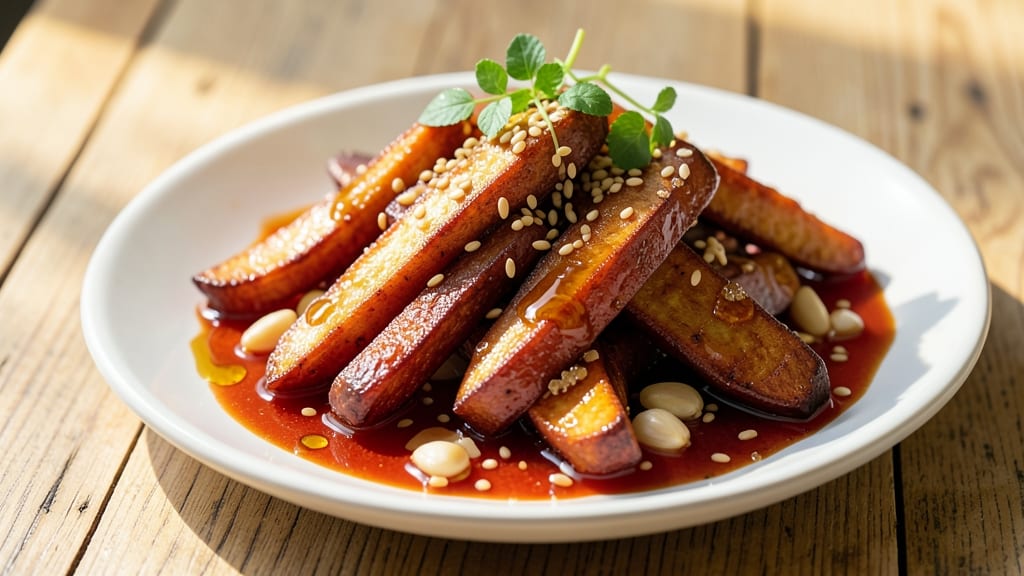
Sweet potato stems transform into a Korean banchan masterpiece with this recipe—crispy, caramelized edges kissed by smoky soy and sesame. What starts as a humble vegetable becomes a flavorful centerpiece when sliced thin, stir-fried to perfection, and glazed with a sweet-savory sauce.
This dish highlights traditional Korean techniques while delivering restaurant-quality results at home.
The secret lies in the balance: high heat for crispy stems, just enough soy sauce for umami depth, and a touch of sugar to caramelize the edges. Garlic and sesame oil add aromatic layers that elevate every bite, making this more than just a side—it’s a flavor experience.
The dish pairs beautifully with rice or grilled meats, but it shines as a standalone banchan for any meal.
By the time you plate these stems, you’ll have golden, glistening bites with a satisfying crunch and a hint of smoky sweetness. The sauce clings perfectly, creating a harmonious blend of textures and flavors that feels both comforting and refined.
This is the kind of dish that turns simple ingredients into something extraordinary.
Perfect for meal prep or last-minute gatherings, this recipe delivers consistent results with minimal effort. Let’s bring the flavors of Korea to your table with this crispy, caramelized delight.
Ingredients for sweet potato stem korean
Twelve ingredients transform humble sweet potato stems into a crispy, caramelized Korean banchan masterpiece.
| Ingredient | Amount | Notes |
|---|---|---|
| Sweet Potato Stems 🍠 | 2 cups | Trimmed, sliced into 1/4-inch thick rounds |
| Kosher Soy Sauce 🥄 | ¼ cup | High-quality, preferably Japanese-style |
| Sesame Oil 🫒 | 1 tbsp | Toasted, for aromatic depth |
| Granulated Sugar 🍚 | 2 tbsp | Light brown sugar for caramelization |
| Garlic Cloves 🧄 | 3 cloves | Minced, for aromatic foundation |
| Toasted Sesame Seeds 🌾 | 1 tbsp | For garnish and crunch |
| Neutral Oil 🫒 | 2 tbsp | Vegetable or canola for frying |
| Rice Vinegar 🍶 | 1 tbsp | For brightness and balance |
| Gochugaru (Korean Red Pepper Flakes) 🌶️ | ½ tsp | Adjust for heat preference |
| Salt 🧂 | ½ tsp | Diamond Crystal preferred |
| Black Pepper 🌶️ | ¼ tsp | Freshly ground for finish |
| Green Onion 🧅 | 2 whole | Thinly sliced, for garnish |
The sweet potato stems are the star—look for firm, unblemished stems at specialty Asian markets or the produce section. Korean markets often carry pre-trimmed stems, but trimming them yourself ensures cleaner cuts. The soy sauce should be Japanese-style (like Kikkoman) for deeper umami, while gochugaru adds that signature Korean heat. For sesame oil, toasted varieties (like those from Mae Ploy or Kadoya) elevate the dish with nutty depth. Garlic should be freshly minced—pre-minced cloves lose their punch quickly.
No gochugaru? Substitute with smoked paprika at half the amount for a milder smokiness. Japanese soy sauce unavailable? Kosher soy sauce works in a pinch, though it may lack the depth. Sesame seeds can be omitted if unavailable, but the toasted oil is non-negotiable—it carries the dish’s aromatic soul. For extra crispiness, double the neutral oil and fry in batches. The sugar can be swapped for mirin (1 tbsp) to add subtle sweetness without caramelization. Green onions? Substitute with chives if unavailable, though they’ll lack the onion’s sharpness.
Store cooked stems in an airtight container for up to 3 days—reheat in a dry skillet for 2-3 minutes to restore crispiness. The sauce components (soy, vinegar, sugar) keep indefinitely in the pantry. For meal prep, portion stems into single servings before glazing to maintain texture. Freeze uncooked stems for up to 2 months—thaw and fry fresh for best results. Garnishes like sesame seeds and green onions should be added post-cooking to preserve their freshness.
Why You'll Love This Recipe
- Zero-Waste Magic: I swear by this recipe for using up those leftover sweet potato stems—no peeling, no fuss. Just chop, blanch, and toss in the pan with garlic and sesame oil, and suddenly you’ve got something delicious instead of scraps.
- Umami Bomb: That balance of soy sauce and sugar? It’s ridiculously good—savory with just enough sweetness to make your taste buds dance. The garlic cloves searing in sesame oil? Pure flavor gold.
- Lunchbox Hero: Between us, this keeps perfectly for days in the fridge. Pack it cold in bento boxes or reheat for a quick bite—it’s my go-to for school lunches or office meals when I need something hearty but easy.
- Pantry Staple: Honestly, you already have everything. Soy sauce, sugar, garlic—these are things I always stock, so this recipe never feels like a special occasion. Even my picky roommate asks for seconds.
Step-by-step instructions for sweet potato stem Korean recipe
This method delivers crispy, caramelized edges with a perfect balance of smoky soy and subtle heat.
Prep and Par-Cook the Sweet Potato Stems
Trim any fibrous ends from the 2 cups sweet potato stems and slice them into ¼-inch thick rounds. I like to use a sharp chef's knife for clean cuts that ensure even cooking. Pat the slices dry with paper towels—this prevents steaming and promotes crispiness during frying.
Heat a large skillet over medium-high heat with the 2 tablespoons neutral oil until shimmering. Add the sweet potato stems in a single layer and cook for 3-4 minutes per side until they develop golden spots. You're not fully cooking them yet—just creating a foundation for the glaze to adhere to. Remove and set aside on a wire rack to drain excess oil.
Build the Glazing Sauce
In the same skillet (no need to clean it—the fond adds flavor), reduce heat to medium and add the 3 minced garlic cloves. Sauté for 30 seconds until fragrant but not browned. Add the 0.25 cup kosher soy sauce, 2 tablespoons granulated sugar, 1 tablespoon rice vinegar, and 0.5 teaspoon gochugaru. Stir constantly for 2 minutes until the sugar begins to caramelize and the sauce thickens slightly.
Here's the thing—you want the sauce to coat the back of a spoon but still remain pourable. If it thickens too quickly, add 1 tablespoon water to loosen. The sugar should dissolve completely, creating a glossy, sticky glaze that will cling beautifully to the sweet potato stems.
Glaze and Crisp the Stems
Return the par-cooked sweet potato stems to the skillet with the sauce. Toss gently to coat evenly, then increase heat to medium-high for 2-3 minutes until the stems are fully glazed and the edges develop a deep caramel color. The stems should be tender when pierced with a fork but still hold their shape.
Residual moisture from the stems will help steam them slightly during this final cooking stage, creating that perfect contrast between crispy edges and tender centers. If the sauce starts to burn, reduce heat slightly and stir more frequently.
Finish and Garnish
Transfer the glazed sweet potato stems to a serving platter. Drizzle with the 1 tablespoon sesame oil and sprinkle evenly with the 1 tablespoon toasted sesame seeds. The oil adds another layer of aroma while the sesame seeds provide texture contrast and visual appeal.
Finish with the 2 thinly sliced green onions and a final sprinkle of 0.25 teaspoon black pepper. Serve immediately while the stems are still warm and the glaze is glossy. The combination of smoky soy, sweet caramelization, and subtle heat creates a perfect balance that makes these stems irresistibly crispy with every bite.
Pro Tips For Making Sweet Potato Stem Korean
- TRIM STEMS THINLY: Use a sharp knife and cut the stems into 2-inch pieces, then slice them lengthwise into thin, even strips—about 1/8-inch thick. Thicker pieces stay tough; thinner ones crisp up perfectly in the pan. (Yes, it takes a few minutes, but the texture makes all the difference.)
- STARTS HOT, ENDS LOW: Sear the stems in a dry pan over medium-high heat for 2 minutes until they darken slightly—this locks in flavor. Then lower to medium, add the garlic and sugar, and let them cook undisturbed for 1 full minute. Rushing this step means burnt garlic and raw spots.
- GARLIC SHOULD MELT, NOT BROWN: Crush the garlic cloves with the flat side of your knife (not chopping) so they release flavor without burning. If they turn golden or bitter, you’ve overcooked them—pull the pan off heat just before they look done and let the residual heat finish the job.
- SOY SAUCE LAST MINUTE: Toss the stems with soy sauce only in the final 30 seconds of cooking. Adding it earlier makes them soggy and dulls the crispness you worked so hard for. (Pro move: Mix the soy with a teaspoon of sesame oil first for even coating.)
Essential equipment for sweet potato stem korean
Skillet Essentials
A 12-inch cast iron skillet (like Lodge) is my go-to for this recipe—its heavy base distributes heat evenly, preventing hot spots that can burn your sauce.
If you don’t have cast iron, a stainless steel skillet with a flat bottom works too, but preheat it longer to ensure even cooking. Avoid nonstick pans—they don’t get hot enough to create that perfect caramelized crust. 🔥
Heat Control Tools
An instant-read thermometer (I love the Thermoworks Thermapen) helps monitor your skillet’s temperature—aim for 350-375°F when frying the stems. For precise heat adjustments, keep a small heat-resistant spatula (like OXO Good Grips) handy to gently nudge stems without disrupting the cooking process.
A kitchen torch can also add a smoky finish if you’re feeling fancy.
Knife and Cutting
A sharp chef’s knife (I prefer Wüsthof or Shun) is non-negotiable for clean, even slices—uneven cuts lead to inconsistent cooking. For extra precision, use a mandoline with a ¼-inch thick slicing blade, but always supervise to avoid accidents.
A cutting board with a damp towel underneath prevents slipping, which is especially helpful when handling slippery stems.
Sauce Thickening
For the glaze, a small whisk (like Macalla) ensures the sauce blends smoothly without lumps. If your sugar caramelizes too quickly, have a spray bottle with water nearby to loosen the sauce gently.
A silicon spatula helps scrape up any fond from the skillet—those flavorful bits add depth to your glaze. 💡
Garnish Tools
Toast your sesame seeds in a dry skillet over low heat for 1-2 minutes until golden—this adds nutty aroma. Use a fine-mesh sieve to sprinkle them evenly over the dish.
For green onions, a sharp knife or mandoline creates thin, even slices. A small bowl with a fine-mesh strainer helps drain excess oil from the stems after par-cooking.
Nutrition facts
Frequently asked questions
Can I use regular potatoes instead of sweet potato stems?
Sweet potato stems are the star here—their natural sweetness and texture make them perfect for caramelization. Regular potatoes (like russets) won't develop the same flavor or crispy edges. If you're desperate, try yams or regular sweet potatoes (peeled and sliced), but they won't match the authentic taste. The stems' fibrous texture also holds up better to stir-frying.
How do I store leftover sweet potato stems?
Store cooked stems in an airtight container for up to 3 days at room temperature. For longer storage, refrigerate for 5-7 days. To revive crispiness, reheat in a dry skillet over medium heat for 2-3 minutes until golden. The sauce components (soy, sugar, vinegar) keep indefinitely in the pantry. Freeze uncooked stems for 2 months—thaw and fry fresh for best texture.
What if my sauce gets too thick or burns?
If the sauce thickens too quickly, add 1 tablespoon water to loosen it while stirring. For burning, reduce heat immediately and scrape up any fond with a silicon spatula—those flavorful bits add depth! Keep a spray bottle with water nearby to gently thin the sauce if needed. The sugar should dissolve completely before glazing the stems.
Can I make this dish ahead of time?
Prep the sauce components (soy, sugar, vinegar) up to 3 days ahead and store in the fridge. Par-cook the stems and refrigerate them separately. When ready to serve, reheat the sauce and stems together in a skillet for 2-3 minutes to restore crispiness. Garnish just before serving to keep the sesame seeds and green onions fresh. This makes it perfect for meal prep!
Why do my stems turn out soggy instead of crispy?
Soggy stems usually mean one of three things: not drying them well before cooking, overcrowding the pan, or not using enough heat. Pat the stems very dry with paper towels, cook in a single layer, and use medium-high heat. Also, avoid covering the pan while cooking—steam is the enemy of crispiness! For extra crunch, par-cook the stems at 375°F for 4-5 minutes before glazing.