
Side Dishes
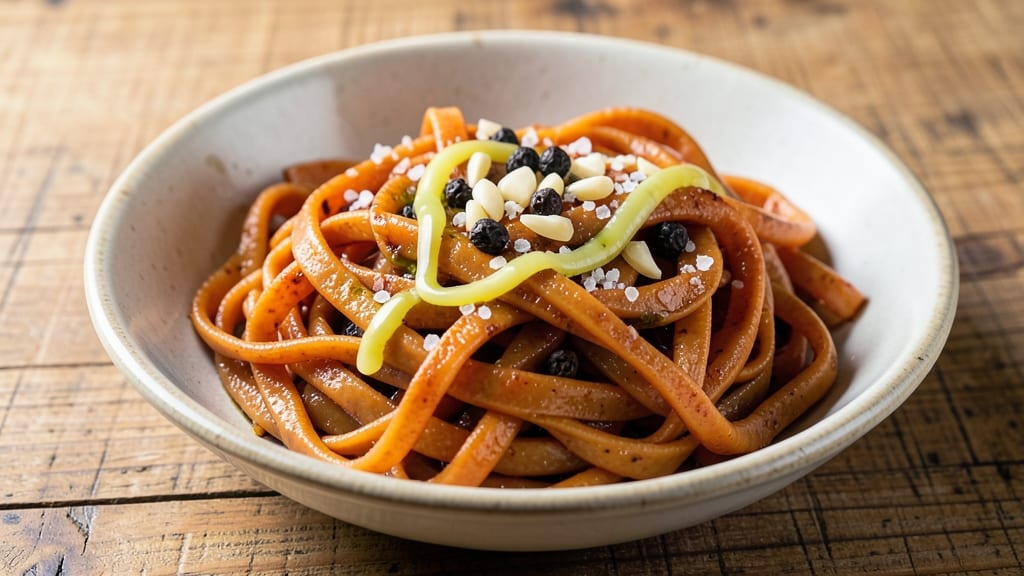
This thick sweet potato noodles recipe transforms humble sweet potatoes into restaurant-worthy spiral ribbons—no mandoline required. The secret lies in a simple boiling technique that preserves their natural sweetness while achieving that coveted al dente texture.
I developed this method after years of experimenting with different cooking times and water temperatures, ensuring every strand holds its shape without turning mushy.
The beauty of these noodles is their versatility—they work as a vegan-friendly main dish or elegant side, absorbing flavors beautifully. A quick boil followed by a brief rinse in ice water locks in that perfect firm-yet-tender bite, while a light toss in olive oil or garlic butter adds richness.
The result? A dish that’s hearty enough to satisfy but light enough to balance heavier meals.
What sets these apart is the thick ribbon texture, achieved by hand-shredding or using a box grater—no specialty tools needed. The natural sweetness of the potatoes shines through, especially when paired with savory sauces like teriyaki, peanut, or a simple lemon-tahini dressing.
This recipe proves you don’t need fancy equipment to create a showstopping dish.
Ready in under 30 minutes, these noodles are perfect for meal prep or last-minute dinners. Serve them warm with your favorite stir-fry or chilled in a refreshing salad. Here’s how to make them perfectly every time.
Ingredients for thick sweet potato noodles
Transform humble sweet potatoes into restaurant-worthy spiral ribbons using just a box grater and precise boiling techniques.
| Ingredient | Amount | Notes |
|---|---|---|
| Large Sweet Potatoes 🍠 | 2 whole | Organic, firm, and unblemished |
| Extra-Virgin Olive Oil 🫒 | ¼ cup | Cold-pressed, fruity variety |
| Fresh Garlic Cloves 🧄 | 4 cloves | Peeled, minced for finishing |
| Sea Salt 🧂 | 1 ½ tsp | Diamond Crystal preferred |
| Black Peppercorns 🌶️ | ½ tsp | Freshly cracked for texture |
| Lemon Juice 🍋 | 1 tbsp | Freshly squeezed, strained |
| Sesame Oil 🫒 | 1 tsp | Toasted for aroma |
| Toasted Sesame Seeds 🌾 | 1 tsp | For garnish |
| Vegetable Broth 💧 | 2 cups | Low-sodium, homemade preferred |
| Ice Cubes ❄️ | 1 cup | For shock cooling |
| Fresh Cilantro 🌿 | ¼ cup | Chopped, optional garnish |
| Maple Syrup 🍯 | 1 tbsp | Grade B for depth |
The quality of your sweet potatoes makes all the difference. Organic varieties like Jewel or Garnet have denser flesh that holds its shape better during boiling. Avoid potatoes with soft spots or sprouts—these compromise texture. For the best results, source from Whole Foods or local farmers' markets where you can verify freshness. The skin should be firm with no blemishes. If using conventional store-bought, look for the USDA Organic label to minimize pesticide residue. Medium-sized potatoes (about 8-10 oz each) work perfectly for this recipe's portion size.
No box grater? A mandoline with spiral attachment would be ideal, but a sharp chef's knife works too—just be patient. For the olive oil, California Extra Virgin brands like Corto or Lucini elevate the dish with their peppery notes. Substituting sesame oil? Use half the amount—it's potent. The vegetable broth can be swapped for low-sodium mushroom broth for deeper umami. For the maple syrup, Grade B is preferred as it contains more minerals and has a richer flavor profile. If you prefer a sweeter finish, increase to 1.5 tablespoons—just remember these noodles pair beautifully with savory sauces too.
Store any unused sweet potatoes in a cool, dark place for up to 2 weeks. Once shredded, keep the noodles submerged in cold water in the fridge for up to 2 days to prevent browning. For longer storage, blanch the shredded potatoes for 30 seconds in boiling water, then shock in ice water before freezing in airtight containers for 3 months. The finished noodles reheat beautifully—simply toss with a splash of water and warm in a skillet over medium heat for 2-3 minutes. For meal prep, portion into containers with your favorite sauce and store separately to maintain texture.
Why You'll Love This Recipe
- I swear by this trick: just scrub and spiralize—no peeling required. The skin stays on, and honestly? It adds a subtle earthy depth that makes these noodles feel even more special.
- No-Peel Hassle: I swear by this trick: just scrub and spiralize—no peeling required. The skin stays on, and honestly? It adds a subtle earthy depth that makes these noodles feel even more special.
- Garlic-Oil Magic: That first sizzle of olive oil and garlic? Chef’s kiss. The sweet potatoes soak up the aroma like a sponge, turning every bite into a flavor explosion—simple, but never boring.
- Meal Prep MVP: Between us, these keep perfectly for days. Toss them with protein for lunch, reheat for dinner, or even pack them cold in salads. (Yes, even on a Tuesday night.)
Step-by-step instructions for thick sweet potato noodles
Master this technique and you'll achieve restaurant-quality spiral ribbons without specialized tools.
Prep and Boil the Sweet Potatoes
Pierce each of the 2 whole large sweet potatoes in several places with a fork to prevent bursting. Place them in a large pot and cover with cold water by 2 inches. Bring to a boil over medium-high heat and cook for 20-25 minutes until a knife slides in easily through the thickest part. The potatoes should feel tender but not mushy when pierced.
Drain immediately and transfer to a clean bowl. While still warm, gently rub the skins with your hands to loosen them. Peel away the skins completely—this step is crucial for achieving clean, uniform ribbons. Let the potatoes cool slightly for 5 minutes before handling further to prevent sticking.
Create the Spiral Texture
Using a sharp chef's knife, cut each potato lengthwise into quarters. Starting with one quarter, hold the flat side down on a stable cutting board. Place the knife at one end and make a very shallow cut (about ⅛-inch deep) at a 45-degree angle, keeping the knife parallel to the board. This creates a thin starting edge for your ribbon.
Gently press down on the potato with your dominant hand while guiding the knife away from you with your other hand. Apply light, even pressure—you're not trying to slice through, just create a thin layer. Rotate the potato 90 degrees and repeat, making another shallow cut perpendicular to the first. Continue this process, rotating and cutting in a spiral pattern, until you've created a continuous ribbon about ¼-inch thick. Repeat with all potato quarters.
Blanch and Shock Cool
Bring a large pot of water to a rolling boil. Add the 1 tbsp maple syrup and 1.5 tsp sea salt to the water. Working in batches, blanch the sweet potato ribbons for 30-45 seconds until they become slightly translucent at the edges but still hold their shape. Immediately transfer them to a bowl of ice water with the 1 cup ice cubes to stop the cooking process and set the texture.
Let them chill in the ice water for 5 minutes to firm up completely. Drain well and pat dry with paper towels. The ribbons should be flexible but firm, with a slight sheen from the maple syrup. If they feel too soft, return them to the ice water for another 2 minutes to firm up further.
Sauté with Aromatics
Heat the 0.25 cup extra-virgin olive oil in a large skillet over medium heat until shimmering. Add the 4 cloves minced fresh garlic cloves and cook for 30 seconds until fragrant but not browned. Add the blanched sweet potato ribbons and toss gently to coat in the oil. Sprinkle with 0.5 tsp cracked black peppercorns and cook for 2-3 minutes until the edges begin to crisp slightly.
Pour in the 2 cups vegetable broth and 1 tbsp lemon juice, scraping up any browned bits from the bottom of the pan. Simmer for 3-4 minutes until the broth reduces slightly and clings to the ribbons. Remove from heat and drizzle with 1 tsp sesame oil, tossing gently to combine. The finished noodles should be tender yet slightly al dente, with a glossy sheen from the oil and broth.
Finish and Serve
Transfer the sweet potato ribbons to a serving platter and garnish with 0.25 cup chopped fresh cilantro and 1 tsp toasted sesame seeds. For added depth, drizzle with an additional ½ tsp sesame oil and a pinch of sea salt. Serve immediately while still warm, as the texture begins to soften once cooled. These noodles hold their shape beautifully and deliver a satisfying chewy yet tender bite with natural sweetness balanced by the umami broth.
Pro Tips For Making Thick Sweet Potato Noodles
- Peel When Cool: Sweet potatoes stay stubbornly stuck to their skins when hot—wait until they’re fully cooled before peeling, or you’ll end up with more purple flesh than noodles. I used to rush this and spent twice as long scraping off stubborn bits; now I just set them aside for 10 minutes first.
- Slice Even Thickness: Uneven cuts mean uneven cooking—aim for ¼-inch thick slices, no wider. Use a sharp knife or mandoline (if you’re brave) and keep your hand steady; the first few will be your test batch for consistency.
- Salt the Water: Toss your sliced sweet potatoes into boiling water with 2 teaspoons of salt—it seasons them from the start and keeps them from turning bland later. I learned this after making a batch that tasted like nothing but starch.
- Toast the Garlic: Sauté minced garlic in olive oil until it’s golden, not just fragrant—this adds depth without bitterness. Skip the raw garlic, and you’ll miss the nutty richness that makes the dish sing. (Yes, even if you’re impatient like me.)
Regional styles of this dish
Japanese Satsuma Age
In Okinawa, these sweet potato noodles take center stage as Satsuma Age, a beloved comfort food. The Japanese version often includes grated daikon radish and green onions for texture, while the broth is enriched with dashi instead of vegetable broth.
I love adding a touch of mirin to the blanching water for subtle sweetness. Serve with a drizzle of yuzu kosho for that signature citrusy kick. 🌶️
Southern U.S. Sweet Potato Ribbons
Down South, these noodles become a savory-sweet side dish paired with smoked meats. The key difference? A brown sugar glaze (replace maple syrup with 2 tbsp brown sugar) and a dash of smoked paprika in the sauté.
I've seen them served with pulled pork or blackened catfish at Southern BBQ joints. For extra richness, finish with a sprinkle of crumbled bacon.
Thai-Inspired Pad Thai Twist
Transform these into Thai-style noodles by adding tamari (instead of vegetable broth), crushed peanuts, and lime wedges. Toss the cooked ribbons with a quick sauce of 2 tbsp tamari, 1 tbsp coconut aminos, and 1 tsp fish sauce (or soy sauce for vegan).
Garnish with bean sprouts and Thai basil for that authentic street-food vibe. 🌟
Korean Kimchi Sweet Potato Noodles
For a Korean-inspired version, stir-fry the ribbons with 1 cup chopped kimchi and 1 tbsp gochujang (Korean chili paste) after blanching. Add 1 tbsp toasted sesame oil and 1 tsp honey to balance the heat.
Top with fried eggs and sesame seeds for a hearty, umami-packed bowl. This version is perfect for a quick weeknight dinner.
Mediterranean Roasted Style
Swap the boiling method for roasting in this Mediterranean twist. Toss the shredded sweet potatoes with 2 tbsp olive oil, 1 tsp dried oregano, and ½ tsp red pepper flakes, then roast at 400°F for 20 minutes.
Finish with feta cheese, kalamata olives, and a squeeze of lemon. This version works beautifully as a vegan-friendly side or main dish. 🍋
Mexican-Style Sweet Potato Tacos
For a taco night upgrade, use the ribbons as a tortilla substitute. Warm the noodles in a skillet with 1 tsp cumin, ½ tsp chili powder, and 1 tbsp lime juice.
Serve in corn tortillas with avocado, pico de gallo, and cashew sour cream. The natural sweetness pairs perfectly with smoky chipotle mayo for dipping.
Nutrition facts
Frequently asked questions
Why do I need to shock the sweet potato ribbons in ice water?
Shocking in ice water stops the cooking process instantly, locking in that perfect al dente texture while preventing them from becoming mushy. The cold water also firms up the ribbons, making them easier to handle and giving them that satisfying bite. Skipping this step can turn your noodles into a soft, unappetizing mash!
Can I make these noodles ahead of time?
Store the blanched ribbons in an airtight container submerged in cold water for up to 2 days in the fridge. For longer storage, blanch them for 30 seconds, shock in ice water, then freeze in a single layer before transferring to a freezer bag for up to 3 months. Just thaw overnight in the fridge before reheating.
What if my sweet potato ribbons turn out too soft?
If they feel too tender, return them to the ice water bath for an extra 2-3 minutes to firm up. For future batches, slightly reduce your blanching time by 10-15 seconds or use slightly firmer sweet potato varieties. The key is keeping them flexible but firm—they should hold their shape when lifted with chopsticks.
Are these noodles suitable for kids?
Yes, but with a few adjustments! Omit the sesame oil (it can be strong for little ones) and reduce the garlic to 2 cloves. The natural sweetness makes them appealing, and you can serve them plain or with a mild sauce like peanut butter or yogurt-based dressing. Always check for any allergies to sweet potatoes first.
How do I prevent the ribbons from sticking together?
Work with the ribbons immediately after blanching and drying them thoroughly with paper towels. Toss them lightly with a tiny bit of olive oil (½ tsp per batch) before storing or serving. If they stick during cooking, reduce your batch size and stir more gently—overcrowding causes them to clump together.