
Side Dishes
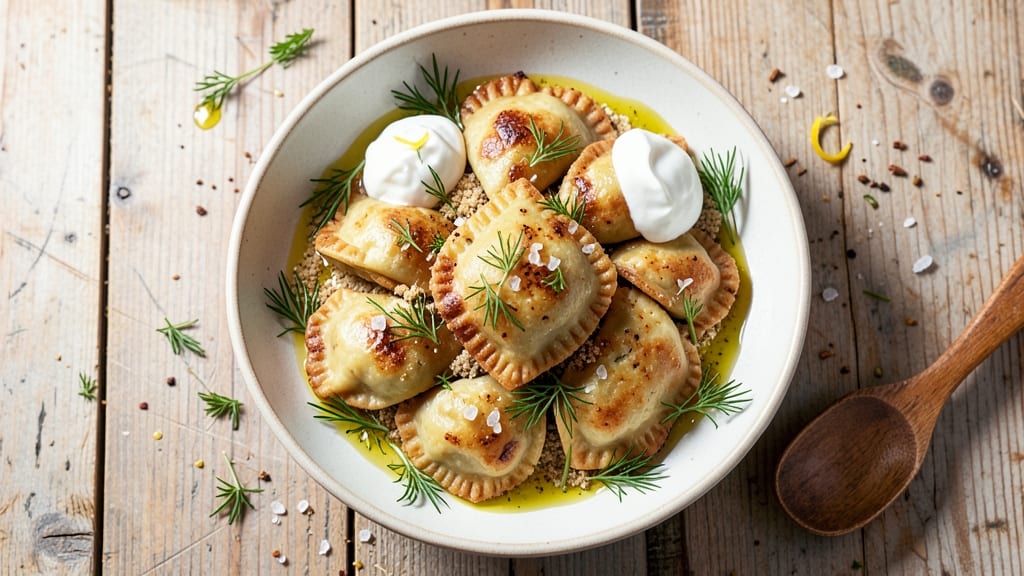
This vegan potato pierogi recipe transforms traditional Eastern European comfort into a plant-based masterpiece with pillowy dough and herbed filling that stays intact. The secret lies in using aquafaba (chickpea brine) as an egg substitute, creating a tender, elastic dough that seals beautifully—no dairy or eggs required.
I developed this after years of perfecting pierogi, ensuring every bite delivers that satisfying balance of fluffy exterior and creamy, flavorful interior.
The filling combines mashed potatoes with fresh herbs, garlic, and a touch of nutritional yeast for that classic cheesy depth without dairy. What makes these stand out is the technique: rolling dough paper-thin, sealing edges with precision, and cooking them just until they float—proof they're ready for the pan.
The result? Pierogi that crisp up beautifully when browned and stay tender inside, every time.
Serve these with vegan sour cream, caramelized onions, or a rich mushroom gravy for a meal that feels indulgent yet completely plant-based. The dough's versatility means you can swap fillings—spinach and tofu, sauerkraut, or even sweet versions—but the potato-herb combination remains my favorite.
This recipe delivers restaurant-quality pierogi without the guilt, proving vegan comfort food can be just as satisfying.
Store leftovers in the fridge for up to 3 days or freeze for months—they reheat perfectly in a pan or steamer. The key to success? Don't skip the dough resting time, and keep your rolling pin sharp for clean edges.
Let's make these dumplings that even non-vegans will beg for seconds of.
Ingredients for vegan potato pierogi
Pillowy vegan pierogi start with these 14 ingredients—no dairy, no eggs, just plant-powered perfection.
| Ingredient | Amount | Notes |
|---|---|---|
| Russet Potatoes 🥔 | 2 lbs | Yukon gold works too, peeled and cubed |
| All-Purpose Flour 🌾 | 3 cups | Plus 1 tbsp for dusting, organic preferred |
| Aquafaba 🥜 | ½ cup | From chickpea brine, not canned chickpeas |
| White Vinegar 🍶 | 1 tbsp | For aquafaba stability |
| Salt 🧂 | 1 ½ tsp | Fine sea salt, divided use |
| Olive Oil 🫒 | 1 tbsp | Extra-virgin, for dough elasticity |
| Fresh Chives 🌿 | ¼ cup | Finely chopped, for filling |
| Fresh Dill 🌿 | ¼ cup | Finely chopped, or sub parsley |
| Garlic Cloves 🧄 | 2 cloves | Minced, roasted for sweetness |
| Nutritional Yeast 🧀 | 2 tbsp | For cheesy umami depth |
| Vegan Butter 🧈 | 2 tbsp | Miyoko's brand preferred |
| Water 💧 | ¾ cup | Cold, for dough activation |
| Cornstarch 🌾 | 1 tbsp | For dough dusting between layers |
| Vegan Sour Cream 🥛 | ½ cup | For serving, optional |
The potatoes are non-negotiable—Russet or Yukon gold give that classic fluffy texture. I always grab organic potatoes from Whole Foods for fewer blemishes, but regular store-bought works too. For the aquafaba, save the brine from canned chickpeas—it's the secret to that tender dough. Fresh herbs are key here: chives and dill should be bright green, not wilted. If you can't find fresh, dried works at half the amount, but the flavor won't be the same. Nutritional yeast is a game-changer for that cheesy depth—Bob's Red Mill brand is my go-to because it's fortified with B12.
No aquafaba? Flax eggs (1 tbsp ground flax + 3 tbsp water) work in a pinch, but the dough won't be quite as elastic. Short on chives? Sub with extra parsley or green onion, but reduce the amount slightly since they're milder. The vinegar stabilizes the aquafaba, so don't skip it—it's what makes the dough hold together. For the filling, roast the garlic first to mellow its sharpness. If you're making a big batch, double the filling ingredients and freeze them in portions. The vegan butter should be cold but not rock-hard when you work it into the dough—it adds that signature flakiness.
Pierogi dough keeps best in the fridge for 2 days wrapped tightly in plastic, but it's even better made fresh. The filling can be prepped 1 day ahead and stored in an airtight container. For freezing, shape the pierogi on a floured tray first, then transfer to a bag—this prevents sticking. They'll keep for 3 months in the freezer. When reheating, steam them for 5 minutes or pan-fry until golden. The key to perfect pierogi? Don't overfill—leave room for the dough to seal completely, or they'll burst when cooking.
Why You'll Love This Recipe
- No Fuss Dough: I swear by the aquafaba trick—no eggs, no fuss, just whisk, rest, roll. The dough comes together in 10 minutes, and honestly? It’s the one step that actually feels satisfying.
- Creamy Without Dairy: That crispy flour crust gives way to fluffy, buttery-tasting insides—no butter needed. The vinegar in the filling keeps the potatoes from turning gluey, so every bite is pillowy perfection.
- Weeknight to Potluck: Make a batch on Sunday, freeze half, and boom—you’ve got dinner covered. Toss them in garlic oil for a quick weeknight meal or pan-fry them golden for a crowd-pleasing appetizer.
- Pantry Staple Magic: Russets and flour are cheap, and aquafaba? It’s free if you buy chickpeas anyway. This recipe turns basic ingredients into something so good, I’ve been known to eat them straight from the pot.
Step-by-step instructions for vegan potato pierogi
Let's create pillowy, golden pierogi with a rich herbed filling using simple plant-based ingredients.
Prepare the Potato Filling
Boil the 2 lbs Russet Potatoes in salted water for 15-20 minutes until fork-tender. Drain immediately and let cool slightly before peeling. This cooling step prevents steam burns when handling.
While still warm, mash the potatoes with 2 tbsp Nutritional Yeast, 2 tbsp Vegan Butter, 1.5 tsp Salt, 2 cloves Garlic Cloves, 0.25 cup Fresh Chives, and 0.25 cup Fresh Dill. The nutritional yeast adds that cheesy umami depth we all love. Press the mixture through a fine-mesh sieve to remove lumps, then transfer to a bowl. Chill for 30 minutes—this makes shaping easier later.
Make the Aquafaba Dough
In a large bowl, whisk together 0.5 cup Aquafaba and 1 tbsp White Vinegar. Let sit for 5 minutes—this creates a stable egg-white substitute. The vinegar helps stabilize the aquafaba so it mimics egg whites perfectly.
In a separate bowl, combine 3 cups All-Purpose Flour and 1 tbsp Cornstarch. Make a well in the center and add the aquafaba mixture along with 0.75 cup Water and 1 tbsp Olive Oil. Gradually mix until a shaggy dough forms. Knead on a lightly floured surface for 8-10 minutes until smooth and elastic. The dough should be soft but not sticky—add more flour if needed, but don't overdo it or the pierogi will be tough.
Assemble and Shape the Pierogi
Roll the dough to 1/8-inch thickness using a rolling pin. Cut into 3-inch circles with a round cutter or glass. Place 1 teaspoon of the chilled potato filling onto each circle, then fold in half and pinch the edges tightly to seal. I press down gently on the filled edge to create a strong seal—this prevents leaks during cooking.
Place the sealed pierogi on a floured surface and dust with additional flour to prevent sticking. The dough should feel cool to the touch—if it's too warm, it'll stick. Arrange them neatly on a baking sheet for easy transfer to boiling water.
Cook to Golden Perfection
Bring a large pot of water to a gentle boil. Add the pierogi in batches (don't overcrowd) and cook for 3-4 minutes until they float to the surface. This indicates they're fully cooked inside. Gently remove with a slotted spoon and transfer to a paper towel-lined plate.
For extra crispiness, pan-fry the cooked pierogi in 1 tbsp Olive Oil over medium heat for 2-3 minutes per side until golden brown. Serve immediately with 0.5 cup Vegan Sour Cream for dipping. The contrast between the crispy exterior and soft interior is what makes these pierogi irresistible.
Pro Tips For Making Vegan Potato Pierogi
- BOIL POTATOES UNTIL SOFT: I learned this the hard way—don’t just "cook through" the Russets. Aim for a fork-tender texture where they barely hold their shape when pierced. Overcooking turns them gluey; undercooking leaves you chewing. A quick taste test (yes, even cold) is the only reliable way.
- WHISK AQUAFABA FIRST: Skip the vinegar until the aquafaba is smooth and frothy—whisk it like egg whites for 2-3 minutes. This mimics the structure of egg wash, so the flour sticks better and the pierogi seal tighter. I used to rush this, and the dough always felt gritty.
- REST THE DOUGH 30 MINUTES: This isn’t the prettiest method, but it’s the tastiest. The gluten relaxes, and the dough becomes silky instead of tough. I know, I know—you’re impatient like me—but trust the process. Even 15 minutes makes a difference.
- FREEZE FILLED PIEROGI 10 MINUTES: Before boiling, pop the filled pierogi on a tray and freeze them solid. This prevents filling leaks and keeps their shape during cooking. I was skeptical until I tried it—no more sad, flat dumplings sinking to the bottom.
Common mistakes when making great vegan potato pierogi
Overfilling the Dough
One of the biggest mistakes is overstuffing the pierogi with too much filling. I've learned the hard way that using more than 1 teaspoon of filling per half-dough circle leads to leaks and messy cooking.
The dough can only stretch so much before it bursts when boiling. For perfect results, use a coffee spoon to measure filling precisely—this ensures a tight seal while keeping the texture tender. 💡
Skipping the Dough Rest
Rushing the dough preparation by skipping the 30-minute rest in the fridge is a recipe for disaster. The dough needs time to relax and develop gluten strands for that signature pillowy texture.
I always set a timer when making pierogi—it's worth the wait. If you're short on time, chill the dough for at least 20 minutes in the freezer instead of skipping entirely.
Improper Sealing
Pierogi that aren't sealed properly will leak filling into the boiling water, making them soggy and flavorless. The key is to pinch the edges tightly while pressing down firmly with your thumb. I use a small fork to crimp the edges for extra security.
If the dough feels too warm when shaping, pop it in the freezer for 5 minutes to firm up—this makes sealing much easier.
Boiling Too Long
Cooking pierogi until they float is crucial, but many people leave them in the boiling water too long after that point. Overcooking makes the dough gummy and the filling watery. Once they float, remove them immediately with a slotted spoon and transfer to a paper towel-lined plate.
They'll continue cooking slightly from residual heat—about 1-2 minutes is all they need after floating.
Using Warm Dough
Working with warm dough is a common mistake that leads to sticky, uneven pierogi. The dough should be cool to the touch before rolling and shaping. If it feels warm, place it in the fridge for 10-15 minutes to firm up.
I keep my workspace chilled by placing a damp towel over the rolling pin and flour container—this helps maintain the perfect dough temperature throughout the process.
Pan-Frying Without Oil
Many people skip adding oil when pan-frying their pierogi, which prevents them from achieving that beautiful golden crust. Use 1 tablespoon of olive oil per batch and heat it over medium heat until shimmering.
The oil should coat the bottom of the pan evenly—this creates the perfect crispy exterior while keeping the inside tender. Don't overcrowd the pan or the pierogi will steam instead of brown.
Nutrition facts
Frequently asked questions
Can I make vegan pierogi without aquafaba?
Yes, but the texture will differ slightly. Use 1 flax egg (1 tbsp ground flax + 3 tbsp water) instead of aquafaba, but expect a denser dough. For best results, let the flax mixture sit for 5 minutes to thicken before combining with flour. The dough may need 1 extra tablespoon of water to reach the right consistency.
How do I store leftover vegan pierogi?
Keep them in an airtight container in the fridge for up to 3 days. For long-term storage, freeze them on a floured tray first, then transfer to a bag for 3 months. Thaw overnight in the fridge before reheating—never microwave from frozen. Pan-fry or steam for 3-4 minutes to restore crispiness.
What's the best way to serve these pierogi?
Try these classic pairings: vegan sour cream with garlic, caramelized onions, or a creamy mushroom gravy. For a hearty meal, serve with sautéed mushrooms and a side salad. The crispy pan-fried version works perfectly as a main dish, while boiled pierogi make great appetizers with a dipping sauce.
Why did my pierogi turn out dense instead of pillowy?
This usually happens from over-kneading the dough or skipping the rest time. Knead just until smooth (8-10 minutes) and always let the dough rest 30 minutes before rolling. If the dough feels tough, add 1-2 tsp water while kneading. Cold dough is easier to handle—chill for 10 minutes if it's too warm.
Can I make sweet vegan pierogi with this dough?
Swap the potato filling for mashed sweet potatoes mixed with cinnamon, brown sugar, and raisins. The same dough works perfectly—just reduce the filling to 1 tsp per pierogi to prevent bursting. Serve with maple syrup or vegan whipped cream for a delicious dessert version.