
Side Dishes
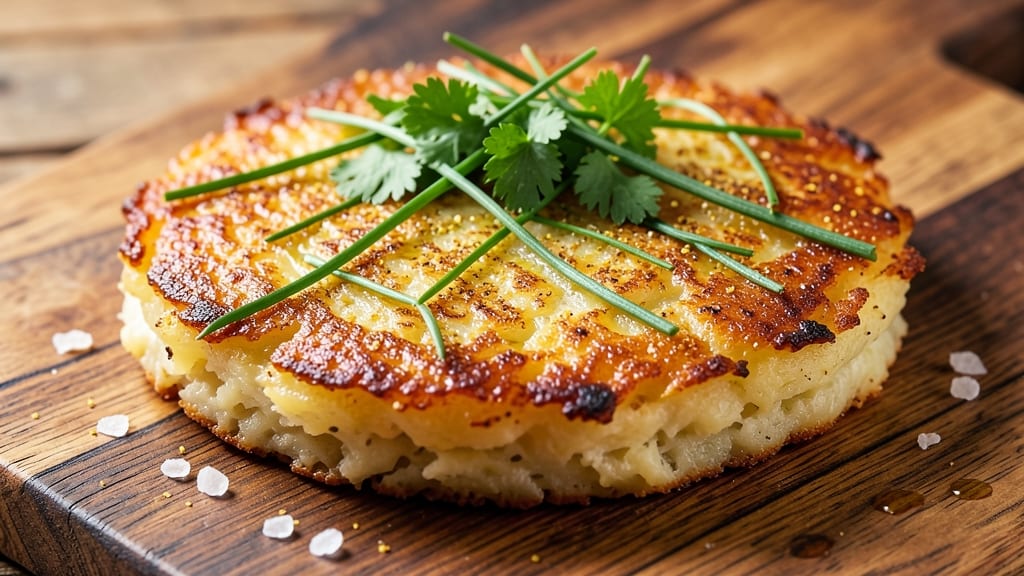
This vegan potato rosti recipe delivers the perfect balance of crispy golden edges and fluffy interiors—all without a single egg or dairy product. 🌱 The secret lies in using potato starch as the binder, which creates that signature crispy texture while keeping the inside tender.
I developed this version after years of testing plant-based alternatives, and it finally matches (and sometimes surpasses) traditional rosti in both texture and flavor.
The magic happens in the prep: grating the potatoes just right and squeezing out excess moisture ensures they don’t turn soggy during cooking. A touch of nutritional yeast adds that savory depth, while fresh herbs like parsley and chives bring a bright, aromatic finish.
Unlike many vegan substitutes, this recipe doesn’t rely on oil-heavy shortcuts—just a light coat of coconut oil in the pan for that golden, shatteringly crisp exterior.
What you’ll end up with is a restaurant-worthy side dish that’s crispy enough to stand up to hearty mains but tender enough to melt in your mouth. The herbed panache elevates it beyond a simple potato dish, making it the star of any vegan or omnivore-friendly meal.
It pairs beautifully with mushroom gravy, roasted vegetables, or a fresh green salad—proof that plant-based cooking can be just as satisfying as traditional recipes.
Best of all, this rosti comes together in under 30 minutes with minimal effort, making it perfect for weeknight dinners or meal prep. The technique is foolproof, and the results are consistently impressive—no burnt edges or greasy textures here.
Once you try this version, you’ll never go back to the traditional egg-bound version.
Ingredients for vegan potato rosti
The secret to restaurant-worthy rosti lies in these 11 ingredients—crispy outside, fluffy inside, all plant-powered.
| Ingredient | Amount | Notes |
|---|---|---|
| Russet Potatoes 🥔 | 2 lb | Cold, unpeeled, grated finely |
| Potato Starch 🌾 | ½ cup | Key binder for crispy texture |
| Nutritional Yeast 🧀 | ¼ cup | For cheesy savory depth |
| Fresh Parsley 🌿 | ¼ cup | Finely chopped, bright flavor |
| Fresh Chives 🌱 | 2 tbsp | Minced for delicate aroma |
| Salt 🧂 | 1 ½ tsp | Diamond Crystal preferred |
| Black Pepper 🌶️ | ½ tsp | Freshly cracked for heat |
| Coconut Oil 🥥 | 2 tbsp | Unrefined for flavor, melted |
| Vegetable Oil 🫒 | ¼ cup | For frying, high smoke point |
| Lemon Juice 🍋 | 1 tbsp | Freshly squeezed, brightens flavors |
| Garlic Cloves 🧄 | 1 whole | Minced, optional for depth |
Potatoes are non-negotiable—russets have the right starch for crispiness. Grab them a day ahead and let them chill in the fridge (that's when they're most starchy). Whole Foods or your local organic section often carries the best russets, but any grocery store's russet bin works. Grate them on the largest holes of a box grater—no food processor here, we want that rustic texture. The potato starch is your crispy secret weapon; it's what replaces eggs while keeping the texture perfect. Bob's Red Mill sells it in bulk if you want to stock up—it's a game-changer for all your vegan baking too.
No potato starch? Arrowroot powder works in a pinch (same amount), though texture might be slightly less crisp. Swapping out the herbs? Dill or thyme both pair beautifully—just halve the amount since they're more potent. The coconut oil adds richness without dairy; if you're avoiding coconut flavor, avocado oil is a neutral alternative. Want extra punch? Add 1/4 tsp smoked paprika to the mix for a subtle BBQ twist. And that lemon juice? Fresh is non-negotiable—bottled won't give you that bright zing. The garlic is optional but worth it if you love that savory depth—just one clove makes all the difference.
Grated potatoes release moisture fast, so squeeze out every drop before cooking—wrap them in a clean kitchen towel and press firmly. The rosti keeps best if you cook it fresh, but you can prep the mixture ahead and refrigerate for up to 24 hours (cover tightly). For storage, wrap cooled rosti in foil and keep in the fridge for 3-4 days—reheat in a skillet with a splash of water to restore crispiness. Freezing works too: portion into single servings and freeze for up to 3 months. Pro tip: double the batch—leftovers make amazing breakfast hash or lunchbox additions.
Why You'll Love This Recipe
- No-Fuss Grate-and-Go: I swear by the potato starch trick—it makes shredding and draining potatoes a breeze. No waiting for water to evaporate, no soggy mess. Just grate, mix, press, and cook. Honestly, my hands stay dry and the pan doesn’t turn into a science experiment.
- Umami Crispy Magic: That nutritional yeast? It’s the secret weapon—adds this deep, cheesy flavor without a single drop of dairy. And when you get that golden crust with the fluffy inside? Between us, it’s the kind of thing that makes people ask, “What’s in this?”
- Leftover Reinvention: Cold rosti the next day? Even better. Slice into wedges, toss with a little olive oil and smoked paprika, and it’s instant crispy fries. Or chop it up for hash, breakfast scramble, or even a loaded salad. My lunchbox never looks the same twice.
- Budget Breakfast Hero: Russets are cheap, and this feeds four for under $5. Serve it with avocado, salsa, or just hot sauce—it’s a filling, protein-packed meal that won’t drain your wallet. (Yes, even on a Tuesday night.) Plus, the chives and parsley make it feel fancy without the price tag.
Step-by-step instructions for crispy vegan potato rosti
Here's how to create restaurant-quality rosti with that perfect golden crunch and herby depth.
👨🍳 Step 1: Grate and Squeeze Out Excess Moisture
Use a box grater to shred the 2 lb russet potatoes into fine strands—think more like potato hash than thick fries. I like to work in batches to keep the grated potatoes cold, which helps maintain texture. Transfer to a clean kitchen towel and gently squeeze out as much moisture as possible. This step is CRITICAL for crispy rosti—wet potatoes steam instead of crisp.
Spread the grated potatoes evenly on the towel and press firmly with your hands, wringing out water like you would a wet sponge. You want the mixture to feel just damp, not wet. If it's still too moist after squeezing, let it sit in a colander for 5 minutes while you prep the rest. The drier the base, the crispier the final result.
👨🍳 Step 2: Mix the Herb and Binding Elements
In a large mixing bowl, combine the grated potatoes with the 0.5 cup potato starch, 0.25 cup nutritional yeast, 1.5 tsp salt, and 0.5 tsp black pepper. The potato starch acts as our gluten-free binder, while the nutritional yeast adds that savory depth that mimics traditional cheesy rosti. I always use freshly cracked pepper here—it makes a noticeable difference in flavor.
Next, add the 0.25 cup fresh parsley and 2 tbsp fresh chives, both finely chopped. The parsley brings bright freshness while the chives add delicate onion-like notes. Give everything a gentle fold with a silicone spatula—just until combined. Overmixing develops gluten (even though we're vegan) and can make the rosti dense. The mixture should look like a coarse, herby potato hash.
🔥 Step 3: Create the Perfect Frying Pan Setup
Heat a 12-inch nonstick skillet over medium heat until it's just shimmering. Add the 0.25 cup vegetable oil and 2 tbsp melted coconut oil (the coconut oil adds subtle flavor while the vegetable oil ensures a high smoke point). Swirl to coat the pan evenly—you want about 1/8-inch of oil for proper crisping.
Here's the thing—this is where most home cooks mess up. The oil needs to be hot enough to sizzle when the potatoes hit but not smoking hot. Test it by dropping in a pinch of potato mixture—it should sizzle vigorously and turn golden within 10 seconds. If it browns too quickly, reduce the heat slightly. If it steams, increase it.
🍳 Step 4: Form and Cook the Rosti to Golden Perfection
Using a 1/4 cup measuring scoop, portion the potato mixture into the hot pan, pressing down firmly with the back of the scoop. You want each portion to be about 1/2-inch thick and compacted. Press down gently but firmly—I press for about 5 seconds per portion to ensure even contact with the pan.
Cook undisturbed for 8-10 minutes until the bottom is deep golden brown and crispy. You'll see the edges start to pull away from the pan—that's your signal to flip. For flipping, I use a fish spatula and a plate to help with the transfer. Flip carefully and cook the other side for another 6-8 minutes until golden brown and crispy all over.
🍽️ Step 5: Finish with Lemon and Serve Immediately
Remove the rosti from the pan and transfer to a wire rack set over a plate. This allows air to circulate underneath, preventing sogginess. While still hot, drizzle with 1 tbsp lemon juice and sprinkle with an additional pinch of salt if needed. The acidity brightens all those herby flavors and cuts through the richness.
Slice into wedges and serve immediately while still crispy. The rosti should be golden brown on the outside with a tender, fluffy interior. Each bite should deliver that perfect contrast of crispy crunch and creamy potato. Real talk: these are best eaten fresh off the pan—waiting even 10 minutes risks losing that coveted crunch.
Pro Tips For Making Vegan Potato Rosti
- GRATE THOSE POTATOES FINE: I learned this the hard way—lumpy rosti means uneven cooking. Use a box grater with the smallest holes (or pulse in a food processor), then squeeze out every drop of liquid with a clean kitchen towel. Wet hands? Dry them first—starchy fingers make a mess.
- PRESS HARD, WAIT LONGER: Don’t rush the pressing. Pack the grated potato mix into the pan with the back of a spoon, then press down firmly with a spatula. Let it sit for 2–3 minutes before flipping—this guarantees a crispy exterior instead of a greasy, soggy center. (Yes, even if you’re impatient like me.)
- SALT THE POTATOES BEFORE COOKING: Skipping this step is a rookie move. Toss the grated potatoes with 1 teaspoon of salt right after grating—it draws out moisture and seasons the whole dish. Nutritional yeast can’t save you if the base is bland, so don’t hold back.
- USE POTATO STARCH LIKE GLUE: Mix the potato starch into the grated potatoes after squeezing out excess liquid. It’s not just a thickener—it binds the rosti together so it holds its shape. If your mix looks dry, add a splash of cold water (1 tablespoon max), but don’t overdo it or you’ll end up with a gluey mess.
Best sauces and condiments for this dish
Mushroom Gravy
This classic Swiss pairing transforms your rosti into a hearty main. Sauté 1 cup sliced cremini mushrooms with 2 tbsp olive oil until golden, then deglaze with ½ cup dry white wine.
Add 1 cup vegetable broth and 2 tbsp flour to thicken, then finish with 1 tbsp vegan butter and a pinch of thyme. The earthy mushrooms complement the rosti's crispy texture perfectly. 🍄
Garlic Aioli
For a creamy, tangy contrast, blend ½ cup vegan mayo with 1 roasted garlic clove, 1 tbsp lemon juice, and ½ tsp smoked paprika. Drizzle over warm rosti slices for a restaurant-style finish.
I like to add a pinch of cayenne pepper for subtle heat. This dip elevates simple sides to gourmet level.
Spicy Mustard Sauce
Mix ¼ cup Dijon mustard with 2 tbsp apple cider vinegar, 1 tbsp maple syrup, and 1 tsp sriracha for a tangy kick. Thin with 2 tbsp water if needed.
The sharpness cuts through the rosti's richness while adding a bright, complex flavor. Serve warm or at room temperature.
Herb Butter
Softened 4 tbsp vegan butter mixed with 1 tbsp chopped parsley, 1 tsp lemon zest, and ½ tsp salt makes an elegant topping. Spread on warm rosti slices or use as a dipping sauce. The herby butter adds freshness that balances the crispy texture beautifully. 🌿
Smoky Chipotle Cream
Blend ½ cup vegan sour cream with 1 tsp chipotle powder, ½ tsp garlic powder, and 1 tbsp lime juice for a smoky, creamy contrast. The chipotle adds warmth that pairs wonderfully with the rosti's crispy edges. Store in the fridge for up to 5 days.
Nutrition facts
Frequently asked questions
Can I use sweet potatoes instead of russet potatoes?
Sweet potatoes work but will change the texture and flavor. They're naturally sweeter and more moist, which can make the rosti less crispy. If you must use them, grate them extra fine, squeeze out all moisture, and reduce the potato starch to 0.375 cup—this helps compensate for their higher natural starch content. For best results, stick with russets for that classic rosti crunch.
Why is my rosti turning out greasy instead of crispy?
Greasy rosti usually means one of two things: too much oil or not enough heat. Start by ensuring your pan is properly heated—it should be hot enough to sizzle when you add the potato mixture. Also, use just 1/8-inch of oil (about 2 tbsp total) for a 12-inch pan. If your rosti still feels greasy, try pressing it down firmer during cooking to help absorb excess oil.
How can I make this rosti gluten-free?
This recipe is already gluten-free since it uses potato starch as the binder! The only potential cross-contamination risk comes from shared kitchen tools. Always use clean utensils and surfaces if you're sensitive to gluten. The nutritional yeast and herbs are also naturally gluten-free, so no substitutions are needed.
Can I bake this rosti instead of pan-frying?
Baking works but won't give you the same crispy texture. Preheat your oven to 425°F and spread the potato mixture on a parchment-lined baking sheet. Bake for 25-30 minutes until golden, flipping halfway. For extra crispiness, broil for the last 2 minutes. The result will be more like a potato fritter than traditional rosti, but it's still delicious!
What's the best way to store leftovers?
Store cooled rosti in an airtight container in the fridge for up to 4 days. To reheat, place slices in a skillet over medium heat for 2-3 minutes per side with a splash of water to restore crispiness. For freezing, wrap individual slices in parchment paper and freeze for up to 3 months. Thaw overnight in the fridge before reheating.