Side Dishes
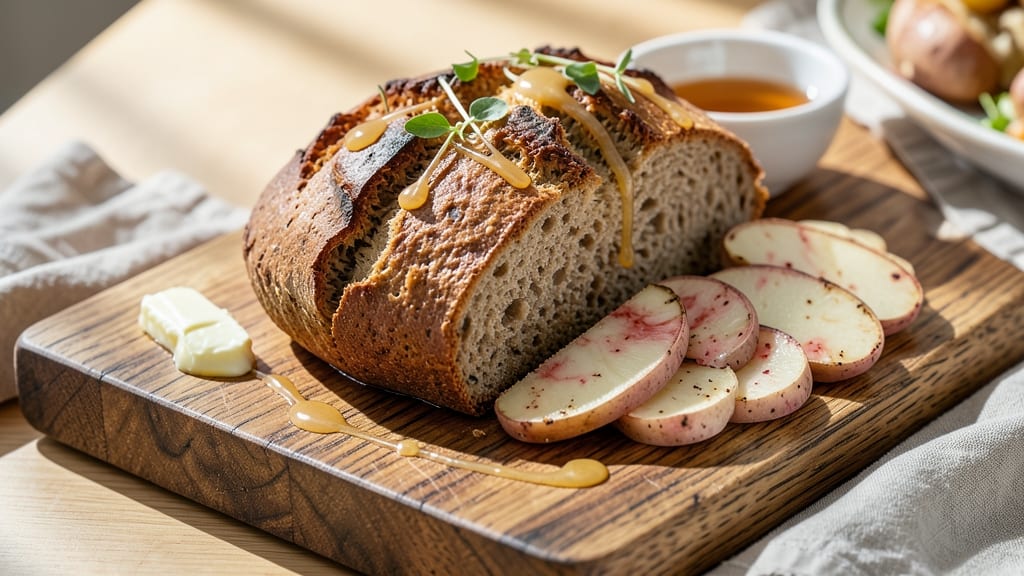
This wheat-free potato bread delivers the perfect balance of crispy crust and tender interior—no gluten, no compromise. 💛 The secret lies in combining mashed potatoes with gluten-free flour for a hearty texture that holds up to toasting or slicing.
I developed this recipe after years of searching for a bread that could replace wheat without sacrificing moisture or structure. What sets this apart is the dual texture: a golden, crackling crust that gives way to a soft, slightly dense crumb.
The potatoes add natural sweetness and moisture, while a touch of honey and eggs bind everything together. It’s the kind of bread that feels indulgent but fits seamlessly into gluten-free diets.
By the time it emerges from the oven, you’ll have a loaf that’s crisp enough for toast, sturdy enough for sandwiches, and flavorful enough to stand alone. The aroma alone will have everyone asking for seconds—even those who swear they don’t like gluten-free bread.
Serve warm with butter, toasted for breakfast, or sliced for sandwiches. Here’s how to make it foolproof.
Ingredients for wheat free potato bread
Eight simple ingredients transform into a bread that rivals wheat-based loaves.
| Ingredient | Amount | Notes |
|---|---|---|
| Russet Potatoes 🥔 | 2 lbs | Peeled and boiled until tender |
| Gluten-Free All-Purpose Flour Blend 🌾 | 3 cups | King Arthur or Bob's Red Mill |
| Large Eggs 🥚 | 2 whole | Room temperature for best binding |
| Honey 🍯 | ½ cup | Pure, liquid honey preferred |
| Unsalted Butter 🧈 | ½ cup | Softened to room temperature |
| Milk 🥛 | ½ cup | Whole milk for richness |
| Baking Powder 🧂 | 1 ½ tsp | Gluten-free certified |
| Salt 🧂 | 1 ½ tsp | Fine sea salt preferred |
| Vanilla Extract 🌿 | 1 tsp | Pure vanilla preferred |
| Olive Oil 🫒 | ¼ cup | For greasing loaf pan |
| Cornmeal 🌾 | 2 tbsp | For dusting pan |
The potatoes are the star here—Russet potatoes have the perfect starch-to-moisture ratio. Grab a couple of big ones from the produce section (the organic bins at Whole Foods usually have the best quality), or any supermarket with a solid potato selection. If you're using pre-boiled potatoes, make sure they're fully cooked and mashed smooth—no lumps. For the gluten-free flour, King Arthur or Bob's Red Mill blends are my go-to—they're formulated to mimic wheat flour's structure. If you're new to gluten-free baking, these blends are your best friend.
No honey? Maple syrup works 1:1, though it adds a slightly earthier flavor. Butter too expensive? Coconut oil is a solid swap—just make sure it's melted before mixing. The milk can be any kind, but whole milk gives the best texture. For the eggs, if you're avoiding them, a flax egg (1 tbsp ground flax + 3 tbsp water) works in a pinch, though the bread might be slightly denser. The vanilla extract is non-negotiable for flavor, but if you're out, vanilla bean paste works too. And for the love of bread, don't skip the cornmeal—it creates that perfect crispy crust.
This bread keeps well for 3-4 days at room temperature, but it's best fresh. If you're making it ahead, wrap it tightly in plastic and store in the fridge—it reheats beautifully in a 350°F oven for 5-10 minutes. For longer storage, freeze slices wrapped in parchment paper for up to 3 months. The crust gets even crisper after freezing, so it's perfect for toast. I always make a double batch—one loaf for now, one for later.
Why You'll Love This Recipe
- No-Fuss Mash: I swear, you just boil, mash, and mix—no kneading, no waiting for dough to rise. That Russet potato base keeps things silky smooth, and the gluten-free blend holds together like a dream.
- Honey-Butter Magic: The honey caramelizes just enough to give it a subtle sweetness, while the cold butter creates pockets of flaky richness. It’s not just bread; it’s a little treat that doesn’t feel like one.
- Leftovers? No Problem: This bread actually improves the next day—drier crust, deeper flavor. I make a double batch on Sundays, slice it up, and freeze it for toast or sandwiches all week.
- Budget-Friendly Staple: Potatoes and eggs are cheap, and this recipe stretches far. Between us, I’ve fed a houseful of hungry teens with minimal cost—and zero complaints about the taste.
Step-by-step instructions for wheat-free potato bread
Here's how to bake a golden, crispy-crusted loaf with a moist interior—no wheat, no worries.
👨🍳 Step 1: Boil and Mash the Potatoes
Peel the 2 lbs Russet Potatoes and cut them into 1-inch chunks. Place them in a pot of cold, salted water and bring to a boil. Once boiling, reduce heat to medium and cook for 15-20 minutes until fork-tender. Drain thoroughly in a colander, then return the potatoes to the pot.
Mash them until completely smooth—no lumps! I like to press a potato masher firmly against the sides of the pot to ensure everything breaks down. Let the mashed potatoes cool slightly before mixing with other ingredients. This step is crucial for that signature potato bread texture—smooth mash equals tender crumb.
👨🍳 Step 2: Mix Wet Ingredients
In a large mixing bowl, combine the 0.5 cup softened unsalted butter, 0.5 cup honey, 0.5 cup whole milk, 1 tsp vanilla extract, and the cooled mashed potatoes. Mix with a wooden spoon or electric mixer until completely smooth and creamy. The mixture should be thick but pourable.
Here's the thing—don't rush this. The butter should be fully incorporated and the honey should dissolve completely. If it looks too thick, add 1-2 tablespoons of milk to loosen it. The wet ingredients form the foundation of our bread, so take your time to get this right.
👨🍳 Step 3: Combine Dry Ingredients
In a separate bowl, whisk together the 3 cups gluten-free all-purpose flour blend, 1.5 tsp baking powder, and 1.5 tsp salt. This is where we ensure everything is properly aerated for that light, fluffy texture. I like to sift the dry ingredients through a fine-mesh sieve to break up any clumps.
Gradually add the dry mixture to the wet ingredients, mixing just until combined. Be careful not to overmix—you'll know it's ready when there are no more flour streaks visible. The batter should be thick but still spreadable. If it feels too sticky, add 1-2 tablespoons more of gluten-free flour to achieve the perfect consistency.
🔥 Step 4: Prepare and Bake the Loaf
Preheat your oven to 350°F. Lightly grease a 9x5-inch loaf pan with 0.25 cup olive oil, then dust it thoroughly with 2 tbsp cornmeal, tapping out any excess. Pour the batter into the prepared pan and smooth the top with a spatula.
Bake for 50-55 minutes until the top is deep golden brown and a toothpick inserted in the center comes out clean. The bread is done when it springs back slightly when pressed and has developed that beautiful crust. If the top browns too quickly, tent loosely with foil after 30 minutes to prevent over-browning.
⏰ Step 5: Cool and Slice
Remove the bread from the oven and let it cool in the pan for 10 minutes. Then transfer it to a wire rack to cool completely. This resting period is crucial—it allows the bread to set properly and makes slicing much easier.
Once fully cooled, slice into 8 even pieces. You'll notice the exterior has that perfect crispy crust while the interior remains wonderfully moist and tender. Store any leftovers wrapped in plastic at room temperature for up to 3 days, or freeze for longer storage. This bread is best enjoyed fresh, so don't wait too long to dig in!
Pro Tips For Making Wheat Free Potato Bread
- BOIL POTATOES UNTIL SOFT: Russets should break apart with a fork—not just dent—when fully cooked. I learned this the hard way: undercooked potatoes make the bread dense and gummy. Drain them well afterward, or the extra moisture will turn your dough into soup.
- CHILL THE DOUGH: Gluten-free dough behaves like a diva—it needs time to relax. After mixing, let it sit in the fridge for at least 30 minutes (up to 2 hours). This prevents cracks and helps the bread rise more evenly.
- SKIP THE OVERMIXING: Gluten-free flour blends get gummy fast. Mix just until combined—no need to overwork it. I used to beat it like I was punishing it, and the bread turned out tough. Stop when the dry bits disappear.
- BAKE WITH STEAM: Place a shallow tray of hot water in the oven before baking. The steam keeps the crust from drying out too fast, which is especially important for gluten-free bread. Crank the oven to 375°F (200°C) and let it preheat with the tray inside.
Creative variations of wheat free potato bread
Savory Herb Twist
For a fresh, herby variation, stir in 2 tbsp finely chopped fresh rosemary or 1 tbsp dried thyme directly into the wet ingredients. This adds an earthy depth that pairs beautifully with roasted meats or soups.
I love using organic rosemary from Trader Joe's—it's affordable and potent. For extra flavor, sprinkle 1 tsp garlic powder into the dry ingredients before mixing. 🌿
Seedy Crunch Add-On
Boost texture and nutrition by folding in ¼ cup toasted sunflower seeds or 2 tbsp chia seeds into the batter before baking. These seeds add a delightful crunch that contrasts perfectly with the soft crumb.
For a nutty option, try ¼ cup chopped walnuts—just toast them first in a dry pan for 3-4 minutes to enhance their flavor. Store-bought seeds work fine, but toasting them yourself makes a noticeable difference.
Sweet Potato Swap
Replace Russet potatoes with 2 lbs sweet potatoes for a naturally sweet, moist loaf with vibrant orange color. Peel and cube them, then boil until tender (about 15 minutes). Mash until smooth, then proceed with the recipe.
The sweetness reduces the need for honey—cut it to ¼ cup instead. This variation is especially great for breakfast toast or French toast, as the natural sweetness shines through. 🍠
Cheesy Garlic Version
For a rich, savory loaf, fold in 1 cup shredded sharp cheddar or ½ cup cream cheese with the wet ingredients. Add 1 tsp garlic powder to the dry mix for extra depth. The cheese melts into the bread, creating pockets of gooey goodness.
I recommend Kraft sharp white cheddar for its meltability, but any aged cheddar works. This version is perfect for sandwiches or as a side for hearty meals.
Everything Bagel Seasoning
Transform your bread into a gluten-free everything bagel by sprinkling 2 tbsp everything bagel seasoning (like Schwartz's brand) over the top before baking. For extra crunch, press the seasoning lightly into the crust. This variation works beautifully for dipping in hummus or pairing with cream cheese.
If you can't find the seasoning, mix 1 tsp sesame seeds, 1 tsp poppy seeds, ½ tsp garlic powder, and ½ tsp onion powder as a substitute.
Nutrition facts
Frequently asked questions
Can I use instant potato flakes instead of fresh potatoes?
Yes, but with adjustments! Replace the 2 lbs fresh potatoes with 1 cup instant potato flakes (about 1 oz dry weight). Add 1 extra tablespoon of milk to compensate for the reduced moisture. The texture will be slightly lighter but still delicious. For best results, mix the flakes with the wet ingredients until fully hydrated before combining with dry ingredients.
Why did my bread turn out dense instead of fluffy?
Overmixing or underbaking usually causes this. Mix just until combined (no flour streaks) and bake until a toothpick comes out clean. Another common issue is using cold butter or eggs—always use room-temperature ingredients. For extra fluff, try adding ½ tsp apple cider vinegar to the wet ingredients to activate the baking powder.
How do I make this recipe egg-free?
Replace the 2 eggs with 2 flax eggs (each = 1 tbsp ground flaxseed + 3 tbsp water). Let them sit for 5 minutes to thicken before mixing. The bread will be slightly denser but still hold together well. For extra binding, add 1 tbsp extra honey to the wet ingredients.
Can I make this bread in a different shaped pan?
For a 9-inch round cake pan, bake at 350°F for 40-45 minutes. For a loaf-shaped pan, adjust baking time to 50-55 minutes. If using a non-stick pan, skip the cornmeal dusting. For extra crispiness, brush the crust with melted butter after 20 minutes of baking.
What's the best way to reheat stale slices?
Wrap slices in foil and warm in a 350°F oven for 5-7 minutes until crispy again. For toast, use a toaster set to medium heat—this restores the crust perfectly. Avoid microwaving as it makes the bread gummy. Pro tip: Freeze extra slices for quick toast—just pop them in the toaster straight from frozen!