
Side Dishes
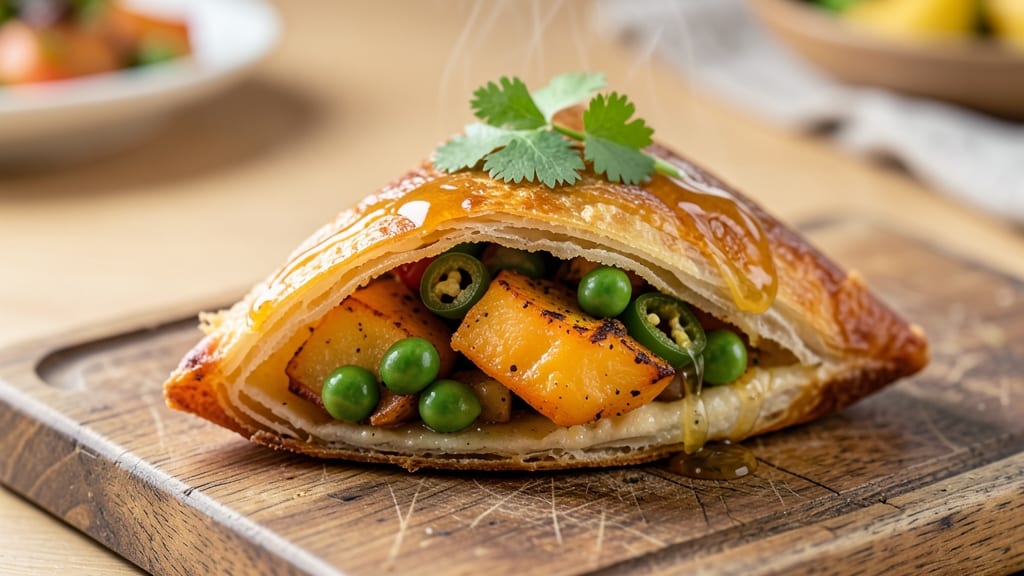
This baked potato samosa recipe brings the vibrant flavors of Indian street food to your kitchen with its crispy, golden layers and spiced potato filling. 🌟 The secret to achieving that perfect texture lies in the dough—light, flaky, and sturdy enough to hold the filling without breaking.
I’ve perfected this recipe over years of testing, ensuring every bite delivers that satisfying crunch followed by tender, flavorful potato and peas.
The dough preparation is straightforward but crucial—layering and rolling the pastry thinly creates those signature crispy edges while keeping the inside soft. For the filling, baked potatoes are mashed with peas, green chilies, and aromatic spices like cumin and garam masala, creating a harmonious blend of earthy and tangy flavors.
The key is balancing the spices so the filling is bold but not overpowering.
Assembling the samosas is where the magic happens—folding the dough into a triangle and sealing it tightly ensures the filling stays contained while frying. Achieving that golden-brown exterior requires careful oil temperature control, whether you’re deep-frying or pan-frying.
The result? A crispy, aromatic samosa that’s perfect for snacking or serving with mint chutney or tamarind sauce.
This recipe is vegetarian-friendly and can be made ahead, with the samosas frying best when fresh. Whether you’re hosting a gathering or craving a taste of India, these samosas will impress with their texture and flavor. Let’s get started!
Ingredients for baked potato samosa
Four baked potatoes and a handful of spices transform into golden, crispy samosas—crunchy outside, tender inside.
| Ingredient | Amount | Notes |
|---|---|---|
| Russet Potatoes 🥔 | 4 large | Baked until tender, peeled |
| All-Purpose Flour 🌾 | 3 cups | For dough, sifted |
| Unsalted Butter 🧈 | ½ cup | Cold, cubed for dough |
| Ice Water 💧 | ¼ cup | For dough elasticity |
| Frozen Peas 🌱 | 1 cup | Thawed, drained |
| Green Chilies 🌶️ | 3 whole | Fresh, finely chopped |
| Garam Masala 🌿 | 1 tbsp | Ground fresh preferred |
| Ground Cumin 🌿 | ½ tbsp | Toasted for aroma |
| Turmeric Powder 🧂 | ½ tsp | Bright yellow color |
| Red Chili Powder 🌶️ | ½ tsp | Adjust for heat |
| Salt 🧂 | 1 tsp | Kosher or sea salt |
| Vegetable Oil 🫒 | 3 cups | For deep frying |
| Lemon Juice 🍋 | 1 tbsp | Freshly squeezed |
The potatoes are the heart of this recipe—Russet potatoes work best because they’re waxy and hold up to baking without turning gluey. Bake them until fork-tender, then mash them while still warm so they absorb the spices better. For the dough, all-purpose flour is key—it needs to be light enough to create those crispy layers. I always grab my flour from King Arthur because it’s consistent, but any quality brand works. The butter should be cold when you mix it into the dough—cold cubes create flaky layers, not greasy ones. If your kitchen’s warm, chill the dough for 30 minutes before rolling.
No fresh green chilies? Substitute with 1 tbsp hot sauce or 1-2 dried chilies (soaked and chopped). Want more garam masala flavor? Toast the spices in a dry pan for 30 seconds before grinding—toasted spices taste 10x better. The peas can be fresh if you’re feeling fancy, but frozen works just as well (thaw and drain them first). For the oil, vegetable or canola oil is best because they have high smoke points—don’t use olive oil, or your samosas will taste bitter. If you’re short on time, you can use store-bought phyllo dough for the outer layer, but homemade is worth the extra 20 minutes of rolling.
The dough keeps wrapped in plastic for 2 days in the fridge—bring it to room temp before using. The filling can be prepped ahead and stored for 1 day, but it’s best fresh. Once fried, samosas stay crispy for 2 hours at room temperature, so serve them immediately. For leftovers, reheat in a 200°F oven for 10 minutes to restore crispiness. Pro tip: Line a plate with paper towels before serving—it soaks up the excess oil and keeps things tidy.
Why You'll Love This Recipe
- No-Fuss Dough: I swear by that ice water trick—just flour, butter, and a splash of cold water. The dough comes together faster than ordering takeout, and honestly? It’s forgiving if you overwork it. That crispy shell happens whether you’re a pro or just learning.
- Pea-Potato Magic: Russet potatoes baked until tender, then mashed with frozen peas? It’s the kind of filling that feels indulgent but costs next to nothing. The peas add that bright pop—no fancy ingredients, just pure, satisfying texture.
- Weeknight to Party: Make a double batch on Sunday and freeze half. Thaw and bake when you’re too tired for dinner or when unexpected guests show up. (Yes, even on a Tuesday night.) They reheat like a dream and taste just as good cold—perfect for picnics or lunchboxes.
- Crispy Without the Hassle: No deep-frying here—just a hot oven and a little patience. The butter in the dough gives that golden, shatterable crust, and the filling stays creamy inside. Between us, it’s the kind of recipe that makes you look like a star without any shortcuts.
Step-by-step instructions for baked potato samosa
Here's how to create these crispy, layered delights with a spiced potato filling that'll impress.
🍳 Step 1: Prepare the Spiced Potato Filling
Preheat your oven to 400°F. Pierce the 4 large Russet Potatoes with a fork and bake for 45-50 minutes until fork-tender. Let them cool slightly, then peel off the skins. Mash the potatoes until smooth—you want no lumps for that perfect texture.
In a large bowl, combine the mashed potatoes with 1 cup thawed, drained frozen peas, 3 finely chopped whole green chilies, 1 tbsp garam masala, 0.5 tbsp ground cumin, 0.5 tsp turmeric powder, 0.5 tsp red chili powder, and 1 tsp salt. Mix well, then fold in 1 tbsp freshly squeezed lemon juice. The filling should be flavorful but not wet—if it's too loose, add a pinch more salt to help bind it.
👨🍳 Step 2: Make the Perfect Dough
In a food processor, pulse the 3 cups all-purpose flour until finely ground. Add the 0.5 cup cold, cubed unsalted butter and pulse until the mixture resembles coarse crumbs with pea-sized butter pieces. With the processor running, gradually add the 0.25 cup ice water until the dough just comes together—it shouldn't be sticky, just cohesive.
Turn the dough onto a lightly floured surface and knead gently for 2-3 minutes until smooth. Divide it into 8 equal portions (about 2 ounces each) and roll each into a ball. Cover with a damp towel and let rest for 15 minutes—this prevents cracking when you roll them out later.
🥘 Step 3: Assemble the Samosas
Roll each dough ball into a 6-inch circle about ⅛-inch thick. Cut each circle diagonally into two triangles. Place 1 tablespoon of the potato filling near the base of one triangle. Fold the other triangle over it, pressing the edges firmly to seal. Crimp the edges with a fork for extra security—this keeps them from unraveling during frying.
Real talk: the first few might look messy, but don't stress. The key is to keep the filling centered and press the edges tightly. You'll get the hang of it. Once assembled, let the samosas rest for 10 minutes before frying—this helps them hold their shape better.
🔥 Step 4: Fry to Golden Perfection
Heat 3 cups vegetable oil in a deep pot to 350°F. Fry the samosas in batches—don't overcrowd the pot or the oil temperature will drop. Fry for 3-4 minutes per side until they're a deep golden brown. You're aiming for that crispy exterior that's the signature of great samosas.
Drain on a wire rack or paper towels—never on paper towels directly in the pot, or they'll steam instead of staying crispy. If they brown too quickly, lower the heat slightly. The filling should be hot but not boiling when you bite in.
🍽️ Step 5: Serve Warm and Enjoy
Let the samosas rest for 2 minutes before serving—this helps the filling set slightly. Serve warm with mint chutney or tamarind sauce for dipping. The outside should be shatteringly crisp, while the inside stays soft and flavorful with those perfectly spiced potatoes.
Here's the thing—if you make these ahead, reheat them in a 350°F oven for 5-7 minutes to restore the crisp. They're even better the next day when the flavors meld together. Trust me, your taste buds will thank you for every crispy bite!
Pro Tips For Making Baked Potato Samosa
- Boil Potatoes Until Fork-Tender: I learned this the hard way—undercooked potatoes turn to mush when mashed, and overcooked ones dry out the filling. Aim for 15-18 minutes in boiling water until a knife slides in easily but doesn’t fall apart. Drain immediately and let them steam-dry in the pot for 2 minutes—this makes all the difference.
- Chill Dough Before Rolling: The dough for samosa wrappers is stubborn when warm. After kneading, wrap it in plastic and refrigerate for at least 30 minutes. Cold dough rolls out evenly, sticks together better, and won’t shrink like a greedy little thing when you bake it. (Yes, even if you’re impatient like me.)
- Thaw Peas in Hot Filling: Frozen peas straight from the freezer release ice water and dilute your filling. Toss them in a dry pan for 30 seconds before adding to the potato mixture—just enough to thaw slightly. This keeps the filling dense and flavorful, not watery.
- Bake at 375°F, Not Higher: I used to blast the oven to 400°F for crispy samosas, but the wrappers burned before the filling cooked through. 375°F is the sweet spot—golden-brown crusts without charring, and the peas stay tender. Rotate the tray halfway if your oven’s hot spots are as aggressive as mine.
Serving suggestions for this dish
Classic Mint Chutney
This vibrant green chutney is the perfect companion to your samosas, cutting through the richness with its bright, herby flavor.
Blend 1 cup fresh mint leaves, ½ cup fresh cilantro, 1 green chili, 1 tbsp lemon juice, 1 tbsp grated ginger, ½ tsp cumin seeds, 2 tbsp yogurt, and a pinch of salt. Thin with 2-3 tbsp water until smooth.
Serve chilled in a small bowl for dipping—it’s the ultimate crowd-pleaser! 🌿
Spicy Tamarind Sauce
For a tangy, slightly sweet contrast, whip up a quick tamarind sauce. Simmer ½ cup tamarind paste with ½ cup water, 1 tbsp sugar, and ½ tsp red chili powder until dissolved.
Cool and adjust sweetness with more sugar or heat with extra chili powder. Drizzle over samosas or serve as a dip—this sauce elevates every bite with its complex flavor. 🍋
Yogurt Dip with Cumin
A simple yet elegant dip, this yogurt sauce adds creaminess and cools the spices. Mix 1 cup plain yogurt with 1 tbsp finely chopped cilantro, ½ tsp roasted cumin powder, ½ tsp chaat masala, 1 tbsp lemon juice, and a pinch of salt.
Chill for 30 minutes before serving—it’s the perfect balance of cool and spicy. 🥛
Pickled Onions
Add a tangy crunch with quick-pickled onions. Thinly slice 1 large red onion and soak in a mix of ½ cup white vinegar, 1 tbsp sugar, ½ tsp salt, and 1 tsp mustard seeds for 30 minutes.
Drain and serve alongside samosas—they add a refreshing bite that complements the crispy exterior. 🧅
Raita for Balance
For a heartier serving, pair your samosas with a cooling raita. Blend 1 cup yogurt with ½ cup grated cucumber, 1 tbsp chopped mint, ½ tsp roasted cumin powder, and a pinch of black salt (kala namak).
Serve in a bowl—this creamy, refreshing side balances the fried richness beautifully. 🥒
Presentation Tips
Arrange samosas on a large platter with chutneys and dips in small bowls around them. Garnish with extra chopped cilantro or a sprinkle of chaat masala for a pop of color.
Serve on a wooden board or banana leaf for an authentic touch—it makes your spread look as delicious as it tastes. 🍽️
Nutrition facts
Frequently asked questions
Can I use sweet potatoes instead of Russet potatoes?
Sweet potatoes work but will change the flavor profile slightly. They're naturally sweeter and less starchy, which can make the filling denser. If you do use them, reduce the sugar in any dipping sauces by half to balance the sweetness. For best results, stick with Russet potatoes—they're the traditional choice for their fluffy texture and neutral taste.
How do I prevent the samosas from falling apart when frying?
Proper sealing is key! Press the edges firmly with your fingers or use a fork to crimp them tightly. Let the assembled samosas rest for 10 minutes before frying—this helps the dough firm up. Also, don't overfill them with more than 1 tablespoon of filling per samosa, or the pressure will cause them to burst. Keep the oil at 350°F for even cooking.
Can I bake these samosas instead of frying?
Brush the assembled samosas with oil and bake at 400°F for 15-18 minutes, flipping halfway. They won't be as crispy as fried versions but will still be delicious. For extra crunch, broil for 2 minutes at the end. This method works great for healthier versions or when you want to avoid deep-frying.
What's the best way to store leftover samosas?
Store in an airtight container at room temperature for up to 2 days. For longer storage, freeze them for 1 month. To reheat, bake at 350°F for 5-7 minutes to restore crispiness. Avoid microwaving—they'll turn soggy. Pro tip: Keep them in a single layer on a tray before freezing to prevent sticking.
Can I make the dough ahead of time?
Yes! Wrap the dough balls tightly in plastic wrap and refrigerate for up to 2 days. Let them sit at room temperature for 30 minutes before rolling to prevent cracking. For longer storage, freeze the dough balls for 1 month. Thaw completely before using. The filling is best made fresh, but you can prep it a day ahead and store it covered in the fridge.