
Side Dishes
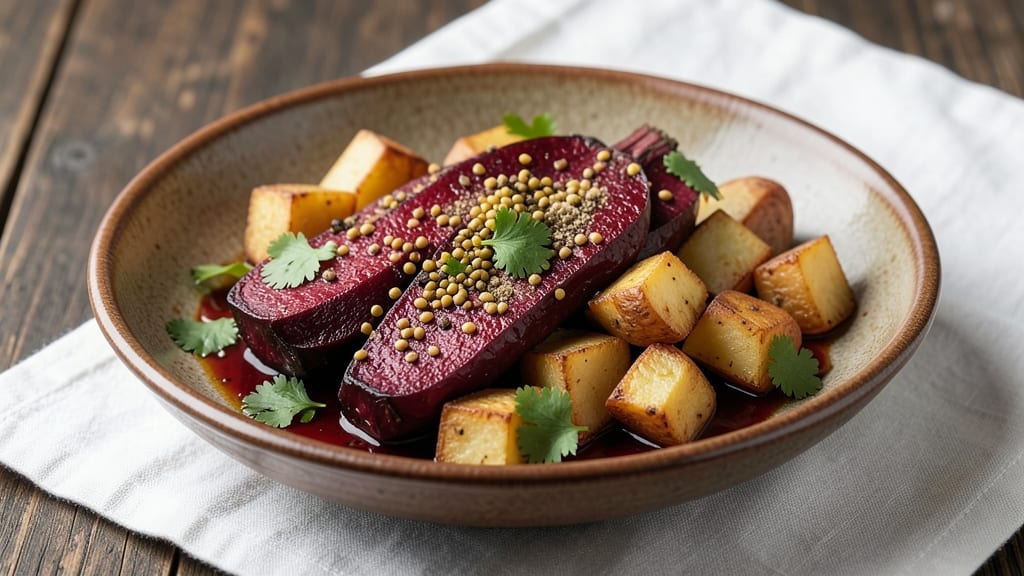
This beetroot potato Indian recipe transforms humble vegetables into a vibrant, spiced side dish that balances earthy sweetness with aromatic warmth.
The secret lies in roasting the vegetables until tender yet crisp, then tempering them with whole spices that dance in hot oil—just like in a North Indian chaat or sabzi.
I developed this recipe after discovering how well beetroot’s natural sweetness complements potatoes’ hearty texture when roasted together, creating a dish that’s both comforting and unexpectedly elegant.
The foundation of this recipe is a simple yet effective technique: roasting the vegetables with a touch of oil and salt until they develop caramelized edges, then finishing them with a tempering of mustard seeds, cumin, and asafoetida for that signature Indian aroma.
The spices aren’t just for flavor—they also help balance the earthy notes of the beetroot and potatoes, making every bite harmonious. This dish is foolproof, requiring minimal prep and delivering maximum flavor, and it pairs beautifully with roti, rice, or even as a standalone vegetarian main.
What makes this recipe stand out is its versatility—it works as a side for curries, a light lunch with yogurt, or even a snack when served warm. The beetroot adds a subtle sweetness that contrasts perfectly with the savory spices, while the potatoes provide a satisfying, starchy base.
The result is a dish that’s restaurant-quality but easy to recreate at home, with just the right amount of crunch and tenderness.
For an extra layer of depth, I recommend finishing the dish with a sprinkle of fresh coriander and a squeeze of lemon—this brightens the flavors and adds a refreshing contrast.
Serve it hot, and you’ll have a side dish that’s sure to impress, whether you’re feeding a family or treating yourself to a simple, flavorful meal. Let’s get cooking!
Ingredients for beetroot potato recipe indian
Twelve ingredients, one vibrant dish—earthy sweetness meets aromatic spice harmony.
| Ingredient | Amount | Notes |
|---|---|---|
| Medium Beetroot 🧅 | 2 whole | Medium size, peeled and cubed |
| Russet Potatoes 🥔 | 2 lb | Medium size, peeled and cubed |
| Vegetable Oil 🫒 | ½ cup | High smoke point preferred |
| Yellow Mustard Seeds 🌶️ | 1 tsp | Whole, for tempering |
| Cumin Seeds 🌿 | 1 tsp | Whole, for tempering |
| Asafoetida Powder 🌶️ | ¼ tsp | Pure, for aroma |
| Fresh Coriander Leaves 🌿 | ¼ cup | Chopped, for garnish |
| Lemon Juice 🍋 | 2 tbsp | Freshly squeezed |
| Kosher Salt 🧂 | 1 ½ tsp | Diamond Crystal preferred |
| Black Salt 🧂 | ¼ tsp | Kala namak for flavor |
| Garam Masala Powder 🌶️ | ½ tsp | Freshly ground preferred |
| Plain Yogurt 🥛 | ¼ cup | Whisked, for serving |
The beetroot and potatoes are the heart of this dish. Choose firm, medium-sized beetroots—they should feel heavy for their size, with a glossy skin. Russet potatoes hold their shape better than waxy varieties when roasted, so grab those at Whole Foods or your local Indian grocery. For the spices, Penzeys or local Indian markets carry the highest quality whole spices and asafoetida. The secret to perfect roasting lies in even-sized cubes—about 1.5 inches each—so they cook uniformly without turning mushy. If you can't find fresh asafoetida, MTR Foods sells reliable pre-ground versions, though fresh is always preferred for that authentic aroma.
No mustard seeds? Substitute with 1/4 tsp ground mustard, though the texture will differ slightly. Running short on cumin? Fenugreek seeds at half the amount add a similar earthy depth. The black salt (kala namak) is non-negotiable for that signature Indian flavor—it's available at Indian specialty stores or online. For the yogurt, full-fat Greek yogurt works best, but any plain yogurt will do in a pinch. The lemon juice should be freshly squeezed; bottled versions lack the bright acidity needed to cut through the richness. If you're prepping ahead, roast the vegetables a day in advance—they actually taste better the next day as the flavors meld.
Store roasted vegetables in an airtight container in the fridge for up to 4 days. The tempering spices should be stored in a cool, dark place—glass jars with tight lids preserve their potency for 6-12 months. For serving, keep the yogurt in a separate container to prevent sogginess. This dish reheats beautifully—just warm in a skillet with a splash of water for 3-4 minutes. The flavors deepen overnight, making it perfect for meal prep. Garnish with fresh coriander just before serving to preserve its vibrant color and aroma.
Why You'll Love This Recipe
- One-Pan Magic: I swear by this recipe when I’m too tired to scrub pots—just toss the cubed potatoes and sliced beetroot in oil with those mustard and cumin seeds, and let the spices work their magic. The pan does all the heavy lifting while you sip tea and pretend you’re not cooking.
- Earthy Crunch: That first bite of caramelized beetroot with the fluffy potato inside? It’s like a hug in your mouth. The mustard seeds add a tiny kick, and the cumin ties everything together—simple, but somehow ridiculously satisfying.
- Lunchbox Hero: Between us, this is my go-to for packed lunches. The flavors hold up for days, and the colors? Stunning. Toss it cold with a sprinkle of chaat masala, or reheat it for a warm, cozy meal—either way, it’s a crowd-pleaser.
- Budget Gem: Russet potatoes and beetroot are cheap, and a single batch feeds four people easily. I’ve made this for potlucks, office lunches, and even as a side for Sunday dinners—always a hit, always filling, and always kind to the wallet.
Step-by-step instructions for spiced roasted beetroot and potatoes
This method transforms humble vegetables into a vibrant, aromatic dish where earthy sweetness meets smoky spice.
Prepare and Roast the Vegetables
Preheat your oven to 400°F and line two rimmed baking sheets with parchment paper. Cut the 2 whole medium beetroot and 2 lb russet potatoes into even 1-inch cubes, ensuring consistent size for uniform cooking. Spread them in a single layer on the prepared sheets, leaving ½-inch space between each piece for proper air circulation.
Drizzle the vegetables with 0.5 cup vegetable oil and toss gently to coat evenly. Sprinkle with 1.5 tsp kosher salt, 0.25 tsp black salt, and 0.5 tsp garam masala powder, massaging the spices into the cubes. Roast for 30 minutes, then flip each piece and roast another 20-25 minutes until the edges are golden brown and the centers yield slightly when pierced with a knife.
Temper the Spices
While the vegetables roast, heat 2 tablespoons vegetable oil in a small skillet over medium heat. Add the 1 tsp yellow mustard seeds and 1 tsp cumin seeds, stirring constantly until they begin to pop and release their aroma—about 30 seconds. Immediately add the 0.25 tsp asafoetida powder and stir for another 10 seconds until the spices are fragrant and lightly toasted.
Remove the skillet from heat and let the tempered spices cool slightly. This step develops the complex flavor profile that defines this dish, so don't rush it. The seeds should be golden and aromatic, not burnt.
Combine and Finish
Transfer the roasted vegetables to a large serving bowl. Pour the tempered spices over the top, then add the 2 tablespoons lemon juice and toss gently to distribute everything evenly. The acidity of the lemon will brighten the earthy flavors and balance the richness of the roasted vegetables.
Finally, fold in the 0.25 cup whisked plain yogurt and 0.25 cup chopped fresh coriander leaves, mixing until the yogurt is fully incorporated. The dish should be creamy yet still vibrant with color. Taste and adjust seasoning if needed, adding a pinch more salt or lemon juice as required.
Serve Warm
Let the dish sit for 5 minutes before serving to allow the flavors to meld. This dish is best enjoyed warm, with the contrast of creamy yogurt and fresh herbs against the caramelized vegetables. Garnish with an additional sprinkle of chopped coriander leaves and serve immediately with crusty bread or as a side to grilled meats.
The result should be a harmonious blend of textures and flavors—tender roasted vegetables with a crisp exterior, creamy yogurt, and the aromatic punch of tempered spices. Each bite should deliver the earthy sweetness of the vegetables balanced by the tangy brightness of the lemon and yogurt.
Pro Tips For Making Beetroot Potato Recipe Indian
- PEEL BEETS AFTER COOKING: I learned this the hard way—raw beetroot peels are stubborn, but cooked ones slide right off. Boil whole beets for 20-25 minutes until fork-tender, then cool in ice water before peeling. The skins will slip away like butter, and you’ll save time scrubbing.
- CUT POTATOES EVENLY: Uneven chunks mean uneven cooking—no one likes mushy bits next to al dente. Use a mandoline or sharp knife to slice Russets into ½-inch rounds, then soak in cold water for 10 minutes to remove excess starch. Pat very dry before frying; crispy edges depend on it.
- TEMPER THE SPICES: Skip the direct high-heat toss of mustard and cumin seeds—you’ll burn them faster than you can say "garlic gone to waste." Instead, heat 1 tablespoon oil in the pan until shimmering, then add seeds on medium-low. Let them sizzle for 10 seconds before adding aromatics; this unlocks their flavor without bitterness.
- FRY IN BATCHES: Crowding the pan steams the potatoes instead of crisping them. Work in 2-inch layers, giving each batch 3-4 minutes per side until golden. If your pan smells like a damp sock, you’re doing it wrong—drain excess moisture from the potatoes first and resist the urge to overfill.
Wine and beer pairings for this recipe
Indian-Inspired White Wine
For this earthy, spiced dish, a dry Indian white wine like Chenin Blanc from Karnataka or Gewürztraminer from Kashmir works beautifully. The wine’s subtle sweetness and floral notes complement the beetroot’s natural sweetness while cutting through the richness of the roasted potatoes.
I love pairing this dish with a chilled bottle of Sula Chenin Blanc—its crisp acidity and hints of apple and citrus create a refreshing contrast to the warm spices. 🍷
Crisp Lager Pairing
A light Indian lager like Kingfisher or Haywards 5000 is my go-to beer choice for this dish. The crisp, clean profile of these beers balances the bold flavors without overpowering them. The effervescence helps cleanse your palate between bites of the spiced vegetables.
For a craft option, try a Belgian Witbier—the coriander and citrus notes in styles like Hoegaarden enhance the dish’s aromatic spices. 🍺
Spiced Rum Cocktail
If you prefer cocktails, a rum-based drink like Dark 'n' Stormy (dark rum, ginger beer, lime) adds a tropical contrast to the earthy flavors. The ginger’s warmth complements the garam masala, while the lime brightens the dish.
For a non-alcoholic version, mix ginger beer with lime juice and a pinch of black salt—it’s a refreshing match that highlights the dish’s Indian roots. 🍹
Herbal Tea Balance
For a non-alcoholic pairing, mint chai tea or jasmine green tea with a splash of lemon creates a soothing balance. The tea’s herbal notes echo the coriander and garam masala in the dish, while the lemon’s acidity mirrors the lemon juice in the recipe.
Serve the tea hot to enhance the warm, spiced flavors of the roasted vegetables. ☕
Regional Wine Adaptations
In South India, where lighter flavors dominate, pair this dish with a Vermentino from Tamil Nadu—its citrusy profile complements the beetroot’s sweetness. For North Indian versions, a full-bodied Shiraz like Grover Zampa adds richness to match the garam masala’s warmth. Each region’s wine enhances the dish’s unique character. 🌍
Nutrition facts
Frequently asked questions
Can I use sweet potatoes instead of regular potatoes?
Yes, you can substitute sweet potatoes for regular potatoes, but expect a slightly sweeter flavor profile. The texture will be denser and more moist, which works beautifully with the beetroot's natural sweetness. Reduce the roasting time by about 5-10 minutes since sweet potatoes cook faster than russets, and check for doneness at 25 minutes total.
How do I make this dish gluten-free?
This recipe is naturally gluten-free, but if you're serving with bread, opt for gluten-free naan or roti made with rice flour or cornmeal. The dish itself requires no modifications—just ensure all your spices (like garam masala) are certified gluten-free and check your yogurt label for hidden additives.
Can I prepare this ahead of time?
The roasted vegetables taste even better the next day as the flavors meld. Prepare the dish up to 2 days in advance and store it in an airtight container in the fridge. Reheat gently in a skillet with a splash of water for 3-4 minutes—the yogurt will separate slightly but can be stirred back in before serving.
What if I don't have asafoetida (hing)?
Don't worry—asafoetida adds depth but isn't essential. Substitute with ½ tsp garlic powder or ¼ tsp onion powder for a similar savory note. For a stronger flavor, add a pinch of black pepper alongside the cumin and mustard seeds during tempering. The dish will still taste delicious, just with slightly different aromatic complexity.
How can I make this dish spicier?
For extra heat, add ½ tsp red chili powder or ¼ tsp cayenne pepper to the roasting vegetables. For a smoky kick, include ¼ tsp smoked paprika in the tempering spices. You can also serve with a side of green chutney or a dollop of mint yogurt spiked with a pinch of red chili flakes.