
Side Dishes
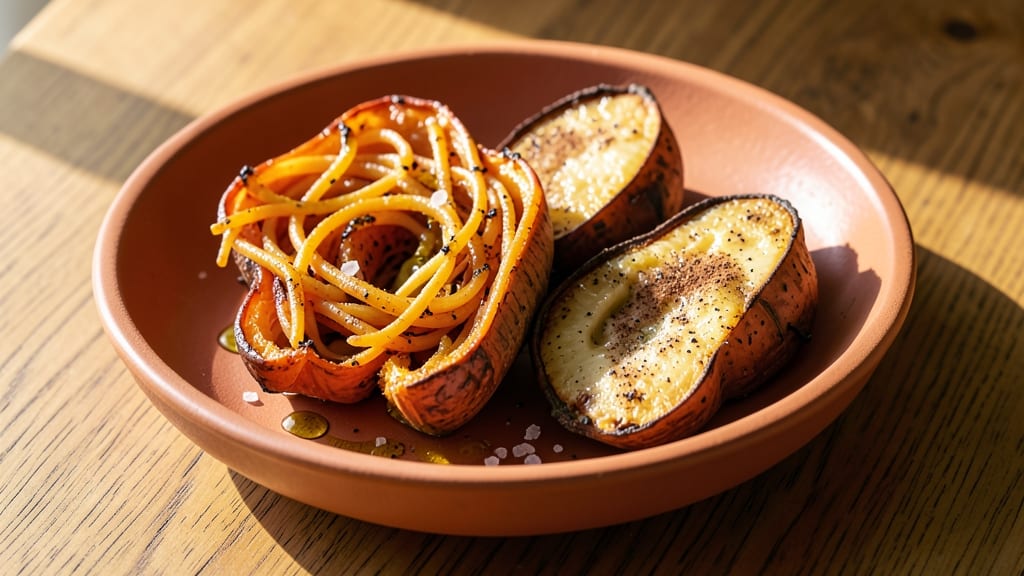
This spaghetti squash and sweet potato recipe transforms two humble vegetables into a nutty-sweet, restaurant-worthy side dish that pairs perfectly with proteins or stands alone as a hearty meal.
The secret lies in roasting them together—spaghetti squash develops its signature stringy texture while sweet potatoes caramelize into tender, flavorful strands that cling together like pasta.
I developed this recipe after years of experimenting with ways to make squash more exciting, and the addition of sweet potatoes takes it from ordinary to extraordinary.
The beauty of this dish is its versatility and simplicity. With just a handful of pantry staples—olive oil, salt, pepper, and a touch of cinnamon or smoked paprika—you’ll create a side that’s packed with natural sweetness and earthy depth.
The roasting process takes about 45 minutes, but the hands-off time means you can focus on other parts of your meal while the oven does the work. The result? A dish that’s naturally gluten-free, vegan-friendly, and rich in fiber, yet so satisfying it’ll have everyone asking for seconds.
What makes this recipe truly special is how the flavors and textures come together. The spaghetti squash strands are tender yet hold their shape, while the sweet potatoes add a creamy, almost buttery richness that balances the squash’s mild sweetness.
Toss them with a drizzle of olive oil, fresh herbs like rosemary or thyme, and a sprinkle of flaky salt for a finish that’s both elegant and effortless.
This dish works as a side for grilled meats, fish, or tofu, or even as a light main course when paired with a simple salad or crusty bread.
Once you try this roasted harmony, you’ll never look at spaghetti squash the same way again. The technique is foolproof, the flavors are naturally balanced, and the results are so impressive you might just skip the pasta entirely.
Let’s get started—your taste buds (and dinner table) will thank you.
Ingredients for spaghetti squash and sweet potato
Roasting brings out the nutty sweetness in spaghetti squash and sweet potatoes—just these 13 ingredients transform humble veggies into restaurant-worthy strands.
| Ingredient | Amount | Notes |
|---|---|---|
| Medium Spaghetti Squash 🍠 | 1 whole | Medium size, about 3-4 lbs |
| Medium Sweet Potatoes 🍠 | 2 whole | Organic preferred, firm texture |
| Extra-Virgin Olive Oil 🫒 | ¼ cup | High quality, fruity variety |
| Flaky Sea Salt 🧂 | 1 ½ tsp | Like Maldon for finishing |
| Freshly Ground Black Pepper 🌶️ | ½ tsp | Freshly cracked for best flavor |
| Ground Cinnamon 🌿 | ½ tsp | Warm, aromatic variety |
| Smoked Paprika 🌶️ | ½ tsp | For subtle smokiness |
| Fresh Rosemary 🌿 | ¼ cup | Chopped, stems removed |
| Fresh Thyme 🌿 | ¼ cup | Leaves only, finely chopped |
| Garlic Cloves 🧄 | 3 cloves | Peeled, minced finely |
| Vegetable Broth 💧 | ¼ cup | Low-sodium preferred |
| Maple Syrup 🍯 | 1 tbsp | Pure, grade A |
| Toasted Pecans 🌰 | ¼ cup | Chopped, for garnish |
The squash and sweet potatoes are the stars here. Look for spaghetti squash with a smooth, heavy feel—the bigger the better, but 3-4 pounds is ideal. Sweet potatoes should be firm with no soft spots. Trader Joe's and Whole Foods carry great organic options, but any grocery store will have good ones. Pro tip: Cut the squash in half lengthwise before roasting—this ensures even cooking and those perfect stringy strands. For the pecans, toast them in a dry pan for 3-4 minutes until fragrant before chopping; this brings out their natural sweetness.
No maple syrup? Agave nectar or honey works just as well—just use the same amount. Fresh herbs not available? Dried rosemary and thyme at one-third the amount will get you close. The smoked paprika adds depth without overpowering; if you only have regular paprika, add a pinch of liquid smoke for that smoky touch. For extra richness, swap half the vegetable broth for coconut milk. And if you're feeling fancy, drizzle with a touch of balsamic glaze before serving—it cuts through the sweetness beautifully.
These roasted veggies reheat beautifully—just pop them back in the oven at 350°F for 10 minutes to revive their crisp edges. Store leftovers in airtight containers for 4-5 days in the fridge, or freeze for up to 3 months. I like to portion mine into single servings before freezing so I can grab one for quick meals. The pecans and herbs can be prepped ahead and stored separately until ready to serve—just toss them in right before eating so they stay fresh.
Why You'll Love This Recipe
- Here’s what sold me: that crispy, almost buttery sweet potato meets the squash’s delicate, pasta-like texture. A drizzle of olive oil and a pinch of salt? It’s like a hug for your taste buds—simple, but somehow ridiculously satisfying. (Yes, even on a Tuesday night.)
- One-Pan Magic: I swear by this for nights when I’m too tired to wash another dish. Roast the squash and sweet potatoes together—same pan, same oven, same easy cleanup. The squash strands just melt with the sweet potato’s caramelized edges, and you’re left with zero extra pots to scrub.
- Sweet-Savory Balance: Here’s what sold me: that crispy, almost buttery sweet potato meets the squash’s delicate, pasta-like texture. A drizzle of olive oil and a pinch of salt? It’s like a hug for your taste buds—simple, but somehow ridiculously satisfying. (Yes, even on a Tuesday night.)
- Meal Prep MVP: Between us, this is my go-to for lunches all week. The squash stays tender for days, and the sweet potatoes hold up perfectly. Pack them cold or reheat—either way, it’s a hearty, filling meal that feels fancy but costs next to nothing.
Step-by-step instructions for roasted spaghetti squash and sweet potatoes
Here's how to transform these humble vegetables into a symphony of caramelized sweetness and aromatic herbs.
Prep and Season the Vegetables
Begin by preheating your oven to 425°F. Cut the spaghetti squash in half lengthwise and scoop out the seeds using a spoon, leaving the walls intact. For the sweet potatoes, pierce them with a fork in several places to allow steam to escape during roasting.
In a large bowl, combine the 0.25 cup extra-virgin olive oil, 1.5 tsp flaky sea salt, 0.5 tsp freshly ground black pepper, 0.5 tsp ground cinnamon, and 0.5 tsp smoked paprika. This aromatic blend is the foundation of our dish's complex flavor profile. Gently toss the cut spaghetti squash and sweet potatoes in this mixture, ensuring every surface is evenly coated. The oil will help create a crispy exterior while the spices infuse deep flavor.
Roast Until Caramelized
Arrange the seasoned vegetables on a parchment-lined baking sheet, cut sides down. Place the baking sheet on the middle rack of your oven and roast for 30 minutes. After this initial roasting time, carefully flip the vegetables using a pair of tongs. You'll notice the edges beginning to caramelize and develop a beautiful golden-brown hue—this is when the magic happens.
Return the vegetables to the oven and continue roasting for another 20-25 minutes, or until the sweet potatoes are tender when pierced with a fork and the spaghetti squash flesh easily pulls apart with a fork. The total roasting time should be about 50-55 minutes, but keep an eye on them as ovens vary. You want the sweet potatoes to be fork-tender with slightly crispy edges, and the spaghetti squash to have that perfect "noodle" texture.
Create the Herb-Garlic Broth
While the vegetables roast, prepare the herb-garlic broth by combining the 0.25 cup vegetable broth, 1 tbsp maple syrup, 3 minced garlic cloves, 0.25 cup chopped fresh rosemary, and 0.25 cup chopped fresh thyme in a small saucepan. Bring this mixture to a gentle simmer over medium-low heat and let it reduce by half, which should take about 5-7 minutes. The aroma will fill your kitchen—this is the fragrant base that will elevate our roasted vegetables.
Strain the reduced broth through a fine-mesh sieve to remove the herb stems, pressing gently with a spoon to extract every last bit of flavor. This herb-infused liquid will be the perfect companion to our roasted vegetables, adding depth and complexity to each bite.
Assemble and Garnish
Once the vegetables are perfectly roasted, carefully transfer them to serving plates. Using a fork, gently scrape the flesh of the spaghetti squash to create those signature "noodle" strands. The sweet potatoes should be easily fork-tender, with slightly crispy edges that contrast beautifully with their creamy interior.
Drizzle the herb-garlic broth evenly over the roasted vegetables, allowing it to pool in the crevices. Sprinkle with the 0.25 cup toasted pecans for a delightful crunch and nutty sweetness that complements the caramelized vegetables perfectly. The pecans add a textural contrast that makes this dish truly special. Serve immediately while everything is hot and the flavors are at their peak.
Pro Tips For Making Spaghetti Squash And Sweet Potato
- CUT THE SQUASH LENGTHWISE: Spaghetti squash is stubborn—don’t slice it into rings like a pie. Cut it in half lengthwise first, then scoop out the seeds. This keeps the flesh intact so it roasts evenly and shreds cleanly into strands instead of collapsing into mush.
- ROAST SWEET POTATOES WHOLE: Peeling sweet potatoes isn’t necessary, and cubing them risks uneven cooking. Roast them whole at 400°F (200°C) for 45–55 minutes until fork-tender, then slice into thick rounds. The skin adds texture, and the centers stay moist.
- SALT THE SQUASH HALVES BEFORE ROASTING: Season the cut sides of the spaghetti squash with flaky sea salt and a drizzle of olive oil before roasting. The salt crisps the edges slightly while the flesh tenderizes, giving you natural "noodles" with a subtle crunch instead of a bland, watery mess.
- USE A LARGE SKILLET FOR SHREDDING: After roasting, let the squash cool for 10 minutes—this makes shredding effortless. Run a fork down the center of each half in the skillet to separate strands, then fluff with a spoon. A small bowl? Skip it. A skillet gives you room to work without squishing the strands.
Creative variations of this dish
Global Comfort Twist
Turn this into a global-inspired side by adding a touch of harissa paste (1 tbsp) to the olive oil mixture for a North African flair. Serve with grilled lamb chops and a side of Moroccan couscous for a full meal.
The harissa adds a subtle heat that pairs beautifully with the sweet potatoes' natural sugars. 🌶️
Mexican Fiesta Fusion
Transform this into a Mexican-inspired dish by swapping the cinnamon for 1 tsp ground cumin and ½ tsp chili powder. Add ½ cup black beans and ¼ cup corn kernels to the roasting pan in the last 10 minutes of cooking.
Top with avocado slices, cilantro, and a squeeze of lime—this becomes a fantastic vegan taco side or bowl base. 🌮
Asian-Inspired Glaze
For an Asian-inspired twist, toss the roasted veggies with 2 tbsp soy sauce, 1 tbsp sesame oil, and 1 tsp grated ginger. Finish with toasted sesame seeds and sliced green onions.
Serve alongside teriyaki tofu or grilled shrimp for a flavor-packed meal. The umami from the soy sauce elevates the natural sweetness of the sweet potatoes. 🍜
Breakfast Power Bowl
Make this a breakfast sensation by adding 2 fried eggs on top and a sprinkle of crumbled feta cheese. The warm, caramelized veggies pair perfectly with the richness of the eggs.
Serve with crispy bacon or turkey sausage for a hearty morning meal. The sweet and savory combo is unexpected but utterly satisfying. 🍳
Creamy Mash Adaptation
For a creamy mash variation, roast the sweet potatoes until ultra-tender, then mash them with 2 tbsp Greek yogurt and 1 tbsp butter. Mix in the spaghetti squash strands and fold in the herb-garlic broth.
Top with crispy sage leaves for a luxurious side that feels like a holiday centerpiece. 🥔
Protein-Packed Bowl
Turn this into a complete protein bowl by adding ½ cup cooked quinoa and ½ cup chickpeas to the roasted veggies. Drizzle with tahini-lemon dressing (1 tbsp tahini + 1 tsp lemon juice + water to thin) for a Middle Eastern-inspired dish.
The quinoa and chickpeas add fiber and plant-based protein, making it a balanced meal. 🌱
Nutrition facts
Frequently asked questions
Can I use butternut squash instead of spaghetti squash?
While butternut squash works beautifully, it won't give you that signature "noodle" texture. For a similar experience, try delicata squash—it's easier to peel, holds its shape when roasted, and has a mild sweetness that pairs perfectly with sweet potatoes. If you prefer butternut, use it as a mash or cube it for hearty sides.
How do I get the spaghetti squash strands to be tender but not mushy?
The key is timing! Roast at 425°F for 45-50 minutes total, flipping halfway. When done, the flesh should pull apart easily with a fork but still hold some structure. Overcooking turns it mushy—watch closely after 30 minutes. For extra tenderness, sprinkle with 1 tsp lemon juice after roasting.
What's the best way to reheat leftovers?
Reheat in a 350°F oven for 10-12 minutes to restore crisp edges. For microwave reheating, cover with a damp paper towel and heat in 30-second bursts, stirring between each. Add a splash of water or broth to prevent drying. The herb-garlic broth can be reheated separately and drizzled back on top.
Can I make this dish ahead of time?
Roast the vegetables up to 2 days ahead and store in airtight containers. Reheat gently, then finish with fresh herbs and pecans right before serving. For make-ahead meals, prep the herb-garlic broth separately and store it in the fridge—reduce it again when ready to use for maximum flavor.
What if I don't have fresh rosemary or thyme?
No problem! Use ½ tsp dried rosemary and ½ tsp dried thyme instead (about one-third the amount). For extra flavor, add 1 tsp garlic powder or ½ tsp onion powder to compensate. The dish will still taste amazing—just slightly more concentrated in herb flavor.