
Side Dishes
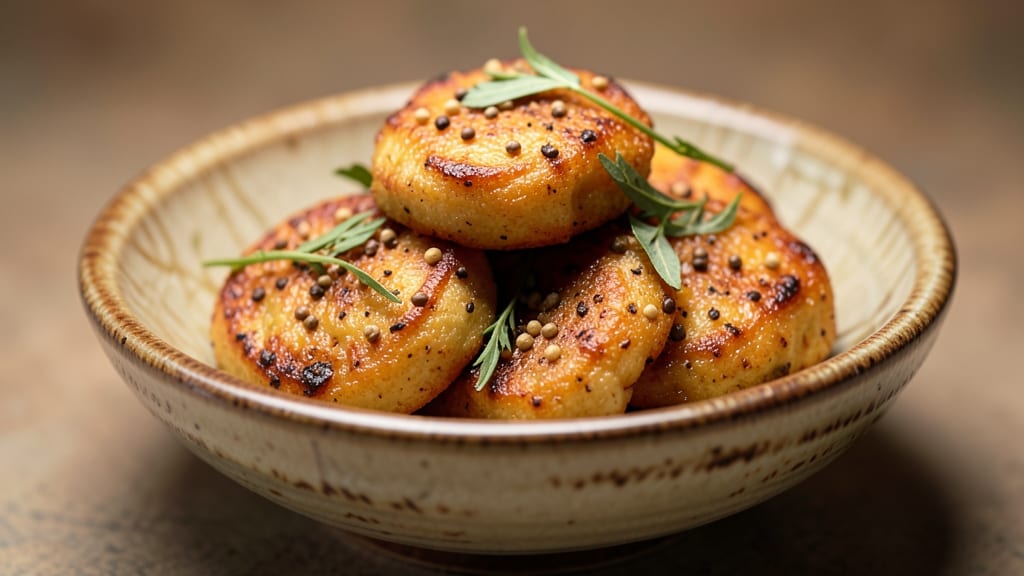
This sweet potato holige recipe transforms humble sweet potatoes into smoky, spiced dumplings that caramelize into golden perfection. 🔥 The secret lies in the tempering—whole spices like mustard seeds and curry leaves bloom in hot oil, releasing aromas that transform simple sweet potatoes into something deeply flavorful.
I developed this version after years of perfecting the balance between sweetness and spice, ensuring every bite delivers both texture and depth.
The process begins with boiling and mashing sweet potatoes until they reach the ideal consistency—creamy yet firm enough to hold shape. The key technique is tempering the spices in ghee until they release their oils, creating a fragrant base that coats each dumpling.
This method elevates the dish from ordinary to extraordinary, with each bite offering a perfect harmony of sweet, smoky, and slightly spicy flavors.
What you'll end up with is a dish that's both comforting and sophisticated—crispy edges giving way to tender, caramelized sweet potatoes infused with warm spices. The aroma alone will have everyone gathering around the table, while the texture provides a satisfying contrast between the crispy exterior and soft interior.
This recipe is perfect for serving alongside rice or as a standalone vegetarian main dish.
Authenticity is preserved through traditional methods, but the recipe is simplified for home cooks without sacrificing flavor. The spices can be adjusted to taste, and the dish reheats beautifully, making it ideal for meal prep or special occasions. Ready to create this South Indian classic in your own kitchen?
Ingredients for sweet potato holige
Transform humble sweet potatoes into smoky, aromatic dumplings with these traditional spices and techniques.
| Ingredient | Amount | Notes |
|---|---|---|
| Sweet Potatoes 🍠 | 2 lbs | Medium-sized, peeled and boiled |
| Ghee 🧈 | ½ cup | Clarified butter for authentic flavor |
| Mustard Seeds 🌶️ | 1 tbsp | Whole seeds for tempering |
| Curry Leaves 🌿 | ¼ cup | Fresh, slightly crushed |
| Green Chilies 🌶️ | 4 whole | Slit lengthwise for mild heat |
| Asafoetida 🌿 | ¼ tsp | Hing powder for depth |
| Turmeric Powder 🧂 | ½ tsp | Freshly ground preferred |
| Cumin Seeds 🌿 | ½ tsp | Toasted for aroma |
| Salt 🧂 | 1 ½ tsp | Adjust to taste |
| Coconut Oil 🫒 | 2 tbsp | For frying dumplings |
| Rice Flour 🌾 | ½ cup | For coating dumplings |
| Fresh Coriander Leaves 🌿 | ¼ cup | Chopped for garnish |
| Lemon Juice 🍋 | 1 tbsp | Freshly squeezed |
The spices are the soul of this dish. Curry leaves and mustard seeds are non-negotiable—look for them in the Indian section of Whole Foods or Patel Brothers if available. Fresh curry leaves should be vibrant green, not wilted. For mustard seeds, yellow or brown varieties work best. If you can't find asafoetida (hing), garlic powder at half the amount can substitute. Ghee is crucial—store-bought ghee from Patanjali or local Indian grocers works perfectly, but avoid butter substitutes with additives. The green chilies should have a slight give when squeezed, indicating freshness.
No curry leaves? Fresh bay leaves at double the amount add depth, though the aroma won't be identical. Substituting ghee with vegetable oil works in a pinch, but the flavor will be less rich. For the rice flour coating, semolina (sooji) is traditional, but regular rice flour works fine. The coconut oil for frying should be virgin and unrefined—Trader Joe's carries a good option. If you're spice-averse, reduce the green chilies to 2 and add 1/4 tsp sugar to balance. The lemon juice should be freshly squeezed—bottled won't have the same brightness. For extra authenticity, toast the cumin seeds in a dry pan until fragrant before adding to the oil.
Store the spice mix in an airtight container for up to 2 weeks—it's worth making extra. The prepared sweet potato mixture keeps in the fridge for 3 days, covered with plastic wrap touching the surface. For frying, maintain oil temperature at 350°F—too hot and they'll burn before cooking through. These reheat beautifully—350°F for 10 minutes in the oven with a splash of water revives crispiness. Freeze shaped dumplings on a tray before bagging for 3 months—fry from frozen without thawing.
Why You'll Love This Recipe
- Here’s what sold me: that deep, nutty sweetness from ghee-sautéed sweet potatoes, balanced by the tiny kick of green chilies. The curry leaves add this earthy aroma that makes it taste like a hug from your grandma’s kitchen. Honestly, it’s the kind of dish that makes you want to eat it straight from the pan.
- One-Pot Magic: I swear by this recipe when I’m too tired to wash pots—just toss sweet potatoes into a pan with ghee, let them caramelize, and boom. The mustard seeds and curry leaves sizzle into a fragrant base while you chop a handful of green chilies. Minimal cleanup, maximum flavor.
- Ghee-Glazed Goodness: Here’s what sold me: that deep, nutty sweetness from ghee-sautéed sweet potatoes, balanced by the tiny kick of green chilies. The curry leaves add this earthy aroma that makes it taste like a hug from your grandma’s kitchen. Honestly, it’s the kind of dish that makes you want to eat it straight from the pan.
- Weeknight to Party: Between us, this recipe works for everything—a lazy Tuesday dinner, a potluck side, or even a fancy-ish meal when you’re hosting. The sweet potatoes hold up for days, so I often double the batch. Sprinkle with toasted coconut or a dollop of yogurt, and suddenly it’s a showstopper.
Step-by-step instructions for sweet potato holige
Transform boiled sweet potatoes into aromatic, smoky-spiced dumplings with this traditional technique.
👨🍳 Step 1: Prepare the Sweet Potato Filling
Take the 2 lbs of boiled sweet potatoes and let them cool completely. Once cool enough to handle, peel away the skin and mash them into a smooth, lump-free paste using a potato masher or fork. I like to add 1 tbsp lemon juice right away—this prevents browning and adds a bright contrast to the rich spices.
In a small bowl, mix the mashed sweet potatoes with 0.5 tsp turmeric powder, 1.5 tsp salt, and 0.25 tsp asafoetida. The turmeric gives that signature golden hue, while the asafoetida adds that unmistakable depth of flavor. Fold everything together until completely combined—no dry spots should remain. This mixture should be soft enough to shape easily but not sticky.
🍳 Step 2: Create the Spiced Tempering
Heat 0.5 cup ghee in a heavy-bottomed pan over medium-low heat. Add 0.5 tsp toasted cumin seeds and let them sizzle for 30 seconds until fragrant. Then add 1 tbsp mustard seeds—they'll pop and dance before settling into a golden crust. This is your signal to add 0.25 cup curry leaves and 4 whole slit green chilies. Cook for 1-2 minutes until the leaves turn vibrant green and the chilies soften slightly.
Remove from heat and let the tempering cool for 2 minutes. Then pour it over the sweet potato mixture and gently fold together. The ghee will coat the filling, creating a silky texture that holds its shape beautifully when fried. If the mixture feels too wet to handle, add 1-2 tablespoons of rice flour to bind it.
🥘 Step 3: Shape the Dumplings
Divide the spiced sweet potato mixture into 16 equal portions (about 2 tablespoons each). Wet your palms lightly with water and roll each portion into smooth, oval-shaped dumplings. I press them gently between my palms to create a slight indentation in the center—this helps them cook evenly and gives that classic holige shape. Place them on a plate and cover with a damp cloth to prevent drying.
Here's the thing—don't make them too small or they'll cook too quickly and dry out. Aim for 1.5 inches long and 1 inch wide. If the mixture feels too sticky to shape, chill it in the fridge for 10 minutes before rolling. This step makes all the difference in achieving that perfect bite-sized texture.
🔥 Step 4: Fry to Golden Perfection
Heat 2 tbsp coconut oil in a non-stick skillet over medium heat until shimmering. Add 4-5 dumplings at a time (don't overcrowd) and fry for 2-3 minutes per side until they develop a deep golden brown crust and look slightly puffed. The oil should sizzle gently but not smoke—adjust heat if needed.
Transfer the fried dumplings to a paper towel-lined plate to drain excess oil. Repeat with remaining dumplings, maintaining even heat throughout. They're done when the exterior is crispy and the interior remains soft and creamy. If any dumpling feels undercooked inside, fry it for another 30 seconds—they should be fully cooked through but still tender.
🍽️ Step 5: Garnish and Serve
Gently toss the warm dumplings with 0.25 cup chopped fresh coriander leaves. This adds a fresh herbal note that cuts through the richness. Serve immediately while still hot, with a side of coconut chutney or yogurt dip for dipping. The contrast of temperatures and textures—crispy exterior, soft interior, cool dip—makes every bite satisfying.
For best results, serve within 20 minutes of frying. The dumplings will stay warm and crispy on the outside while remaining tender inside. If making ahead, fry them just before serving—holige loses its ideal texture when reheated.
Pro Tips For Making Sweet Potato Holige
- CUT SWEET POTATO INTO EVEN SLICES: I learned this the hard way—uneven slices mean some burn while others stay raw. Use a sharp knife and a mandoline if you’re feeling fancy, but even a ruler and steady hand work. Aim for ¼-inch thickness, no thicker, so they cook through without turning to mush.
- USE LOW HEAT FOR GHEE INFUSION: Ghee burns faster than you think, and once it’s bitter, there’s no fixing it. After adding mustard seeds and curry leaves, drop the heat to medium-low—just enough to sizzle, not smoke. This lets the flavors meld without sacrificing that nutty aroma.
- SALT THE WATER LIBERALLY: Sweet potatoes soak up water like sponges, and if your cooking liquid isn’t salty enough, the final dish tastes bland. Use at least 1½ teaspoons of salt per liter of water for the boil, and don’t skimp—you’re not making a spa bath, you’re making holige.
- STIR ONCE, NOT CONSTANTLY: I used to fuss with the pot like it was a temperamental lover, but overstirring turns sweet potatoes into glue. After adding them to the ghee, give it one gentle stir to coat, then let them sit undisturbed for 2-3 minutes. Patience here = caramelized edges, not a sad, soggy mess.
Wine and beer pairings for this dish
South Indian White Wine
For a traditional pairing, try a crisp Chenin Blanc from India’s Karnataka region. The bright acidity and subtle floral notes complement the sweet potatoes’ caramelized sweetness while cutting through the smoky spices.
I love Sula Chenin Blanc—its citrus and green apple flavors mirror the fresh coriander garnish. Serve slightly chilled (45-50°F) to refresh your palate between bites. 🍷
Malaysian Spiced Beer
Aromatic Malaysian lager like Tiger Beer or Anchor Blue stands up to the dish’s bold flavors. The light maltiness balances the sweet potatoes, while the subtle spice notes in the beer echo the curry leaves and mustard seeds.
For a craft option, try Singha Beer—its clean finish lets the dish’s complexity shine. Serve at 40-45°F to enhance the crispy texture contrast. 🍺
Coconut-Inspired Liqueur
For a dessert-friendly twist, serve Malibu Coconut Rum (neat or with ice) alongside. The coconut flavor harmonizes perfectly with the dish’s natural sweetness and fried texture. I like to add a splash of lime juice for brightness—about 1 oz rum + ½ oz lime juice per serving.
This pairing works especially well for brunch or festive occasions. 🥥
Herbal Tea Pairing
Finish the meal with South Indian masala chai or ginger tea to cleanse the palate. The warm spices in the tea (cardamom, cinnamon) complement the holige’s flavor profile without overpowering it.
For a caffeine-free option, try hibiscus tea—its tartness balances the dish’s richness beautifully. Brew with 1 tsp loose-leaf tea per cup and serve hot. ☕
Regional Beer Adaptations
In Tamil Nadu, locals often pair holige with Kingfisher Lager—its smooth, slightly malty profile works surprisingly well. For a stronger option, try Goa’s Feni (a cashew or coconut-based spirit) if you want to lean into the coconut oil frying technique.
The nutty notes in Feni enhance the sweet potatoes’ natural sweetness. Serve Feni neat or on the rocks for best results. 🍻
Nutrition facts
Frequently asked questions
Can I substitute regular potatoes for sweet potatoes in this recipe?
Sweet potatoes are essential—their natural sweetness and moisture content create the perfect texture for holige. Regular potatoes will be too starchy and dry out during frying. If you must substitute, try yam for a similar moisture level, but expect a slightly different flavor profile.
How do I adjust the spice level for kids or sensitive palates?
Reduce the green chilies to 2 whole and add ¼ tsp sugar to balance. You can also remove half the seeds from each chili before slitting. For extra mildness, skip the asafoetida and use ½ tsp garlic powder instead. The dish will still be flavorful but much gentler.
Why did my dumplings fall apart when frying?
This usually happens when the mixture is too wet or the oil isn't hot enough. Ensure you're using 1-2 tbsp rice flour if needed to bind, and maintain oil temperature at 350°F. Chill the mixture for 10 minutes before shaping if it feels too sticky. Also, don't overcrowd the pan—fry in batches.
Can I make this recipe ahead of time?
You can prep the spiced sweet potato mixture up to 3 days ahead and store it covered in the fridge. Shape the dumplings 1 day ahead and refrigerate uncovered on a tray to prevent sticking. Fry just before serving for the best texture—reheating makes them soggy. For long-term storage, freeze shaped dumplings for 3 months and fry from frozen.
What's the best way to reheat leftover holige?
Reheat in a dry skillet over medium heat for 2-3 minutes until crispy again. For oven reheating, place on a baking sheet at 350°F for 10 minutes with a splash of water to restore moisture. Microwaving isn't recommended—it makes them rubbery. The key is quick, dry heat to revive the crispy exterior.