
Side Dishes
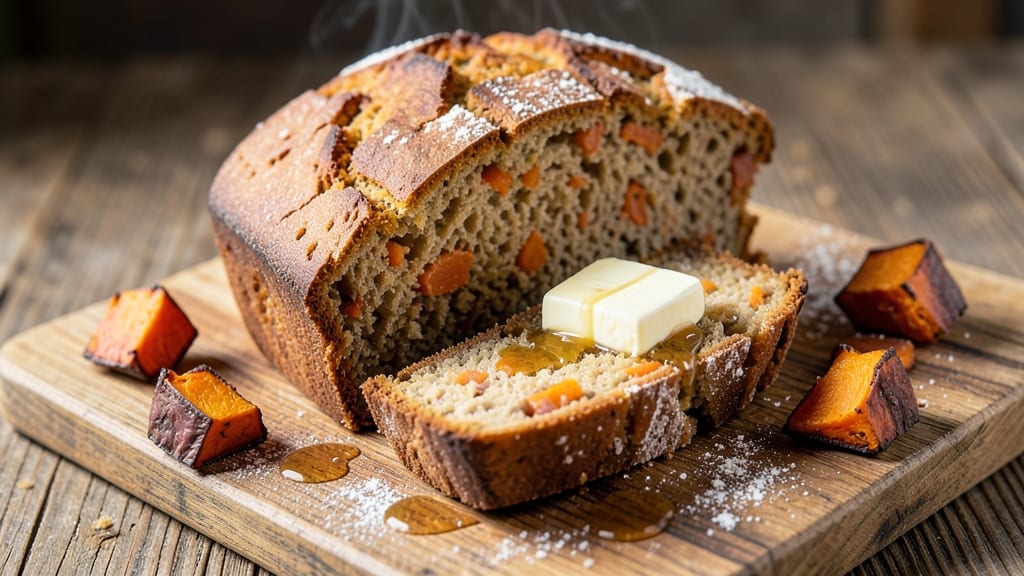
This sweet potato loaf bread recipe transforms humble ingredients into a moist, spiced loaf with warm nutmeg and cinnamon notes that taste like autumn in every bite.
The secret lies in blending roasted sweet potato into the dough—its natural sweetness and earthy depth create a bread that’s rich yet light, perfect for sandwiches or served alongside soups.
What makes this recipe stand out is how the sweet potato keeps the loaf tender for days, while the nutmeg-kissed crust adds a sophisticated touch that elevates even simple meals.
The process is straightforward but yields restaurant-quality results: mix the dough with roasted sweet potato puree, let it rise until puffy, then bake until golden brown.
No fancy equipment is needed—just a standard loaf pan and a little patience for the fermentation step, which develops that signature depth of flavor. The dough is vegetarian-friendly and can easily be adapted with gluten-free flour or added seeds for extra texture.
By the time it emerges from the oven, you’ll have a loaf with a crisp exterior and a soft, slightly sweet interior that’s impossible to resist. The nutmeg and cinnamon infuse every slice with warmth, while the sweet potato adds moisture that keeps it fresh for days.
This isn’t just bread—it’s a versatile centerpiece that works as a side, sandwich base, or even toasted with butter.
For extra flair, brush the baked loaf with a touch of melted butter while still warm, or sprinkle with flaky sea salt for contrast. The possibilities are endless, but the foundation—simple, spiced, and deeply satisfying—is what makes this recipe a staple. Let’s get baking!
Ingredients for sweet potato loaf bread
Sweet potatoes, warm spices, and simple pantry staples create a loaf that tastes like autumn in every bite.
| Ingredient | Amount | Notes |
|---|---|---|
| Orange Sweet Potatoes 🍠 | 1 ½ lb | Medium size, peeled and cubed |
| All-Purpose Flour 🌾 | 4 cups | Plus 2 tbsp for dusting |
| Active Dry Yeast 🍞 | 0.03 oz | 1 packet or 2.25 tsp |
| Granulated Sugar 🍚 | ½ cup | Light brown sugar preferred |
| Unsalted Butter 🧈 | ½ cup | Cold, cubed for dough |
| Large Eggs 🥚 | 2 whole | Room temperature |
| Milk 🥛 | 1 cup | Warm, not hot |
| Ground Nutmeg 🌿 | 1 tsp | Freshly grated preferred |
| Ground Cinnamon 🌶️ | 1 tsp | High-quality preferred |
| Salt 🧂 | 1 ½ tsp | Diamond Crystal kosher |
| Olive Oil 🫒 | 2 tbsp | For greasing pan |
The sweet potatoes are the heart of this recipe—orange varieties have the perfect balance of sweetness and earthiness. Most grocery stores carry them year-round, but local farmers markets in fall often have the freshest, most flavorful ones. Look for firm, unblemished tubers with vibrant orange skin. For this recipe, medium-sized potatoes work best—peel and cube them before roasting. If you're short on time, a food processor can speed up the cubing process. The key is to roast them until tender but not mushy, which helps create that signature moist texture in the bread. Costco often has bulk sweet potatoes at a good price, but any reputable grocery store will have what you need.
No nutmeg? Mace or allspice at half the amount will give you a similar warm depth. Short on cinnamon? Pumpkin pie spice works well, but reduce to half a teaspoon to avoid overpowering the dough. For the yeast, instant yeast can be used directly without proofing—just make sure it's fresh (it should smell slightly sweet and yeasty). The butter matters here—European-style butter like Plugrá adds more richness, but any unsalted butter will work. If you're making this gluten-free, substitute the flour with a 1:1 gluten-free blend—just be aware the texture will be slightly denser. The olive oil for greasing the pan can be swapped for melted butter if you prefer a richer flavor.
Store the baked loaf in an airtight container at room temperature for up to 3 days—it actually tastes better the next day as the flavors meld. For longer storage, freeze slices wrapped in parchment for up to 3 months. The dough can be made a day ahead and refrigerated, but let it come to room temperature before shaping. For extra crispiness, brush the warm loaf with melted butter or a light coating of olive oil right after baking. This loaf keeps well, making it perfect for meal prep—slice and toast as needed throughout the week.
Why You'll Love This Recipe
- Sweet Potato Swap: I swear by this trick—roasting the orange sweet potatoes first brings out that natural caramelized sweetness. No peeling, no fuss, just slice, roast, and blend into the dough. The yeast wakes up faster because of that warm, spiced base.
- Buttery Warmth: That little pat of unsalted butter mixed into the dough? It’s the secret. The bread turns out tender inside with just a hint of crispness on the crust—like a cross between cornbread and cinnamon rolls, but better. Honestly, I’ve been known to eat a slice straight from the pan.
- Breakfast to Brunch: Here’s what sold me—this bread is ridiculously good toasted with jam or slathered in peanut butter. But it’s also my go-to for sandwiches (hello, fried chicken) or even as a side to breakfast burritos. Not the prettiest, but the taste makes up for it every time.
- Leftovers on Lock: Between us, I make a double batch on Sundays because this bread stays fresh for days. Freezes like a dream too—just thaw and toast. And since sweet potatoes are budget-friendly, I’m not stressing over grocery runs. My secret weapon for lazy mornings.
Step-by-step instructions for sweet potato loaf bread
Here's how to transform humble sweet potatoes into a fragrant, moist loaf with perfect spice balance.
Prepare the Sweet Potato Purée
Preheat your oven to 375°F and place the 1.5 lb orange sweet potatoes (peeled and cubed) on a baking sheet. Roast for 45-50 minutes until fork-tender and caramelized at the edges. The sweetness will deepen as they roast—this is key for that authentic loaf flavor.
Once roasted, transfer the sweet potatoes to a bowl and let them cool slightly. Using a potato masher or fork, mash until completely smooth with no lumps. You should have about 2 cups of purée. Let it cool completely before using—warm purée can kill the yeast later in the recipe. I like to spread it on a plate and refrigerate for 20 minutes to speed up cooling.
Mix the Wet Ingredients
In a stand mixer fitted with the paddle attachment, combine the cooled sweet potato purée with the 0.5 cup granulated sugar, 2 whole large eggs, and 1 cup warm milk. Mix on medium speed for 2 minutes until fully incorporated and smooth. The sugar helps balance the sweetness of the potatoes while adding structure to the loaf.
In a separate small bowl, whisk together the 0.03 oz active dry yeast with 2 tablespoons warm water (about 110°F) until dissolved. Let it sit for 5 minutes until foamy. If it doesn't foam, your yeast is inactive—start over with fresh yeast. This step is crucial for proper rise in your loaf.
Combine Wet and Dry Ingredients
Add the yeast mixture to your wet ingredients and mix on low speed for 30 seconds to combine. In a separate large bowl, whisk together the 4 cups all-purpose flour, 1.5 tsp salt, 1 tsp ground cinnamon, and 1 tsp ground nutmeg. Gradually add the dry ingredients to the wet mixture, mixing on low speed until just combined—you should still see some flour streaks.
Switch to the dough hook attachment and knead for 3-4 minutes until the dough comes together and pulls away from the sides of the bowl. The dough will be slightly sticky, which is normal for sweet potato loaf. If it's too sticky to handle, add 1 tablespoon flour at a time until workable. Cover the bowl with a damp towel and let rise in a warm place for 1 hour or until doubled in size.
Shape and Bake the Loaf
Grease a 9x5-inch loaf pan generously with 2 tablespoons olive oil, ensuring all sides are coated. Gently deflate the risen dough and shape it into a log, placing it seam-side down in the prepared pan. Cover with a damp towel and let rise for another 30 minutes—this second rise ensures a light, airy texture.
Preheat your oven to 350°F. Bake the loaf for 50-55 minutes until the top is golden brown and a toothpick inserted into the center comes out clean. For extra browning, brush the top with a little milk mixed with water after 30 minutes in the oven. The loaf should have a beautiful caramelized crust with a tender, moist interior.
Cool and Serve
Remove the loaf from the pan immediately and transfer it to a wire rack to cool completely. This prevents sogginess and allows the crumb to set properly. While cooling, you'll notice the sweet aroma of nutmeg and cinnamon filling your kitchen—this is the payoff for all your effort.
Slice the loaf into ¼-inch thick pieces for serving. The interior should be moist with visible sweet potato flecks, and each bite should deliver a perfect balance of sweetness from the potatoes and warmth from the spices. Store any leftovers wrapped in plastic at room temperature for up to 3 days, or freeze for up to 3 months for freshness whenever you need it.
Pro Tips For Making Sweet Potato Loaf Bread
- Boil Sweet Potatoes Until Fork-Tender: I learned this the hard way—undercooked sweet potatoes make the loaf dense and gummy. Boil peeled, cubed sweet potatoes until they collapse easily when pierced (about 15-20 minutes, not 10). Overcooking turns them mushy, but slightly firm cubes mash smoother and sweeter.
- Mix Yeast with Warm Butter: Skip the water activation step—crush the active dry yeast directly into the melted butter (cooled to 110°F) with sugar. The butter’s fat helps the yeast bloom faster and creates a richer dough right from the start. (Yes, it looks weird, but it works.)
- Don’t Over-Knead the Dough: This isn’t brioche—handle it like a delicate thing. Once the flour is fully incorporated, knead just until smooth (about 5 minutes). Overworking activates the gluten too much, and you’ll end up with a chewy, dense loaf instead of a tender, moist one.
- Bake in a Preheated Loaf Pan: Cold pans steal heat and delay browning. Preheat your loaf pan in the oven for 10 minutes before adding the dough—this guarantees an even rise and that perfect golden crust. (Pro move: Brush the pan with softened butter first for easier removal.)
Regional styles of this sweet potato loaf bread
Southern Comfort
In the American South, sweet potato loaf bread is a classic comfort food often served alongside fried chicken or collard greens. The recipe traditionally includes a touch of molasses (about 1 tablespoon) for deeper caramel notes.
I’ve seen Southern bakers add chopped pecans to the dough for crunch—just fold them in during the final kneading step. The nutmeg is often replaced with a pinch of cloves for a more robust spice profile. 🍠
Midwest Heartland Twist
Up north, this loaf gets a cozy, homestyle makeover by incorporating dried cranberries (about ½ cup) and chopped walnuts for texture. The Midwest version also uses whole wheat flour (half the amount) to add fiber while keeping the bread’s signature moisture.
A sprinkle of flaky sea salt on top before baking adds a salty contrast that’s popular in Minnesota and Wisconsin. I love this variation for breakfast sandwiches!
Caribbean Spiced Adaptation
For a tropical twist, Caribbean bakers swap nutmeg for allspice and add grated ginger (about 1 teaspoon). The dough often includes shredded coconut (about ½ cup) for a sweet, nutty crunch.
Some versions even use rum (about 1 tablespoon) in the wet ingredients for extra depth. This variation pairs perfectly with jerk chicken or curried dishes. 🌶️
Gluten-Free Southern Style
For those avoiding gluten, Southern cooks use a 1:1 gluten-free flour blend (like Bob’s Red Mill) and add ½ cup ground flaxseed for binding. The dough will be denser, so I recommend reducing the milk to ¾ cup and adding 1 extra egg for structure.
A 30-minute extra rise time helps achieve the same lightness. This version keeps the molasses and pecans for that classic Southern flavor.
Modern Artisan Version
Urban bakeries often elevate this loaf with sourdough starter (replace ½ cup milk with ½ cup starter) for a tangy depth.
They also add toasted pumpkin seeds (about ¼ cup) for crunch and a honey glaze (mix 2 tablespoons honey with 1 tablespoon water) brushed on after baking. This version is perfect for charcuterie boards or as a side with roasted vegetables. ✨
Nutrition facts
Frequently asked questions
Can I use regular potatoes instead of sweet potatoes?
No, you shouldn't substitute regular potatoes—they lack the natural sweetness and moisture that makes this loaf special. Sweet potatoes provide a perfect balance of sweetness and earthy flavor that regular potatoes can't replicate. If you're out of sweet potatoes, you could try yams, but they'll have a slightly different texture and flavor profile.
How do I know when the dough has risen enough?
Your dough is ready when it's doubled in size and has soft, airy peaks when you gently press two fingers into it. For the first rise, this should take about 1 hour. For the second rise in the loaf pan, it should puff up noticeably in 30 minutes. If it's taking longer, try placing the bowl in a warmer spot—like near a turned-off oven with the light on.
Why did my loaf turn out dense instead of light?
Dense loaves usually happen from one of three issues: underproofed yeast, overmixed dough, or not enough sweet potato purée. First check if your yeast was active (it should foam in 5 minutes). Second, make sure you didn't overmix after adding flour—just combine until no flour streaks remain. Finally, the sweet potato purée adds moisture that helps create lift—use exactly 2 cups of purée for the best texture.
Can I make this recipe without a stand mixer?
Mix the wet ingredients in a large bowl using a wooden spoon, then stir in the dry ingredients until just combined. For kneading, turn the dough out onto a lightly floured surface and knead by hand for 8-10 minutes until smooth and elastic. The dough will be stickier without a mixer, so keep extra flour nearby but don't overdo it—just enough to make it workable.
What's the best way to reheat slices?
For the crispiest texture, warm slices in a 350°F oven for 3-5 minutes on a baking sheet. For quick toasting, use a toaster set to medium heat—this brings back the crust without drying out the interior. If you prefer, you can also reheat in a skillet over medium-low heat for about 1 minute per side with a pat of butter.