
Side Dishes
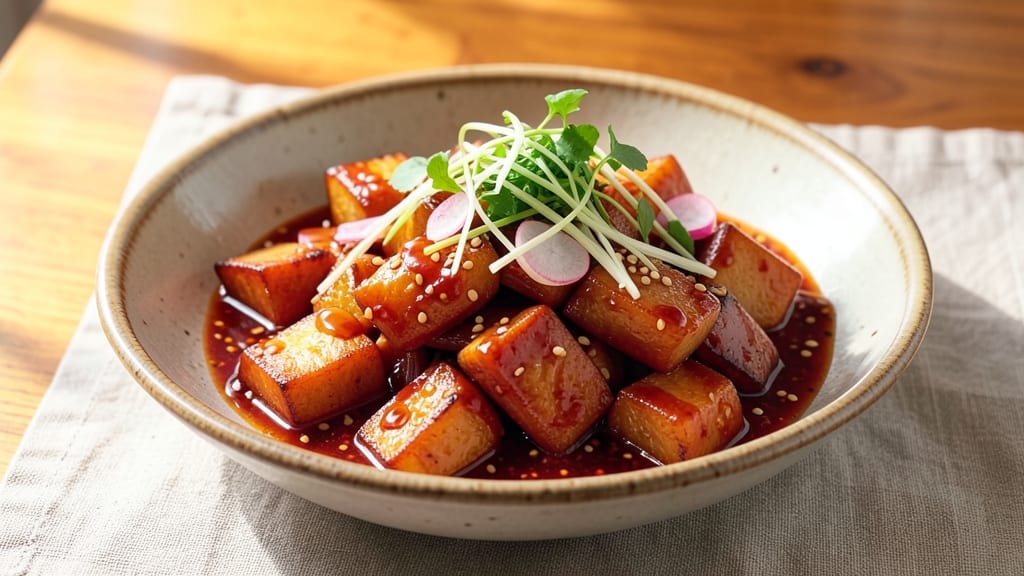
This sweet potato tteokbokki recipe transforms classic Korean rice cakes into a vibrant, spicy-sweet dish with deep umami flavor. The secret lies in simmering sweet potatoes into a rich, caramelized broth that coats chewy rice cakes—whether homemade or store-bought—while balancing heat with natural sweetness.
I developed this version to stay true to tteokbokki’s soul while making it approachable for home cooks, with vegetarian adaptations that preserve its bold character.
What sets this recipe apart is the layered flavor profile: the sweet potatoes caramelize into a glossy, slightly sticky sauce that clings to each rice cake, while gochujang and gochugaru (Korean red pepper flakes) deliver authentic heat without overpowering.
The dish builds complexity as it simmers, with umami from soy sauce and fish sauce (or vegetarian alternatives) deepening the broth. Toppings like soft-boiled eggs, crispy fish cakes (or vegan substitutes), and fresh green onions add texture and freshness to every bite.
The result is a dish that’s restaurant-quality at home—chewy, glossy, and packed with contrasting textures and flavors. The sweet potatoes lend natural sweetness that balances the spice, while the chewy rice cakes hold up perfectly to the rich, slightly sticky sauce.
This version scales easily for gatherings, and the broth can be made ahead, so you’re left with minimal last-minute work when hunger strikes.
Whether you’re serving it as a side for grilled meats or a vegetarian main with steamed rice, this sweet potato tteokbokki delivers the same bold, comforting flavors that make it a Korean comfort food staple. Let’s bring that warmth to your table with this foolproof method.
Ingredients for sweet potato tteokbokki
Sweet potatoes, chewy rice cakes, and bold spices—this vegetarian tteokbokki delivers restaurant-quality flavor at home.
| Ingredient | Amount | Notes |
|---|---|---|
| Sweet Potatoes 🍠 | 2 lb | Medium, peeled and cubed |
| Korean Rice Cakes 🍡 | 12 oz | Store-bought or homemade |
| Gochujang 🌶️ | ½ cup | Korean red pepper paste |
| Gochugaru 🌶️ | 2 tbsp | Korean red pepper flakes |
| Soy Sauce 🥢 | ⅓ cup | For umami depth |
| Vegetarian Fish Sauce 🍄 | 2 tbsp | Or mushroom sauce for umami |
| Sesame Oil 🫒 | 1 tbsp | For aroma |
| Green Onions 🧅 | ¼ cup | Sliced, for garnish |
| Vegetable Oil 🫒 | 1 tbsp | For frying rice cakes |
| Sugar 🍚 | ¼ cup | Balances spice |
| Garlic Cloves 🧄 | 4 cloves | Minced for flavor |
| Sesame Seeds 🌾 | 1 tbsp | Toasted for crunch |
| Vegetable Broth 💧 | 1 ½ cups | Low-sodium preferred |
| Salt 🧂 | 1 tsp | Kosher or sea salt |
| Black Pepper 🌶️ | ½ tsp | Freshly ground |
The sweet potatoes are the heart of this dish—look for vibrant orange ones at the grocery store, like the Japanese sweet potatoes from Trader Joe's. They caramelize beautifully, giving that glossy, slightly sticky sauce that coats every rice cake. If you can't find gochujang at regular stores, check the Korean section of World Market or H Mart. The rice cakes should be chewy but not hard; store-bought works perfectly, but if you're ambitious, homemade ones add an extra layer of texture. For the vegetarian fish sauce, mushroom sauce or soy sauce with a splash of mirin works in a pinch—just don't skip the umami boost.
No gochugaru? Substitute with 1 tbsp of cayenne plus 1 tbsp paprika, but you'll lose some of the authentic smoky depth. Short on vegetable broth? Water plus 1 tsp bouillon powder gets you close, but the broth is key for building flavor. The sesame oil adds that signature aroma—don't skip it, even if you're sensitive to strong flavors. For extra richness, stir in 1 tbsp of vegan butter at the end. And if you're feeling fancy, top with crispy tofu or vegan fish cakes instead of green onions for a protein punch.
This broth keeps beautifully—3-4 days in the fridge or 3 months frozen. Make a double batch and freeze portions for quick meals. The rice cakes crisp up when reheated, so add a splash of water and warm through gently. For best texture, serve immediately after cooking. Store leftovers in an airtight container with a layer of oil on top to keep them chewy. The flavors actually improve overnight as everything melds together.
Why You'll Love This Recipe
- One-Pot Magic: I swear by this recipe because it’s literally one pan, one sauce, and done. No chopping boards, no extra pots—just toss in the sweet potatoes, rice cakes, and that gochujang-soy sauce combo, and let it simmer. Honestly, the messiest part is cracking the eggs at the end.
- Sweet Heat Balance: That caramelized sweet potato meets the chewy rice cakes in a sauce that’s just spicy enough—thanks to the gochugaru and gochujang—to make your taste buds dance. The soy sauce ties it all together without overpowering, so it’s never too sweet or too fiery.
- Lunchbox Hero: Between us, this is my go-to for meal prep. The flavors only get better the next day, and it reheats like a dream. Pack it in bento boxes for work or school lunches—kids (or your inner kid) will devour the chewy rice cakes first.
- Pantry Staple Power: Gochujang and soy sauce are already in my cupboard, and sweet potatoes last forever. This recipe costs next to nothing to make but feels like a restaurant dish. Plus, if you’ve got leftovers, they’re perfect cold or reheated—no waste, all flavor.
Step-by-step instructions for sweet potato tteokbokki
Here's how to make this vibrant, chewy tteokbokki with perfect spice-sweet balance.
Prepare Sweet Potatoes and Build the Sauce Base
In a large pot, combine the 2 lb peeled and cubed sweet potatoes with the 1.5 cups vegetable broth. Bring to a boil over medium-high heat, then reduce to a simmer and cook for 10-12 minutes until the sweet potatoes are tender but still hold their shape. Drain well, reserving the broth for later.
In a separate bowl, whisk together the 0.5 cup gochujang, 0.33 cup soy sauce, 2 tbsp vegetarian fish sauce, 0.25 cup sugar, 1 tbsp sesame oil, 1 tsp salt, and 0.5 tsp black pepper. This sauce should be thick and vibrant red—it's the flavor foundation of your tteokbokki. Taste and adjust the sweet-spicy balance if needed, adding more sugar for sweetness or a pinch of gochugaru for heat.
Toast Rice Cakes and Sauté Aromatics
Heat 1 tbsp vegetable oil in a large skillet over medium heat. Add the 12 oz Korean rice cakes and toast them for 3-4 minutes until they develop a golden crust. This step is crucial—it enhances their chewy texture and prevents them from turning mushy in the sauce. Remove the rice cakes and set aside.
In the same skillet, add 1 tbsp vegetable oil and sauté the 4 minced garlic cloves for 30 seconds until fragrant. Immediately add the 2 tbsp gochugaru and cook for another 30 seconds to toast the flakes and deepen their flavor. This aromatic base will elevate your entire dish.
Combine and Simmer the Tteokbokki
Return the toasted rice cakes to the skillet with the garlic and gochugaru. Pour in the prepared sauce and add the cooked sweet potatoes. Stir well to combine, then add just enough of the reserved vegetable broth to create a thick, glossy coating—about ½ cup should do it. Bring to a gentle simmer over medium-low heat.
Simmer uncovered for 8-10 minutes until the sauce has thickened and clings to the rice cakes and sweet potatoes. The mixture should be sticky and well-coated, with the sweet potatoes absorbing some of the vibrant red sauce. Taste and adjust seasoning if needed—this is where you can fine-tune the perfect balance of spice and sweetness.
Finish and Garnish
Remove the tteokbokki from heat and stir in the 0.25 cup sliced green onions. In a small dry skillet, toast the 1 tbsp sesame seeds over low heat for 1-2 minutes until golden and fragrant. Sprinkle these toasted sesame seeds over the finished tteokbokki just before serving.
Serve immediately in bowls, garnished with additional green onions and sesame seeds. The dish should be vibrant red with chewy rice cakes, tender sweet potatoes, and a glossy sauce that balances sweet, spicy, and umami flavors perfectly. Each bite should deliver that signature tteokbokki texture with layers of complex flavor.
Pro Tips For Making Sweet Potato Tteokbokki
- Boil Sweet Potatoes First: I learned this the hard way—peeling and cubing raw sweet potatoes mid-recipe just adds chaos. Boil them whole in salted water for 10-12 minutes until fork-tender, then cool before cubing. This keeps the sauce from turning into a mushy, starchy mess when you add them later.
- Toast Rice Cakes Twice: Skip the single quick fry—double-toast them. First, pan-fry until golden (about 2 minutes per side), then toss them back in the hot wok with the sauce for another 30 seconds. The extra crispiness makes all the difference when they soak up that gochujang-soy glaze.
- Bloom Gochujang Properly: Don’t just dump gochujang into the sauce like it’s ketchup. Heat 1 tablespoon of oil or broth first, then stir in the gochujang and let it sizzle for 30 seconds until it darkens slightly. This deepens the flavor and prevents a raw, bitter aftertaste—trust me, your mouth will notice.
- Simmer, Don’t Boil: After adding the sauce and sweet potatoes, keep the heat at a gentle simmer (tiny bubbles, not a rolling boil). Boiling turns the rice cakes mushy and dilutes the gochugaru’s heat. A 5-minute simmer on medium-low is all you need—patience here guarantees texture.
Wine and beer pairings for this recipe
Sweet and Spicy Wine
For this vibrant dish, I recommend a light-bodied red wine that can stand up to the heat while complementing the sweet potatoes' natural sweetness. A Gewürztraminer from Alsace is perfect—its lychee and rose notes harmonize beautifully with the gochujang's spice and the sweet potatoes' caramelized depth.
The wine's slight sweetness mirrors the dish's balance, while its acidity cuts through the richness. Serve it slightly chilled to enhance its refreshing qualities. 🍷
Crisp Korean Lager
When it comes to beer pairings, a Korean lager like Hite or Cass is my go-to choice. These beers have a clean, crisp profile that cleanses your palate between bites of spicy-sweet tteokbokki.
The subtle malt sweetness in these lagers complements the dish's natural sweetness, while their carbonation helps cool the heat. For a more adventurous option, try a Korean wheat beer like OB Golden Lager—its citrus notes add a refreshing contrast to the dish's bold flavors.
Rice Wine Garnish
Add a splash of mirin or Korean rice wine (makgeolli) to your glass for an extra layer of flavor. The sweetness of mirin enhances the dish's caramelized notes, while makgeolli's fermented depth adds complexity.
I like to pour a small amount into the glass before adding wine or beer—it creates a beautiful, aromatic bridge between the dish and your drink. This technique is especially effective when serving with Gewürztraminer or Hite beer.
Non-Alcoholic Options
For those who prefer non-alcoholic pairings, a sparkling yuzu soda or green tea works wonderfully. The citrusy effervescence of yuzu soda cuts through the dish's richness, while the subtle bitterness of green tea balances the sweetness.
For a more traditional approach, serve barley tea (boricha)—its nutty, toasty notes complement the toasted sesame seeds and garlic in the tteokbokki. All of these options keep the meal refreshing and well-rounded. 💛
Serving Temperature Tips
Let your wine or beer reach room temperature before serving—this enhances their aromas and flavors. For beer, I recommend serving it slightly colder than room temperature, around 50-55°F, to preserve its crispness.
When pairing with Gewürztraminer, chill it to 55-60°F to highlight its fruity notes without muting its complexity. Proper temperature ensures that each sip complements the dish's vibrant flavors perfectly. ❄️
Nutrition facts
Frequently asked questions
Can I make this sweet potato tteokbokki without gochujang?
For a vegetarian-friendly substitute, mix 2 tbsp tomato paste with 1 tbsp sriracha, 1 tbsp soy sauce, and 1 tsp sugar to mimic the spicy-sweet profile. The key is balancing heat and umami—add a pinch of smoked paprika for depth. This version will still deliver that signature chewy texture with a slightly different but equally delicious flavor.
How do I prevent the rice cakes from turning mushy?
Toast the rice cakes in oil for 3-4 minutes before adding them to the sauce—this creates a protective crust that locks in chewiness. Also, simmer the dish on medium-low heat and avoid overcrowding the pan. If using homemade rice cakes, ensure they're properly dried before cooking to maintain their texture.
What's the best way to adjust the spice level?
Start with the full 2 tbsp gochugaru and taste as you simmer. For milder heat, reduce by ½ tbsp at a time. To intensify, add ½ tsp extra gochugaru or a splash of gochujang at the end. Pro tip: Freshly toasted gochugaru packs more punch than pre-ground flakes, so adjust accordingly.
Can I make this dish ahead of time?
Yes! The broth and sauce keep for 3-4 days refrigerated or 3 months frozen. Reheat gently with a splash of water to restore moisture. For best texture, toast the rice cakes fresh and assemble just before serving. The flavors actually deepen overnight, making it perfect for meal prep.
What are good toppings for vegetarian tteokbokki?
Try crispy tofu or vegan fish cakes for protein, sliced kimchi for tang, or avocado for creaminess. Classic additions include soft-boiled eggs (use vegan eggs if needed) and extra sesame seeds. These toppings add texture contrast and balance the dish's bold flavors.