
Side Dishes
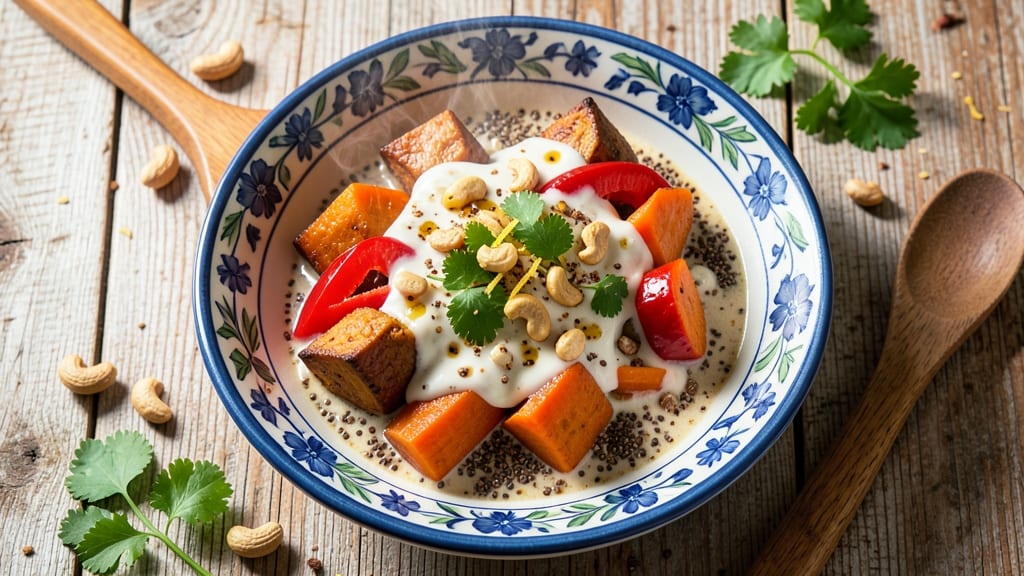
Sweet potato vegetable curry transforms humble roots and seasonal vegetables into a rich, aromatic dish that balances earthy sweetness with spiced coconut depth. The secret lies in slow-simmering sweet potatoes until fork-tender while building layers of flavor through whole-spice tempering—a technique that unlocks complex, restaurant-quality results at home. This vegetarian curry delivers the perfect harmony of textures: velvety coconut sauce, crisp-tender vegetables, and sweet potatoes that melt in your mouth.
What sets this recipe apart is the balance of traditional methods and modern shortcuts. We start with a dry roast of whole spices—cumin, coriander, and cardamom—to release their essential oils before blooming in warm coconut milk.
This creates a fragrant base that infuses every ingredient, while a touch of cashew cream adds luxurious body without overpowering the natural sweetness of the sweet potatoes. The dish comes together in one pot, making it both efficient and impressive.
The result is a curry that's deeply satisfying yet light enough to serve as a main dish or hearty side. The sweet potatoes develop a tender, caramelized edge from the slow simmer, while the vegetables retain their natural crunch.
Serve it over basmati rice for a complete meal, or pair with warm naan to soak up every last drop of that fragrant coconut sauce. Garnish with fresh cilantro and a dollop of yogurt for brightness and contrast.
This recipe works beautifully with seasonal vegetables like bell peppers, zucchini, or green beans, but even the simplest selection of carrots and peas will shine. The beauty of this curry lies in its adaptability—it's equally at home as a weeknight dinner or an elegant vegetarian centerpiece.
Let's create this comforting, flavor-packed dish that brings warmth to any table.
Ingredients for sweet potato vegetable curry
Transform humble roots and seasonal vegetables into a rich, aromatic curry with these carefully balanced ingredients.
| Ingredient | Amount | Notes |
|---|---|---|
| Sweet Potatoes 🍠 | 1 ½ lb | Medium, peeled, cubed evenly |
| Bell Peppers 🌶️ | 2 whole | Mixed colors, sliced into strips |
| Carrots 🥕 | 2 whole | Medium, peeled, chopped |
| Coconut Milk 🥥 | 1 can | Full-fat, 13.5 oz can |
| Cashews 🥜 | ½ cup | Raw, soaked 1 hour |
| Cumin Seeds 🌿 | 1 tbsp | Whole, toasted lightly |
| Ground Cumin 🌿 | 1 tsp | Freshly ground preferred |
| Ground Coriander 🌿 | 1 tsp | Freshly ground preferred |
| Cardamom Pods 🌿 | 4 whole | Lightly crushed |
| Ginger Root 🌿 | 2 tbsp | Fresh, grated finely |
| Garlic Cloves 🧄 | 4 cloves | Peeled, minced finely |
| Onion 🧅 | 1 whole | Medium, finely chopped |
| Plain Yogurt 🥛 | ¼ cup | Unsweetened, for garnish |
| Fresh Cilantro 🌿 | ¼ cup | Chopped, for garnish |
| Sea Salt 🧂 | 1 ½ tsp | Diamond Crystal preferred |
| Black Peppercorns 🌶️ | ½ tsp | Freshly cracked |
The sweet potatoes are the heart of this dish—choose firm, vibrant orange varieties with no soft spots. Trader Joe's and Whole Foods carry excellent organic options, but any sweet potato will work if it's fresh. For the coconut milk, full-fat canned versions like Thai Kitchen or Goya deliver the richest flavor, while lighter versions can make the sauce separate. The cashews add luxurious body, so soak them for at least one hour to soften completely—this ensures smooth blending later. Freshly ground spices make all the difference here, so if you have whole cumin and coriander seeds, toast them lightly in a dry pan before grinding to deepen their aroma.
No cardamom pods? Substitute with 1/2 teaspoon ground cardamom, but the whole pods infuse more complex flavor. Running short on coconut milk? Light coconut milk plus 1 tablespoon coconut cream mimics the richness. For the vegetables, bell peppers and carrots are ideal, but zucchini or green beans work beautifully too—just adjust cooking time based on their tenderness. The ginger and garlic should be freshly grated and minced for maximum punch, though jarred ginger in a pinch will do if you're in a hurry. The yogurt garnish adds brightness, so opt for plain, unsweetened varieties to avoid competing flavors.
Store the curry base (without yogurt) in an airtight container for up to 5 days in the fridge, where flavors deepen beautifully. For longer storage, freeze in portion-sized containers for up to 3 months. The cashew cream can be prepped ahead and kept refrigerated for 4 days, making assembly faster on busy nights. When reheating, add a splash of water or coconut milk to prevent drying out—this curry tastes even better the next day as the flavors meld. Garnish with fresh cilantro and a dollop of yogurt just before serving to maintain that vibrant contrast.
Why You'll Love This Recipe
- Here’s what sold me: the contrast. Sweet potatoes melt into that velvety coconut milk, while the cashews add a buttery crunch that’s dangerously easy to overdo. (Yes, I’ve been known to sneak extra handfuls straight from the pot.)
- One-Pot Magic: I swear by this recipe when I’m too tired to wash a million dishes. Toss everything—sweet potatoes, peppers, carrots—into one pot with the spices, and let the coconut milk do the heavy lifting. By the time the cashews toast at the end, your kitchen’s cleaner than your last takeout order.
- Creamy Crunch Combo: Here’s what sold me: the contrast. Sweet potatoes melt into that velvety coconut milk, while the cashews add a buttery crunch that’s dangerously easy to overdo. (Yes, I’ve been known to sneak extra handfuls straight from the pot.)
- Lunchbox Hero: Between us, this curry is my secret weapon for packed lunches. The flavors only get better the next day—thicker, richer, and still packed with those caramelized sweet potatoes. Just reheat, and suddenly Tuesday dinner feels like a five-star meal.
Step-by-step instructions for sweet potato vegetable curry
Transform simple vegetables into a rich, aromatic curry with layers of spice and coconut depth.
Toast Spices and Build the Aromatic Base
Heat a heavy-bottomed pot over medium heat and add the 1 tablespoon cumin seeds. Toast them for 30-45 seconds until they release their nutty aroma and begin to sizzle. Immediately add the 4 lightly crushed cardamom pods and the 1 whole onion, chopped finely. Cook for 5-6 minutes until the onion softens to a translucent state and the spices deepen in fragrance.
Here's the thing—properly toasting the spices unlocks their full potential. You'll know it's right when the kitchen fills with that warm, earthy scent. If the onions start to brown too quickly, reduce heat slightly to prevent burning. Once the onions are tender, add the 2 tablespoons finely grated ginger root and 4 minced garlic cloves, cooking for another 1 minute until fragrant.
Incorporate Ground Spices and Vegetables
Stir in the 1 teaspoon ground cumin, 1 teaspoon ground coriander, and 1.5 teaspoons sea salt, mixing vigorously to distribute the spices evenly through the onion mixture. Add the 1.5 pounds cubed sweet potatoes, 2 sliced bell peppers, and 2 chopped carrots, stirring gently to coat the vegetables in the spice mixture.
This step ensures even flavor distribution throughout the curry. The sweet potatoes should be evenly coated with the spice paste—this prevents bland spots in the final dish. If the vegetables appear dry after stirring, add 2 tablespoons water to help the spices adhere better. Real talk: the bell peppers will soften quickly, so don't overcook them at this stage.
Simmer with Coconut Milk for Rich Depth
Pour in the 1 can full-fat coconut milk, stirring well to combine with the spiced vegetables. Bring the mixture to a gentle simmer over medium-low heat, then reduce heat to maintain a steady simmer. Cover the pot and cook for 20-25 minutes until the sweet potatoes are tender when pierced with a fork and the carrots are fork-tender.
Your goal here is tender vegetables with a creamy coconut base. You'll know it's ready when the sweet potatoes collapse easily under gentle pressure and the sauce has thickened slightly from the coconut milk. If the curry appears too thin, uncover and simmer for another 5 minutes to reduce. If it's too thick, add 2-3 tablespoons water to reach your desired consistency.
Finish with Cashews and Garnish
In a small bowl, combine the 0.5 cup soaked cashews with 2 tablespoons water and blend until smooth using an immersion blender or food processor. Stir this cashew cream into the simmering curry and cook for an additional 3-4 minutes to allow the flavors to meld completely. Taste and adjust seasoning with additional sea salt or 0.5 teaspoon cracked black peppercorns as needed.
For the final touch, remove the pot from heat and stir in the 0.25 cup chopped fresh cilantro. The cashews add a luxurious creaminess while the cilantro brightens the dish with freshness. Serve immediately while warm, garnished with an additional sprinkle of cilantro and a dollop of 0.25 cup plain yogurt on each serving for a cooling contrast to the rich curry.
Pro Tips For Making Sweet Potato Vegetable Curry
- CUT SWEET POTATOES SMALL: Sweet potatoes take longer to soften than carrots or peppers—chop them into 1-inch cubes (or smaller if impatient). I used to leave them too big, and they’d turn to mush while the peppers stayed crunchy. Even heat works better on even-sized pieces.
- TOAST CASHEWS FIRST: Skip the raw cashews—toss them in a dry pan for 2-3 minutes until golden. They’ll add texture and depth that soaking can’t match. (Yes, even if you’re in a hurry—just set a timer and move on.)
- SAUCE BEFORE SIMMERING: Build the curry base (onions, spices, garlic) until it’s deeply fragrant and slightly darkened at the edges. Only then add coconut milk and veggies. Rushing this step means a bland, one-dimensional flavor—no amount of salt fixes it.
- PEEL CARROTS AFTER COOKING: Leave the skins on until the very end—they add color and subtle earthiness. Peel them cold after draining, or the curry will turn into a murky brown sludge. (Your future self will thank you for the 30 seconds of extra work.)
Storing and reheating your sweet potato vegetable curry
Fridge Storage Tips
Let your curry cool completely before transferring to an airtight container—I use glass Pyrex with snap-on lids for best results. Store in the fridge for up to 5 days, where the flavors actually deepen as the spices meld.
The coconut milk and cashew cream help preserve moisture, so you won’t lose that creamy texture. Just give it a quick stir before reheating to redistribute any settled spices. 🥥
Freezer Prep
For longer storage, freeze the curry in portion-sized containers (like quart-sized freezer bags) with 1-inch headspace to prevent expansion cracks. Label with the date—it keeps beautifully for 3 months.
The cashew cream freezes well too, so you can prep it ahead and store it separately for faster assembly later. Thaw overnight in the fridge for best texture. ❄️
Stovetop Reheating
My preferred method is stovetop reheating on medium-low heat—it maintains that velvety coconut sauce. Add 2-3 tablespoons water or coconut milk to prevent drying out, then simmer for 8-10 minutes, stirring occasionally.
Taste and adjust seasoning after reheating—curries often need a pinch of salt to brighten flavors. For extra richness, stir in 1 tablespoon cashew cream during reheating. 🔥
Microwave Shortcut
For quick meals, microwave individual portions covered with a damp paper towel on 50% power for 2-3 minutes. Stir halfway through to distribute heat evenly. If the curry looks dry, add 1 tablespoon water or coconut milk and microwave for another 30 seconds.
The microwave works best for single servings—just avoid overcooking the sweet potatoes to prevent mushiness. 💡
Garnish Refresh
Always finish with fresh garnishes after reheating—they make all the difference. Sprinkle with chopped cilantro and a dollop of plain yogurt for brightness. For extra flair, add a pinch of freshly cracked black pepper or a squeeze of lime juice to cut through the richness.
The yogurt also helps balance any reheating-induced dryness. ✨
Make-Ahead Sauce
Prep the spiced vegetable base (without yogurt) ahead and store it separately. When ready to serve, simply reheat the base, then stir in cashew cream and fresh garnishes.
This shortcut saves time while keeping the curry fresh-tasting. I often do this for busy weeknights—just assemble and heat in 10 minutes or less. 💪
Nutrition facts
Frequently asked questions
Can I substitute regular potatoes for sweet potatoes in this curry?
Sweet potatoes are essential for their natural sweetness and tender texture when cooked. Regular potatoes will make the curry taste bland and may turn mushy during the long simmer. If you must substitute, try purple sweet potatoes for a deeper flavor or butternut squash (peeled and cubed) for a similar texture. The dish won't be identical, but it'll still be delicious!
How do I adjust the spice level for sensitive palates?
Start by reducing the whole cumin seeds to ½ teaspoon and skip the black peppercorns entirely. For extra mildness, use ½ teaspoon ground coriander instead of the full amount. Taste after adding coconut milk—if still too spicy, stir in 1 tablespoon honey or maple syrup to balance. The cashew cream also helps mellow strong flavors.
What vegetables work best if I don't have bell peppers or carrots?
This curry is incredibly adaptable! Try zucchini, green beans, or cauliflower florets (cut small for even cooking). For heartier options, add chickpeas or butternut squash cubes. Just adjust cooking time—most veggies need 15-20 minutes total with the sweet potatoes. The key is keeping pieces uniform in size for even doneness.
Why did my curry separate when I reheated it?
This happens when coconut milk separates due to temperature changes. Stir in 1 tablespoon cashew cream or a splash of warm water while reheating to re-emulsify. For prevention, always reheat on low heat and stir frequently. If the sauce is too thick, add 2 tablespoons coconut milk before serving. The texture will smooth out beautifully!
Can I make this curry dairy-free?
Simply omit the yogurt garnish or use a dairy-free yogurt alternative like coconut or almond yogurt. The cashew cream already provides richness, so no other substitutions are needed. For extra creaminess, blend ½ cup silken tofu with the cashews instead. The flavors remain perfectly balanced without dairy.