
Side Dishes
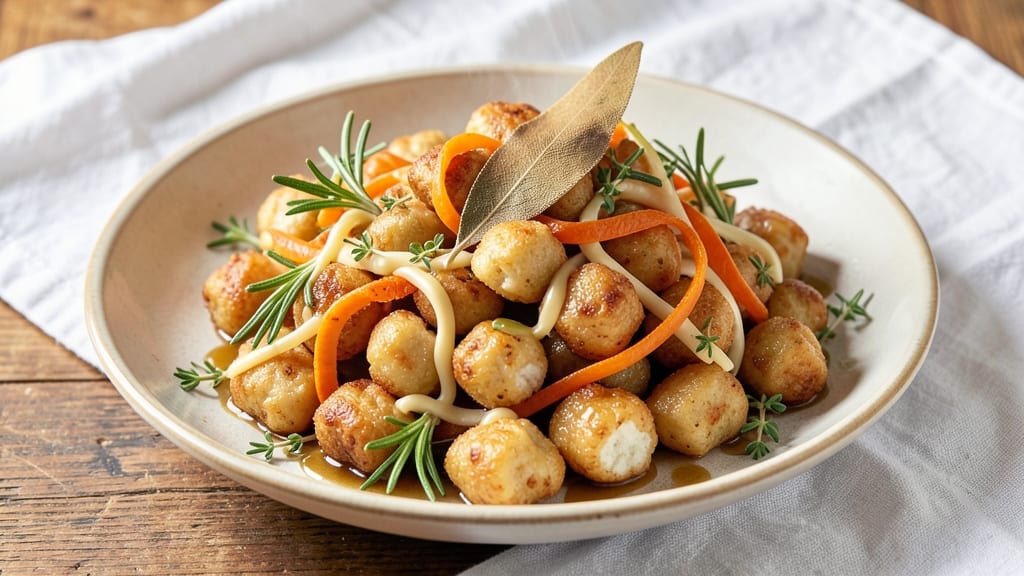
This sweet potato and potato gnocchi recipe transforms humble ingredients into pillowy, herbed dumplings that rival any Italian trattoria. The secret lies in blending tender sweet potatoes with classic russets, creating a dough that’s both sturdy and delicate—perfect for boiling into cloud-like perfection.
I’ve perfected this technique over years of testing, ensuring every bite delivers that signature melt-in-your-mouth texture with a subtle sweetness from the orange flesh.
The process starts with a simple dough made from mashed potatoes, sweet potatoes, flour, and eggs, then rolled into ridges for that classic gnocchi shape. What sets this apart is the herbed sweetness—fresh rosemary and thyme infuse the dough during resting, while a touch of nutmeg adds warmth.
The result? Dumplings that float beautifully in boiling water and soak up sauces like a dream.
Once boiled to perfection, these gnocchi transform into pillowy clouds with crisp edges when browned in a pan. Toss them with brown butter, sage, or a light tomato sauce for a vegetarian main or side that feels indulgent yet balanced.
The sweet potatoes add natural sweetness without overpowering, making this recipe versatile for both classic and modern dishes.
Whether you’re serving as a first course or a hearty side, this gnocchi delivers restaurant-quality results at home. The dough rests for 30 minutes (a critical step!), and the boiling process takes just 2-3 minutes—quick enough for weeknights but impressive enough for dinner guests.
Let’s get started on creating your own batch of these irresistible dumplings.
Ingredients for sweet potato and potato gnocchi
These carefully selected ingredients create restaurant-quality gnocchi with herbed sweetness and perfect texture.
| Ingredient | Amount | Notes |
|---|---|---|
| Russet Potatoes 🥔 | 2 lb | Peeled and boiled until fork-tender |
| Sweet Potatoes 🍠 | 1 ½ lb | Peeled and boiled until tender |
| All-Purpose Flour 🌾 | 3 cups | Plus 2 tbsp for dusting |
| Large Eggs 🥚 | 2 whole | Room temperature for best mixing |
| Fresh Rosemary 🌿 | ¼ cup | Finely chopped, stems removed |
| Fresh Thyme 🌿 | ¼ cup | Finely chopped, leaves only |
| Ground Nutmeg 🌶️ | ½ tsp | Freshly grated preferred |
| Diamond Crystal Kosher Salt 🧂 | 1 ½ tsp | For dough and boiling water |
| Unsalted Butter 🧈 | ½ cup | Cold, cubed for browning |
| Fresh Sage 🌿 | ¼ cup | Chopped for finishing |
| Extra-Virgin Olive Oil 🫒 | 1 tbsp | For dough and pan |
The potatoes are the foundation—russets for structure and sweet potatoes for natural sweetness. Choose firm russets with smooth skins and vibrant orange sweet potatoes; avoid any with soft spots or sprouts. Whole Foods or local farmers' markets often carry the freshest varieties. For boiling, cut potatoes into even chunks to ensure uniform cooking. The sweet potatoes should mash to a smooth, slightly sticky consistency—this is key for the dough's tenderness. If your sweet potatoes are fibrous, strain them through a fine-mesh sieve for a silky texture. Freshly boiled potatoes yield the best results; never use canned or pre-mashed varieties.
No fresh rosemary? Dried rosemary at one-third the amount works in a pinch, though fresh is ideal for that bright aroma. Substituting thyme for oregano changes the flavor profile entirely—stick with thyme for authentic herbed notes. For nutmeg, pre-ground is fine, but freshly grated adds depth. If you're avoiding gluten, swap half the flour for almond flour, though texture will differ slightly. The butter should be cold and cubed for browning; don't melt it beforehand. For a dairy-free option, use coconut oil instead, though the flavor will be subtly different. Always measure flour by spooning it into the cup and leveling—never scooping directly from the bag.
Freshly made gnocchi should be used within 24 hours for best texture, though they can be frozen for up to 3 months. Store shaped gnocchi on a floured tray in the freezer, then transfer to a bag. Before cooking, no need to thaw—just drop them directly into boiling water. The dough can be refrigerated for up to 24 hours before shaping, though it's best used immediately. For make-ahead convenience, shape and freeze the gnocchi, then boil from frozen (add 1 minute to cooking time). Always season the boiling water generously—1.5 tsp salt for 4 quarts of water ensures flavorful dumplings.
Why You'll Love This Recipe
- No-Rolling Required: I swear by this trick—just mash, mix, and fold. No dough board, no stress. The sweet potatoes add natural sweetness that balances the fluffy texture, and honestly? My hands are always cleaner this way.
- Double the Comfort: That crispy edge when browned in butter? Chef’s kiss. The rosemary cuts through the sweetness while the eggs bind everything into pillowy clouds. It’s like hugging a warm bowl of nostalgia—except it’s actually dinner.
- Leftovers That Beg for Seconds: I make a big batch on Sundays, and by Wednesday, they’re gone. Pan-fried with garlic or tossed in marinara, they reheat like a dream. (Yes, even on a Tuesday night.)
- Budget Booster: Russets and sweet potatoes stretch further than you’d think, and flour/eggs are pantry staples. I’ve fed six people for under $10 with this—no fancy ingredients, just pure, satisfying gnocchi magic.
Step-by-step instructions for sweet potato and potato gnocchi
Mastering gnocchi requires precision and patience—here's how to create pillowy, herbed dumplings with perfect texture.
Boil and Rice the Potatoes
Place the 2 lb russet potatoes and 1.5 lb sweet potatoes in a large pot and cover with cold water by 2 inches. Add 1.5 tsp Diamond Crystal kosher salt and bring to a rolling boil. Reduce heat to maintain a gentle boil and cook for 15-20 minutes until completely tender.
Drain the potatoes immediately and return them to the pot. Let them steam dry for 2 minutes to evaporate excess moisture. This step is crucial—wet potatoes will make your gnocchi dense. Once cool enough to handle, use a potato ricer to push them through, creating a smooth, rustic texture. Avoid mashing, as it introduces gluten and toughens the dough.
Combine Potatoes with Flour and Eggs
Transfer the riced potatoes to a large mixing bowl and let them cool to room temperature. Add the 3 cups all-purpose flour (plus the 2 tbsp for dusting) and the 2 whole large eggs. Using your hands, gently mix until just combined—you should have a shaggy, slightly sticky dough. Avoid overworking the dough, as this develops gluten and makes the gnocchi tough.
Here's the thing—you want the dough to be soft but not sticky enough to cling to your fingers. If it feels too dry, add 1 teaspoon of water at a time until it comes together. The dough should hold its shape when pressed but still be pliable. Cover the bowl with a damp towel and let it rest for 30 minutes to relax the gluten.
Shape the Gnocchi
Divide the dough into 4 equal portions and roll each into a ½-inch thick rope. Use a sharp knife or a gnocchi board to cut the ropes into 1-inch pieces. For extra texture, roll each piece gently over the tines of a fork to create ridges—this helps them hold sauce better and gives them that classic gnocchi look.
Don't skip this rolling step. The ridges create surface area for sauce to cling to, and the gentle pressure from the fork ensures even cooking. Place the shaped gnocchi on a floured baking sheet and dust lightly with more flour to prevent sticking. Work in batches to keep the dough from drying out.
Cook the Gnocchi to Perfection
Bring a large pot of water to a rolling boil and add 1 tbsp extra-virgin olive oil and ½ tsp Diamond Crystal kosher salt. Add the gnocchi in batches and stir gently to prevent sticking. Cook for 2-3 minutes until they float to the surface—this is your signal that they're done. Use a slotted spoon to remove them and drain well.
Real talk: Gnocchi should be light and tender, not chewy. If they feel undercooked, return them to the boiling water for 30 seconds. Overcooking turns them mushy, so keep a close eye on them. Toss the cooked gnocchi with the 0.25 cup fresh sage and 0.5 tsp ground nutmeg for a fragrant finish.
Brown in Butter for Added Flavor
Heat a large skillet over medium heat and melt the 0.5 cup unsalted butter until it foams. Add the cooked gnocchi and let them sizzle for 2-3 minutes until golden brown on all sides. The butter will infuse the gnocchi with rich flavor and create a beautiful, crispy exterior.
Here's where it gets fun—toss in the 0.25 cup fresh rosemary and 0.25 cup fresh thyme and cook for another 30 seconds until fragrant. The herbs will release their essential oils, adding layers of aromatic complexity. Serve immediately with your favorite sauce or a sprinkle of additional ground nutmeg for a touch of warmth.
Pro Tips For Making Sweet Potato And Potato Gnocchi
- BOIL UNTIL SOFT: Russets and sweet potatoes should fall apart like butter when pierced with a fork—no resistance, no excuses. I used to rush this, and my gnocchi turned out dense and chewy. Trust the process: a solid 15-20 minutes in salted boiling water (yes, even the sweet potatoes) guarantees a light, pillowy texture.
- CHILL THE DOUGH: Wrap the gnocchi dough in plastic and refrigerate for 30 minutes before rolling. I learned this the hard way—skipping it makes the dough sticky and uneven. Cold dough holds its shape better, so your gnocchi won’t stick to the rolling pin or each other.
- ROLL THIN, CUT FAST: Use a pasta machine or wooden rolling pin to flatten the dough to about ¼-inch thickness—thicker strips mean dense, rubbery gnocchi. Cut ridges with a sharp knife or gnocchi board (or even a fork in a pinch), but don’t press too hard—just enough to separate.
- TEST ONE, THEN COOK: Drop a single piece of gnocchi into boiling water before committing to the whole batch. It should float within 30 seconds—if it sinks, it’s undercooked; if it disintegrates, you overboiled the potatoes. Adjust your cooking time based on this test, not the recipe’s guesswork.
Storing and reheating your leftovers
Refrigerator Storage
Freshly shaped gnocchi can stay in the fridge for 24 hours before cooking, but I recommend making them fresh for the best texture. If you must store them, place them on a floured tray lined with parchment paper, cover loosely with plastic wrap, and refrigerate.
The flour prevents sticking, and the loose wrap allows airflow to keep them from becoming gummy. When ready to cook, no need to thaw—just drop them straight into boiling water. 🥔
Freezer Storage
For longer storage, freeze shaped gnocchi on a floured tray for 1 hour to firm up, then transfer to a quart freezer bag with 1 inch of headspace for expansion. They’ll keep for up to 3 months.
Cook from frozen by adding 1 minute to the boiling time—no thawing required! The sweet potato flavor holds up beautifully in the freezer, though texture may soften slightly after thawing. ❄️
Reheating Cooked Gnocchi
Leftover cooked gnocchi reheat best in a skillet with 1 tbsp butter or olive oil over medium heat for 2-3 minutes until warmed through. Avoid microwaving—it turns them soggy. For extra crispiness, add a splash of water to the pan and cover for 30 seconds to steam gently.
Toss with fresh herbs like rosemary or thyme to revive their aroma. 🔥
Reviving Stale Gnocchi
If your gnocchi have lost their pillowy texture, don’t toss them! Toss them in a dry skillet over medium heat for 1-2 minutes to crisp up the exterior. The residual starch will help restore some of their bounce.
For a richer finish, add 1 tbsp brown butter and a pinch of nutmeg—this combo masks any dryness and adds depth. 💫
Sauce Pairing Tips
When reheating with sauce, add it to the skillet after the gnocchi have browned slightly—this prevents a mushy texture. For cream-based sauces, reheat gently with 1 tbsp heavy cream to loosen the sauce and coat the gnocchi evenly.
Tomato sauces work best when simmered with the gnocchi for 1-2 minutes to meld flavors. The sweet potato’s natural sweetness shines with tangy or umami-rich sauces like sage brown butter or mushroom ragù. 🍝
Nutrition facts
Frequently asked questions
Can I make this gnocchi recipe without eggs?
Yes! For a vegan version, replace the 2 eggs with 2 tablespoons aquafaba (chickpea brine) or ¼ cup unsweetened applesauce. The dough will be slightly stickier, so add 1 extra tablespoon flour if needed. The texture may be a bit denser, but still delicious when cooked properly.
Why does my gnocchi dough turn out too sticky?
Sticky dough usually means too much moisture from the potatoes or not enough flour. Let your boiled potatoes steam dry for 3-5 minutes after draining to remove excess water. If the dough is still too wet, add 1 tablespoon flour at a time until it holds together when pressed. Avoid overworking the dough—just mix until combined.
How do I prevent gnocchi from sticking together?
Work in batches and keep everything well-floured! Dust your work surface, rolling pin, and shaped gnocchi with all-purpose flour between each step. Store shaped gnocchi on a floured baking sheet, separated by parchment paper. If they stick after shaping, gently roll them in more flour before cooking.
Can I use only sweet potatoes instead of both sweet and regular potatoes?
You can, but the texture will be less stable. Sweet potatoes alone make the dough softer and more prone to falling apart when cooking. For best results, use at least 50% russet potatoes for structure. If you prefer all-sweet-potato gnocchi, add 1 extra tablespoon flour to help bind the dough.
What's the best way to test if my gnocchi is cooked?
The classic test is when they float to the surface in boiling water. If they sink at first but then bob up, that's your cue—they're perfectly done! Cook for 30 seconds after floating to ensure they're tender inside. Overcooked gnocchi turn mushy, so keep a close eye on them.